

Loading, please wait...
Loading, please wait...

Major corrective procedures for severe spinal deformities present intricate perioperative challenges for surgical and anesthesia teams. Specifically, pediatric scoliosis surgery requires aggressive bony resection, vertebral osteotomies, and mechanical instrumentation to achieve proper realignment. These corrective maneuvers expose vulnerable neural pathways to excessive mechanical traction and vascular compromise. Consequently, surgical teams depend on continuous intraoperative neurophysiological monitoring to prevent irreversible spinal cord injury. Transcranial electrical stimulation elicits motor-evoked potentials that provide real-time assessment of corticospinal tract integrity during correction. However, intravenous anesthetics and regional nerve blocks can alter synaptic transmission and peripheral motor responses. Therefore, clinicians must select anesthetic regimens that maintain signal fidelity while ensuring complete surgical immobility. In addition, profound postoperative pain complicates recovery if teams do not deliver effective regional analgesia. Regional techniques offer significant advantages, but their direct physiological interactions with neurophysiological signals demand rigorous scrutiny. Sudden signal loss requires rapid communication between the neurophysiologist and the operating surgeon. Because false-positive alarms cause unnecessary surgical delays, clinicians strive to preserve baseline evoked responses. Ultimately, effective clinical care requires balancing intraoperative neuroprotection with aggressive pain relief.
Over the past decade, ultrasound-guided regional anesthesia has transformed postoperative recovery pathways in pediatric orthopedics. In particular, the erector spinae plane block provides remarkable multisegmental analgesia across thoracic and lumbar dermatomes. During this procedure, the anesthesiologist injects local anesthetic deep to the erector spinae musculature and superficial to transverse processes. Consequently, the injectate diffuses craniocaudally within the interfascial plane to reach dorsal and ventral rami of spinal nerves. Furthermore, this approach avoids direct neuroaxis instrumentation, substantially decreasing the risks of epidural hematoma or spinal cord trauma. Clinical trials show that bilateral blocks markedly decrease intraoperative volatile anesthetic consumption and blunt neuroendocrine stress responses. Additionally, pediatric patients experience significantly lower postoperative pain scores and consume fewer systemic opioids. However, single-shot injections of plain ropivacaine possess a relatively brief duration of clinical action. Because surgical pain often persists for multiple days, clinicians frequently incorporate pharmacological adjuvants to prolong block efficacy. Therefore, investigators actively evaluate diverse perineural additives to extend analgesia safely without generating unwanted neurotoxicity.
To prolong regional analgesia, anesthesiologists frequently incorporate adjuvants into local anesthetic solutions. Among these pharmacological agents, dexamethasone and dexmedetomidine represent two prominent options with distinct physiological mechanisms. Dexamethasone functions as a potent synthetic glucocorticoid that suppresses local inflammatory mediators and inhibits nociceptive C-fiber firing. In contrast, dexmedetomidine acts as a selective alpha-2 adrenergic receptor agonist that suppresses neuronal transmission through membrane hyperpolarization. In a recent randomized controlled trial involving ninety children, investigators compared plain ropivacaine against ropivacaine combined with either dexamethasone or dexmedetomidine. Both adjuvant groups achieved outstanding clinical improvements in pain control compared to plain ropivacaine alone. Specifically, the time to first rescue opioid extended beyond eleven hours in both adjuvant cohorts, whereas control patients required rescue analgesia within five hours. Furthermore, both additives produced significant opioid-sparing effects and achieved markedly lower numerical pain scores across the first postoperative day. Nevertheless, the systemic profiles of these two adjuvants diverged sharply regarding neuromonitoring fidelity and hemodynamic stability. Consequently, clinicians must evaluate these distinct pharmacological behaviors when selecting an adjuvant.
Intraoperative neurophysiological monitoring demands reliable motor-evoked potential amplitudes to detect early spinal cord ischemia or traction injury. Interestingly, the trial demonstrated that perineural dexamethasone significantly enhanced neuromonitoring conditions throughout posterior spinal fusion. Patients receiving dexamethasone exhibited significantly higher motor-evoked potential amplitudes following corrective maneuvers compared to both alternative groups. Moreover, these patients required lower transcranial electrical stimulation intensity to evoke robust motor responses. Researchers propose that dexamethasone mitigates perioperative neuroinflammation and reduces local tissue edema, thereby preserving corticospinal conduction velocity. Conversely, dexmedetomidine demonstrated an unfavorable impact on neurophysiological monitoring parameters. Although it provided effective analgesia, dexmedetomidine resulted in noticeably suppressed motor-evoked potential amplitudes and deeper sedation levels. Systemic absorption of dexmedetomidine dampens central motor neuronal excitability and attenuates spinal alpha-motor neuron output. Consequently, this suppression increases the risk of false-positive warnings, creating unwarranted alarm in the operating theater. Therefore, dexamethasone proves far superior when preservation of neurophysiological signal integrity remains a primary operative concern.
Cardiovascular stability represents another essential determinant of patient safety during major pediatric spinal reconstruction. In this clinical trial, the safety profiles of the studied adjuvants differed markedly in their hemodynamic effects. Notably, patients in the dexmedetomidine cohort experienced significant cardiovascular complications, including eleven recorded episodes of bradycardia and five episodes of hypotension. Because rapid systemic vascular absorption occurs within paraspinal tissue planes, dexmedetomidine stimulates central alpha-2 receptors and reduces sympathetic tone. This sympatholysis produces peripheral vasodilation and sudden reductions in heart rate. Such hemodynamic instability can compromise spinal cord perfusion during delicate corrective maneuvers, creating substantial perioperative hazards. In sharp contrast, patients receiving perineural dexamethasone maintained stable hemodynamics throughout the entire procedure without episodes of bradycardia. Furthermore, dexamethasone did not provoke adverse metabolic shifts, such as hyperglycemia or elevated systemic inflammatory markers. Thus, dexamethasone delivers robust analgesia while preserving essential cardiovascular homeostasis. For pediatric spinal teams, dexamethasone provides superior therapeutic reliability without compromising neuromonitoring or hemodynamic safety.
Dexamethasone reduces local tissue inflammation, attenuates perioperative nerve edema, and stabilizes neural membranes around surgical sites. By mitigating tissue injury responses, the corticosteroid preserves peripheral nerve conduction velocity and increases motor-evoked potential amplitudes. Consequently, the surgical team requires lower transcranial electrical stimulation intensities to monitor corticospinal integrity accurately throughout spinal fusion.
Dexmedetomidine causes significant central sympatholysis following vascular absorption from paraspinal tissue planes. This systemic uptake frequently triggers severe pediatric bradycardia and hypotension, which impairs spinal cord perfusion. Additionally, dexmedetomidine dampens central motor neuronal excitability, suppressing motor-evoked potential amplitudes and potentially generating false-positive neuromonitoring warnings during critical spinal alignment maneuvers.
The erector spinae plane block delivers comprehensive thoracic analgesia by spreading local anesthetic solution across dorsal and ventral spinal rami. Consequently, this regional technique reduces intraoperative volatile anesthetic requirements, blunts neuroendocrine stress responses, and alleviates severe postoperative pain. Patients experience extended analgesic relief, consume fewer systemic opioids, and achieve earlier functional mobilization.
Disclaimer: This content is for informational and educational purposes only. It is not intended to be a substitute for professional medical advice, diagnosis, or treatment. Always seek the advice of your physician or other qualified health provider with any questions you may have regarding a medical condition or procedure. Never disregard professional medical advice or delay in seeking it because of something you have read here. Refer to the latest local and national guidelines for clinical practice.
References
Reysner M et al. Effects of Perineural Dexamethasone and Dexmedetomidine on Neuromonitoring and Analgesia in Pediatric Scoliosis Surgery: A Randomized Controlled Trial. Spine (Phila Pa 1976). 2025 Sep 15. doi: 10.1097/BRS.0000000000005399. PMID: 40391862.
Kurdi MS, Abinaya K, Ladhad DA, et al. Comparison of perineural dexamethasone and dexmedetomidine as adjuvants in reducing rebound pain in patients undergoing peripheral nerve block: A double blind randomized controlled study. J Anaesthesiol Clin Pharmacol. 2025.
Reysner M, Huber J, Reysner T, et al. Dexamethasone as an Adjuvant to Erector Spinae Plane Block Is Associated With Improved Neuromonitoring Parameters and Analgesia in Pediatric Spine Surgery. Spine J. 2026; doi:10.1016/j.spinee.2026.01.021.
Levin D. Intraoperative neuromonitoring in paediatric spinal surgery. BJA Educ. 2019;19(4):106-112.

Read summarized clinical updates, watch expert medical content, and earn CME certifications right from your smartphone.
Open your smartphone camera to scan and install.





A randomized trial assessed perineural dexamethasone and dexmedetomidine as adjuvants to erector spinae plane block in pediatric scoliosis surgery. Dexamethasone improved motor-evoked potentials and prolonged analgesia, whereas dexmedetomidine triggered bradycardia without improving neuromonitoring quality.
Today

A validation study evaluates the consumer-grade InBody Dial H30 bioelectrical impedance device against a 3-compartment criterion in recreationally active adults, revealing a slight overestimation in body fat percentage and underestimation in fat-free mass alongside notable individual limits of agreement.
Today

A nationwide survey reveals substantial knowledge gaps among general practitioners regarding fetal pathology and autopsy. Enhanced training and interdisciplinary communication are vital to guide stillbirth evaluation, clarify autopsy consent, and improve preconception counseling for bereaved parents.
Today
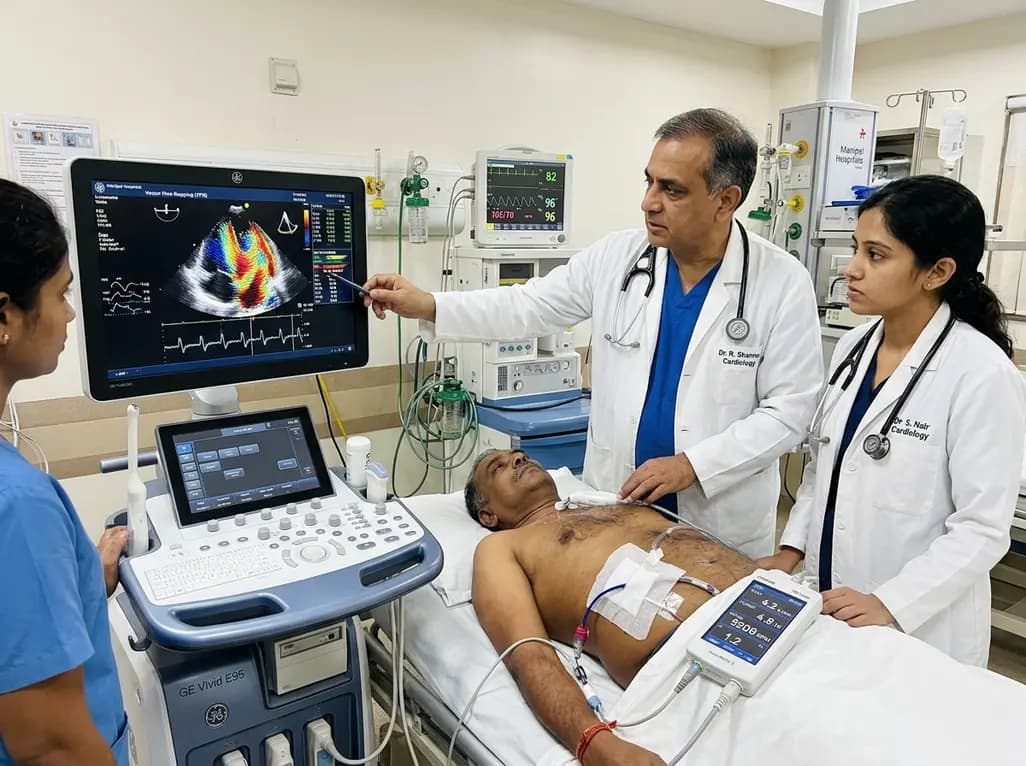
A pilot study shows that transesophageal echocardiography with vector flow mapping measures intraventricular energy loss in HeartMate 3 LVAD recipients. Energy loss significantly correlates with controller-displayed pump flow, offering clinicians deeper insights into ventricular unloading and intracardiac fluid mechanics.
Today

A comparative study demonstrates that simple and complex labral tears achieve comparable functional outcomes and low recurrence rates following arthroscopic stabilization for anterior shoulder instability, despite differing clinical presentations and dislocation histories.
Today

A nationwide analysis shows that inpatient lifestyle counseling for type 2 diabetes remains remarkably underutilized despite modest gains. Clinicians must bridge persistent demographic disparities and integrate structured dietary and exercise counseling into routine hospital discharge workflows.
Today
