.webp&w=384&q=75)

Loading, please wait...
Loading, please wait...

Perinatal mood disturbances represent a major global public health concern that compromises both maternal and neonatal well-being. Although evidence-based psychological treatments such as interpersonal psychotherapy demonstrate clear clinical value, practical barriers routinely impede access to face-to-face sessions. Fortunately, digital health therapeutics provide a viable solution to bridge this persistent care gap. A landmark randomized controlled trial has now assessed a self-guided perinatal depression smartphone intervention grounded in interpersonal psychotherapy principles, revealing critical insights into acceptability and timing-dependent therapeutic benefits for expectant and new mothers.
Perinatal depressive episodes frequently emerge during pregnancy and extend into the early postpartum period. Consequently, untreated distress leads to elevated risks of preterm delivery, low neonatal birth weight, impaired mother-infant bonding, and long-term neurodevelopmental disruptions. Despite routine prenatal visits, many expectant mothers fail to receive structured psychiatric support. Several compounding factors explain this discrepancy. Specifically, persistent social stigma, geographic disparities, childcare obligations, and chronic shortages of trained psychotherapists prevent women from initiating mental healthcare.
Moreover, conventional clinic models often lack the flexibility required by modern expectant families. While standard obstetric workflows screen for maternal distress, referral pathways frequently break down before therapeutic initiation occurs. Therefore, clinicians urgently require scalable, evidence-based tools that integrate smoothly into everyday maternal routines. Self-guided digital health applications offer continuous accessibility, privacy, and low financial burden. As a result, digital solutions show extraordinary promise in democratizing maternal mental health interventions worldwide, especially in resource-constrained community and hospital settings.
To rigorously test digital therapeutics, investigators conducted a nationwide, nonblinded randomized controlled trial evaluating a self-guided perinatal depression smartphone intervention. The study recruited 350 pregnant women across diverse regions using direct online advertisements and community postcards. Notably, the trial adopted inclusive eligibility parameters by not mandating a minimum baseline depression symptom score. This universal approach enabled researchers to observe the application's performance across a broad spectrum of baseline emotional states, ranging from healthy adjustment to subclinical distress.
Investigators randomly allocated participants to either the interpersonal psychotherapy-informed smartphone program or usual prenatal care. Over an eight-week study window, the intervention cohort navigated interactive modules centered on interpersonal problem-solving, role transitions, and communication strategies. Concurrently, the researchers monitored participant satisfaction using the validated Japanese version of the Client Satisfaction Questionnaire-8. In addition, the team tracked depressive symptom shifts through the Patient Health Questionnaire-9 from baseline through eight weeks post-enrolment, ultimately concluding assessments at one month postpartum.
Digital therapeutic tools can only succeed when end users actively embrace and navigate their interfaces. In this trial, the application demonstrated exceptional acceptability among expectant mothers. Specifically, 90.2% of participants in the intervention arm achieved a satisfaction score of 17 or higher on the standardized satisfaction scale. Thus, mothers found the digital format accessible, intuitive, and reassuring during a demanding period of physical and psychological transition.
Furthermore, this overwhelming satisfaction highlights the feasibility of self-directed therapy in maternal populations. Expectant women frequently report cognitive fatigue, time constraints, and unpredictable schedules during pregnancy. Nevertheless, participants sustained high engagement because modular, asynchronous lessons allowed them to process therapeutic content at their own preferred pace. Consequently, these robust engagement metrics demonstrate that smartphone-delivered psychotherapy can successfully overcome common adherence obstacles seen in conventional psychiatric interventions.
Interestingly, the trial documented divergent therapeutic trajectories between the pregnancy period and the postpartum phase. During pregnancy, depressive symptom comparisons between the intervention group and usual care showed no statistically significant differences, reflected by a modest standardized mean difference of 0.11. Because many enrolled participants started with low baseline depressive scores, a notable floor effect likely limited observable antenatal improvements.
However, the intervention generated a distinct and clinically meaningful benefit following childbirth. At one month postpartum, women assigned to the smartphone application exhibited significantly lower depressive scores compared to usual care recipients, achieving a standardized mean difference of 0.28. Therefore, the findings suggest a crucial preventative latency effect. As mothers entered the acute stress of infant care and biological sleep disruption, the coping mechanisms acquired during antenatal digital modules protected them from escalating depressive morbidity.
Interpersonal psychotherapy operates on the premise that psychiatric symptoms interconnect closely with personal relationships, role disputes, and life adjustments. The perinatal journey involves profound psychosocial transitions, including shifts in spousal dynamics, familial obligations, and maternal identity. Hence, adapting interpersonal psychotherapy into a digital format directly targets the primary stressors encountered during pregnancy and early parenthood.
Specifically, the smartphone modules guided participants through structured exercises designed to clarify interpersonal expectations, express emotional needs, and mobilize social circles. Furthermore, the self-guided exercises empowered mothers to renegotiate caregiving responsibilities before infant delivery occurred. Consequently, when postpartum fatigue and stress surged, intervention users possessed pre-established problem-solving frameworks. By fostering interpersonal competence and emotional resilience, the digital program successfully mitigated the psychological vulnerability typical of the fourth trimester.
These randomized findings provide substantial implications for modern obstetric and psychiatric care pathways. First, obstetricians and primary care clinicians can consider evidence-based smartphone applications as effective adjuncts to routine prenatal consultations. While severe clinical depression still demands comprehensive psychiatric evaluation and pharmacotherapy, digital therapeutics represent an ideal first-line prevention strategy for universal or subthreshold populations.
In addition, health systems can implement digital platforms to relieve overextended clinical personnel. Because the smartphone application operates autonomously without intensive human therapist involvement, scaling it across broad demographic populations remains cost-effective. Thus, integrating verified digital tools into maternal public health programs can significantly alleviate postpartum mood disorders, protect maternal-infant attachment, and optimize long-term family well-being.
The application teaches mothers to manage major role transitions, resolve interpersonal conflicts, and build practical communication habits during pregnancy. By mastering these psychosocial coping skills early, mothers can navigate the acute physical exhaustion, emotional strain, and relationship adjustments of the postpartum period with greater emotional resilience.
Participants entered the study without requiring high baseline depression scores, creating a floor effect that limited measurable improvement during pregnancy. However, the immense physiological and social stress of childbirth challenged maternal coping reserves, allowing the protective skills learned in the app to demonstrate clear preventative efficacy postpartum.
No, self-guided applications serve as scalable preventive tools and clinical adjuncts rather than replacements for comprehensive psychiatric care. Women experiencing moderate to severe major depressive disorder, suicidal ideation, or psychosis require immediate individualized evaluation, licensed psychotherapist engagement, and potentially pharmacotherapy guided by qualified healthcare professionals.
Disclaimer: This content is for informational and educational purposes only and is not intended as medical advice or as a substitute for professional clinical judgment, diagnosis, or treatment. It does not establish a doctor-patient relationship. Healthcare professionals must independently evaluate and corroborate clinical facts, exercise their own medical judgment, and tailor care to individual patient needs. Patients should consult their physician or other qualified healthcare provider regarding any health condition or medical concerns. Some information may involve products or clinical practices that are off-label or not approved in specific jurisdictions. Refer to the latest local and national guidelines for clinical practice.
References
Toshishige Y et al. Acceptability and efficacy of a smartphone intervention informed by interpersonal psychotherapy for perinatal mental health: A randomized controlled trial. Psychol Med. 2026 Sep 24. doi: 10.1017/S0033291726105868. PMID: 42779472.
Dennis CL et al. Telephone-based nurse-delivered interpersonal psychotherapy for postpartum depression: nationwide randomised controlled trial. Br J Psychiatry. 2020;216(4):189-196.
Loughnan SA et al. Internet-delivered psychological interventions for clinical depression and anxiety in pregnancy: A systematic review and meta-analysis. Arch Womens Ment Health. 2019;22(6):737-750.

Read summarized clinical updates, watch expert medical content, and earn CME certifications right from your smartphone.
Open your smartphone camera to scan and install.





A randomized controlled trial demonstrates that an interpersonal psychotherapy-informed perinatal depression smartphone intervention achieves high acceptability and significantly reduces depressive symptoms at one month postpartum, offering a scalable model for maternal care.
Today
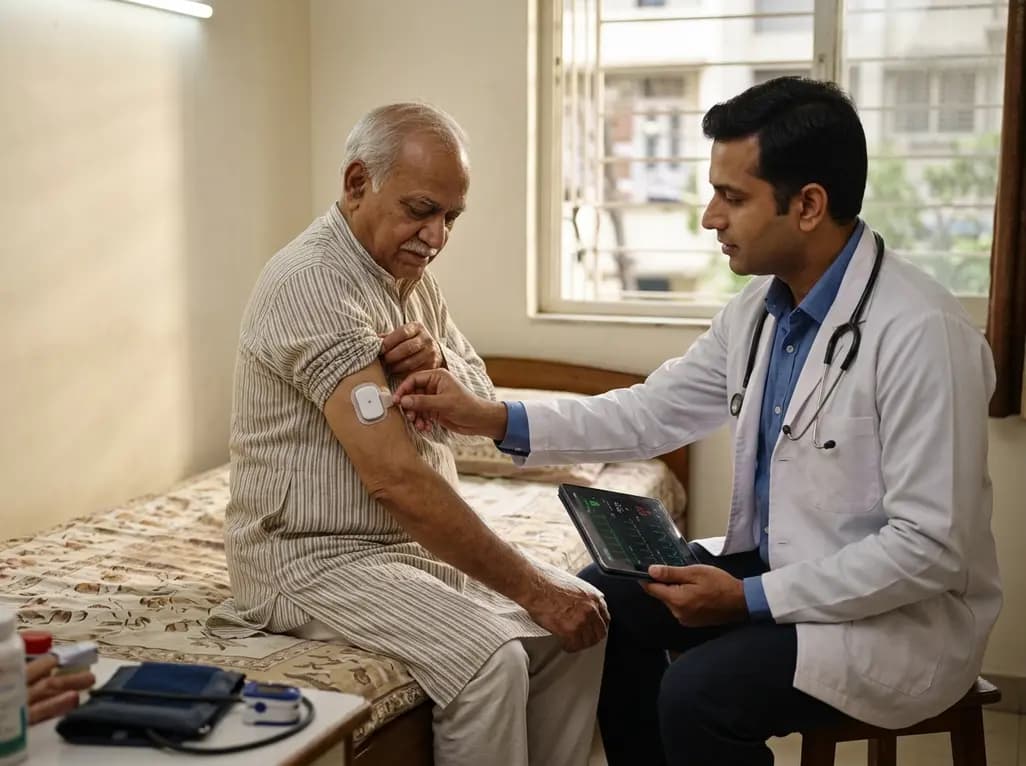
A feasibility study evaluates remote vital sign monitoring in acute hospital at home patients. Continuous wearable patches captured heart rate and respiratory rate with high adherence (89% and 75%), significantly exceeding manual spot checks for blood pressure, oxygen saturation, and temperature.
Today

A scoping review evaluates 116 studies on AI in women's reproductive health, finding that 83.6% carry high risk of bias. While ensemble models show promise, disparities and lack of validation hinder LMIC deployment.
Today

Differential oxygenation during peripheral TA-NRP can cause undetected coronary hypoxemia due to arch vessel clamping. A novel circuit with continuous aortic root monitoring detects desaturation early, facilitating left ventricular unloading and preventing allograft dysfunction and unnecessary heart discard.
Today

A longitudinal study reveals that patients undergoing staged bilateral hip arthroscopy experience progressive contralateral labral deterioration during surgical intervals. However, structural degradation does not compromise 2-year postoperative clinical outcomes or patient-reported satisfaction scores.
Today

A post hoc analysis of the PARM-T2D study shows pemafibrate exerts baseline-dependent effects on LDL-C and particle size in type 2 diabetes and hypertriglyceridemia. It lowers triglycerides and remnants while favorably remodeling atherogenic LDL particles based on initial lipid control status.
Today
