.webp&w=384&q=75)

Loading, please wait...
Loading, please wait...
Perinatal depression affects up to fifteen percent of pregnant women, posing significant emotional and physiological challenges during pregnancy and the postpartum period. Clinical evidence increasingly links maternal mental health conditions to altered neurodevelopmental trajectories in children. Recent genomic investigations explore how perinatal depression autism risk may be mediated through epigenetic alterations and non-coding genetic elements. Among these candidates, Human Endogenous Retroviruses have emerged as pivotal molecular mediators linking maternal psychological distress, immune activation, and child neurodevelopment. Human Endogenous Retroviruses represent ancient viral sequences integrated into the genome, comprising roughly eight percent of human DNA. While typically dormant, these retroviral elements reactivate during periods of maternal immune disturbance or severe psychological stress.
When activated, endogenous retroviruses regulate gene expression, alter neuroinflammatory signaling, and modify cellular differentiation. Maternal mood disorders create a systemic environment that triggers epigenetic remodeling across peripheral immune cells. Consequently, clinicians must evaluate maternal psychiatric history not merely as a psychological factor, but as a biological modifier of fetal development. Understanding these transcriptional changes provides insights into how maternal perinatal depression influences embryonic neurodevelopment.
To investigate the biological mechanisms underlying maternal-fetal crosstalk, researchers evaluated transcript levels of retroviral elements and inflammatory cytokines. Peripheral blood mononuclear cells were isolated from mothers with a documented history of perinatal depression and their children. The research team categorized the pediatric cohort into children diagnosed with Autism Spectrum Disorder and typically developing controls. Quantitative real-time polymerase chain reaction assays revealed distinct expression profiles across study groups. Specifically, clinical cohorts demonstrated marked dysregulation in pHERV-W envelope gene transcripts alongside syncytin-2 expression.
Syncytin-2, encoded by endogenous retroviral genes, plays essential physiological roles in placental morphogenesis and maternal immunotolerance. However, aberrant expression outside normal parameters disrupts neuroimmune balance. Furthermore, elevated expression of Interleukin-6 accompanied retroviral activation in both depressed mothers and children diagnosed with autism. Interleukin-6 serves as a major proinflammatory cytokine capable of disrupting neural circuit assembly. The concurrent elevation of retroviral transcripts and inflammatory cytokines suggests a shared dysregulated pathway operating in mothers with perinatal depression and their neurodivergent children.
A key finding of this pilot study lies in the quantitative relationship between maternal psychiatric symptoms and retroviral activity. Researchers evaluated mothers using the Hamilton Depression Rating Scale at the time of blood sampling. Clinical scores demonstrated a statistically significant positive correlation with pHERV-W expression levels in maternal peripheral blood mononuclear cells. Women displaying higher symptom severity on the Hamilton Depression Rating Scale exhibited proportionally higher levels of pHERV-W retroviral transcripts. This correlation demonstrates that maternal affective disturbance leaves a measurable molecular footprint in peripheral blood cells.
Systemic psychological stress activates the hypothalamic-pituitary-adrenal axis, elevating circulating glucocorticoids and proinflammatory cascades. These biochemical alterations induce chromatin remodeling, enabling retrotransposons and endogenous retroviruses to escape transcriptional silencing. Consequently, maternal depressive episodes trigger a continuous biological response that sustains retroviral transcription long after acute presentation. Measuring retroviral transcript levels might eventually assist clinicians in identifying maternal cohorts exhibiting heightened biological vulnerability, enabling targeted surveillance for their offspring.
The molecular alignment between affected mothers and their offspring highlights the role of shared environmental and epigenetic dynamics. Mothers with a history of perinatal depression and their children with autism spectrum disorder shared identical abnormalities in pHERV-W and syncytin-2 transcript profiles. This molecular overlap suggests that maternal affective disorders alter the biological environment during critical windows of fetal brain development. Maternal systemic inflammation and retroviral activation during pregnancy alter the intrauterine milieu, influencing fetal microglia function and synaptic pruning.
Postnatal factors, shared household environments, and common genetic vulnerabilities further reinforce these biochemical similarities within mother-child dyads. Epigenetic modifications, including DNA methylation, regulate endogenous retroviruses without altering the primary DNA sequence. When maternal perinatal depression destabilizes epigenetic repressor complexes, retroviral elements initiate abnormal transcriptional activity. These transmissible epigenetic changes can affect early childhood neurodevelopment, reinforcing the concept that maternal mental health and pediatric neurodevelopment share deep biological links.
Integrating retroviral transcriptomics into clinical practice represents a potential step forward in maternal-child healthcare. Obstetricians, psychiatrists, and pediatricians historically evaluated perinatal depression and child developmental delays as separate clinical concerns. However, discovering shared retroviral dysregulation necessitates an integrated interdisciplinary approach. Early screening for perinatal depression during prenatal and postnatal visits serves as a critical clinical intervention point. Timely management of maternal mood disorders may mitigate systemic inflammatory cascades, protecting the developing fetal nervous system from pathological retroviral exposure.
Furthermore, identifying elevated pHERV-W or Interleukin-6 levels in mothers could serve as a biomarker for pediatric developmental monitoring. Children born to mothers with a history of severe perinatal depression might benefit from early neurodevelopmental screenings. Early identification of developmental delays permits timely behavioral therapies during periods of maximal neural plasticity. Ultimately, recognizing retroviral activity as a biological modifier encourages clinicians to adopt comprehensive risk stratifications combining maternal mental health, inflammatory profiles, and pediatric neurodevelopmental monitoring.
While these findings offer promising mechanistic insights, researchers emphasize that current pilot results require validation through larger prospective cohort studies. Prospective studies following pregnant women from early gestation through late childhood will clarify whether retroviral reactivation precedes or follows depressive episodes. Additionally, detailed epigenetic profiling will determine whether retroviral expression in maternal blood directly mirrors cellular activity at the placental interface and within embryonic brain tissue.
Investigating therapeutic interventions aimed at stabilizing retroviral silencing represents another crucial frontier in medical research. Pharmacological and psychotherapeutic interventions that successfully alleviate maternal depression might also restore physiological epigenetic repression of human endogenous retroviruses. Consequently, future research must explore whether effective maternal depression management reduces pediatric neurodevelopmental risk markers. Unraveling these complex molecular interactions will ultimately refine risk prediction, optimize maternal mental health management, and improve pediatric neurodevelopmental outcomes worldwide.
Human Endogenous Retroviruses are ancient viral genetic elements integrated into human DNA. Although typically silenced by epigenetic mechanisms, psychological stress or immune activation can reactivate these retroviruses. Once expressed, retroviral proteins induce neuroinflammation, disrupt cell signaling, and modify cellular differentiation, thereby disturbing neurodevelopmental processes in the growing embryo and child.
Clinical evaluations using the Hamilton Depression Rating Scale demonstrate a direct positive correlation between maternal depression severity and elevated pHERV-W retroviral expression. Perinatal depression activates systemic inflammatory and hormonal pathways, destabilizing epigenetic repression. This allows endogenous retroviruses to increase transcription in peripheral immune cells, serving as a biological marker of maternal illness.
Identifying shared retroviral dysregulation, such as elevated pHERV-W, syncytin-2, and Interleukin-6 in mothers and children, offers potential early biomarkers. While not independently diagnostic, monitoring these biomarkers alongside maternal psychiatric history helps clinicians stratify risk. This enables early neurodevelopmental surveillance and timely therapeutic intervention for children at higher risk for autism spectrum disorder.
Disclaimer: This content is for informational and educational purposes only... Refer to the latest local and national guidelines for clinical practice.
References

Read summarized clinical updates, watch expert medical content, and earn CME certifications right from your smartphone.
Open your smartphone camera to scan and install.





A pilot study reveals that mothers with perinatal depression and their children with autism spectrum disorder share abnormal expression of retroviral elements pHERV-W and syncytin-2, alongside IL-6. Maternal depression severity positively correlates with pHERV-W levels, indicating a shared molecular pathway.
Today
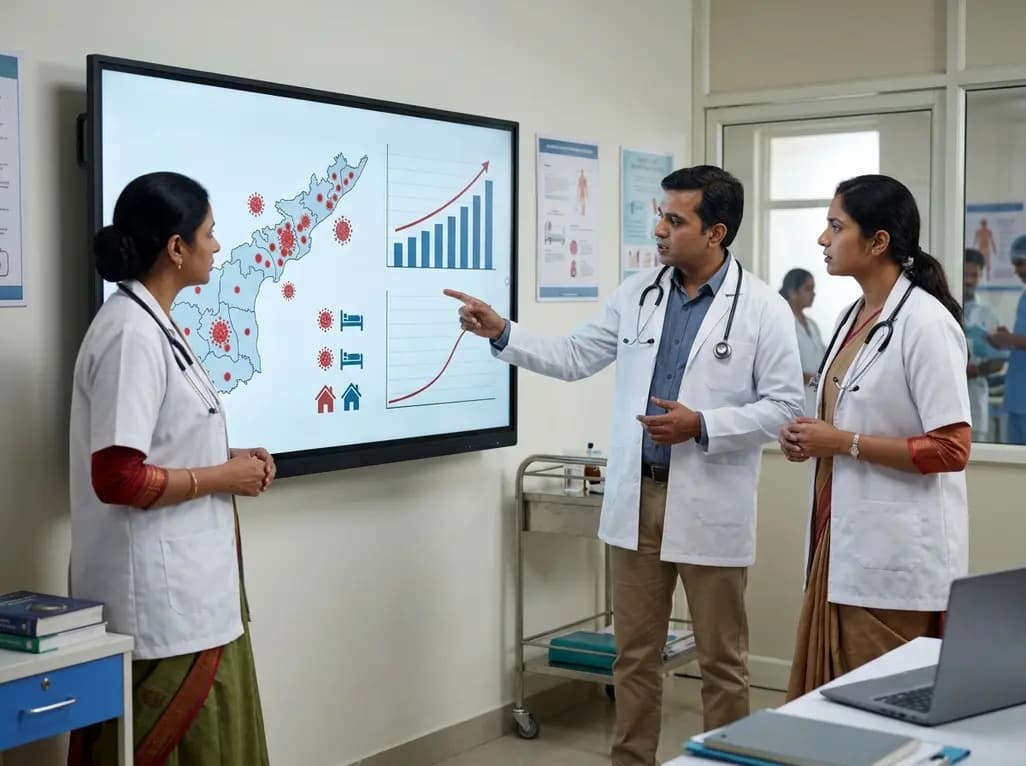
Andhra Pradesh reported 10 new Covid-19 cases, taking the state tally to 49 while deaths remain at four. With 24 patients hospitalized and 16 under home isolation, the Health Department has intensified monitoring. Medical professionals should review regional distribution, diagnostic protocols, and management plans.
Today

An 11-year Swedish registry study of 618 uterine sarcoma patients found that minimally invasive surgery yielded survival comparable to open surgery in early stages. However, adjuvant chemotherapy conferred no survival benefit in localized or advanced disease, highlighting stage and histology as key outcomes.
3 days back

A cross-sectional study evaluates post-intensive care syndrome in cardiac patients 2-4 weeks post-ICU discharge, highlighting cognitive, psychological, and functional impairments and the need for structured multidisciplinary rehabilitation.
3 days back

Anterior cruciate ligament reconstruction failure lacks uniform definition. A narrative review proposes an integrative framework incorporating objective and subjective instability, persistent pain, restricted motion, graft rupture, and secondary meniscal injury to standardize clinical reporting.
3 days back
With World Obesity Atlas data warning that over 41 million Indian children are overweight or obese, ICMR and NIN have unveiled a 10-point policy roadmap. The initiative calls for mandatory front-of-pack labeling, HFSS taxes, strict marketing bans, and healthier school environments to curb non-communicable diseases.
Today
