.webp&w=384&q=75)

Loading, please wait...
Loading, please wait...
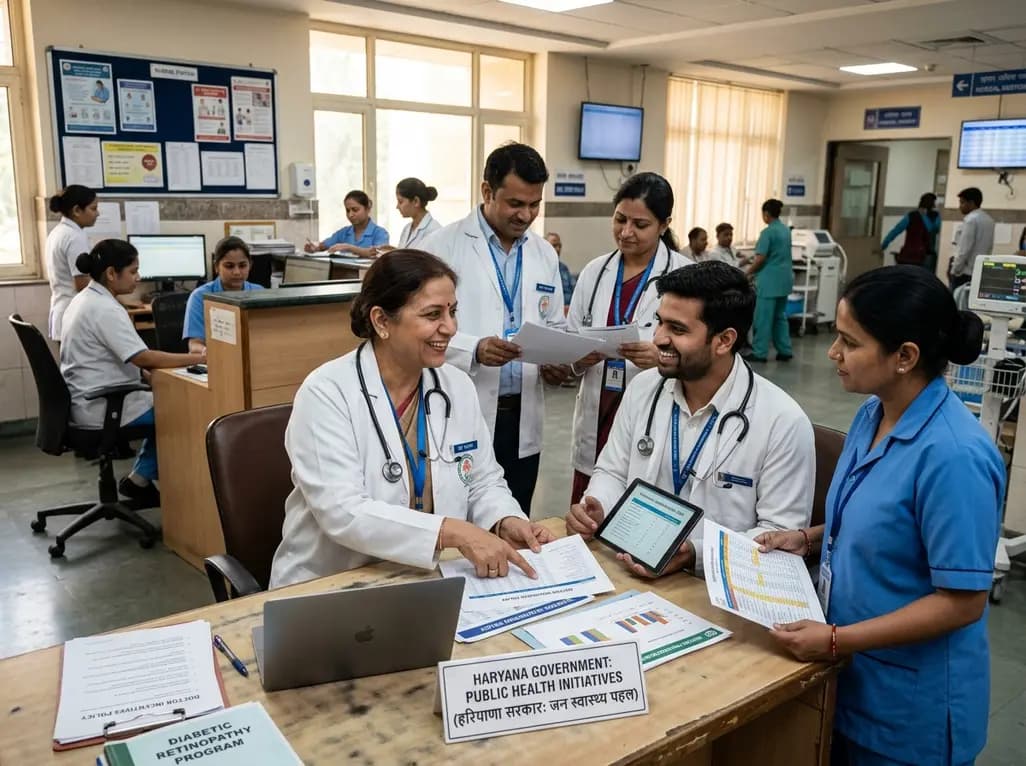
The Haryana state government has announced a comprehensive structural overhaul of its public healthcare system to enhance clinical efficiency. Chief Minister Nayab Singh Saini confirmed that doctors and auxiliary healthcare workers will soon receive performance-based incentives linked directly to facility footfall. Consequently, public facilities will actively maximize utilization under the Ayushman Bharat and Chirayu schemes. Furthermore, this health system modernization introduces specialized clinical services, flexible specialist engagement models, and strict digital monitoring. Ultimately, the progressive initiative aims to deliver universal, high-quality medical care to underprivileged communities across Haryana.
Under this forward-thinking framework, government hospitals will redirect institutional revenue generated from Ayushman Bharat and Chirayu packages. Specifically, administrative authorities will allocate these operational funds directly to staff rewards, facility upgrades, and sanitation improvements. Clinicians, nursing officers, support personnel, and Ayushman Mitras will receive monetary benefits when their centers achieve higher patient registrations. Therefore, the policy aligns health worker motivation with measurable public clinical volume. In addition, hospitals recording below-average insurance claims will undergo targeted administrative reviews to identify clinical bottlenecks. Chief Minister's Good Governance Associates will actively evaluate institutional workflows to optimize service delivery. As a result, primary care providers and district clinicians gain a direct stake in community health outreach. Moreover, encouraging vulnerable beneficiaries to choose public secondary centers prevents unnecessary out-of-pocket spending in private settings. State leaders believe this performance-linked structure will elevate institutional productivity across rural and urban institutions alike. Furthermore, hospital administrations will maintain full operational flexibility when utilizing these internal funds. Consequently, health teams can resolve immediate infrastructure deficits without enduring prolonged bureaucratic delays. Ultimately, rewarding higher patient throughput transforms administrative efficiency into superior patient care standards throughout Haryana.
Chronic microvascular complications of diabetes pose a severe threat to vision across aging rural and urban populations. Notably, diabetic retinopathy remains one of the leading causes of preventable adult blindness in India. To combat this growing burden, the Haryana government has made advanced retinopathy therapies entirely free within state hospitals. Officials will integrate comprehensive vitreoretinal management, including high-cost intravitreal anti-VEGF injections, into standard government insurance packages. Consequently, underprivileged diabetic patients will no longer face financial ruin when seeking sight-saving eye interventions. Furthermore, public health facilities will expand their empanelled ophthalmology treatment packages under Ayushman Bharat. Eye specialists in civil hospitals can now prescribe and administer essential retinal pharmacotherapies without logistical hurdles. Therefore, early screening initiatives at peripheral wellness centers can refer diagnosed patients directly for definitive therapeutic injections. Additionally, integrating specialized retinal treatments within public hospitals reduces referral delays and prevents irreversible visual impairment. Clinicians emphasize that timely intravitreal therapy halts macular edema and stabilizes visual acuity effectively. Moreover, state medical colleges and district hospitals will upgrade specialized retinal diagnostic tools to ensure accurate staging before intervention. Hence, this policy shift democratizes advanced tertiary ophthalmology care for economically marginalized citizens across every district.
Severe specialist deficits have historically impaired clinical service delivery within secondary public healthcare centers across northern India. To address persistent clinical shortages, the state health department will immediately recruit full-time cardiologists, general physicians, and diagnostic radiologists. However, conventional bureaucratic hiring channels often struggle to attract skilled clinical practitioners to peripheral health facilities. Therefore, the administration has authorized an innovative open recruitment model alongside standard civil service pathways. Under this arrangement, senior medical specialists can contract their clinical services at locations and durations of their own choice. Furthermore, the health department will actively re-engage retired radiologists identified through National Medical Commission registries. Authorities have relaxed rigid age limits to facilitate the rapid onboarding of these veteran clinical imaging experts. Consequently, district civil hospitals can eliminate prolonged diagnostic backlogs for ultrasonography, computed tomography, and plain radiography. Additionally, locating retired practitioners close to their primary residences ensures high retention rates and predictable staffing schedules. Thus, this pragmatic human resource strategy strengthens diagnostic accuracy while reducing reliance on distant tertiary medical institutions. Indeed, empowering specialized doctors through flexible scheduling bridges the urban-rural healthcare divide with remarkable administrative efficiency. Moreover, clinical administrators will periodically assess diagnostic workflow efficiency to maintain high imaging quality standards.
Surgical capacity in sub-divisional hospitals frequently suffers due to a marked shortage of qualified operating room surgeons. To overcome this systemic bottleneck, Haryana is launching a hybrid public-private partnership framework for major elective surgeries. Specifically, specialist surgeons from private corporate hospitals or independent private practices may now operate within government medical theaters. Under this collaborative model, the state will compensate visiting surgical specialists on a clear per-day or per-procedure basis. Consequently, district civil hospitals can utilize idle operating infrastructure without incurring recurring permanent salary liabilities. Moreover, underprivileged patients can access complex surgical expertise locally without traveling to distant private nursing homes. This collaborative arrangement also encourages cross-learning between visiting surgical consultants and resident government medical officers. Meanwhile, hospital administrators can optimize theatre schedules and expand comprehensive surgical packages covered under public insurance schemes. Furthermore, strict institutional credentialing ensures that visiting surgeons maintain rigorous clinical standards and post-operative monitoring protocols. Additionally, local anesthetic teams will coordinate closely with visiting surgeons to guarantee comprehensive perioperative safety. Therefore, partnering with private practitioners bridges acute surgical voids and rapidly expands elective procedural volumes. Ultimately, this inclusive operational strategy broadens patient access to specialized surgical interventions across rural Haryana.
Effective health administration requires robust digital transparency and reliable access to essential pharmacological treatments. Accordingly, Haryana has mandated a unified online platform connecting all district hospitals, sub-divisional facilities, and peripheral health centers. This integrated portal will digitally record the complete patient journey in real time, from initial registration to medicine dispensing. Consequently, supervising authorities can monitor clinical caseloads, diagnostic test turnaround times, and prescription patterns seamlessly across all facilities. In addition, the state government has established a firm November 1 deadline to launch Amrit Pharmacies statewide. These dedicated pharmacy outlets provide essential medicines, cardiovascular implants, and oncology consumables at heavily subsidized retail prices. Therefore, indigent patients undergoing complex treatments will avoid catastrophic out-of-pocket costs for critical post-operative prescriptions. Furthermore, real-time digital inventory tracking prevents drug stockouts and curbs unauthorized external drug prescribing. Notably, regular digital audits will also discourage clinicians from prescribing external medications without proper medical justification. District Chief Medical Officers will actively review pharmaceutical availability on the central portal to maintain unbroken supply chains. Additionally, local health authorities will install dedicated digital help desks to support patients navigating the digital registration system. In conclusion, combining full digital health integration with affordable Amrit outlets establishes an accountable, transparent healthcare delivery model.
Q1: How will performance-based incentives be funded and distributed among hospital staff?
The state government will utilize operational funds collected under the Ayushman Bharat and Chirayu health schemes. Specifically, these resources will support monetary incentives for doctors, nursing personnel, and Ayushman Mitras at busy centers. Consequently, staff members will receive extra compensation when their hospitals achieve higher patient footfall. Furthermore, hospitals will channel remaining scheme proceeds into modern facility upgrades, equipment repairs, and essential hospital sanitation.
Q2: What clinical provisions are introduced for diabetic retinopathy under the state scheme?
Diabetic retinopathy care is now completely free for eligible beneficiaries in all government hospitals across Haryana. The state health department has added specialized vitreoretinal treatments, including therapeutic intravitreal injections, directly into government healthcare packages. Therefore, ophthalmologists can administer essential anti-VEGF therapies without imposing financial burdens on indigent patients. Furthermore, this proactive inclusion ensures early clinical intervention for proliferative disease. Consequently, prompt medical treatment halts macular edema and prevents irreversible blindness statewide.
Q3: How does the new recruitment mechanism utilize private specialists and retired radiologists?
The state has introduced an open recruitment model allowing specialist physicians to choose their work locations and tenure. Additionally, private surgeons may perform elective procedures in public operating theaters on a per-case or daily stipend basis. Furthermore, the health department will re-hire retired radiologists using National Medical Commission records with relaxed age limits. As a result, civil hospitals will rapidly eliminate severe diagnostic imaging shortages and resolve prolonged surgical backlogs.
Disclaimer: This content is for informational and educational purposes only. It does not constitute medical advice or replace professional judgment. Refer to the latest local and national guidelines for clinical practice.
References

Read summarized clinical updates, watch expert medical content, and earn CME certifications right from your smartphone.
Open your smartphone camera to scan and install.





Haryana Chief Minister Nayab Singh Saini has rolled out landmark performance-linked financial incentives for public sector clinicians and allied staff. The comprehensive reform introduces free intravitreal diabetic retinopathy management, flexible empanelment for private specialists, and digital infrastructure upgrades.
Today

A Global Burden of Disease 2021 analysis reveals an increasing incidence of NASH-associated hepatocellular carcinoma worldwide, particularly in high-SDI nations. As population aging and metabolic risks accelerate, clinicians must implement structured screening and early intervention protocols to curb liver mortality.
Today
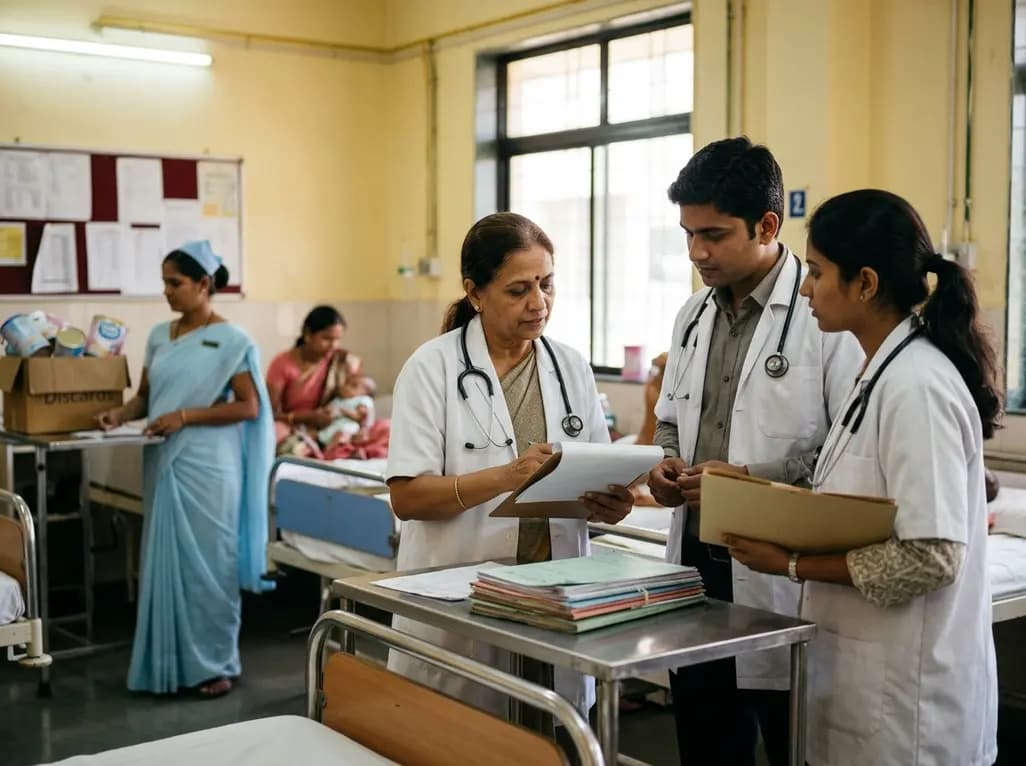
The Maharashtra Food and Drug Administration has enforced stringent compliance orders under food safety laws. The directive prohibits commercial promotions, infant formula samples, gifts, and clinician sponsorships while mandating explicit breastfeeding notices and rapid adverse event reporting across healthcare facilities.
Today
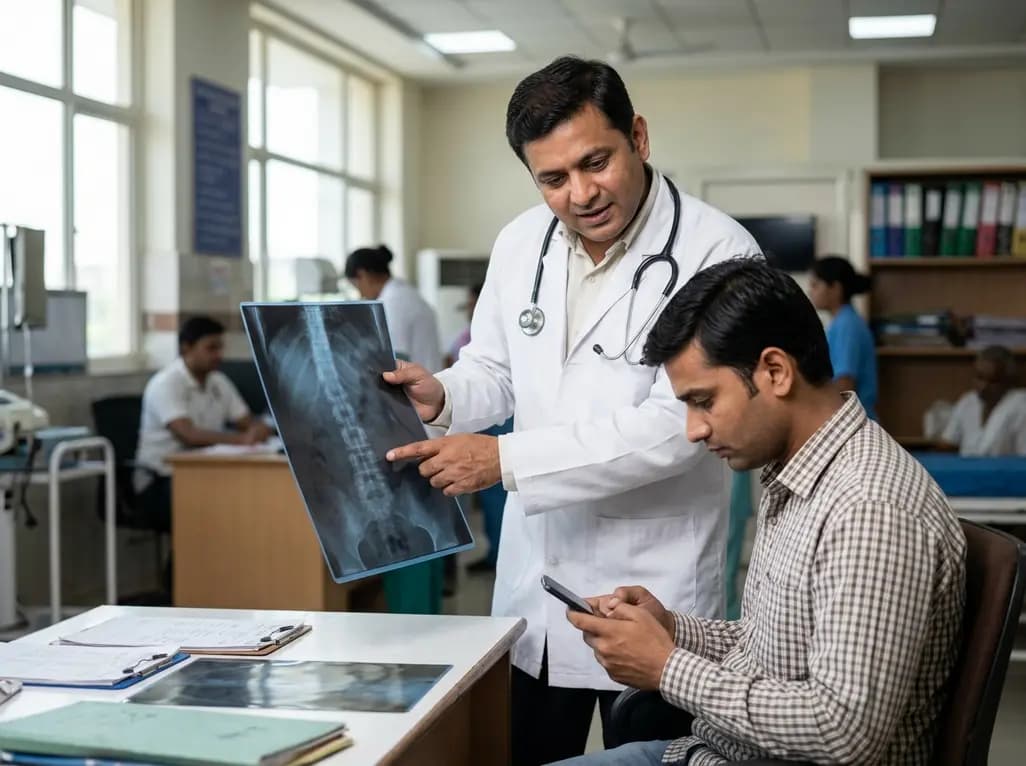
A cross-sectional study reveals a strong positive correlation between problematic internet use and kinesiophobia in adults aged 18-45 with non-specific low back pain, highlighting how digital overuse reinforces movement fear and complicates musculoskeletal recovery.
Today
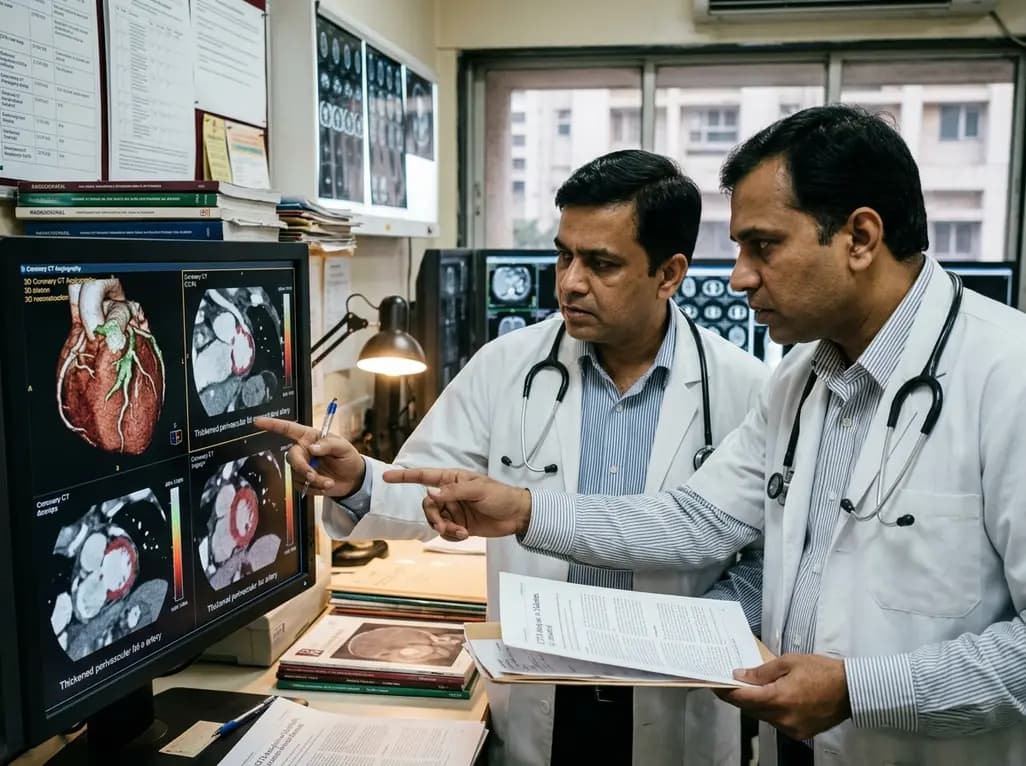
A recent coronary CT angiography study demonstrates that diabetic patients exhibit accelerated plaque burden, impaired CT-FFR, and elevated perivascular fat attenuation index values, reflecting heightened vascular inflammation that worsens across adverse metabolic phenotypes.
Today
