.webp&w=384&q=75)

Loading, please wait...
Loading, please wait...
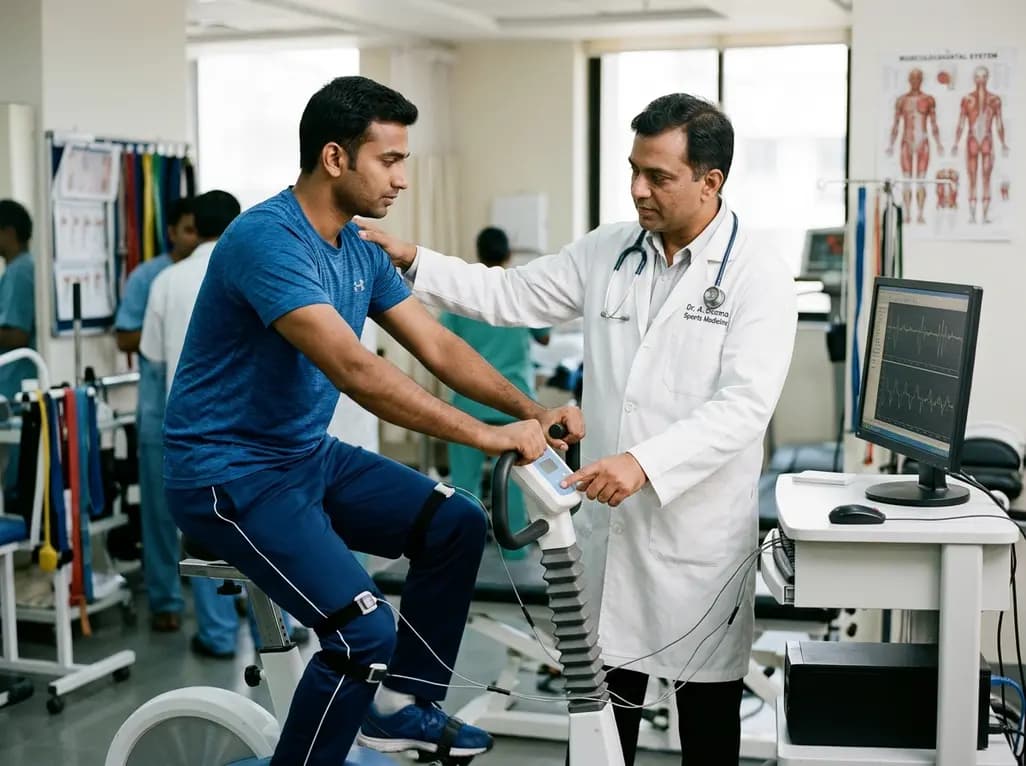
Cycling is rapidly expanding across the globe as both an athletic discipline and a primary mode of active transportation. However, safely maneuvering a bicycle through unpredictable urban and rural environments requires sophisticated neuromuscular coordination and spatial awareness. While sports scientists historically prioritized aerobic capacity, muscular power, and pedal mechanics, modern research emphasizes the central role of sensory-action integration. Mastering perceptual motor skills cycling dynamics protects riders against sudden surface irregularities, vehicular conflicts, and traumatic musculoskeletal crashes. Consequently, understanding how cyclists coordinate sensory input with immediate motor action has become crucial for sports physicians, orthopedic surgeons, and rehabilitation therapists. This article synthesizes contemporary scientific evidence regarding perceptual-motor processes in cycling, outlining how constraint interactions dictate rider adaptability, athletic performance, and long-term injury prevention.
To evaluate cycling performance accurately, dynamical systems theory conceptualizes human motion as an emergent phenomenon governed by multi-frequency constraints. In sports science, traditional paradigms often treated cycling as a fixed, repetitive movement pattern dominated by sagittal-plane joint kinematics. However, real-world cycle navigation demands continuous coupling between active sensory perception and adaptive motor control. In a recent scoping review, researchers systematically screened 4,566 publications from the Web of Science database. Ultimately, they identified 30 eligible peer-reviewed articles encompassing 56 experimental protocols exploring cycling control. The synthesis demonstrated that bicycle handling relies fundamentally on affordances, which represent the functional action opportunities offered by the surrounding terrain. Moreover, cyclists do not execute isolated, pre-programmed movement scripts stored within cortical memory. Instead, motor coordination emerges spontaneously from ongoing visual flow, vestibular input, and proprioceptive tension adjustments. For instance, maintaining lateral stability during abrupt turns requires uninterrupted gaze tracking and instantaneous steering corrections. Therefore, mastering perceptual motor skills cycling proficiency requires continuous attunement to environmental cues rather than mechanical muscle rigidity.
Environmental conditions exert an immediate, profound influence on cycling biomechanics and steering stability. The scoping review identified that 28 of the 56 reviewed experiments specifically investigated environmental constraints, analyzing optical flow, road curvature, path width, and surface friction. In bustling traffic environments, excessive visual clutter frequently overloads sensory processing pathways, particularly among novice commuters or fatigued athletes. Consequently, degraded ambient illumination or severe weather diminishes the cyclist's capacity to identify dangerous obstacles in a timely manner. Furthermore, empirical findings demonstrate that constrained lane widths restrict steering variability, compelling riders to anchor their gaze closer to the front wheel. This restricted visual search pattern diminishes anticipatory gaze fixations, reducing peripheral hazard awareness and elevating collision risks. In contrast, elite cyclists display expansive visual scanning, actively fixating on the apex of approaching turns while monitoring peripheral hazards. Additionally, compromised pavement surfaces alter handlebar grip vibrations, necessitating instantaneous neuromotor recalibrations to preserve balance. Thus, sports medicine practitioners must recognize that environmental degradation severely taxes central processing resources, heightening trauma susceptibility during adverse road conditions.
Task constraints comprise the explicit objectives, operational rules, and mechanical equipment settings that structure physical performance. Among the analyzed studies, 16 distinct experimental protocols evaluated task manipulations, including target velocities, cadence targets, and complex steering maneuvers. Interestingly, navigating bicycles at exceptionally low speeds demands substantially greater steering corrections than cruising at moderate velocities. At low velocities, the bicycle loses passive gyroscopic stability, compelling the central nervous system to generate active corrective torques through the handlebars and pelvis. Conversely, high-speed cornering requires precise deceleration timing and predictive trajectory adjustments to overcome centrifugal forces. Furthermore, dual-task conditions—such as managing traffic while attending to navigation prompts—drastically disrupt motor performance. Laboratory investigations demonstrate that divided cognitive attention elevates lateral lane deviations and delays critical braking reactions. In addition, bike geometry, including handlebar drop and saddle height, alters spinal kinematics and head positioning. When cyclists adopt extremely aggressive aerodynamic postures, their upward visual field becomes substantially restricted. As a consequence, physical discomfort and neck fatigue impair vestibular orientation, limiting reactive steering capabilities during acute hazards.
Individual constraints represent the anatomical, psychological, and physiological attributes unique to each cyclist. Within the synthesized evidence, 12 experiments examined individual factors, evaluating chronological age, athletic expertise, physical fatigue, and sensory impairments. For example, pediatric cyclists demonstrate immature visual search strategies and delayed motor responses, placing them at heightened vulnerability during traffic navigation. Conversely, elderly individuals often encounter age-related reductions in vestibular hair cell density, peripheral visual acuity, and muscle spindle sensitivity. Consequently, older adults exhibit compromised postural adaptability when negotiating sudden surface bumps, predisposing them to devastating falls. Furthermore, physical exhaustion severely impairs perceptual acuity during prolonged endurance events. Central fatigue blunts spatial awareness, decreasing the cyclist's ability to detect moving roadway hazards. Psychological factors also dictate motor outcomes; elevated anxiety and fear of falling promote excessive muscular cocontraction, inducing rigid, maladaptive bike handling. Therefore, clinicians evaluating injured cyclists must examine these intrinsic constraints comprehensively. Muscular strength assessments alone cannot confirm safe road readiness. Instead, medical professionals must evaluate functional reaction times, dynamic equilibrium, and perceptual vigilance before clearing patients for independent cycling.
These scientific insights hold vital practical implications for sports physicians, orthopedic surgeons, and physical therapy specialists. Historically, rehabilitation programs following clavicle fractures, ligamentous knee reconstructions, or spine trauma focused primarily on isolated joint mobility and localized muscular hypertrophy. However, restoring isolated muscle strength fails to re-establish dynamic perception-action coupling under real-world cycling conditions. To optimize recovery outcomes, clinicians should integrate progressive perceptual-motor exercises into rehabilitation protocols. For instance, incorporating unexpected balance perturbations, obstacle avoidance drills, and visual tracking tasks during cycling simulation challenges the nervous system functionally. Furthermore, introducing dual-task cognitive demands during indoor ergometer sessions retrains divided attention under aerobic strain. For concussed athletes, assessing visual-vestibular integration and dynamic gaze stability is essential before authorizing full sports participation. Premature clearance without addressing subtle perceptual deficits dramatically increases recurrent collision risk. Additionally, sports medicine professionals must educate competitive and commuter cyclists regarding fatigue management and adequate nutrition to preserve neuromotor vigilance. By evolving rehabilitation beyond conventional biomechanics toward dynamic sensory-motor retraining, clinicians ensure safer athletic recovery and sustainable injury prevention.
Aging naturally reduces peripheral visual acuity, vestibular processing speed, and proprioceptive reflex sensitivity. Consequently, elderly cyclists experience delayed neural processing times and restricted gaze patterns during dynamic road conditions. When facing sudden surface hazards or approaching vehicles, their nervous system struggles to generate timely counter-steering corrections. Therefore, these subtle sensory-motor deficits compromise lateral stability, significantly heightening catastrophic fall risks and severe orthopedic trauma among geriatric riders.
Yes, targeted perceptual-motor exercises accelerate functional recovery following severe orthopedic trauma. While traditional physical therapy successfully restores muscular bulk and range of motion, dynamic drills retrain the central nervous system to coordinate reactive actions. Incorporating reactive steering challenges, surface perturbations, and split-attention tasks rebuilds proprioceptive acuity and dynamic balance. Consequently, this holistic neuromuscular approach restores functional movement confidence, minimizing compensatory biomechanical errors and future reinjury risks.
Urban road infrastructure fundamentally shapes the environmental affordances and visual information that cyclists navigate daily. If bike lanes feature unexpected sightline occlusions, complex intersections, or poor surface maintenance, riders experience severe cognitive overload and delayed hazard detection. By integrating perceptual-action principles, civil planners create intuitive visual sightlines, predictable lane geometries, and high-contrast pavement markings. Consequently, these structural improvements facilitate smooth steering adjustments, drastically reducing traumatic cycling collisions.
Disclaimer: This content is for informational and educational purposes only. It is not intended as medical advice, diagnosis, or treatment. Always seek the advice of your physician or other qualified health provider with any questions you may have regarding a medical condition. Refer to the latest local and national guidelines for clinical practice.
References

Read summarized clinical updates, watch expert medical content, and earn CME certifications right from your smartphone.
Open your smartphone camera to scan and install.





A recent scoping review examines how perceptual-motor coordination, environmental variables, and task constraints govern cycling control. Discover how these insights inform sports medicine rehabilitation, injury prevention, and cycling safety.
Today

Left bundle branch pacing is an emerging physiological resynchronization strategy for heart failure. While observational data and some trials show benefits over biventricular pacing, divergent trial outcomes highlight the importance of confirmed conduction capture and specialized operator technique.
Today

A retrospective study of 86,012 pregnancies demonstrates that size-selective cfDNA enrichment boosts mean fetal fraction to 18.88% and achieves a 59.20% PPV for fetal copy number variants. However, 85.83% of CNVs showed size discrepancies, underscoring the mandatory role of confirmatory microarray testing.
Today
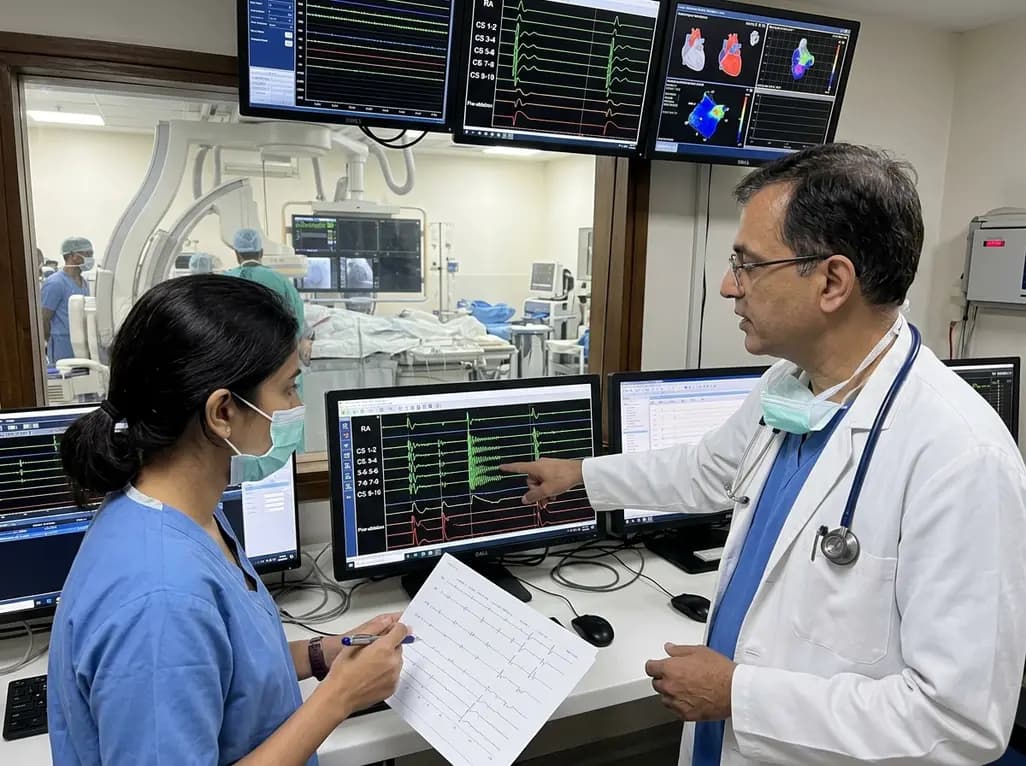
Radiofrequency catheter ablation of the cavotricuspid isthmus successfully terminates typical atrial flutter. This article reviews the mechanisms driving coronary sinus electrogram changes, wavefront activation pathways, and clinical criteria to verify bidirectional block during electrophysiology studies.
Today

A recent investigation examined load-dependent kinetic and kinematic profiles during two-way ballistic exercise across 30% to 80% 1-RM. Findings highlight load effects on velocity, impulse, and power, offering sports physicians objective guidance for neuromuscular conditioning and rehabilitation.
Today

A cross-sectional study demonstrates that increased BMI in adolescents significantly enhances mandibular length and alters salivary adipokines like adiponectin and resistin, providing novel insights into craniofacial growth and orthodontic planning.
Today
