

Loading, please wait...
Loading, please wait...

Medical education presents rigorous academic demands that can sometimes overwhelm learners during their preclinical and clinical training. Consequently, medical educators continuously seek effective strategies to assist struggling learners. Implementing structured medical student remediation is essential for salvaging academic trajectories and reducing attrition rates. The recent study on the SUPPORT programme, which stands for Strategic Use of Peer-to-Peer for Organised Remediation Tutoring, provides compelling evidence on this issue. Researchers investigated examination outcomes and learner experiences among undergraduate students who had faced substantial academic delay of one to two years. Medical training environments often generate intense psychological pressure, particularly when students fall behind their original cohort. Therefore, formal remediation frameworks must address both knowledge deficits and emotional burdens. This retrospective cohort study highlights how senior or advanced peers can successfully bridge educational divides. Ultimately, the findings offer valuable guidance for medical colleges worldwide seeking sustainable and culturally supportive models for academic recovery.
Undergraduate medical students face intense intellectual and emotional demands throughout their training. When students experience recurrent exam failures or course extensions, they often suffer from severe distress and isolation. In many institutions, traditional faculty-led remediation remains scarce due to heavy clinical and teaching workloads. Moreover, hierarchical barriers between professors and struggling students can hinder candid conversations about learning challenges. Consequently, delayed students may withdraw socially, which further worsens their academic performance. Structured medical student remediation programs aim to counter this detrimental spiral. By introducing accessible support mechanisms, institutions can prevent prolonged course extensions and subsequent career abandonment. In India and across global health systems, regulatory bodies increasingly highlight remediation within competency-based medical curricula. Faculty members must therefore explore agile, learner-centered interventions that fit within institutional constraints. Peer-assisted frameworks offer an attractive pathway because they leverage near-peer teachers who recently traversed the same examinations. Thus, establishing organized remediation protects both institutional resources and individual student careers.
The SUPPORT study utilized a retrospective cohort design to evaluate an organized peer-to-peer tutoring intervention. Researchers identified 69 eligible medical students who had accumulated one to two years of academic delay. All eligible candidates were offered voluntary participation, resulting in 39 participants and 30 non-participants. After one academic quarter, investigators assessed standardized examination pass rates between the two cohorts. The analysis revealed that participants achieved a 51.3% pass rate compared to only 26.7% in the non-participant group. Furthermore, statistical analysis demonstrated a relative risk of 1.92 with a significant p-value of 0.040. These empirical findings indicate that structured peer instruction nearly doubled the probability of passing subsequent examinations. In addition, the voluntary nature of the program demonstrated genuine student interest in peer-led study cohorts. However, the study also highlights that nearly half of the participants still struggled to clear their assessments. Therefore, while peer tutoring provides substantial academic momentum, complex learning challenges require multifaceted longitudinal support across consecutive terms.
Beyond quantitative examination metrics, the qualitative survey revealed crucial psychological and interpersonal insights from 23 participants. Thematic analysis identified four central themes: perceived educational effectiveness, psychological safety, implementation timing, and logistical organisation. Traditional remediation often triggers feelings of stigma, inadequacy, and embarrassment before senior clinical faculty. Conversely, peer tutors foster an egalitarian environment where struggling learners feel comfortable revealing conceptual deficiencies. Because near-peers recently conquered identical academic milestones, they deliver cognitive congruence and practical study strategies. Moreover, participants reported renewed academic motivation and decreased emotional isolation during group revision. This shared experience transformed a demoralizing setback into a collaborative educational journey. Consequently, peer tutoring normalizes academic difficulty and builds resilient coping mechanisms. In high-pressure medical environments, psychological safety is not merely an emotional luxury; it directly enhances cognitive retention and clinical reasoning. Thus, peer-led remediation succeeds largely because it alleviates the crippling anxiety that accompanies academic probation.
Although the SUPPORT model showed remarkable success, qualitative participant feedback underscored notable organizational challenges. Several participants emphasized that remediation began too late in their academic trajectories. They strongly advocated for earlier identification systems to catch academic decline before multi-year delays accumulate. Furthermore, organizing tutoring schedules around demanding clinical rotations required considerable administrative coordination. Peer tutors also require structured preparation in pedagogical techniques, assessment literacy, and empathetic communication. Without adequate faculty oversight, peer sessions risk drifting into informal social exchanges rather than focused revision. Additionally, institutions must ensure adequate physical space and digital study resources for small-group collaboration. Rewarding peer tutors through academic credits or formal teaching certifications also remains essential for sustaining engagement. Therefore, medical schools must integrate peer tutoring into official administrative schedules rather than treating it as an extracurricular afterthought. When colleges systematically support these logistics, peer remediation flourishes sustainably.
Modern healthcare education emphasizes competency-based progression, ensuring every graduate meets rigorous safety standards. Medical councils globally, including the National Medical Commission in India, mandate structured remediation for underperforming learners. However, implementing personalized faculty mentoring for every delayed student places tremendous strain on departmental resources. Integrating near-peer tutoring into national curricula presents an efficient, cost-effective solution. Advanced students consolidate their own clinical knowledge while teaching juniors, generating bidirectional educational value. Meanwhile, struggling students receive targeted formative feedback in small, interactive sessions. To maximize clinical relevance, peer tutoring should incorporate case-based discussions, clinical vignettes, and structured oral questioning. Faculty mentors should remain involved by designing learning objectives and reviewing tutor performance. Consequently, peer tutoring complements rather than replaces faculty expertise. By embedding peer-assisted learning within foundational remediation guidelines, medical institutions can establish supportive learning environments that leave no aspiring clinician behind.
Peer tutoring improves remediation outcomes by combining cognitive congruence with non-threatening communication. Near-peer tutors recently mastered the same syllabus and examinations, enabling them to explain intricate clinical concepts using relatable frameworks. Additionally, learning from peers reduces performance anxiety and creates psychological safety. This collaborative atmosphere encourages struggling students to clarify foundational doubts, thereby doubling examination pass rates compared to unassisted self-study.
Psychological safety is essential because academic failure often induces profound shame, imposter syndrome, and isolation among medical students. When students fear faculty criticism, they frequently hide persistent knowledge gaps instead of seeking help. Peer-led tutoring eliminates hierarchical barriers, providing an empathetic environment where learners freely discuss their academic vulnerabilities. Consequently, reduced emotional distress enhances memory consolidation, diagnostic reasoning, and sustained motivation during intensive revision periods.
Medical colleges can identify struggling learners earlier by instituting frequent, low-stakes formative assessments and continuous attendance tracking. Academic mentoring committees should monitor early warning markers, such as failing continuous internal assessments or missing clinical rotations. Once faculty detect these signals, they can immediately refer students to organized peer tutoring networks, preventing minor academic setbacks from developing into prolonged study delays.
Disclaimer: This content is for informational and educational purposes only... Refer to the latest local and national guidelines for clinical practice.
References

Read summarized clinical updates, watch expert medical content, and earn CME certifications right from your smartphone.
Open your smartphone camera to scan and install.





A recent cohort study reveals that structured peer-led tutoring significantly improves exam pass rates and psychological well-being in struggling undergraduate medical students. Explore how early intervention and collaborative academic remediation offer vital solutions for modern medical training curricula.
Today
Nonadherence to immunosuppressive therapy after lung transplantation threatens graft and patient survival. This review highlights evidence-based digital, behavioral, and therapy-related interventions to enhance adherence and emphasizes the need for tailored, multifactorial management strategies.
Today
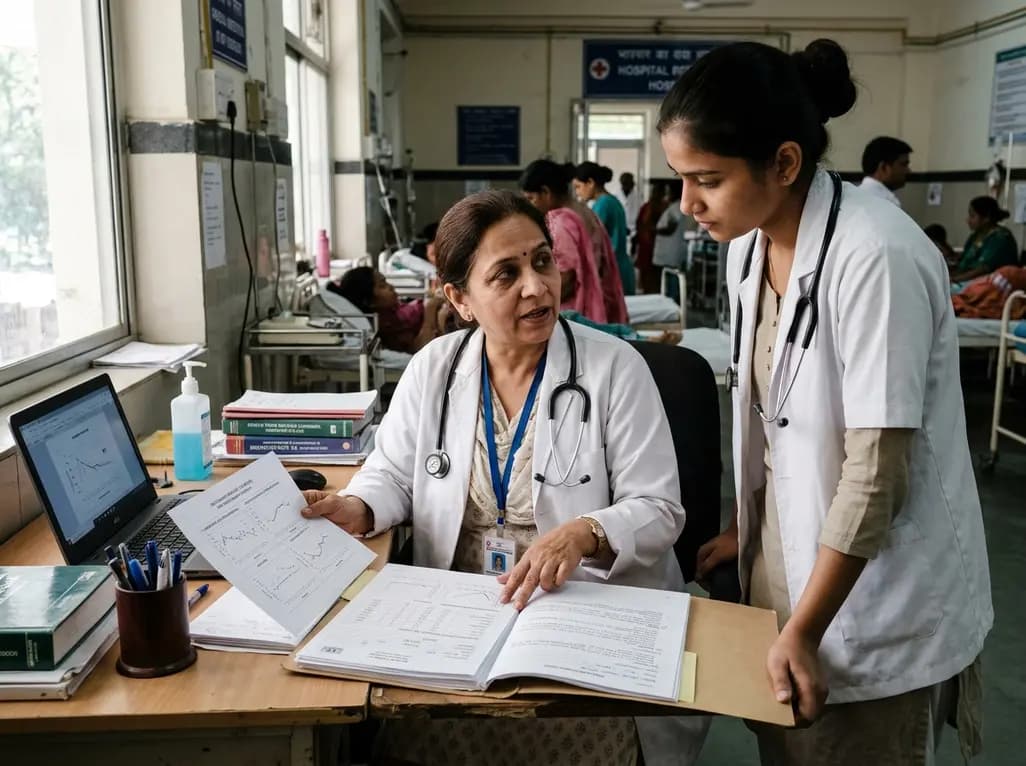
A landmark study reveals that physiologic subtypes of gestational glucose intolerance, including insulin resistance and insulin deficiency, independently raise long-term risks of maternal prediabetes and diabetes, underscoring the urgent need for structured postpartum surveillance.
Today
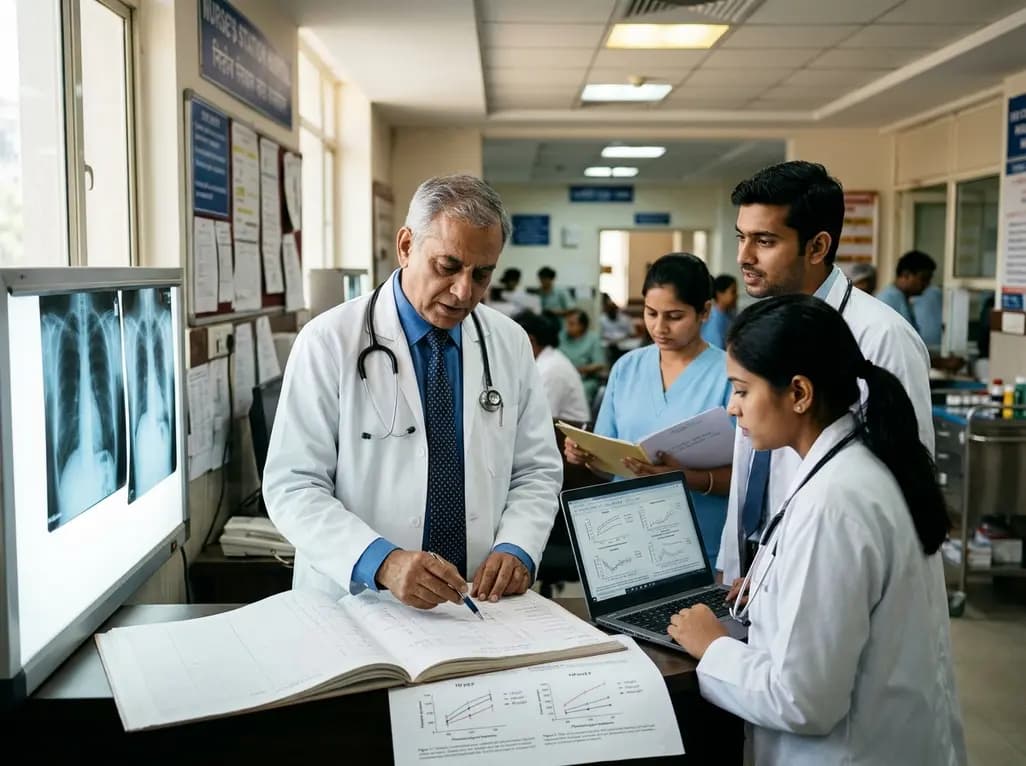
A systematic review and component network meta-analysis evaluated the incremental benefits of drug classes in HFmrEF and HFpEF. SGLT-2 inhibitors and MRAs provided the most robust reductions in heart failure hospitalizations, while mortality benefits remained elusive across all investigated drug classes.
Today
A recent clinical study identifies proximal intercuneiform joint disruption in 43.8% of low-energy Lisfranc injuries. Due to the low diagnostic sensitivity of standard radiographs and MRI, orthopedic surgeons must perform routine intraoperative stress testing to ensure complete anatomical reduction and fixation.
Today
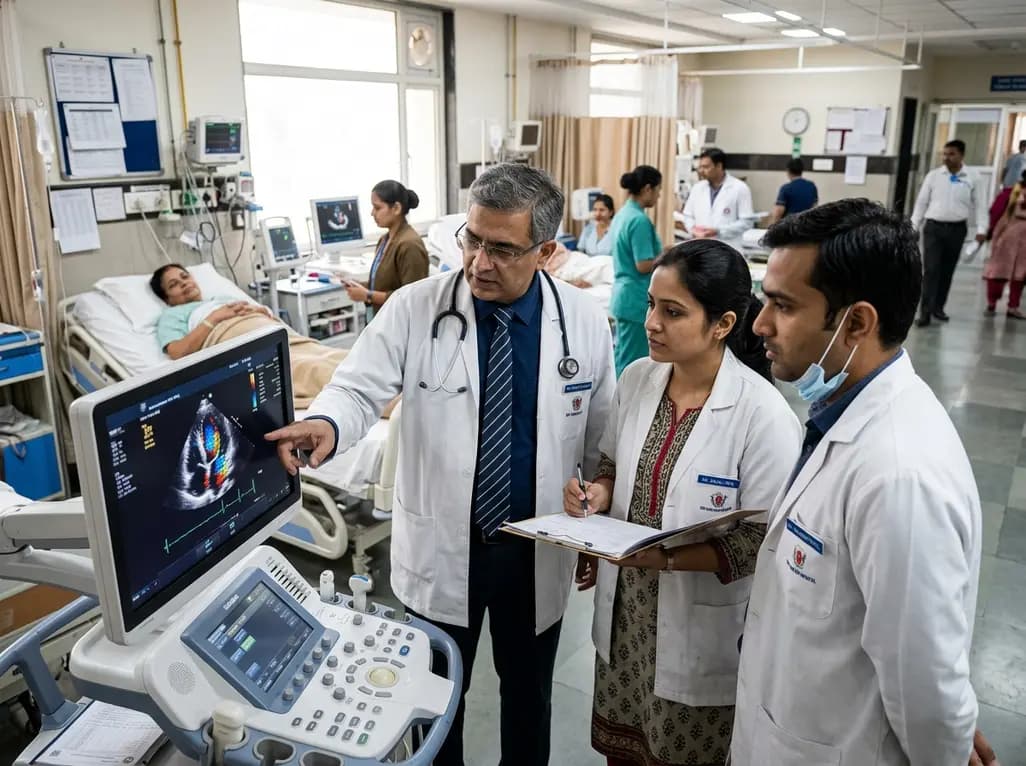
Mayo Clinic trials and real-world datasets show GLP-1 receptor agonists improve left ventricular remodeling, reduce intracardiac filling pressures, decrease hospitalizations by 34%, and lower geriatric fall risks in patients with obesity and heart failure, delivering notable clinical and economic benefits.
Today
