

Loading, please wait...
Loading, please wait...

Traumatic brain injury in children remains a major public health challenge globally. Each year, thousands of young patients sustain injuries that disrupt acute neurological functioning and compromise lifelong cognitive, physical, and behavioral development. Clinicians traditionally evaluate these injuries using acute injury severity markers such as the Glasgow Coma Scale score or neuroimaging abnormalities. However, recovery after pediatric traumatic brain injury is fundamentally nonlinear and highly heterogeneous. Emerging clinical evidence shows that biological trauma interacts with structural environments, access barriers, and social determinants of health. Consequently, clinicians must look beyond acute clinical scores to understand why children with comparable initial injuries follow markedly divergent recovery trajectories over time.
Historically, trauma classification systems relied almost entirely on physiological indices captured immediately after trauma. Although the Glasgow Coma Scale and Abbreviated Injury Scale offer rapid triage value, they fail to capture longitudinal recovery dynamics. Recently, researchers analyzed 926 pediatric patients from the Children's Health After Injury dataset to address this limitation. They utilized unsupervised machine learning, dimensionality reduction, and density-based hierarchical clustering across five core clinical dimensions: anatomical injury severity, vital signs, systemic comorbidities, secondary complications, and acute consciousness levels. This data-driven approach uncovered four distinct clinical phenotypes. Each phenotype exhibited unique physiological patterns, longitudinal recovery curves, and differential vulnerability to social determinants of health. Therefore, acute presentations merely represent the starting point of an evolving clinical syndrome. By evaluating multimodal patient clusters, healthcare teams can forecast functional trajectories more reliably. Furthermore, this classification demonstrates that two children with identical acute coma scores can experience radically different cognitive, motor, and psychological outcomes twelve months post-injury.
The clustering analysis delineated four distinct groups that reshape how clinicians anticipate recovery. Cluster 1 comprised adolescents presenting with high injury severity alongside stable Glasgow Coma Scale scores. Interestingly, these adolescent patients showed an age-dependent vulnerability, developing a 25% increase in total psychological and behavioral impairment across twelve months. In contrast, Cluster 2 involved younger children with moderate initial trauma and stable consciousness scores. Although their overall functional impairment score plateaued during follow-up, their physical and neurological deficits worsened slowly over time. Cluster 3 represented critically injured children suffering severe acute neurological damage. Strikingly, this cohort carried the lowest global impairment scores at baseline but developed severe neurobehavioral deterioration and fluctuating neurological symptoms over the follow-up period. Finally, Cluster 4 encompassed moderately injured children who exhibited stable early consciousness followed by sharp, delayed deterioration. This fourth cohort shouldered the heaviest global burden across all follow-up intervals, experiencing a 31% surge in total impairment driven by compounding psychological and behavioral morbidities.
A crucial insight from this cohort analysis is that social determinants of health do not affect all pediatric head injuries equally. Instead, structural disparities cluster heavily within specific clinical phenotypes, especially those with severe injury profiles. In Cluster 3, which captured critically injured children, race and ethnicity emerged as potent independent determinants of cluster membership. Specifically, Asian children had 1.8 times higher odds of belonging to this critically injured phenotype compared to White children. Furthermore, age significantly interacted with racial disparities, compounding risk profiles in vulnerable sub-cohorts. In contrast, Clusters 2 and 4 displayed minimal direct associations with recorded social variables, despite Cluster 4 carrying the highest overall impairment burden. These findings highlight how systemic healthcare barriers, socioeconomic status, and environmental vulnerabilities influence injury exposure patterns, transport logistics, and immediate acute care access. Consequently, pediatric trauma registries and triage frameworks must incorporate social and demographic risk factors alongside conventional anatomical indices.
Pediatric head trauma is not an isolated event; it represents a chronic, evolving disease process. A prominent finding in this retrospective cohort is the delayed manifestation of psychological, cognitive, and behavioral deficits across multiple phenotypes. Many children who appear clinically stable upon discharge from the intensive care unit or emergency department subsequently experience functional decline months later. For instance, adolescents in Cluster 1 experienced progressive behavioral dysregulation as they attempted to reintegrate into academic and social environments. Similarly, patients in Cluster 4 experienced an acute surge in neurobehavioral symptoms between initial stabilization and the one-year landmark. Developing brains possess remarkable plasticity, but they also exhibit unique vulnerabilities to delayed excitotoxicity, neuroinflammation, and psychosocial stress. When families lack access to structured post-discharge rehabilitation, educational support, and outpatient mental health resources, early neurobehavioral deficits compound rapidly. Clinicians must therefore educate caregivers early that cognitive and emotional problems may only surface as developmental demands increase over time.
These findings carry profound implications for pediatricians, pediatric neurologists, neurosurgeons, and emergency physicians worldwide. In regions where trauma infrastructure varies significantly, recognizing phenotypic risk factors can optimize resource allocation. Healthcare teams must establish longitudinal surveillance programs that extend well beyond the traditional three-to-six-month follow-up window. Because neurobehavioral decline often accelerates months after injury, routine multidisciplinary assessments including neuropsychology, speech therapy, and occupational rehabilitation are essential. Moreover, hospital discharge protocols should systematically screen for social determinants of health, identifying families at risk for fragmented follow-up care. Early interventions must proactively target mental health, family stress, and educational accommodations before behavioral sequelae become irreversible. Moving forward, trauma networks must validate these machine-learning-derived phenotypes across diverse international cohorts to strengthen clinical generalizability and promote equitable trauma care for every child.
Social determinants of health affect baseline vulnerability, mechanism of injury, acute care access, and post-discharge rehabilitation support. In clinical clustering studies, demographic factors like age and race strongly correlate with membership in high-severity phenotypes. For example, specific minority groups face significantly elevated odds of severe initial injury, while socioeconomic resources dictate whether a recovering child can successfully access long-term therapy and neurobehavioral interventions.
Pediatric brain injury alters continuous neurodevelopment. While early physical recovery may appear satisfactory, the maturing pediatric brain encounters escalating cognitive, academic, and social demands over time. Secondary neuroinflammation, persistent network disruption, and unaddressed psychological trauma often manifest as delayed behavioral, emotional, and executive function impairments, causing overall impairment scores to rise significantly between baseline and the one-year follow-up mark.
Clinicians must implement routine screening for social determinants of health upon trauma admission to identify families at high risk of care attrition. Multidisciplinary care models should integrate pediatric neurology, physical medicine, neuropsychology, and social work. Additionally, extending formal clinical follow-up beyond twelve months, coordinating school-based accommodations, and establishing remote telemedicine consultations can bridge access gaps for underserved pediatric populations.
Disclaimer: This content is for informational and educational purposes only and does not constitute medical advice, diagnosis, or treatment. Healthcare professionals must exercise independent clinical judgment and correlate these findings with specific patient presentations. Refer to the latest local and national guidelines for clinical practice.
References
Cross A et al. Effect of Social Determinants of Health on Pediatric Traumatic Brain Injury Phenotypes: Retrospective Cohort Analysis. JMIR Pediatr Parent. 2026 Nov 12. doi: 10.2196/87372. PMID: 43019543.
Bryant BL et al. Association between social determinants of health and pediatric traumatic brain injury outcomes. Front Pediatr. 2024;12:1361250.
Chan V et al. Pediatric Traumatic Brain Injury and Social Determinants of Health: A Population-Based Cohort Study. JAMA Netw Open. 2025;8(3):e252841.
Jimenez N et al. Social Determinants of Health in Pediatric Rehabilitation for Children with Traumatic Injury: A Systematic Review. J Pediatr. 2023;262:113576.

Read summarized clinical updates, watch expert medical content, and earn CME certifications right from your smartphone.
Open your smartphone camera to scan and install.





A landmark retrospective cohort study identifies four distinct pediatric traumatic brain injury phenotypes, revealing how social determinants of health and demographic factors drive long-term neurobehavioral and functional recovery trajectories.
Today

A new study demonstrates how explainable AI guides transparent fall risk prediction models in older adults. By pairing random survival forests and SHAP with Cox regression, researchers achieved superior accuracy and eliminated unneeded variables, enhancing clinical decision-making and patient safety.
Today
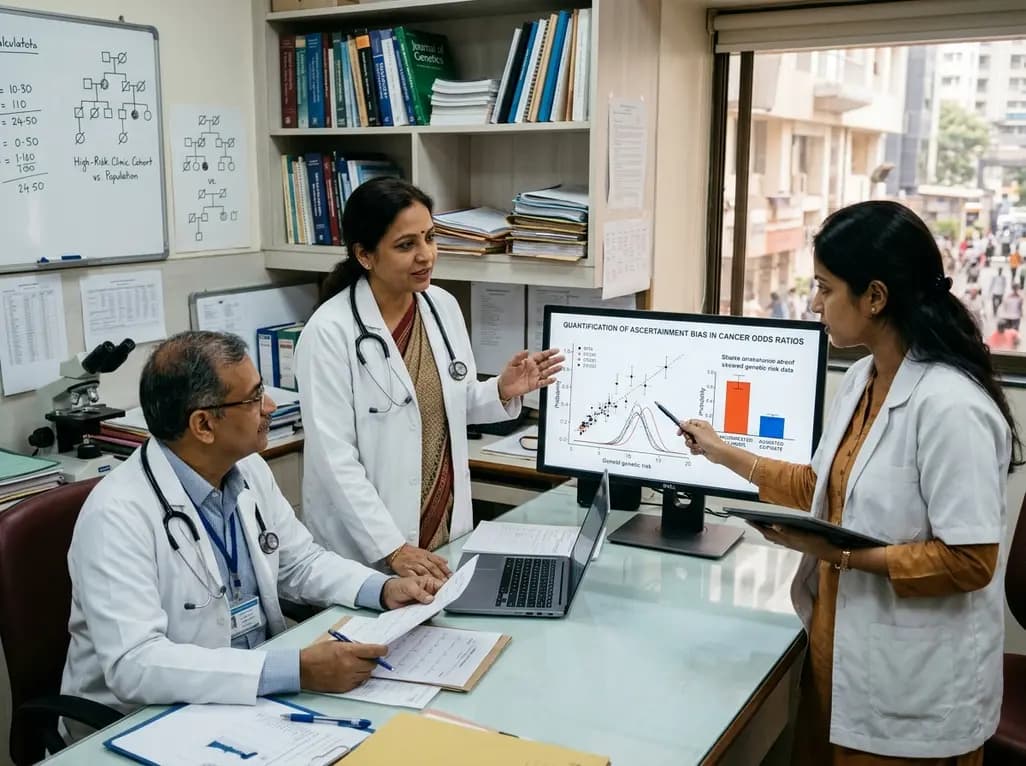
Ascertainment bias in cancer case-control studies inflates odds ratios and penetrance estimates when cases are drawn from high-risk clinics. A landmark modeling study demonstrates substantial bias ranging up to 23.72, highlighting the critical need for ascertainment adjustment in genetic risk counseling.
Today
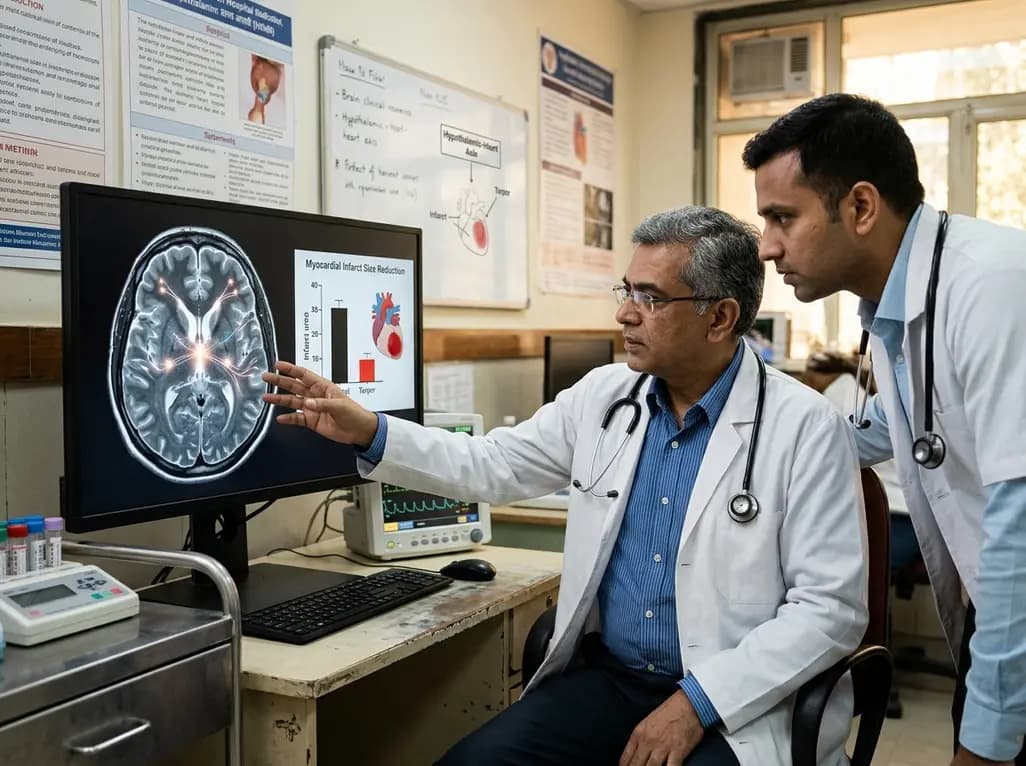
Researchers demonstrate that central induction of synthetic torpor in non-hibernating rats provides striking cardioprotection, reducing myocardial infarct size by ~40% during ischaemia-reperfusion injury through endogenous survival signaling, independent of hypothermia.
Today
A prospective study evaluates DeepSeek for knee osteoarthritis outcomes. While the model excels at baseline diagnosis and clinical scoring, its six-month prognostic predictions fall short of clinicians and simple persistence models, demonstrating high run-to-run variability.
Today

A novel fluorine-functionalized near-infrared copper fluorescent probe selectively illuminates lung tissue, revealing critical links between hyperglycemia, ER stress, and pulmonary malignancy for improved early diagnosis.
Today
