

Loading, please wait...
Loading, please wait...

Pediatric cerebrovascular disease represents a critical yet underappreciated challenge in global child health. Recent epidemiological data from the Global Burden of Disease study demonstrate a profound transition in the global pediatric stroke burden over the past three decades. While overall disease incidence has changed only modestly, survival rates have climbed significantly across most world regions. Consequently, clinical teams face a changing reality where surviving childhood stroke frequently brings long-term disability rather than complete recovery.
Between 1990 and 2023, the worldwide epidemiology of pediatric stroke transitioned dramatically. Global age-standardized incidence declined only modestly during this thirty-year span. However, age-standardized years of life lost fell sharply across all studied populations. This marked divergence indicates that improvements in critical care and emergency resuscitation have saved countless young lives. Therefore, lower mortality primarily reflects better survival after the initial vascular insult rather than fewer stroke events.
Furthermore, rates of years lived with disability remained remarkably persistent over the same observation period. Because mortality dropped while chronic impairment persisted, the overall proportion of disease burden linked to disability rose from 14.6% to 21.7%. Researchers observed this shift across three distinct temporal eras spanning from 1990 to 2023. In addition, the pattern remained consistent across all pediatric age cohorts and both sexes.
Consequently, clinicians must recognize that surviving an acute stroke often initiates lifelong challenges. Surviving children frequently endure persistent motor deficits, visual loss, cognitive impairment, and secondary epilepsy. Modern healthcare systems must therefore adapt their clinical priorities to address these enduring morbidities.
Disability-adjusted life years synthesize premature death and nonfatal morbidity into an essential public health index. Historically, premature mortality among infants and young children drove the vast majority of lost healthy life years. Fortunately, modern pediatric intensive care units and improved resuscitation algorithms have curbed early fatalities. However, this hard-won survival has generated an expanding cohort of children living with chronic neurological compromise.
Importantly, children who survive strokes face unique neurodevelopmental hurdles compared to adult stroke survivors. A child suffers brain injury while neural circuits are actively developing and wiring together. Consequently, focal ischemic damage disrupts developmental milestones, speech acquisition, and motor coordination. Furthermore, cognitive and behavioral difficulties often surface years later when academic demands intensify. Thus, childhood stroke imposes enduring socioeconomic and emotional stress on families.
Moreover, healthcare systems frequently fail to anticipate these chronic post-stroke needs. Standard rehabilitation protocols regularly overlook pediatric-specific developmental milestones. As a result, affected children miss critical therapeutic windows during formative neurodevelopmental stages. Clinicians must therefore view pediatric stroke as a chronic condition requiring sustained neurodevelopmental monitoring.
The transition toward a disability-predominant burden exhibits profound disparities between high-income and low- and middle-income countries. High-income nations achieved accelerated reductions in pediatric stroke mortality over recent decades. Consequently, disability now represents a substantially greater share of their total pediatric stroke burden. Rapid neuroimaging, regionalized pediatric stroke pathways, and specialized intensive care units drove these substantial survival gains.
In contrast, low- and middle-income nations shoulder a punishing dual burden. These health systems face persistent premature mortality alongside rapidly escalating disability. Limited access to magnetic resonance imaging frequently delays diagnostic confirmation in resource-limited hospitals. In addition, basic supportive neurocritical care remains scarce outside major academic medical centers. As a result, many children in developing countries still die from treatable acute complications.
Furthermore, surviving children in resource-constrained environments confront severe shortages of specialized pediatric rehabilitation services. Essential physical therapy, speech pathology, and occupational therapy remain inaccessible for most families. Thus, structural health inequities exacerbate both acute fatal outcomes and chronic functional disability. International collaborative initiatives must prioritize closing these persistent global treatment divides.
Unlike adult stroke, which arises primarily from atherosclerosis and lifestyle risk factors, pediatric stroke involves markedly distinct etiologies. Arteriopathies represent the most frequent cause of arterial ischemic stroke in children. Common entities include focal cerebral arteriopathy of childhood, Moyamoya disease, and arterial dissection. In addition, congenital heart disease, sickle cell hemoglobinopathy, and systemic infections significantly elevate pediatric vascular risk.
Similarly, hemorrhagic stroke in young patients exhibits unique vascular underlying mechanisms. Intracranial arteriovenous malformations, cavernous malformations, and aneurysms account for most pediatric hemorrhagic events. Furthermore, clinical presentations differ dramatically by patient age. Neonates rarely display classic focal weakness. Instead, they present with subtle focal seizures, lethargy, or acute apnea.
Consequently, delayed recognition remains a pervasive obstacle in pediatric stroke management worldwide. Frontline clinicians often mistake acute stroke symptoms for benign mimics like migraine, postictal paralysis, or encephalitis. Therefore, initial diagnosis frequently exceeds standard therapeutic windows. Clinicians must maintain heightened vigilance when assessing any child presenting with sudden neurological deficits.
Rapid medical intervention during acute pediatric stroke directly determines lifelong functional recovery. In adults, hyperacute therapy relies heavily on intravenous thrombolysis and endovascular mechanical thrombectomy. Applying these therapies to pediatric patients requires specialized technical expertise and careful risk stratification. Nevertheless, emerging evidence supports endovascular thrombectomy in selected pediatric patients presenting with large vessel occlusions.
Simultaneously, prompt supportive neurocritical care protects vulnerable ischemic penumbra tissue. Clinical teams must aggressively optimize cerebral perfusion pressure, maintain normoglycemia, prevent hyperthermia, and control acute seizures. Even in resource-limited settings lacking advanced endovascular suites, standardized neuroprotective care significantly curtails secondary brain injury. Healthcare systems must therefore integrate pediatric stroke training into frontline emergency medicine curricula.
Furthermore, long-term multidisciplinary rehabilitation remains indispensable for maximizing functional independence. Because children possess substantial neuroplasticity, early physical, occupational, and speech therapies yield remarkable functional gains. Rehabilitative protocols must evolve as children grow, addressing evolving academic and social demands. In addition, supporting family caregivers ensures consistent therapy adherence and improves long-term outcomes for pediatric stroke survivors.
Significant advancements in neonatal and pediatric critical care have lowered acute mortality rates worldwide. However, stroke incidence has declined only modestly while rates of chronic neurological impairment remain stable. Consequently, more children survive the initial cerebrovascular event but subsequently live with lifelong cognitive, motor, and developmental disabilities.
Unlike adults, who primarily develop stroke from atherosclerosis and chronic hypertension, children experience distinct etiologies. Common causes include focal cerebral arteriopathies, Moyamoya disease, arterial dissection, congenital cardiac anomalies, prothrombotic disorders, and systemic infections. Vascular malformations such as arteriovenous malformations represent the most common cause of pediatric hemorrhagic stroke.
Low- and middle-income countries face a dual burden of stroke morbidity. While high-income nations achieved faster mortality reductions, developing countries retain high premature mortality due to delayed diagnosis and limited acute neurocritical care. Concurrently, increasing survival in urban tertiary centers adds a expanding burden of chronic disability without sufficient rehabilitation.
Disclaimer: This content is for informational and educational purposes only. It does not constitute medical advice, diagnosis, or treatment. Healthcare professionals should exercise their independent clinical judgment when interpreting or applying this information. For comprehensive clinical guidance, please refer to the complete study or contact the corresponding author directly. Neither the author nor the publisher accepts responsibility for any loss or harm resulting from the use of this content. Refer to the latest local and national guidelines for clinical practice.
References

Read summarized clinical updates, watch expert medical content, and earn CME certifications right from your smartphone.
Open your smartphone camera to scan and install.





A 1990–2023 Global Burden of Disease analysis reveals an epidemiological shift in pediatric stroke from premature mortality toward chronic disability, driven by improved acute survival but highlighting persistent global disparities in rehabilitation and acute care access.
Today

A large network analysis of middle-aged and older adults reveals distinct sex-specific dependency pathways between lifestyle factors and cardiometabolic diseases. Physical activity, smoking, and alcohol exhibit divergent bridging roles in men and women, underscoring the need for tailored clinical prevention.
Today

A meta-analysis of 9 randomized controlled trials evaluated health-related quality of life when adding PD-1/PD-L1 inhibitors to standard therapy for endometrial and cervical cancer. Adding immunotherapy did not detectably change global quality of life or worsen functional and symptom domains.
Today

A cross-sectional study evaluates the critical intersection between acute surgical pain, kinesiophobia, and fall risks during initial mobilization after cardiac surgery, emphasizing targeted nursing strategies.
Today

A landmark study reveals that patellofemoral cartilage defects in patients with trochlear dysplasia are primarily driven by patellar maltracking and spur height rather than dislocation frequency or shape mismatch, offering crucial insights for preoperative imaging and surgical stabilization.
Today
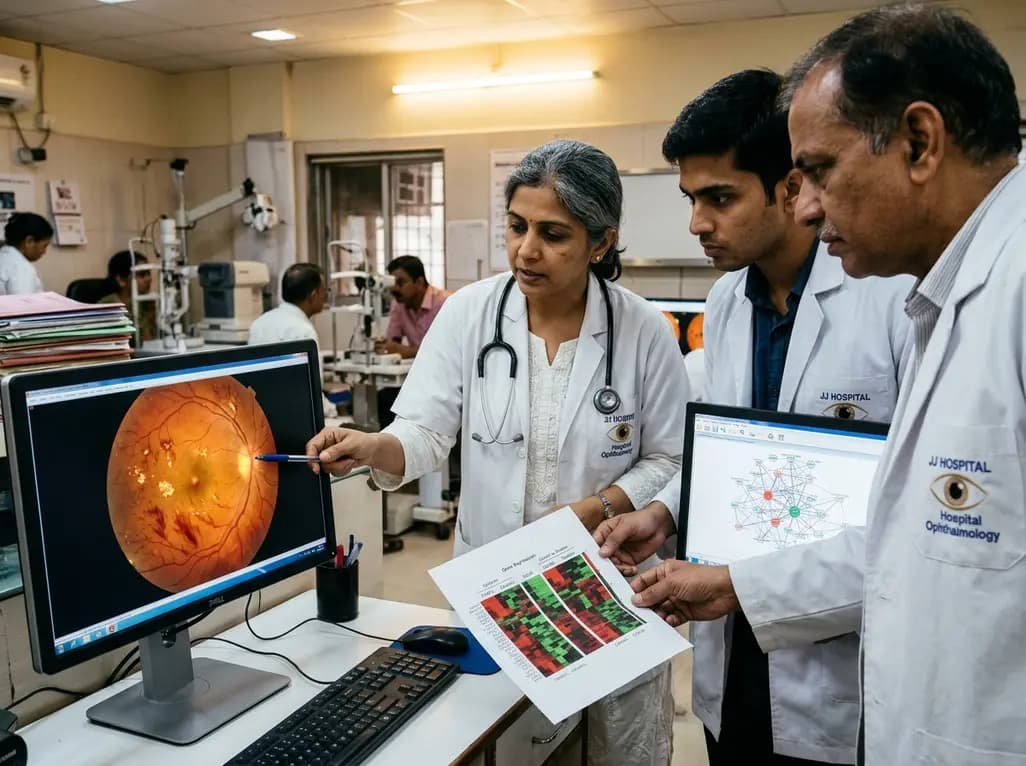
Single-cell transcriptomics reveals that STAP2 promotes retinal endothelial dysfunction in diabetic retinopathy through CXCR4 signaling. In vivo and in vitro studies show STAP2 knockdown reduces capillary drop-out and vascular leakage, uncovering a novel therapeutic target beyond anti-VEGF therapies.
Today
