

Loading, please wait...
Loading, please wait...

Charcot-Marie-Tooth disease represents the most common inherited peripheral neuropathy in pediatric neurology. Although clinicians predominantly focus on lower limb deformities, upper extremity involvement produces substantial functional disability. Specifically, preserving manual dexterity in CMT remains vital for educational success, personal autonomy, and social participation. Affected children frequently struggle with handwriting, handling classroom supplies, and fastening clothing. Consequently, evaluating fine motor coordination alongside muscular capacity is crucial. Recent clinical evidence demonstrates that manual dexterity operates independently of maximal muscle strength, urging clinicians to rethink pediatric assessment strategies.
A recent cross-sectional study evaluated upper limb performance in thirty-nine children and adolescents with Charcot-Marie-Tooth disease. The cohort had a mean age of 13.2 years, capturing key developmental stages. To assess fine motor coordination, investigators administered the standardized Nine-Hole Peg Test. Furthermore, researchers converted raw completion times into age- and sex-adjusted z-scores using normative reference data. This rigorous standardization allowed direct comparisons against healthy peer populations.
The resulting data revealed marked impairments in manual dexterity. Children with neuropathy required significantly longer completion times than healthy normative cohorts. Moreover, these manual deficits appeared consistently across both dominant and non-dominant hands. Subgroup analyses showed comparable motor delays across diverse genetic variants, including CMT1A. Consequently, clinicians must recognize fine motor slowness as a generalized feature of pediatric neuropathy that routine observation frequently misses.
In addition to fine motor speed, the investigators thoroughly characterized muscular strength profiles. The protocol measured isometric peak torque for elbow flexors and extensors to establish proximal limb capacity. Concurrently, clinicians utilized calibrated handgrip dynamometry to capture distal strength. Researchers converted all strength measurements into standardized z-scores adjusted for age and sex. Additionally, the team applied the Benjamini-Hochberg correction for multiple comparisons.
The findings demonstrated pronounced muscular weakness across both distal and proximal anatomical compartments. Pediatric participants exhibited significant force reductions in elbow flexion, elbow extension, and handgrip relative to healthy cohorts. Therefore, upper limb pathology extends beyond distal intrinsic hand muscles. However, distal weakness predominated, reflecting the classical length-dependent axonal degeneration of the neuropathy. Proximal weakness further compromises arm mechanics because shoulder and elbow stability support distal precision. Thus, pediatric assessments must evaluate the entire upper limb kinetic chain.
Crucially, the study revealed an unexpected clinical disconnect between muscular strength and functional manual execution. Statistical analysis demonstrated only a weak negative correlation between Nine-Hole Peg Test scores and handgrip strength. Furthermore, this correlation disappeared entirely when researchers evaluated specific disease subtypes, including CMT1A. Similarly, manual dexterity displayed no significant correlation with either elbow flexor or extensor strength.
These findings illustrate that raw physical force does not determine manual dexterity. Fine motor control relies heavily on sensory feedback, proprioceptive acuity, and thumb opposition stability. In inherited neuropathies, sensory axon degeneration disrupts the somatosensory guidance required for delicate object manipulation. In addition, intrinsic muscular imbalance impairs precision pinch mechanics without diminishing gross elbow torque. Consequently, clinicians who rely solely on grip dynamometry overlook significant functional hand disabilities. Therefore, functional dexterity assessments provide irreplaceable diagnostic insights that force measurements cannot capture.
These findings carry direct implications for pediatric neurologists, physiatrists, and occupational therapists managing neuromuscular disorders. Traditionally, clinical teams track disease progression using manual muscle testing or electrophysiological nerve conduction studies. However, standard manual muscle testing frequently lacks the sensitivity required to detect subtle motor impairments in developing children. Therefore, practitioners must integrate standardized functional dexterity instruments into periodic routine follow-ups.
The Nine-Hole Peg Test serves as an accessible, rapid, and reproducible tool that clinicians can easily implement during outpatient consultations. Additionally, comprehensive clinical batteries like the Charcot-Marie-Tooth disease Pediatric Scale evaluate vibration sense, balance, and dexterity alongside muscle strength. Utilizing these multidimensional measures allows physicians to identify emerging difficulties before academic frustration occurs. Furthermore, objective monitoring helps clinicians distinguish pure motor weakness from sensory ataxia. As a result, healthcare teams can tailor supportive interventions precisely to each child's individual profile.
Because muscular force alone does not guarantee manual competence, rehabilitation strategies must emphasize multidimensional functional training. Rather than focusing solely on resistive strength exercises, occupational therapists should prioritize motor coordination, task repetition, and sensory re-education. Specifically, structured interventions should incorporate essential daily activities such as holding writing utensils, handling zippers, using scissors, and managing touchscreen devices.
Moreover, therapists can prescribe targeted intrinsic hand exercises to strengthen the lumbricals and stabilize the first web space. Preserving thumb opposition mechanics remains critical for preventing progressive claw hand deformities and maintaining functional pinch grips. In addition, clinicians should recommend ergonomic adaptations early in the school environment. Simple accommodations, including contoured pencil grips and keyboard alternatives, significantly reduce hand fatigue. Furthermore, establishing collaborative communication between therapists, educators, and families ensures continuous developmental support. By implementing comprehensive rehabilitative strategies early, clinicians empower young patients to maintain academic independence.
Charcot-Marie-Tooth disease damages peripheral motor and sensory nerve fibers through length-dependent axonal degeneration. In pediatric patients, this neurodegenerative process leads to intrinsic hand muscle weakness, impaired thumb opposition, and diminished tactile sensitivity. Consequently, affected children frequently struggle with fine motor tasks such as handwriting, fastening small buttons, and manipulating educational supplies. These functional difficulties often emerge during early childhood and persist regardless of gross arm strength.
The Nine-Hole Peg Test directly measures motor coordination, finger agility, and active manipulation speed under standardized conditions. In contrast, standard dynamometry records only maximal isometric force generation, such as gross grip or elbow torque. Because functional manual dexterity depends extensively on sensory processing, proprioceptive feedback, and precision coordination rather than sheer force, pegboard assessments provide a vastly superior reflection of real-world manual capability in young patients with neuropathy.
Multidimensional occupational therapy focusing on task-specific training, sensory re-education, and intrinsic hand muscle stabilization delivers the greatest clinical benefit. Therapists utilize adaptive equipment, customized writing grips, and ergonomic utensils to minimize joint strain and prevent fatigue. Furthermore, incorporating assistive educational technology, including modified keyboards and speech-to-text software, enables children to sustain academic performance while avoiding secondary musculoskeletal contractures and chronic hand discomfort during critical school years.
Disclaimer: This content is for informational and educational purposes only and should not be considered as medical advice. Always consult a qualified healthcare professional regarding any medical condition or treatment. Refer to the latest local and national guidelines for clinical practice.
References

Read summarized clinical updates, watch expert medical content, and earn CME certifications right from your smartphone.
Open your smartphone camera to scan and install.





A cross-sectional study reveals that children and adolescents with Charcot-Marie-Tooth disease suffer marked reductions in manual dexterity and muscle strength. Crucially, fine motor deficits correlate poorly with distal and proximal arm force, emphasizing the need for comprehensive sensory and functional evaluations.
Today
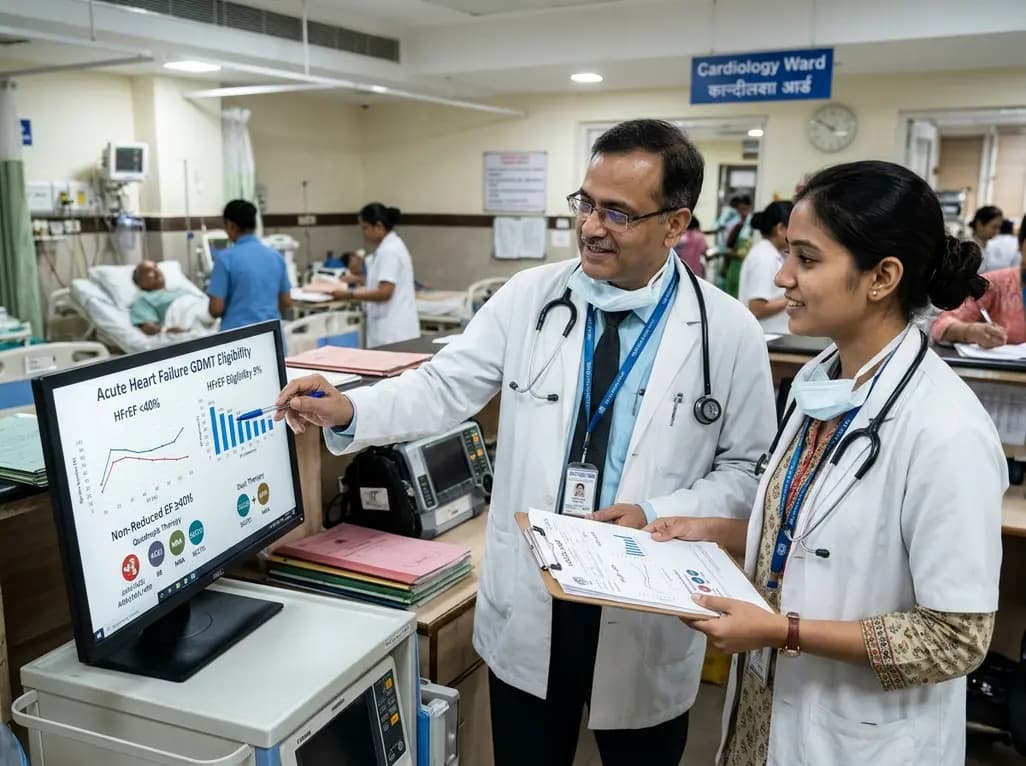
The VOCAL-AHF study reveals that most acute heart failure patients across reduced and non-reduced ejection fraction categories are eligible for in-hospital GDMT initiation. Notably, nearly two-thirds of HFrEF patients qualify for quadruple therapy, while non-reduced EF patients show high eligibility for dual therapy.
Today

Ascertainment bias in cancer case-control studies inflates odds ratios and penetrance estimates when cases are drawn from high-risk clinics. A landmark modeling study demonstrates substantial bias ranging up to 23.72, highlighting the critical need for ascertainment adjustment in genetic risk counseling.
Today

Researchers demonstrate that central induction of synthetic torpor in non-hibernating rats provides striking cardioprotection, reducing myocardial infarct size by ~40% during ischaemia-reperfusion injury through endogenous survival signaling, independent of hypothermia.
Today
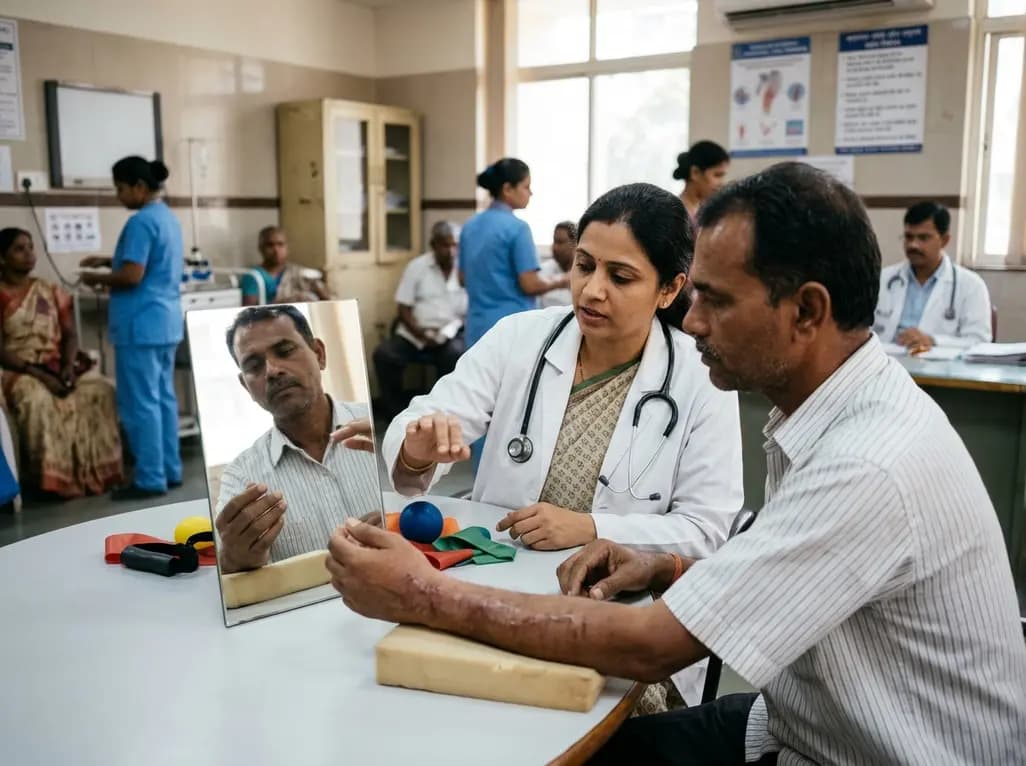
A meta-analysis shows that movement representation techniques significantly enhance upper limb and wrist function in distal radius fracture rehabilitation. While effects on pain and grip strength remain inconclusive, early low-cost telerehabilitation and mirror therapy provide promising clinical benefits.
Today

A novel fluorine-functionalized near-infrared copper fluorescent probe selectively illuminates lung tissue, revealing critical links between hyperglycemia, ER stress, and pulmonary malignancy for improved early diagnosis.
Today
