.webp&w=384&q=75)

Loading, please wait...
Loading, please wait...

Investigating pediatric hemispherotomy outcomes is essential for guiding clinical decisions in severe drug-resistant childhood epilepsy. Hemispherotomy surgically disconnects an entire dysfunctional cerebral hemisphere to halt intractable seizures. Historically, surgical teams prioritized complete seizure cessation as the defining benchmark of operative success. However, cognitive preservation and intellectual recovery represent equally vital metrics for families and healthcare professionals. Children undergoing hemispheric disconnection present with diverse underlying etiologic substrates. Consequently, neurodevelopmental trajectories vary substantially across pediatric populations following surgery. While hemispherotomy frequently achieves high rates of seizure freedom, intellectual impairment remains a pervasive long-term challenge. Recent multicenter clinical evidence offers crucial insight into the pre-existing and modifiable variables influencing intellectual functioning. By delineating these specific prognostic factors, pediatric neurologists and neurosurgeons can improve family counseling. Furthermore, clinicians can refine individualized perioperative treatment pathways. Identifying independent drivers of development helps multidisciplinary teams establish realistic expectations before undertaking radical surgical interventions. Therefore, systematic cognitive assessment must accompany seizure tracking in contemporary pediatric epilepsy care. In addition, early prognostic stratification ensures that therapeutic resources focus promptly on vulnerable children. Ultimately, an in-depth understanding of postsurgical cognition provides a foundation for proactive rehabilitation strategies.
A landmark collaborative multicenter study evaluated 296 children and adolescents who underwent hemispherotomy between 2000 and 2016. Each participant completed standardized postsurgical assessments measuring intelligence quotient or developmental quotient scores. Across the cohort, investigators documented a median postoperative follow-up duration of 2.1 years. Notably, 84 percent of the young patients achieved complete freedom from epileptic seizures. Moreover, 60 percent successfully discontinued antiseizure medications during their follow-up period. Despite these impressive clinical and surgical achievements, formal cognitive assessments uncovered widespread intellectual disability. Only 11 percent of the children demonstrated normal intellectual functioning, achieving scores of 85 or above. Meanwhile, 16 percent exhibited mild cognitive impairment, with quotients ranging between 70 and 84. Moderate intellectual impairment affected 22 percent of participants, whose scores fell between 55 and 69. Most critically, 51 percent experienced severe intellectual disability, registering developmental quotients below 55. These sobering figures demonstrate that successful hemispheric disconnection does not automatically restore normative cognition. Instead, significant pre-existing encephalopathy frequently persists after surgical seizure control. Thus, clinicians must recognize the persistent gap between seizure remission and intellectual recovery. Accordingly, long-term developmental tracking represents an indispensable component of comprehensive postsurgical epilepsy management.
Underlying brain pathology serves as a paramount determinant of cognitive capability following hemispheric disconnection. Patients in the cohort presented with various structural etiologies, including developmental malformations, perinatal stroke, and progressive inflammatory disorders like Rasmussen encephalitis. Through ordinal regression modeling, researchers demonstrated that developmental malformations correlated with poorer intellectual outcomes compared to acquired pathologies. Specifically, children with polymicrogyria exhibited significantly reduced odds of achieving higher intellectual functioning. The statistical analysis revealed an odds ratio of 0.30 for patients diagnosed with polymicrogyria. This significant reduction highlights how extensive cortical dysgenesis impacts neural network plasticity across both hemispheres. In contrast, children with acquired vascular insults or isolated Rasmussen encephalitis often retained better developmental potential. Because polymicrogyria frequently reflects diffuse, bilateral microstructural abnormalities, the remaining hemisphere cannot fully compensate for lost functions. Furthermore, genetic mutations driving malformations of cortical development often compromise global synaptic connectivity. Therefore, identifying the exact histopathological substrate during presurgical evaluation offers essential prognostic clues. Neurologists should explain these etiologic constraints carefully during initial discussions with caregivers. As a result, families can prepare appropriate educational environments tailored to the child's true cognitive potential. Consequently, etiologic classification guides realistic rehabilitative goals from the very beginning of the surgical pathway.
Structural abnormalities visible on neuroimaging in the contralateral cerebral hemisphere substantially undermine cognitive potential. In the study cohort, patients showing contralateral magnetic resonance imaging abnormalities experienced a marked decline in developmental prospects. Ordinal regression revealed an odds ratio of 0.47 for achieving higher functioning in children with contralateral lesions. When structural defects affect the presumed healthy hemisphere, functional reorganization faces severe anatomical constraints. Consequently, the spared hemisphere struggles to assume receptive language and executive functions previously shared between both hemispheres. Beyond neuroimaging lesions, the child's age at epilepsy onset played a decisive role in intellectual performance. Specifically, later age at epilepsy onset significantly increased the likelihood of achieving superior intellectual functioning, with an odds ratio of 1.16 per additional year. This clear relationship aligns directly with the established neurological concept of early brain vulnerability. Early seizure onset disrupts critical periods of synaptogenesis, dendritic arborization, and neural circuit specialization. Conversely, older children who develop refractory epilepsy possess already established neural networks that resist cognitive decline more effectively. Thus, clinicians must factor both contralateral neuroimaging status and initial onset timing into their diagnostic formulations. Additionally, careful assessment of the non-operated hemisphere helps prevent unrealistic expectations regarding postsurgical intellectual acceleration.
While etiology, contralateral lesions, and onset age represent non-modifiable baseline variables, postsurgical medication protocols offer an actionable clinical lever. The multicenter analysis demonstrated that continuing antiseizure medications after surgery significantly decreased the probability of achieving higher intellectual functioning. Patients who remained on pharmacological therapy showed an odds ratio of 0.51 compared to peers who successfully discontinued drugs. Chronic antiseizure polytherapy exerts well-documented sedating and cognitive side effects on developing brains. Many conventional medications impede attention, processing speed, memory consolidation, and overall psychomotor efficiency. Furthermore, ongoing drug exposure can blunt neural plasticity within the preserved hemisphere, impeding adaptive reorganization after disconnection. Of course, residual seizures often dictate continued medication, reflecting more extensive underlying epileptogenic pathology. Nevertheless, in seizure-free children, lingering physician hesitation frequently prolongs unnecessary medication exposure. Therefore, timely and structured tapering of antiseizure medications emerges as the single most critical modifiable factor for optimizing developmental outcomes. Epilepsy specialists should actively pursue drug reduction protocols when post-operative electroencephalography confirms electrographic stability. Ultimately, reducing chemical burdens unlocks latent developmental potential in recovering pediatric brains. In addition, collaborative clinical pathways between epileptologists and neuropsychologists can safely accelerate post-operative pharmacological withdrawal.
Key predictors include the underlying etiology, presence of contralateral MRI abnormalities, age at epilepsy onset, and postsurgical antiseizure medication management. Children with developmental malformations like polymicrogyria or bilateral structural damage show lower developmental quotients. Conversely, older age at seizure onset and timely postsurgical medication withdrawal correlate with superior intellectual recovery.
Polymicrogyria significantly impairs cognitive prognosis, reducing the odds of higher intellectual functioning by seventy percent compared to other etiologies. This developmental malformation often involves diffuse, bilateral microstructural abnormalities that restrict neural plasticity. Consequently, the remaining hemisphere cannot effectively compensate for lost functions, leading to persistent and severe postoperative intellectual disability.
Continuing antiseizure medications after surgery independently reduces the likelihood of achieving higher developmental quotients by forty-nine percent. Chronic antiepileptic therapy imposes substantial cognitive and sedative burdens on young developing brains. Therefore, safely discontinuing medications in seizure-free children eliminates unnecessary neurochemical suppression and represents the primary modifiable opportunity to optimize long-term intellectual development.
Disclaimer: This content is for informational and educational purposes only and is not intended as medical advice or as a substitute for professional clinical judgment. Consult a qualified specialist for personal healthcare guidance. Refer to the latest local and national guidelines for clinical practice.
References

Read summarized clinical updates, watch expert medical content, and earn CME certifications right from your smartphone.
Open your smartphone camera to scan and install.





A multicenter cohort study of 296 children reveals that etiology, contralateral MRI lesions, age at seizure onset, and postsurgical medication management independently dictate cognitive development after hemispherotomy, highlighting medication tapering as a critical modifiable lever.
Today

Bacteroides thetaiotaomicron utilizes an intricate multiprotein extracellular relay and outer membrane vesicles for cobamide scavenging in the human gut. This review examines its transport mechanics, riboswitch regulation, and potential clinical implications for host-microbe vitamin competition and nutrient absorption.
Today

Novel preclinical research demonstrates that antisense oligonucleotides targeting essential genes such as DARS1, DYNC1I2, and EIF2S3 selectively induce apoptosis in ovarian and lung cancer cells. Conditional biomarker activation provides a viable strategy to spare normal tissue while overcoming therapy resistance.
Today
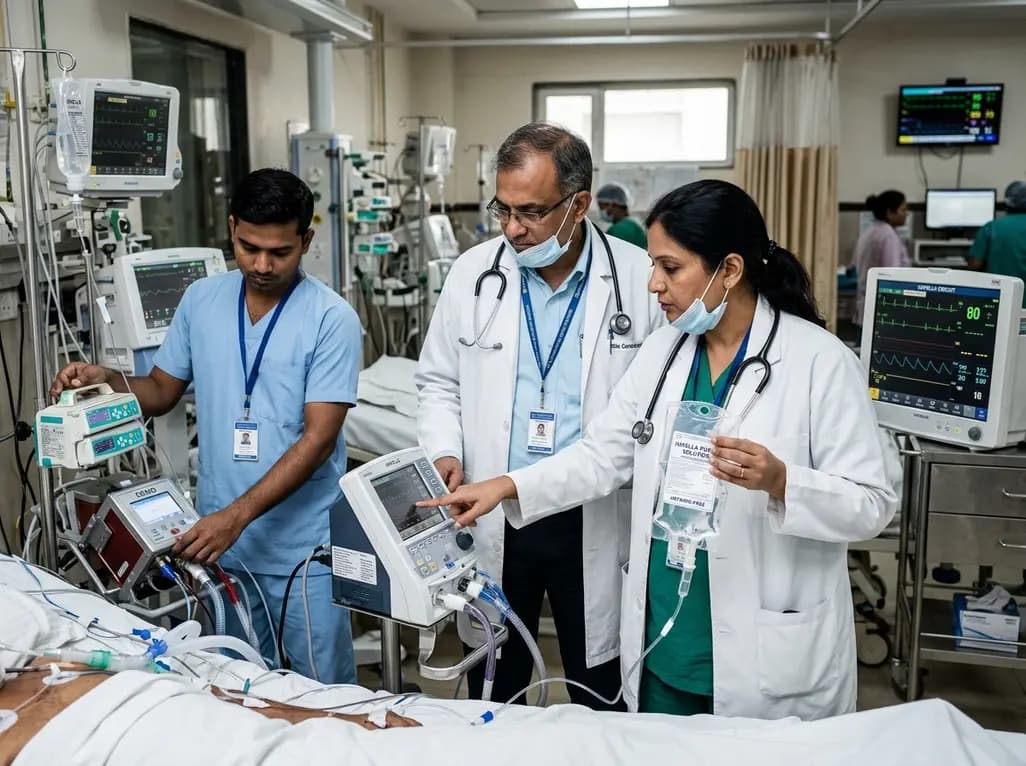
This clinical analysis examines heparin-free versus heparin-containing Impella purge solutions in patients receiving concomitant ECMO support (ECPELLA). Evidence suggests anticoagulant-free purges maintain device patency while reducing bleeding risks, offering a viable strategy alongside systemic anticoagulation.
Today

A 10-year Markov state-transition model shows minimally invasive tubular decompression dominates open laminectomy for pure lumbar spinal stenosis, yielding 5.95 vs 5.91 QALYs and saving $4,167 per patient through reduced complications and lower index costs.
Today

A preclinical study demonstrates that naringin-loaded phytosomes significantly enhance oral bioavailability and provide neuroprotective efficacy in diabetic neuropathy by dampening inflammation, reducing oxidative stress, and relieving neuropathic pain.
Today
