.webp&w=384&q=75)

Loading, please wait...
Loading, please wait...
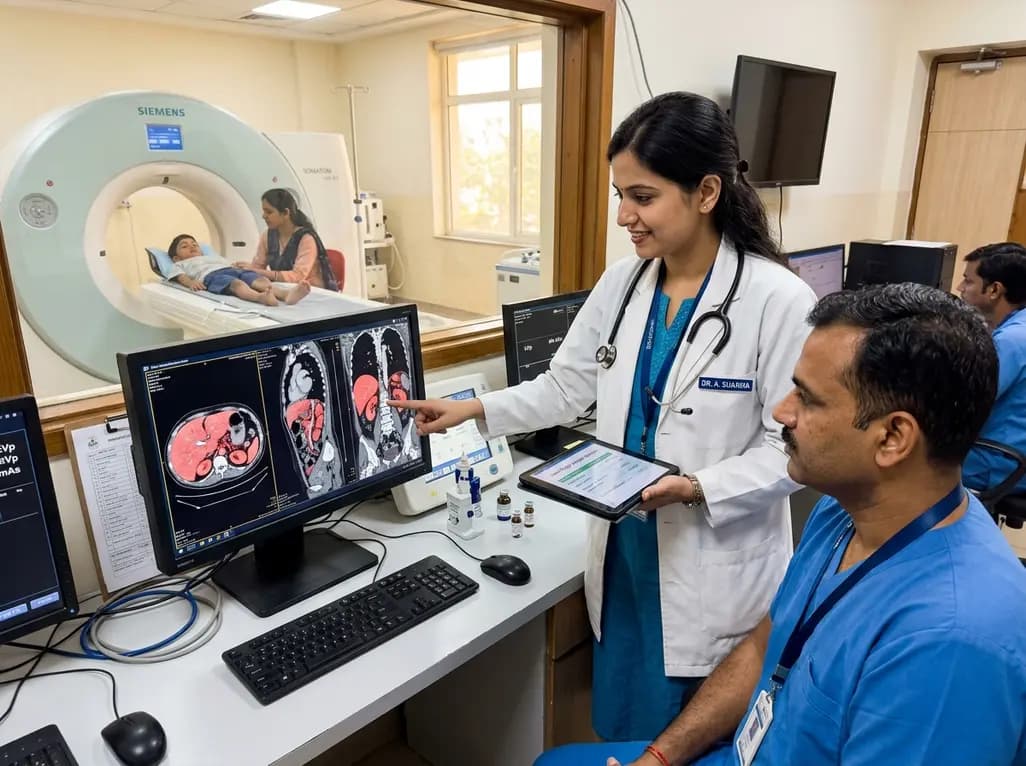
In pediatric diagnostic imaging, computed tomography plays a pivotal role in evaluating complex intra-abdominal pathologies. However, determining the optimal volume of intravenous iodinated contrast media remains a persistent clinical challenge. Traditionally, pediatric contrast dosing relies on total body weight calculations. Consequently, children with higher adiposity often receive larger contrast volumes than physiologically necessary. Therefore, refining pediatric contrast dosing protocols is essential to minimize unnecessary contrast exposure while preserving diagnostic image quality in young patients.
Recent pediatric research explores whether lean body weight offers a more accurate parameter for calculating contrast medium volume. Adipose tissue exhibits lower vascularity and extracellular fluid volume compared to lean tissue. As a result, dosing strictly by total body weight can cause relative contrast overexposure in heavier pediatric patients. Dosing based on lean body weight addresses this physiological imbalance effectively. Consequently, pediatric radiologists can potentially reduce total iodine delivery without compromising organ enhancement or diagnostic clarity.
A prospective randomized clinical trial investigated contrast volume requirements and hepatic enhancement quality across three distinct dosing strategies in children. The study enrolled sixty-six pediatric patients aged up to sixteen years undergoing contrast-enhanced abdominal computed tomography. Researchers randomly assigned participants to three clinical arms: a lean body weight group, a total body weight group, and an institutional control protocol group.
In the lean body weight group, clinicians calculated contrast administration using Peters formula, administering 0.63 grams of iodine per kilogram of lean body weight. In contrast, the total body weight group received 0.46 grams of iodine per kilogram of total body weight. Furthermore, the institutional control group received 2 milliliters per kilogram of total body weight, representing standard clinical practice. The primary objective was evaluating whether lean body weight calculations could safely reduce total contrast volume without compromising diagnostic hepatic attenuation values.
The trial findings revealed noticeable numeric reductions in overall contrast volume among children receiving lean body weight dosing. Specifically, the lean body weight group received a median contrast volume of 27 milliliters, compared to 34.5 milliliters in the total body weight group and 40 milliliters in the standard control group. Although these volumetric differences did not reach statistical significance in the overall cohort, the relative reduction was clinically meaningful for pediatric safety.
Importantly, the reduction in contrast media volume did not compromise diagnostic image quality or organ visualization. Quantitative attenuation measurements confirmed that hepatic enhancement remained equivalent across all groups. Specifically, liver enhancement in the lean body weight cohort averaged 552 Hounsfield units, demonstrating comparable quality to institutional standard protocols. Therefore, lean body weight protocols successfully reduced contrast exposure while maintaining excellent diagnostic confidence for pediatric radiologists during abdominal evaluations.
Understanding pediatric physiological distribution is fundamental to optimizing contrast delivery in young patients. Iodinated contrast agents distribute primarily throughout the extracellular fluid compartment. Because lean muscle tissue and solid organs hold the vast majority of vascular supply and extracellular fluid, lean body mass correlates directly with contrast distribution dynamics. Conversely, adipose tissue receives minimal perfusion and contributes minimally to contrast distribution during dynamic imaging phases.
When pediatric contrast protocols rely exclusively on total body weight, patients with higher body fat percentages receive disproportionately elevated contrast doses. This excess iodine does not enhance parenchymal tissue further, but it does increase renal clearance burdens. Furthermore, reducing total contrast load is particularly beneficial in vulnerable pediatric patients, such as those with mild baseline renal insufficiency or undergoing repeated diagnostic scans. Consequently, lean body weight formulas provide a tailor-made approach that reflects true physiological distribution volume in children.
Implementing lean body weight dosing protocols offers multiple clinical advantages in pediatric healthcare settings. Primarily, individualizing contrast volume reduces total systemic iodine load, which lowers the risk of contrast-induced acute kidney injury and adverse hypersensitivity reactions. Additionally, reduced contrast volumes support sustainable healthcare practices by lowering pharmaceutical waste and overall procedural costs within pediatric radiology departments.
Integrating lean body weight calculations into daily clinical workflow requires minimal administrative overhead. Clinicians can easily calculate lean mass using standardized pediatric formulas, such as Peters formula, directly within electronic health record systems or CT injector consoles. Furthermore, radiographers and pediatricians can collaborate to implement automated dose calculators, ensuring precise dosing without delaying acute imaging studies. As evidence supporting individualized protocols continues to grow, adoption of lean mass parameters can enhance safety standards across pediatric radiology services globally.
The adoption of lean body weight dosing represents a significant step toward precision medicine in pediatric diagnostic imaging. While preliminary results are promising, future multicenter studies with larger patient cohorts will help refine dosing algorithms across diverse age groups and pediatric body habitus types. Furthermore, advanced CT technologies, including dual-energy CT and low-kVp imaging techniques, may further decrease contrast requirements while enhancing soft tissue contrast.
Ultimately, transitioning from traditional total body weight dosing to personalized lean mass protocols offers a safer, more tailored approach for pediatric patients. Pediatricians, radiologists, and clinical technologists should consider incorporating lean body weight parameters into routine abdominal CT workflows. By prioritizing individualized dosing strategies, healthcare providers can maintain superior diagnostic accuracy while actively minimizing contrast exposure risks in children across clinical settings.
Lean body weight in pediatric patients is typically calculated using validated mathematical equations such as Peters formula, which incorporates the child's height, total body weight, and sex. Modern electronic health record systems and advanced contrast injector workstations can automatically perform these calculations prior to CT examinations. This automated integration ensures fast, accurate dosing estimations without adding operational delay or administrative burden to busy pediatric radiology departments and emergency imaging workflows.
No, clinical trial evidence demonstrates that lean body weight dosing maintains diagnostic hepatic image quality comparable to traditional total body weight protocols. Quantitative evaluations show that organ attenuation values, measured in Hounsfield units, remain equal across dosing strategies. Because contrast media distributes primarily within extracellular fluid and lean vascular tissues, calculating dosage based on lean mass delivers adequate iodine concentration to solid abdominal organs without unnecessary hyperconcentration or volume overloading.
Reducing contrast volume in pediatric patients minimizes systemic iodine exposure and reduces physiological strain on immature or developing renal systems. Furthermore, lowering total contrast volume decreases the risk of contrast-induced acute kidney injury, extravasation injury, and systemic allergic reactions. For pediatric patients who require repeated diagnostic imaging studies throughout chronic treatment courses, cumulative contrast reduction significantly mitigates long-term organ toxicity and optimizes overall pediatric patient safety profiles.
Disclaimer: This content is for informational and educational purposes only. It does not constitute medical advice, diagnosis, or treatment. Refer to the latest local and national guidelines for clinical practice.
References

Read summarized clinical updates, watch expert medical content, and earn CME certifications right from your smartphone.
Open your smartphone camera to scan and install.





A prospective study evaluates lean body weight versus total body weight for iodinated contrast dosing in pediatric abdominal CT, showing reduced contrast volumes without compromising diagnostic image quality.
last month

A prospective discrete choice experiment reveals that patients with chronic lymphocytic leukemia prioritize progression-free survival and quality of life over dosing convenience, highlighting vital trade-offs between cardiac, renal, and neurologic toxicities in collaborative oncology decision-making.
Today
A recent longitudinal study evaluated the link between prenatal loss of control eating and cardiovascular health using Life's Essential 8 frameworks. While direct associations across pregnancy were non-significant, the high prevalence of dysregulated eating highlights critical implications for obstetric practice.
Today

A cross-sectional analysis of NHANES 2013-2020 reveals that depressive symptoms and sleep disturbance significantly elevate the odds of cardiometabolic multimorbidity in adults with arthritis. Comprehensive clinical screening and integrated multi-organ interventions are vital to reduce overall cardiovascular burden.
Today

Systematic review comparing labral repair and reconstruction in primary hip arthroscopy shows comparable short- to mid-term patient-reported outcomes, with lower THA conversion after repair but superior outcomes for reconstruction in patients aged 40 and older.
Yesterday

A breakthrough study shows that harmine restores insulin-producing beta cell mass and boosts functional identity markers through an unexpected protein kinase A pathway. This finding demonstrates that small-molecule DYRK1A inhibitors possess divergent therapeutic capabilities in diabetes management.
Today
