.webp&w=384&q=75)

Loading, please wait...
Loading, please wait...

Managing chronic lymphocytic leukemia has entered an unprecedented era of targeted therapy. Clinicians no longer rely solely on cytotoxic chemoimmunotherapy regimens. Instead, novel small-molecule inhibitors have redefined front-line and relapsed disease management. However, therapeutic success requires aligning clinical evidence with individual patient priorities. A recent prospective discrete choice experiment evaluated CLL treatment preferences among adults across the United States. The investigators surveyed 199 patients to quantify how specific therapeutic attributes guide clinical choices. Historically, oncologists often assumed that oral convenience outweighed other therapeutic features. In contrast, this rigorous study highlights a more nuanced trade-off. Patients actively prioritize durable disease control and daily functional well-being over schedule simplicity. Furthermore, patients demonstrate a remarkable willingness to navigate complex clinical monitoring if a drug prevents debilitating symptoms. Understanding these distinct CLL treatment preferences enables oncologists to tailor therapy specifically to individual tolerance thresholds. Consequently, collaborative discussions can optimize both oncologic outcomes and daily living standards. Shared decision-making bridges the gap between laboratory efficacy and personal lifestyle priorities. When hematologists incorporate patient values early, treatment adherence inevitably improves. Therefore, structured value discussions should become an integral standard in modern oncology clinics.
The discrete choice experiment used conditional logistic regression to evaluate trade-offs across efficacy, safety, and administration convenience. Notably, progression-free survival emerged as the single most critical driver, capturing 29.5% of relative attribute importance. Patients clearly view sustained remission as paramount to their survival expectations. Nevertheless, adverse event profiles commanded an overwhelming collective share of patient concern. When researchers combined various adverse events, safety attributes vastly exceeded efficacy in aggregate decision weight. Specifically, the quality-of-life impact of headaches accounted for 25.9% of relative importance. Similarly, atrial fibrillation followed closely, driving 24.4% of patient decision weighting. Meanwhile, kidney dysfunction and tumor lysis risks contributed 10.1% to the overall choice equation. In contrast, routine administration convenience comprised only 5.4% of total importance. Furthermore, the perceived impact of diarrhea and hypertension accounted for just 3.5% and 1.1%, respectively. Consequently, these findings indicate that while patients value disease control, severe symptomatic disruptions strongly deter therapy acceptance. Clinicians often tolerate persistent mild or moderate symptoms, yet patients perceive these toxicities as major threats to daily functioning. Therefore, oncologists must evaluate whether patients tolerate persistent physical side effects before initiating specific targeted pathways.
Cardiovascular safety remains a central concern when selecting modern kinase inhibitors. The substantial 24.4% weight assigned to atrial fibrillation underscores profound patient anxiety regarding cardiac complications. Atrial fibrillation carries significant risks of thromboembolism, stroke, and unexpected hospital admissions. Consequently, patients fear losing physical independence and worry about adding anticoagulant medications. Similarly, the striking 25.9% importance given to headaches reflects how unmanaged neurologic discomfort disrupts basic daily routines. For example, second-generation agents like acalabrutinib often trigger early headaches that can impair concentration and work performance. Fortunately, caffeine supplementation and simple analgesics frequently alleviate these episodes within several weeks. However, unless clinicians proactively counsel patients about this transient pattern, patients may abandon therapy prematurely. Additionally, renal dysfunction generated notable apprehension among 10.1% of participants. Patients recognize that renal impairment can necessitate frequent laboratory draws, dose modifications, or intensive hydration protocols. In comparison, hypertension and mild diarrhea generated surprisingly low relative concern. Nonetheless, unmonitored cardiovascular elevation can induce silent long-term vascular morbidity. Therefore, comprehensive shared decision-making requires clinicians to clarify that low day-to-day bother does not diminish long-term organ toxicity risks.
The therapeutic debate between continuous oral Bruton tyrosine kinase inhibitors and time-limited venetoclax combinations remains prominent. Continuous BTK inhibition suppresses malignant clones durably, but it requires indefinite daily compliance and sustained vigilance for cumulative toxicities. Conversely, fixed-duration regimens offer definitive treatment completion and treatment-free remissions. However, fixed regimens frequently require strict tumor lysis syndrome prophylaxis, serial blood draws, and occasional hospitalizations. Surprisingly, treatment convenience accounted for merely 5.4% of patient preference weighting in this prospective cohort. Patients willingly accept initial intensive monitoring and outpatient visits to achieve deep remissions and time off therapy. Alternatively, some patients favor continuous single-agent oral regimens to avoid intensive laboratory surveillance and venipunctures. Furthermore, personal commitments and travel logistics shape these distinct preferences. Clinicians must explain that both strategies offer excellent progression-free survival across modern clinical trials. Therefore, selecting between continuous and time-limited approaches depends heavily on individualized lifestyle factors and tolerance for medical visits. When oncologists detail these logistical trade-offs transparently, patients feel empowered in their personalized cancer care journey. Ultimately, aligning the treatment schedule with patient lifestyle promotes sustained therapy adherence.
Applying patient preference data within Indian healthcare settings introduces unique socioeconomic and logistical variables. In India, many oncology patients bear significant out-of-pocket medical costs for targeted leukemia therapies. Continuous therapies can create substantial, unpredictable financial toxicity over prolonged periods. Consequently, fixed-duration regimens frequently present a highly attractive financial alternative by capping lifetime pharmaceutical expenditures. Furthermore, access to tertiary hematology centers varies dramatically between major metropolitan hubs and rural districts. Intensive tumor lysis syndrome monitoring and hospitalization require accessible institutional support and rapid laboratory turnaround. In peripheral regions lacking specialized nephrology backup, continuous oral agents might offer a safer operational profile. Nevertheless, physicians must rigorously screen for pre-existing cardiac comorbidities, especially rheumatic heart disease and untreated hypertension. Rural patients might struggle to report sudden palpitations or early signs of atrial arrhythmia. Therefore, Indian clinicians should carefully weigh institutional monitoring capabilities against long-term outpatient medication costs. Additionally, dedicated patient counseling in regional languages remains vital to bridge literacy and educational differences. Collaborative decision-making must accommodate both clinical safety thresholds and family financial realities to ensure uninterrupted therapeutic delivery.
Progression-free survival represents the single most influential clinical attribute for patients selecting targeted leukemia therapy. Patients consistently prioritize therapies that extend remission duration and delay disease progression. However, patient preference research indicates that efficacy alone does not dictate therapeutic choices. Patients frequently evaluate survival benefits alongside potential reductions in daily quality of life. Therefore, clinicians must emphasize durable disease control while proactively addressing toxicity concerns to ensure treatment satisfaction.
Headaches and atrial fibrillation directly disrupt daily physical performance, emotional well-being, and personal independence. Atrial arrhythmias create acute anxiety due to stroke risks and potential hospitalization requirements. Meanwhile, severe chronic headaches interfere with basic concentration and occupational tasks. Consequently, patients heavily weigh these specific symptomatic toxicities against therapeutic efficacy. Proactive symptom counseling and prompt medical management help alleviate these fears, fostering confidence throughout therapy.
Hematologists in India must evaluate local monitoring infrastructure, institutional hospitalization resources, and household financial capacity. Fixed-duration regimens offer definitive treatment endpoints and limit long-term out-of-pocket costs, though they necessitate close laboratory surveillance for tumor lysis syndrome. Conversely, continuous therapies provide convenient oral administration but impose sustained financial and toxicity monitoring burdens. Tailoring treatment choices requires transparent dialogue balancing these economic, logistical, and medical factors.
Disclaimer: This content is for informational and educational purposes only... Refer to the latest local and national guidelines for clinical practice.
References
Ailawadhi S et al. Prospective patient preference study for chronic lymphocytic leukemia (CLL) treatment attributes impacting patient shared decision-making. Expert Rev Anticancer Ther. 2026 Sep 21. doi: 10.1080/14737140.2026.2722166. PMID: 42766011.
Mato AR, Roeker LE, Jacobs R, et al. Assessment of real-world outcomes and toxicities of Bruton tyrosine kinase inhibitors in chronic lymphocytic leukemia. Clin Lymphoma Myeloma Leuk. 2023;23(4):254-263.
Sharman JP, Egyed M, Jurczak W, et al. Acalabrutinib with or without obinutuzumab versus chlorambucil and obinutuzumab for treatment-naive chronic lymphocytic leukaemia (ELEVATE-TN): 5-year follow-up of a randomised, controlled, phase 3 trial. Lancet Oncol. 2022;23(7):1019-1032.

Read summarized clinical updates, watch expert medical content, and earn CME certifications right from your smartphone.
Open your smartphone camera to scan and install.





A prospective discrete choice experiment reveals that patients with chronic lymphocytic leukemia prioritize progression-free survival and quality of life over dosing convenience, highlighting vital trade-offs between cardiac, renal, and neurologic toxicities in collaborative oncology decision-making.
Today
A recent longitudinal study evaluated the link between prenatal loss of control eating and cardiovascular health using Life's Essential 8 frameworks. While direct associations across pregnancy were non-significant, the high prevalence of dysregulated eating highlights critical implications for obstetric practice.
Today

A cross-sectional analysis of NHANES 2013-2020 reveals that depressive symptoms and sleep disturbance significantly elevate the odds of cardiometabolic multimorbidity in adults with arthritis. Comprehensive clinical screening and integrated multi-organ interventions are vital to reduce overall cardiovascular burden.
Today

Systematic review comparing labral repair and reconstruction in primary hip arthroscopy shows comparable short- to mid-term patient-reported outcomes, with lower THA conversion after repair but superior outcomes for reconstruction in patients aged 40 and older.
Yesterday
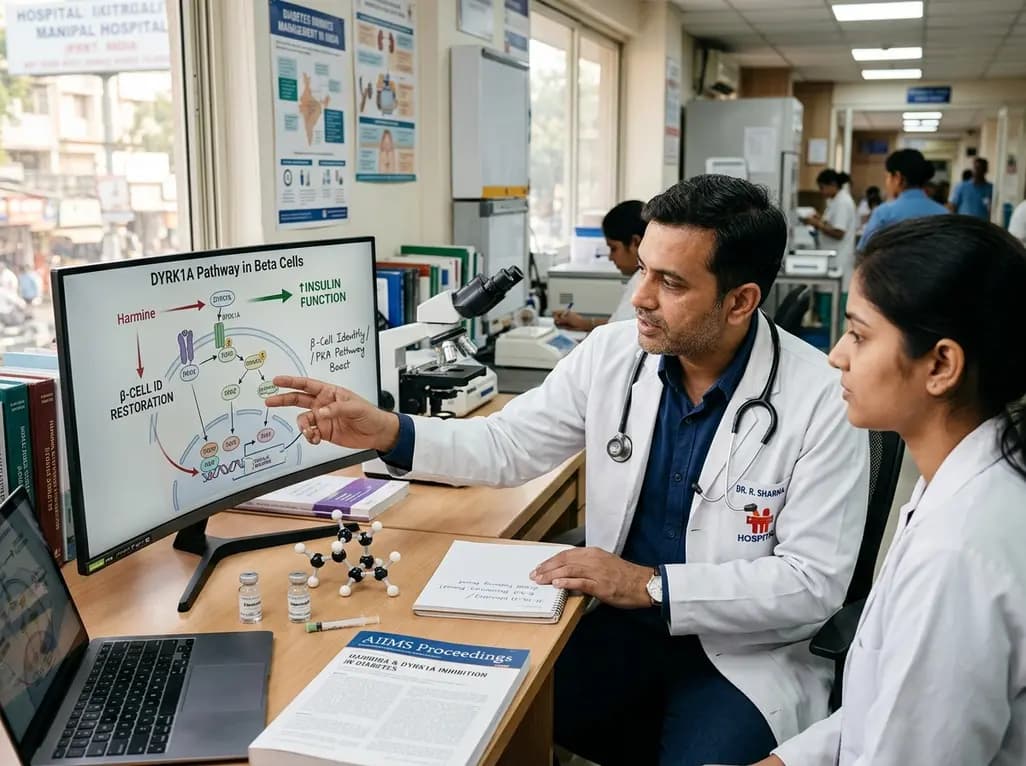
A breakthrough study shows that harmine restores insulin-producing beta cell mass and boosts functional identity markers through an unexpected protein kinase A pathway. This finding demonstrates that small-molecule DYRK1A inhibitors possess divergent therapeutic capabilities in diabetes management.
Today
