

Loading, please wait...
Loading, please wait...

Evaluating pediatric Chiari headaches presents significant diagnostic dilemmas for neurologists and pediatric surgeons. Historically, clinicians frequently debated whether operative decompression or structured medical therapy yields superior symptom relief. To resolve this question, Lynch and colleagues conducted an observational cohort study of 112 affected children. Specifically, the team categorized headache phenotypes and evaluated clinical outcomes across distinct management strategies. Ultimately, their findings challenge traditional surgical assumptions and emphasize balanced therapeutic decision-making.
Chiari malformation type I involves caudal displacement of cerebellar tonsils through the foramen magnum. Consequently, this anatomical crowding disrupts cerebrospinal fluid circulation across the craniovertebral junction. The investigators categorized headache symptoms into typical, intermediate, and atypical presentations using established diagnostic criteria. Forty patients presented with typical episodes characterized by severe suboccipital or occipital pain. Furthermore, Valsalva maneuvers such as coughing, straining, laughing, or bending forward consistently provoked these episodes.
In addition, forty-two children exhibited intermediate features, demonstrating both exertional pain and continuous background aching. Meanwhile, thirty patients presented with atypical headaches resembling primary tension-type cephalalgia or childhood migraines. Pediatric patients often struggle to describe subtle variations in mechanical provocation or pain localization. Therefore, clinicians must conduct meticulous neurological examinations rather than relying solely on patient descriptions. Recognizing these diverse clinical phenotypes enables specialists to differentiate true hindbrain compression symptoms from coincident primary headache disorders. Consequently, thorough semiological profiling prevents unnecessary interventions for incidental anatomical variants.
The clinical decision between surgical intervention and conservative medical management requires careful risk stratification. In this study, forty-eight patients underwent surgical decompression, whereas sixty-four children received medical therapies. Neurosurgeons determined the management course after detailed shared discussions with each patient and their guardians. Specifically, clinicians recommended surgical treatment when patients exhibited severe symptoms, progressive neurological signs, or an associated spinal syrinx. Surgical decompression generally involves suboccipital craniectomy, cervical laminectomy, and optional duraplasty to enlarge the posterior fossa space.
Conversely, medical management relies on established analgesic protocols and migraine prophylactic medications. Pediatricians prescribed nonsteroidal anti-inflammatory drugs, lifestyle adjustments, and preventive pharmacotherapy depending on headache semiology. While posterior fossa decompression restores patency to the subarachnoid pathways, surgical intervention carries real morbidity risks. These complications include cerebrospinal fluid leaks, pseudomeningoceles, postoperative meningitis, and chemical arachnoiditis. On the contrary, medical therapy eliminates surgical morbidity but requires strict compliance and continuous monitoring. Therefore, clinical teams must carefully evaluate the risk-to-benefit balance before deciding between decompressive surgery and ongoing medical surveillance.
The primary analysis evaluated symptom improvement over both short-term and long-term observation windows. Remarkably, the authors found no statistically significant difference in headache improvement between surgical and medical treatment groups. This therapeutic equivalence held true across all headache categories, including typical, mixed, and atypical symptom profiles. In short-term assessments within six months, both groups demonstrated similar rates of meaningful pain relief. Furthermore, extended evaluations beyond six months confirmed that surgical intervention did not confer superior long-term headache resolution.
Historically, neurosurgeons anticipated that children with classic Valsalva-induced suboccipital pain would benefit most profoundly from bony decompression. However, the study outcomes directly challenge this long-standing clinical belief. Medical management achieved comparable rates of symptom reduction even among patients experiencing typical Chiari headache features. These findings suggest that cephalic pain in pediatric tonsillar ectopia often arises from multifactorial mechanisms. Independent primary headache syndromes, muscular tension, and postural strains frequently coexist with anatomical tonsillar herniation. Consequently, anatomical decompression does not reliably abolish central pain processing mechanisms. Clinicians should therefore recognize that conservative pharmacologic management provides an effective alternative to immediate operative intervention.
Multivariable regression models identified specific demographic and anatomical variables associated with headache resolution. Notably, non-White race and the presence of an associated spinal syrinx served as statistically significant predictors of short-term headache improvement. Patients with a syrinx often experience substantial relief following therapy because targeted intervention alleviates intraspinal hydrodynamic pressure. When treatment successfully stabilizes fluid dynamics, cord distension and localized meningeal irritation diminish rapidly.
In contrast, female gender emerged as a statistically significant negative predictor of long-term headache improvement. Female adolescents frequently experience high rates of co-occurring primary neurovascular headaches, including migraines driven by hormonal fluctuations. Therefore, persistent pain circuits often maintain cephalalgia in females despite successful surgical decompression or standard analgesic regimens. Furthermore, the degree of tonsillar herniation on magnetic resonance imaging failed to predict symptomatic outcomes reliably. Deep tonsillar descent did not correlate with worse pain, nor did minimal herniation predict superior medical response. Consequently, neurosurgeons cannot base surgical recommendations solely on radiographic measurements. Instead, clinicians must synthesize neurological examination findings, comorbid pain profiles, and prognostic predictors during clinical counseling.
These compelling findings provide a pragmatic roadmap for modern pediatric neurosurgical and neurological practice. Given the equivalent headache outcomes, clinicians should adopt a conservative-first strategy for children with isolated headache symptoms. Practitioners should reserve posterior fossa decompression for cases involving progressive syringomyelia, objective neurological deficits, or refractory pain unresponsive to comprehensive medical regimens. Furthermore, pediatricians and neurologists must aggressively manage underlying migraine or tension components before labeling medical therapy as a failure.
Additionally, multidisciplinary collaboration between pediatricians, neurologists, and neurosurgeons remains vital for optimal decision-making. Clear communication relieves parental distress when magnetic resonance imaging incidentally reveals low-lying cerebellar tonsils. Educating families that non-operative strategies provide equivalent headache relief fosters confidence in conservative management. Ultimately, avoiding premature surgical procedures spares children from procedural risks while maintaining excellent long-term quality of life. Clinicians can confidently guide families toward conservative options while maintaining vigilant surveillance for emergent red flag signs.
Typical Chiari headaches manifest as brief, intense suboccipital or occipital pain aggravated by Valsalva maneuvers like coughing, straining, or laughing. Conversely, atypical headaches mimic primary headache disorders such as tension-type cephalalgia or childhood migraines. They present with diffuse, dull, or throbbing pain without clear mechanical exacerbation during physical exertion.
Surgeons should prioritize posterior fossa decompression when pediatric patients present with an expanding spinal cord syrinx, progressive motor deficits, sensory loss, or lower cranial nerve dysfunction. When severe, intractable Valsalva headaches persist despite optimized medical management, surgical intervention also offers valuable anatomical relief by restoring normal craniocervical fluid dynamics.
Comparable outcomes likely occur because pediatric headaches often stem from multifactorial origins rather than isolated mechanical tonsillar impaction. Coexisting conditions like childhood migraine, muscle tension, and central sensitization can provoke head pain independently. Consequently, non-operative medical therapy treats these neural pain generators just as effectively as surgical decompression resolves hydrodynamic obstruction.
Disclaimer: This content is for informational and educational purposes only. It is not intended to be a substitute for professional medical advice, diagnosis, or treatment. Always seek the advice of your physician or other qualified health provider with any questions you may have regarding a medical condition. Never disregard professional medical advice or delay in seeking it because of something you have read here. Refer to the latest local and national guidelines for clinical practice.
References

Read summarized clinical updates, watch expert medical content, and earn CME certifications right from your smartphone.
Open your smartphone camera to scan and install.





A retrospective cohort study reveals comparable headache outcomes between surgical decompression and medical therapy in pediatric Chiari malformation type I. Clinicians must weigh conservative pathways alongside surgical risks when tailoring treatment for pediatric headache relief.
Today

The DOMINO study protocol presents a multidisciplinary implementation mapping approach to overcome provider, patient, and payer barriers to antiobesity medications, offering vital insights for Indian clinicians managing the growing diabesity burden.
Today

An intracranial EWSR1::CREM fusion sarcoma in a 31-year-old female manifested as a paraneoplastic inflammatory syndrome with anemia and secondary infertility. The dural mass mimicked meningioma, but gross-total resection resolved her systemic inflammation and restored natural fertility within one month.
Today

A real-world cohort study of 6,537 patients from the FOUNTAIN platform demonstrates that initiating finerenone significantly reduces albuminuria by 40.7% with minimal eGFR decline and manageable hyperkalemia risk, confirming its practical effectiveness and safety in diabetic kidney disease.
Yesterday
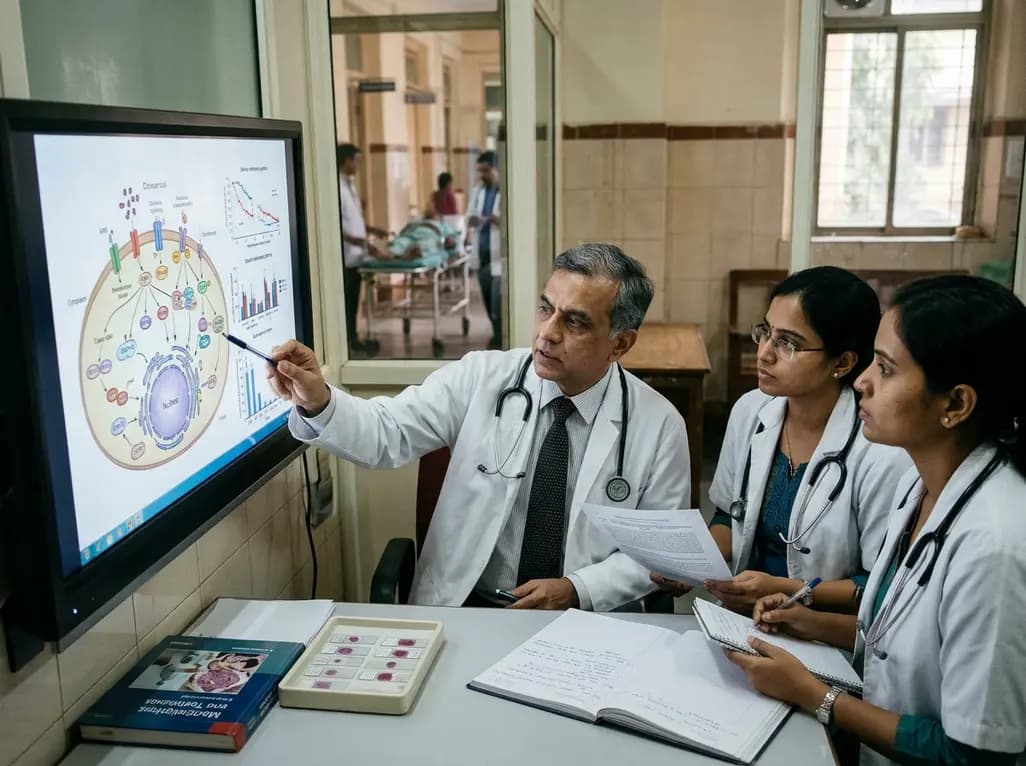
A comprehensive analysis of MAP therapy resistance in osteosarcoma, examining canonical and non-canonical mechanisms across damage avoidance, enhanced DNA repair, and replication stress tolerance to identify novel vulnerabilities.
Today
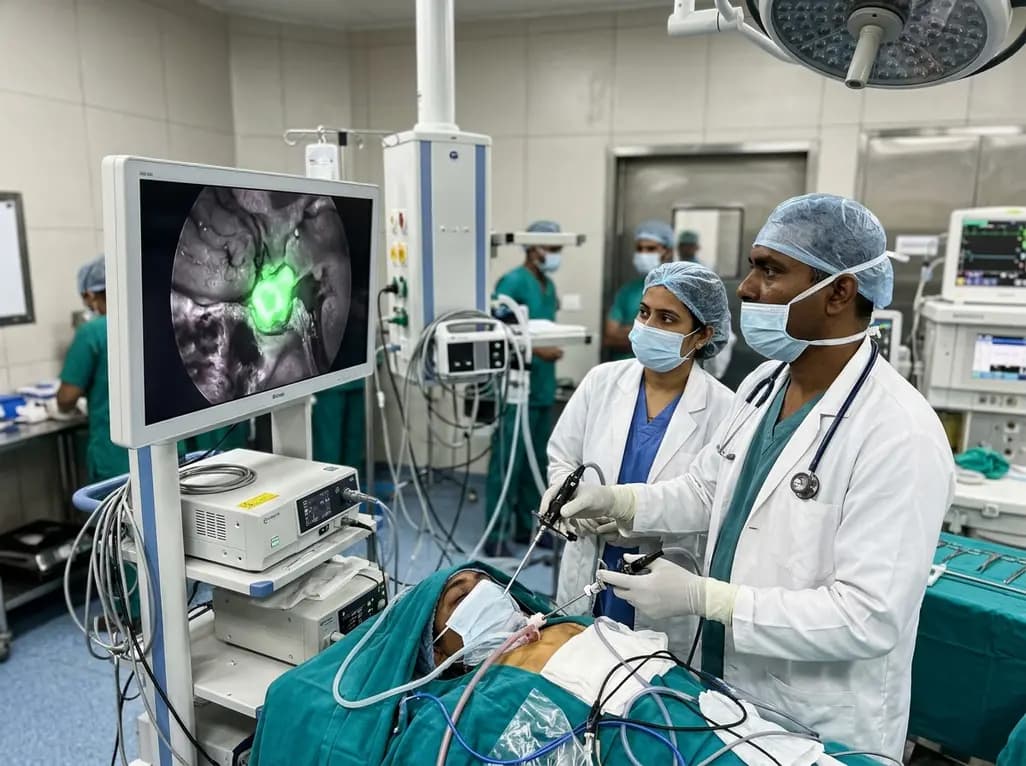
Near-infrared autofluorescence provides real-time label-free optical guidance during endoscopic transsphenoidal pituitary surgery. By highlighting stark signal contrasts between normal pituitary gland and adenomas, this technique aids gross-total tumor resection while safeguarding critical endocrine function.
Today
