

Loading, please wait...
Loading, please wait...
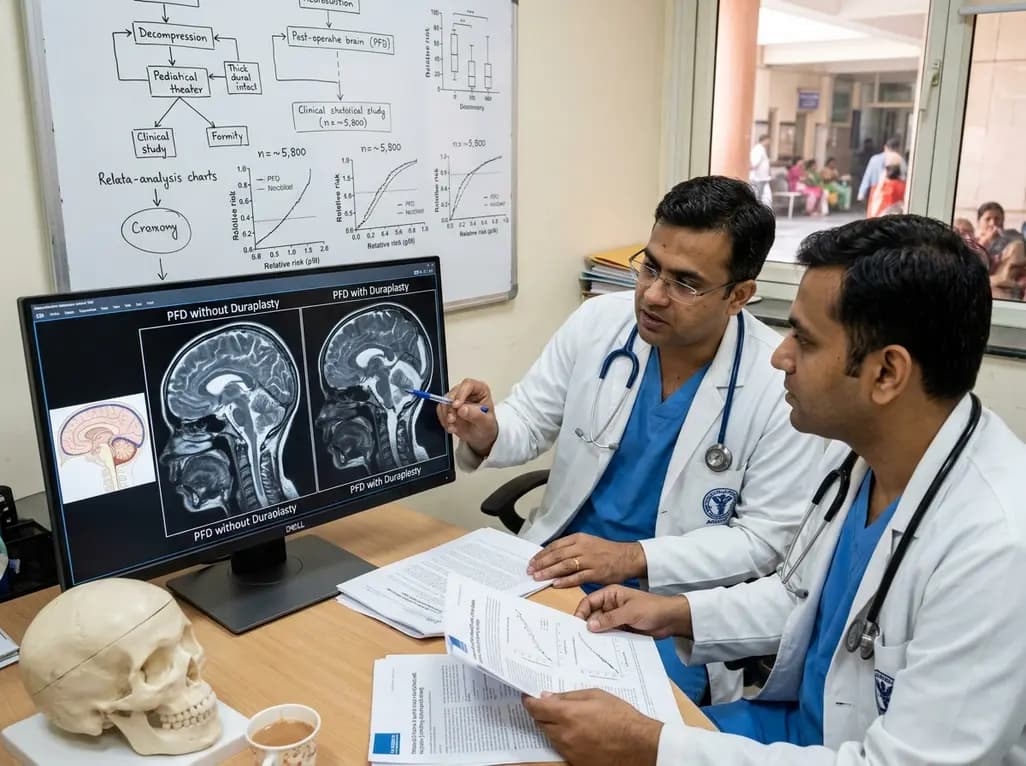
Surgical management of pediatric Chiari malformation type I remains a subject of active debate among neurosurgeons. Clinicians frequently choose between posterior fossa decompression only and posterior fossa decompression with duraplasty. Proponents of duraplasty emphasize improved cerebrospinal fluid dynamics and reliable syrinx regression. Conversely, advocates of osseous decompression alone prioritize reduced surgical trauma and fewer operative complications. A landmark systematic review and meta-regression now delivers crucial clarity regarding pediatric Chiari decompression outcomes. By analyzing comparative evidence across thousands of young patients, the study provides robust guidance for everyday neurosurgical decision-making.
The systematic review evaluated twenty-six comparative studies encompassing 5,977 pediatric patients. Among these children, 2,641 underwent osseous decompression alone, while 3,336 received posterior fossa decompression with duraplasty. Researchers conducted rigorous random-effects models, study-level meta-regression, and graft-type subgroup evaluations. Furthermore, the investigators prespecified sensitivity analyses restricted to strictly defined congenital cohorts and centers routinely deploying intraoperative ultrasound. They also formally examined risk of bias, publication bias, and evidence certainty. Consequently, this investigation represents one of the largest and most methodologically sound syntheses to date on surgical strategies for symptomatic tonsillar herniation.
The primary clinical outcomes demonstrated comparable efficacy between both surgical techniques. Overall clinical improvement occurred in 70.8% of patients receiving bone-only decompression and 80.0% of those receiving duraplasty. However, this numerical difference did not achieve statistical significance. Similarly, radiographic syrinx resolution reached 55.4% in the bone-only cohort versus 63.5% in the duraplasty group, showing no meaningful divergence. In addition, validated functional assessments using Chicago Chiari Outcome Scale scores revealed equivalent postoperative recovery profiles. Therefore, adding a dural patch does not automatically guarantee superior long-term neurological recovery or enhanced hydromyelia reduction in standard pediatric presentations.
Surgical revision remains a critical consideration when selecting an initial operative strategy. Historically, surgeons feared that omitting duraplasty would lead to frequent symptom recurrence and secondary procedures. In this comprehensive meta-regression, the reoperation risk ratio stood at 1.54 for bone-only decompression compared to duraplasty. Nevertheless, this finding failed to reach statistical significance across the examined cohorts. Consequently, the evidence indicates that bony decompression alone does not unacceptably inflate repeat intervention rates. Carefully selected pediatric patients can therefore achieve durable neural decompression without routine intradural manipulation or patch grafting during the initial procedure.
Although functional outcomes remained comparable, complication rates diverged sharply between the two operative approaches. Specifically, posterior fossa decompression with duraplasty produced substantially higher cerebrospinal fluid-related morbidity. Patients undergoing dural opening experienced higher rates of cerebrospinal fluid leaks, pseudomeningocele formation, and aseptic meningitis. Conversely, posterior fossa decompression without duraplasty reduced these complications by more than half. Therefore, the avoidance of dural incision confers an immediate, measurable safety advantage. Minimizing extra-axial fluid collections also shortens hospital stays, reduces chemical arachnoiditis risk, and prevents secondary wound breakdowns in vulnerable pediatric individuals.
Tailoring surgical intervention to the individual child represents the modern standard of care. Intraoperative ultrasound serves as an invaluable diagnostic adjunct during bone-only decompression. Specifically, real-time sonography allows the neurosurgeon to evaluate tonsillar pulsation, fourth ventricle patency, and subarachnoid space restoration before concluding surgery. If adequate cerebrospinal fluid pulsatility across the craniocervical junction appears restored after bony removal, duraplasty may be safely omitted. However, if severe intradural scarring or persistent flow obstruction persists, the surgeon can selectively perform duraplasty. Thus, incorporating dynamic intraoperative imaging reconciles the debate by guiding tailored, tissue-sparing surgical intervention.
Current meta-analytic evidence indicates that adding duraplasty does not produce a statistically significant advantage in syrinx improvement compared to bone-only decompression. While numerical rates of hydromyelia reduction appear slightly higher after dural opening, comparative statistical analyses show equivalent radiological resolution. Consequently, surgeons do not need to perform routine duraplasty solely to achieve adequate syrinx reduction in pediatric patients.
Duraplasty requires incising the dura mater and sewing a biological or synthetic patch over the posterior fossa. Opening the intradural compartment exposes the arachnoid space to surgical debris, blood, and graft foreign bodies. Consequently, patients face heightened risks of persistent cerebrospinal fluid leaks, subcutaneous pseudomeningoceles, wound breakdown, and chemical aseptic meningitis, which bone-only decompression effectively prevents.
Neurosurgical teams should evaluate preoperative symptom severity, tonsillar descent morphology, and intraoperative findings. When osseous removal restores satisfactory subarachnoid space and vigorous tonsillar pulsations on intraoperative ultrasound, bone-only decompression suffices. Conversely, for patients with extensive intradural adhesions, severe ventral compression, or failed prior osseous decompression, proceeding with formal duraplasty remains the preferred remedial option.
Disclaimer: This content is for informational and educational purposes only... Refer to the latest local and national guidelines for clinical practice.
References
Nischal SA et al. Posterior fossa decompression in pediatric Chiari malformation type I: a meta-analysis and meta-regression of outcomes with and without duraplasty. J Neurosurg Pediatr. 2026 Nov 13. doi: 10.3171/2026.5.PEDS25675. PMID: 43024877.
Durham SR, Fjeld-Olenec H. Comparison of posterior fossa decompression with and without duraplasty for the surgical treatment of Chiari malformation Type I in pediatric patients: a meta-analysis. J Neurosurg Pediatr. 2008;2(1):42-49.
Limbrick DD Jr et al. Pediatric Chiari I malformation: surgical management and outcome considerations. Neurosurgery. 2022;91(4):540-549.

Read summarized clinical updates, watch expert medical content, and earn CME certifications right from your smartphone.
Open your smartphone camera to scan and install.





A comprehensive meta-analysis of nearly 6,000 pediatric patients evaluates posterior fossa decompression with versus without duraplasty for Chiari malformation type I. Findings reveal equivalent clinical and syrinx improvement, whereas duraplasty significantly increases CSF-related complications.
Today

Central chronotropic incompetence is an underrecognized sequela of rhombencephalitis causing exertional dyspnea despite normal resting cardiac function. Cardiopulmonary exercise testing unmasks this heart-brain uncoupling, guiding rate-responsive pacing and targeted rehabilitation.
Today

A landmark study reveals that lipid-rich malignant ascites alters the T-cell metabolic transcriptome, causing cholesterol efflux and impaired fatty acid oxidation. This suppresses TCR signalling and blocks BiTE immunotherapy, while lipid depletion restores antitumour cytotoxicity in ovarian cancer.
Today
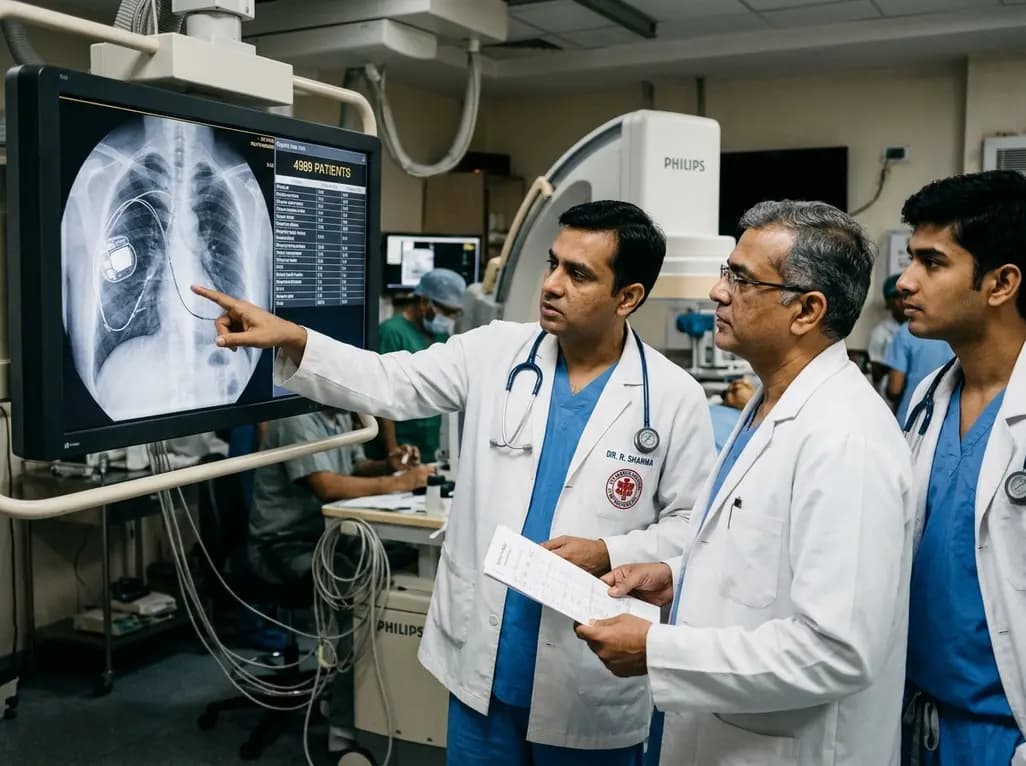
A registry study of 4,989 patients evaluates transvenous lead extraction for right-sided cardiac devices. Despite longer dwell times and older leads, right-sided extractions achieve high procedural success and comparable safety to left-sided approaches.
Today

Recent crash analyses demonstrate significant variations in traffic injury severity across vehicle seating positions. Electric vehicle passengers face disproportionately higher trauma risks than drivers, particularly during airbag deployments, demanding adapted emergency assessment and clinical vigilance.
Today

Understand the causal role of Lipoprotein(a) in cardiovascular disease, why international guidelines recommend once-in-a-lifetime molar testing, and the clinical implications of recent phase 3 RNA outcome trials.
Today
