

Loading, please wait...
Loading, please wait...
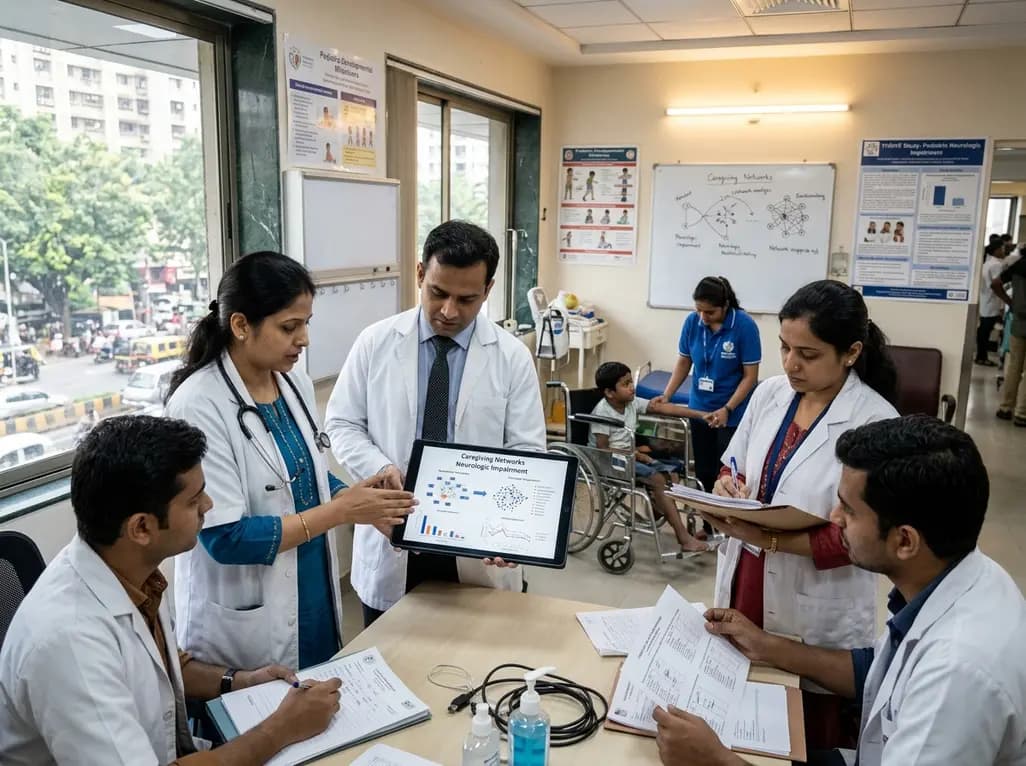
Children who live with severe neurologic impairment present complex physiological and clinical challenges. Consequently, optimizing pediatric caregiving networks has become a paramount priority for health systems worldwide. These children frequently experience multiple co-occurring chronic conditions, such as intractable epilepsy, severe neuromuscular weakness, dysphagia, and chronic respiratory failure. Therefore, daily home management demands relentless clinical vigilance and technical proficiency. In many households, families must coordinate enteral tube feeds, respiratory airway clearance, and strict polypharmacy administration. Because care demands frequently exceed the capacity of a single person, multiple individuals must share these daily duties. However, when care coordination falters, acute medical complications swiftly emerge. Recurrent aspiration pneumonia, status epilepticus, and dehydration frequently lead to emergency visits and prolonged hospital stays. Furthermore, primary caregivers experience physical exhaustion, chronic stress, and profound social isolation. Medical teams often focus entirely on pharmacological regimens and surgical procedures, yet they overlook home dynamics. As a result, comprehensive care requires clinicians to evaluate the entire home support system rather than isolating the patient from family context.
Managing a medically fragile child requires a robust and well-organized care infrastructure. In particular, pediatric caregiving networks encompass a broad spectrum of paid and unpaid individuals. Unpaid contributors frequently include parents, grandparents, older siblings, extended relatives, and helpful neighbours. In addition, paid professionals such as home health nurses, physiotherapists, and private attendants often assist families. Social network analysis provides valuable mathematical tools to examine these complex social relationships. Specifically, researchers quantify network size, density, centralization, and triadic closure to understand operational efficiency. Network density measures how intensely caregivers connect and communicate with one another. Triadic closure occurs when two distinct caregivers who assist the child also establish direct communication between themselves. Moreover, centralized networks rely heavily on a single primary caregiver, whereas decentralized models distribute responsibility more evenly. Consequently, when information flows seamlessly among all network members, caregivers recognize acute clinical changes much earlier. In contrast, fragmented networks create hazardous communication lapses and duplicate medication errors. Therefore, analyzing relational structures provides vital insights into household vulnerability and patient safety.
To systematically investigate these intricate relational patterns, researchers designed the multicenter THRIvE prospective cohort study. This landmark protocol investigates how caregiving structures directly correlate with longitudinal clinical outcomes in pediatric neurology. The study enrolls children between two and sixteen years of age who have documented neurologic impairment. Furthermore, eligible participants must have experienced at least one hospitalization or emergency department visit during the previous year. Investigators recruited patient cohorts across five prominent academic medical centers. Primary caregivers complete comprehensive egocentric social network surveys at study enrollment, while secondary caregivers provide independent verification. In addition, the research protocol systematically captures fundamental network variables, including network composition, tie strength, and relational density. Analysts then deploy advanced mixed-effects regression models that appropriately account for site clustering and multiple statistical comparisons. Consequently, this rigorous methodological design controls for critical socio-demographic confounders, household income, and baseline medical complexity. Ultimately, the prospective protocol establishes a scientific framework for uncovering modifiable interpersonal connections that protect high-risk pediatric patients.
The primary objective of the THRIvE protocol centers on defining serious health outcomes over a twelve-month follow-up window. Specifically, the investigative team tracks all-cause mortality and unexpected hospital readmissions as primary clinical endpoints. In addition, researchers rigorously evaluate child quality of life using validated, multidimensional pediatric survey instruments. Secondary outcome measures include missed school days, parent work absenteeism, emergency department visits, and acute symptom burden. For instance, frequent gastrointestinal intolerance and recurrent respiratory exacerbations often herald impending clinical decompensation. However, dense and cohesive care networks may mitigate these adverse episodes through timely home interventions. When secondary caregivers recognize subtle warning signs, they can promptly adjust home therapies or seek early outpatient consultation. Consequently, early network-level mobilization prevents minor physiological deviations from escalating into catastrophic hospital admissions. Furthermore, effective task distribution reduces parental burnout, which directly improves the emotional and physical well-being of the entire household. Ultimately, quantifying these longitudinal endpoints helps clinicians identify which specific network configurations best protect vulnerable children.
In India, pediatricians manage a substantial volume of children affected by cerebral palsy, hypoxic brain injury, and neurogenetic conditions. Fortunately, the traditional Indian family structure naturally provides an extensive care network consisting of grandparents, aunts, and uncles. However, joint family dynamics can also introduce significant clinical challenges if medical communication lacks clear organization. For example, conflicting advice regarding nutritional feeding, traditional remedies, and medication administration frequently causes adherence errors. Moreover, financial constraints often restrict access to dedicated home healthcare nursing and allied rehabilitative services. Therefore, Indian pediatricians must actively map the household care team during routine clinical visits. Clinicians should identify who prepares feeds, who administers anticonvulsants, and who monitors respiratory secretions. In addition, establishing closed-loop communication among key family decision-makers prevents dangerous delays during acute emergencies. Medical teams can train both primary and secondary caregivers together during hospital discharge planning. Consequently, empowering the entire domestic network builds household resilience and drastically reduces preventable tertiary hospital readmissions across diverse socioeconomic settings.
Traditional family assessments typically treat the household as a single homogenous unit or focus entirely on one primary caregiver. In contrast, social network analysis mathematically evaluates the specific connections, density, and communication pathways among all care contributors. Consequently, this innovative approach uncovers hidden gaps in communication, highlights overburdened individuals, and identifies secondary caregivers who significantly influence clinical decisions. Therefore, network analysis provides a far more actionable and detailed understanding of domestic care delivery.
Dense and highly coordinated networks allow caregivers to share clinical responsibilities and monitor children continuously. For instance, when secondary caregivers actively cross-communicate, they detect subtle physiological changes such as fever or respiratory distress much earlier. Consequently, the family can initiate rescue protocols or contact clinicians before severe decompensation occurs. In contrast, isolated or fragmented networks experience delayed decision-making, which substantially increases the likelihood of acute emergency room visits and preventable hospitalizations.
Indian clinicians can readily map domestic care structures during routine outpatient consultations without requiring expensive software. Specifically, pediatricians should identify all family members who prepare meals, dispense medicines, and provide physical therapy. Furthermore, doctors must establish clear emergency action plans that designate specific roles for each relative. By educating secondary caregivers alongside parents, clinicians ensure consistent medical administration. Ultimately, this inclusive strategy enhances domestic safety and minimizes catastrophic hospital readmissions across diverse socioeconomic environments.
Disclaimer: This content is for informational and educational purposes only... Refer to the latest local and national guidelines for clinical practice.
References

Read summarized clinical updates, watch expert medical content, and earn CME certifications right from your smartphone.
Open your smartphone camera to scan and install.





The THRIvE multicenter study uses social network analysis to evaluate how pediatric caregiving networks impact hospitalizations and quality of life in children with neurologic impairment, offering vital clinical insights for pediatricians.
Today

A cross-sectional study in critical care reveals three distinct profiles of family surrogate decision-making self-efficacy, highlighting how clinician communication, hope, and social support drive decision readiness.
Today

A large cohort study demonstrates that fetal growth restriction in a first pregnancy raises maternal cardiovascular risk within five years postpartum, including elevated rates of heart failure, stroke, and myocardial infarction. Clinicians must initiate proactive postpartum screening and cardiovascular prevention.
Today
An NHANES analysis reveals that meeting 24-hour movement guidelines significantly lowers the odds of cardiovascular disease, obesity, hypertension, and diabetes among adults with disabilities, emphasizing the power of combined physical activity, sleep, and limited sedentary time.
Today

A paired cadaveric study compared triple and quintuple percutaneous Achilles tendon lengthening. While quintuple hemisection showed numerically greater elongation, differences were not statistically significant.
Yesterday
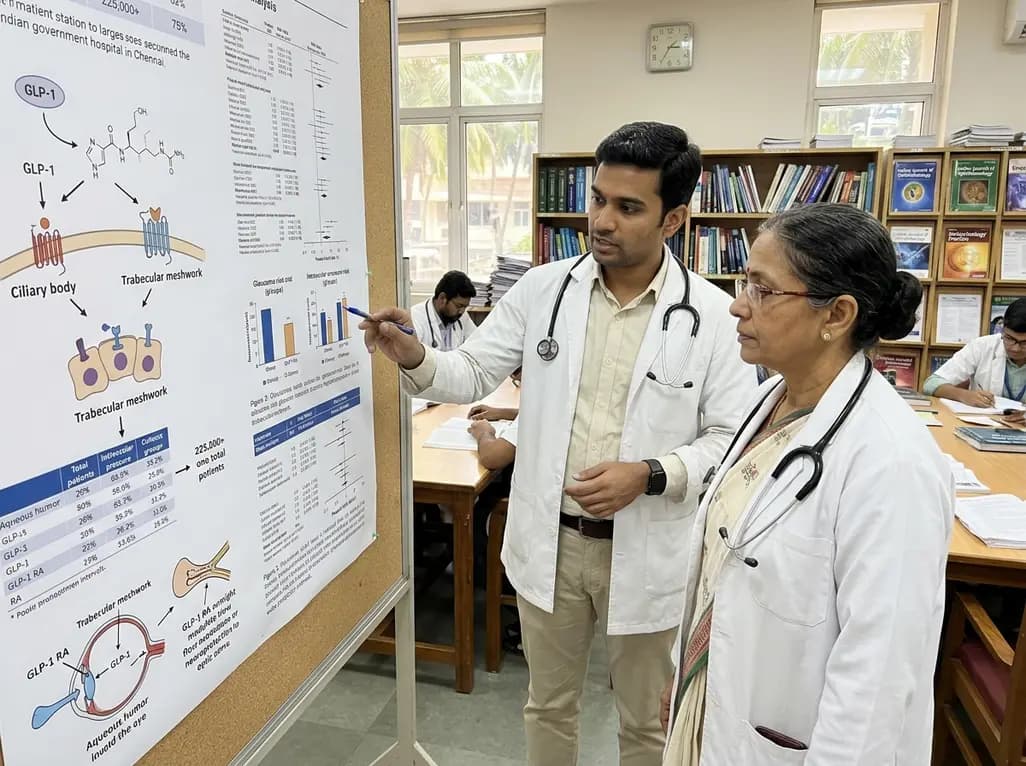
A systematic review and meta-analysis of over 225,000 patients explores whether GLP-1 receptor agonists reduce the risk of glaucoma and ocular hypertension. While pooled data show a 31% lower risk, low certainty and wide prediction intervals urge cautious optimism and further randomized trial evaluation.
Today
