.webp&w=384&q=75)

Loading, please wait...
Loading, please wait...

Identifying pediatric Brugada syndrome presents unique clinical hurdles for cardiologists and pediatricians worldwide. Although clinicians historically recognized Brugada syndrome as an adult-onset channelopathy, recent multicenter evidence highlights its emergence during childhood. The German multicenter study COGIA investigated 76 pediatric patients across 12 tertiary care centers to evaluate diagnostic criteria applicability and clinical outcomes. Researchers sought to determine how adult-oriented guidelines perform in younger cohorts. Because children exhibit distinct electrophysiological properties, standard electrocardiographic features often remain concealed or intermittent. Consequently, establishing an accurate diagnosis requires heightened clinical vigilance. In addition, the rarity of the syndrome in childhood frequently causes underrecognition or misdiagnosis as benign vasovagal syncope or epilepsy. Clinicians must maintain strong suspicion when evaluating unexplained syncope or positive family histories. Therefore, dedicated multicenter registries provide essential real-world insights into pediatric arrhythmogenic risks. Understanding these nuances helps clinicians navigate diagnostic complexities and deliver timely interventions.
Diagnostic criteria developed primarily for adults do not always translate seamlessly to young patients. In the COGIA study, 39 of 76 pediatric patients (51.3%) met European Society of Cardiology (ESC) diagnostic criteria. However, only 34 patients (44.7%) fulfilled Shanghai Brugada Score criteria. This discrepancy underscores the inherent difficulty of applying rigid scoring thresholds in young cohorts. A spontaneous type 1 ECG pattern appeared in 24 patients (31.6%), whereas fever unmasked the pattern in 6 patients (7.9%). Furthermore, pharmacological provocation using ajmaline challenge yielded positive results in 19 of 25 tested patients (76.0%). Although sodium channel blocker testing demonstrates high sensitivity, clinicians must exercise caution during pediatric drug challenges. Arrhythmogenic risks mandate execution by experienced pediatric electrophysiologists within specialized resuscitation environments. Because baseline electrocardiograms fluctuate dynamically over time, sequential recordings during febrile episodes provide critical diagnostic clues. Thus, combining clinical scoring systems with repeated assessments improves diagnostic accuracy.
Genetic evaluation plays a vital role in investigating suspected channelopathies among young patients. In the COGIA cohort, genetic testing identified a pathogenic or likely pathogenic SCN5A variant in 31 of 66 tested children (47.0%). Interestingly, variant detection rates remained identical between patients with a definitive clinical diagnosis (46.7%) and those without one (47.2%). This observation emphasizes that harboring an SCN5A variant alone does not confirm clinical disease expression. Loss-of-function variants in the SCN5A gene impair cardiac sodium channel conductances, which accelerates arrhythmogenesis. However, variable penetrance and polygenic modulators strongly influence phenotypic manifestation across families. Therefore, experts emphasize that genetic testing serves as a confirmatory tool rather than a standalone diagnostic modality. Clinicians must interpret genetic variants within the broader context of family history and dynamic electrocardiographic findings. Moreover, comprehensive genetic counseling remains essential for families navigating ambiguous results.
Clinical manifestations of Brugada syndrome in children range from asymptomatic presentations to life-threatening ventricular tachyarrhythmias. Syncope represents the most frequent clinical symptom, occurring in 15 patients (19.7%) within the COGIA cohort. In addition, major arrhythmic events occurred in 4 patients (5.3%), presenting as aborted cardiac arrest. Notably, all patients experiencing major arrhythmic events fulfilled standard diagnostic criteria. The study identified symptoms at first consultation as an independent predictor of future major arrhythmic events, conferring an 11.3-fold increased risk. Fever represents a critical environmental trigger that unmasks latent type 1 patterns and precipitates malignant arrhythmias. Because elevated temperature alters sodium channel gating kinetics, febrile illnesses can rapidly destabilize cardiac electrical stability. Consequently, clinicians must educate parents about aggressive fever management using antipyretics immediately upon temperature rise. Recognizing fever-induced arrhythmias is paramount for preventing sudden cardiac death.
Risk stratification remains challenging because adult risk markers may perform differently in pediatric populations. In the COGIA investigation, clinicians implanted an implantable cardioverter-defibrillator (ICD) in 7 pediatric patients (9.2%). Although ICD therapy offers proven secondary prevention against sudden death, device placement in growing children carries significant long-term morbidity. Potential complications include lead fractures, venous occlusion, infection, and inappropriate shocks during sinus tachycardia. Therefore, electrophysiologists reserve ICD implantation for high-risk symptomatic individuals, particularly cardiac arrest survivors. In contrast, asymptomatic children require conservative risk mitigation strategies rather than immediate device placement. Clinicians must perform individualized risk assessments incorporating symptom severity and electrophysiological findings. In addition, regular outpatient follow-up allows cardiologists to track somatic growth and adjust programming parameters as children mature.
Managing young patients with Brugada syndrome requires a multimodal approach encompassing lifestyle modifications, pharmacotherapy, and strict avoidance protocols. All families must receive guidance regarding proarrhythmic drugs listed on established international registries. Furthermore, clinicians should consider quinidine therapy for symptomatic patients who experience recurrent ventricular arrhythmias. Quinidine acts by inhibiting transient outward potassium currents, thereby restoring cellular action potential balance and suppressing arrhythmogenic triggers. In acute emergencies, isoproterenol infusions effectively suppress refractory electrical storms in intensive care settings. In addition, prompt antipyretic administration during common infections remains an essential preventative intervention. Multidisciplinary care teams involving pediatric cardiologists and genetic counselors ensure structured longitudinal surveillance. Ultimately, collaborative global registries like the COGIA study will refine risk stratification algorithms and guide evidence-based pediatric management.
Clinicians diagnose pediatric Brugada syndrome by identifying a spontaneous or fever-induced type 1 coved ST-segment elevation on right precordial electrocardiographic leads. In addition, specialists evaluate clinical criteria using the ESC guidelines and the Shanghai Brugada Score. When resting electrocardiograms remain inconclusive, experienced electrophysiologists may perform controlled ajmaline provocation testing in specialized pediatric centers. Genetic screening for SCN5A mutations provides supportive diagnostic confirmation and aids comprehensive familial cascade screening across generations.
Fever acts as a dangerous environmental trigger because elevated body temperatures alter the gating kinetics of mutant cardiac sodium channels. This temperature-dependent dysfunction exacerbates outward repolarizing currents, which unmasks the characteristic type 1 electrocardiogram pattern and precipitates life-threatening ventricular arrhythmias. Consequently, healthcare providers instruct families to initiate aggressive antipyretic therapy immediately during febrile illnesses and seek urgent medical evaluation if unexplained syncope or palpitations occur.
Cardiologists primarily recommend implantable cardioverter-defibrillator placement for pediatric patients who have survived aborted cardiac arrest or documented sustained ventricular arrhythmias. Because device implantation in growing children carries significant risks of lead complications, vascular thrombosis, and inappropriate shocks, clinicians avoid routine prophylactic ICD placement in asymptomatic patients. Instead, high-risk symptomatic individuals receive devices alongside individualized medical therapies, including quinidine administration, to suppress potential recurrent arrhythmogenic episodes effectively.
Disclaimer: This content is for informational and educational purposes only. It is not intended to be a substitute for professional medical advice, diagnosis, or treatment. Always seek the advice of your physician or other qualified health provider with any questions you may have regarding a medical condition. Refer to the latest local and national guidelines for clinical practice.
References

Read summarized clinical updates, watch expert medical content, and earn CME certifications right from your smartphone.
Open your smartphone camera to scan and install.





The German multicenter study COGIA evaluated 76 pediatric patients with suspected Brugada syndrome. Diagnostic criteria were fulfilled in 51.3% by ESC guidelines and 44.7% by Shanghai Score. Symptoms at first consultation significantly increased major arrhythmic event risk, underscoring the need for early evaluation.
4 weeks back

With post-monsoon dengue surges threatening South Asian health systems, physicians must refine triage and management. This guide covers vital warning signs, plasma leakage detection, crystalloid titration, and vector containment strategies to prevent mortality during seasonal arboviral epidemics.
Today

Findings from Project Viva indicate that sustained postpartum weight retention, rather than excessive gestational weight gain alone, directly worsens women's mid-life cardiovascular health, degrading blood pressure and glycemic parameters decades after delivery.
Today
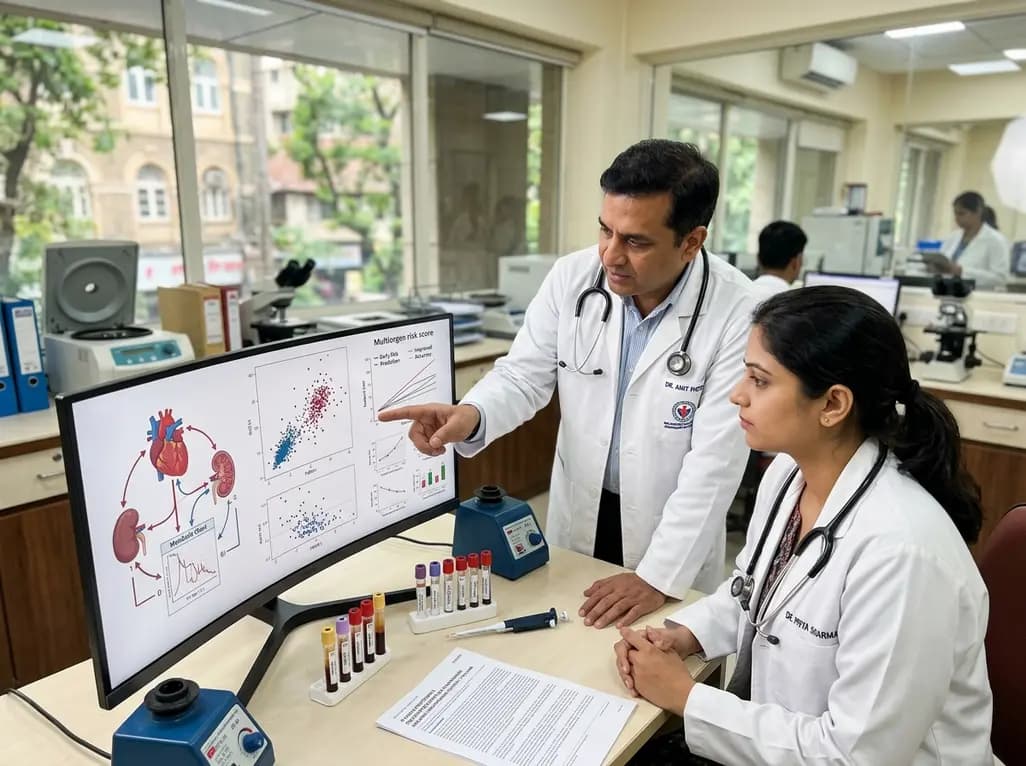
A large UK Biobank study reveals that plasma proteomic signatures capture preclinical organ damage and improve multiorgan risk prediction across early CKM syndrome stages 0 to 2 beyond traditional PREVENT clinical models.
Today

A retrospective CBCT study reveals that superior TMJ space asymmetry correlates moderately with occipital condyle-atlas-axis asymmetry in unilateral TMJ osteoarthritis, highlighting an imaging correlate between jaw biomechanics and upper cervical alignment rather than a standalone diagnostic marker.
Today

A Bayesian multilevel meta-analysis reveals that aerobic training combined with moderate carbohydrate restriction modestly lowers HbA1c in type 2 diabetes. However, sparse data and very low certainty leave incremental benefits over exercise or diet alone unproven, highlighting the need for individualized care.
Today
