.webp&w=384&q=75)

Loading, please wait...
Loading, please wait...

Alveolar rhabdomyosarcoma (ARMS) is a highly aggressive pediatric malignancy often driven by the PAX3-FOXO1 fusion oncoprotein. Recent research has uncovered a critical molecular mechanism involving the PAX3-FOXO1 BRD4 interaction, which facilitates aberrant gene expression. Scientists used direct-detect nuclear magnetic resonance (NMR) spectroscopy to analyze this process in detail. They identified a specific acetylation site at lysine 233 within the FOXO1 intrinsically disordered region (IDR). Consequently, this discovery provides a detailed structural framework for understanding how these proteins cooperate to maintain oncogenic states.
The intrinsically disordered regions of transcription factors frequently host post-translational modifications. These modifications mediate vital protein-protein interactions. In the context of PAX3-FOXO1, the FOXO1 IDR contains a lysine-rich region that undergoes acetylation. Specifically, the acetylation at site K233 appears unique to the fusion protein. In endogenous FOXO1, local structures typically shield this site from modification. However, the fusion event likely exposes this region. This exposure allows the oncoprotein to contact the first bromodomain of BRD4. Furthermore, this interaction stabilizes the fusion protein and enhances its transcriptional potency at super-enhancers.
These structural insights confirm why BRD4 and PAX3-FOXO1 colocalize at critical genomic sites in ARMS. Moreover, the study demonstrates that the bromodomain inhibitor JQ1 successfully blocks this interaction. Therefore, targeting the PAX3-FOXO1 BRD4 interaction represents a viable therapeutic strategy for pediatric patients. Such precision medicine approaches aim to disrupt the oncogenic circuitry directly. Future clinical trials may leverage these mechanistic details to refine the use of BET inhibitors in cancer treatment. Overall, understanding these molecular contacts offers a pathway toward more effective, targeted therapies.
Acetylation at lysine 233 (K233) in the FOXO1 IDR allows the PAX3-FOXO1 fusion protein to bind to the bromodomain of BRD4. This interaction stabilizes the protein and drives its oncogenic activity in rhabdomyosarcoma.
Yes, research indicates that BET inhibitors such as JQ1 can inhibit the interaction between BRD4 and the acetylated region of PAX3-FOXO1, potentially reducing tumor growth.
C direct-detect NMR spectroscopy allowed researchers to identify and characterize specific acetylation sites in the intrinsically disordered regions of the fusion protein that were previously difficult to visualize.
Disclaimer: This content is for informational and educational purposes only. It is not intended as medical advice or a substitute for professional clinical judgment. Refer to the latest local and national guidelines for clinical practice.
References
Fraser OA et al. PAX3-FOXO1 Contacts BRD4 through Its Acetylated Intrinsically Disordered Region. Biochemistry. 2026 Jun 12. doi: 10.1021/acs.biochem.6c00040. PMID: 42284071.
Gryder BE et al. PAX3-FOXO1 establishes myogenic super enhancers and confers BET bromodomain vulnerability. Cancer Discovery. 2017;7(8):884-899.
Heske CM. Targeting the PAX3-FOXO1 Fusion Protein in Alveolar Rhabdomyosarcoma. Biologicals. 2020;68:1-12.

Read summarized clinical updates, watch expert medical content, and earn CME certifications right from your smartphone.
Open your smartphone camera to scan and install.





A structural study identifies that the PAX3-FOXO1 oncoprotein contacts BRD4 through an acetylated intrinsically disordered region at Lysine 233. This mechanistic insight explains the efficacy of BET inhibitors like JQ1 in treating aggressive alveolar rhabdomyosarcoma.
4 months ago

Explore vital recurrent stroke predictors in lacunar stroke patients managed with intensive blood pressure lowering. This analysis examines trial findings from SPS3 to uncover residual vascular risks, metabolic factors, and targeted secondary prevention strategies for high-risk neurological patients.
Today

Odisha has established India's first state-level clinical protocol specifically tailored for pregnant women with sickle cell disease. Developed with NHM and UNICEF, the framework provides structured antenatal screening, crisis mitigation, standardized referral pathways, and specialized interdisciplinary care.
Today

India is advancing preventive healthcare by integrating genomics, artificial intelligence, and quantum technologies. With the SANGAM programme sequencing one million Indian genomes, clinicians can unlock personalized therapies, detect cardiometabolic risks early, and curb the burden of diabetes and heart disease.
Today
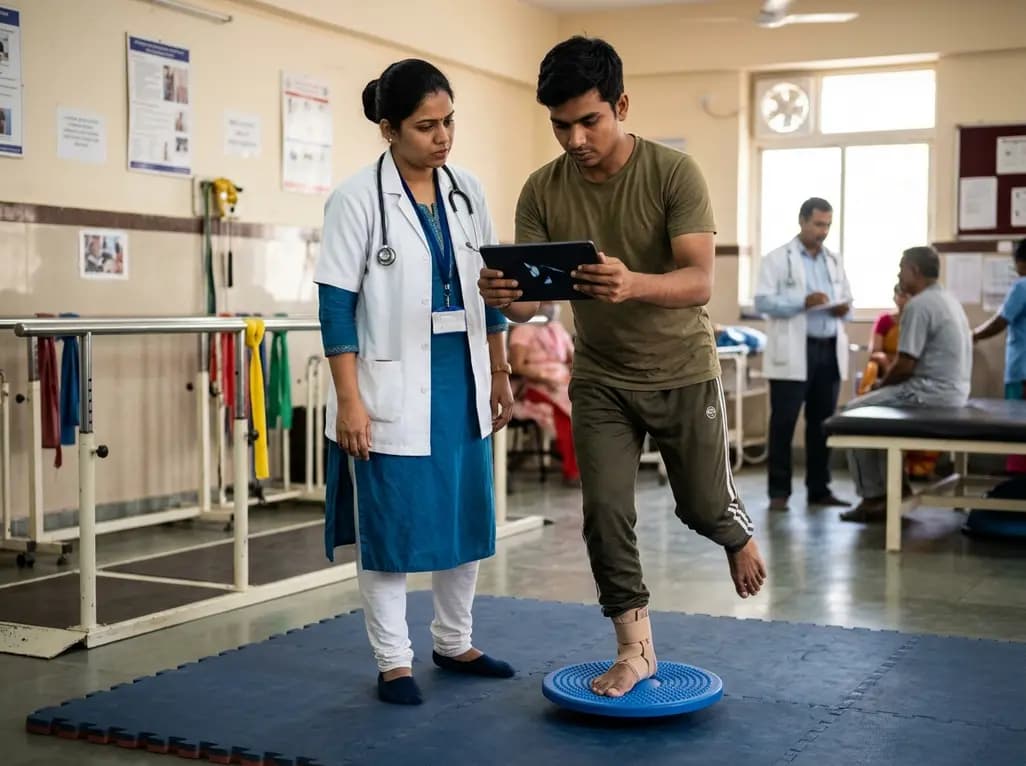
A randomized controlled trial demonstrates that an eight-week dual-task training intervention significantly improves static and dynamic postural control over standard balance exercises in individuals with chronic ankle instability, addressing critical neurocognitive deficits during athletic and daily activities.
Today

A retrospective cohort study of 7,716 ICU patients from the MIMIC-IV database demonstrates that Gradient Boosting Decision Trees significantly outperform traditional SOFA scores in predicting in-hospital mortality among patients with sepsis and diabetes, with SHAP analysis providing clinical interpretability.
Today
