.webp&w=384&q=75)

Loading, please wait...
Loading, please wait...

Contemporary youth navigate interpersonal relationships in an environment where online communication and physical interactions continuously overlap. Historically, public health surveillance evaluated offline activities and virtual interactions in isolation. However, modern research shows that adolescents rarely separate digital exploration from their physical realities. Understanding modern adolescent sexual behaviors requires a holistic perspective that captures how virtual media consumption, sexting, and physical intimacy interact. By evaluating these experiences together, clinicians and counselors can better understand youth development, positive relationship models, and emotional health during key developmental transitions.
Recent epidemiological research utilizing person-centered analytical techniques provides meaningful clarity regarding youth sexuality. Rather than evaluating isolated activities, investigators applied latent class analysis to identify distinct behavioral subgroups across digital and offline spaces over three-month intervals. Consequently, this methodological approach captures the diverse spectrum of contemporary adolescent sexual behaviors. The data demonstrate that adolescents do not follow a uniform path of sexual expression. Instead, youth cluster into distinct profiles characterized by varying levels of digital communication, media consumption, and physical intimacy.
Furthermore, evaluating co-occurring activities provides clinicians with a realistic understanding of youth development. Prior public health frameworks often treated any digital involvement as inherently high-risk or problematic. In contrast, current evidence suggests that digital engagement often mirrors normal exploratory development. Therefore, clinicians must assess both modalities concurrently to recognize healthy developmental trajectories and differentiate them from potential emotional distress or relational vulnerability.
Gender-stratified models demonstrate notable differences between adolescent boys and girls regarding sexual practices. Among boys who reported prior sexual experience, latent class analysis identified four distinct subgroups. These profiles include a pornography-focused subclass, a low sexual engagement group, a moderate digital and physical engagement group, and a moderate digital with high physical engagement group. The emergence of a distinct pornography-focused group among boys highlights the unique role that digital media consumption plays in male psychosexual development.
Conversely, the analysis identified three distinct subclasses among adolescent girls: low sexual engagement, moderate digital and physical engagement, and moderate digital with high physical engagement. Notably, an isolated media-heavy subclass did not emerge among girls. This contrast indicates that digital sexual communication among adolescent girls frequently coincides with in-person relational dynamics. Consequently, healthcare providers must adopt nuanced, gender-informed assessment strategies when discussing digital media, body image, and intimacy during clinical consultations.
Individual characteristics strongly influence which behavioral subclass an adolescent enters. Advanced chronological age and specific sexual identity markers consistently predict membership in profiles with higher digital and physical activity. Furthermore, psychological factors such as emotional regulation, self-esteem, and social support play substantial roles in shaping these developmental trajectories. Adolescents who possess higher socioemotional competence often navigate both digital spaces and in-person interactions with greater resilience.
In addition, youth identifying as sexual minorities often utilize digital platforms to find supportive peer communities and explore their identities safely. As a result, digital platforms can serve as vital supportive spaces for marginalized youth who may lack affirming local environments. Therefore, pediatricians and mental health professionals must avoid stigmatizing digital interactions. Instead, clinicians should explore the psychological motivations driving online interactions to provide constructive, identity-affirming guidance.
A crucial contribution of contemporary sexuality research is the focus on positive developmental outcomes, including subjective well-being and relational ethics. The study examined how different behavioral profiles relate to positive sexuality indicators, specifically sexual well-being and respectful attitudes toward partners. Interestingly, adolescents in classes characterized by moderate digital and physical engagement frequently demonstrated healthy sexual well-being and positive partner attitudes. These findings suggest that integrated, consensual sexual exploration does not inherently compromise psychological health.
Moreover, the presence of high partner respect across multiple active subclasses demonstrates that youth can develop healthy interpersonal boundaries within contemporary environments. However, youth whose digital consumption occurs without healthy emotional processing or interpersonal connection may require additional psychosocial support. By prioritizing relational ethics, mutual consent, and emotional health, healthcare providers can help adolescents build satisfying, respectful relationships across all spheres of life.
Medical professionals in primary care, pediatrics, and adolescent psychiatry occupy an essential position to guide youth through healthy development. Routine clinical consultations should incorporate nonjudgmental, open-ended discussions regarding digital habits, interpersonal relationships, and sexual health. Clinicians must move beyond conventional risk-focused screening tools to address emotional safety, digital boundaries, and mutual consent. Proactive discussions normalize healthy developmental questions while creating a supportive environment for disclosing distress or coercion.
Additionally, clinicians should encourage parents and educators to adopt balanced communication strategies regarding technology. Rather than implementing punitive digital restrictions, caregivers should foster critical digital literacy and open communication. Providing adolescents with reliable information regarding reproductive health, emotional well-being, and respectful communication empowers them to make safe, informed choices. Through collaborative clinical and educational efforts, communities can support youth in achieving positive psychosocial and sexual health.
Digital and in-person sexual behaviors frequently co-occur rather than functioning as separate activities. Adolescents routinely use digital communication, messaging, and online content to explore romantic and sexual intimacy. Consequently, online interactions often complement or mirror physical relationship dynamics. Clinicians evaluate both domains together to accurately understand developmental milestones, emotional health, and interpersonal safety.
Latent class analysis identified four distinct subgroups for boys: pornography-focused, low sexual engagement, moderate digital and physical engagement, and moderate digital with high physical engagement. For girls, three subclasses emerged: low sexual engagement, moderate digital and physical engagement, and moderate digital with high physical engagement. These classifications highlight distinct gender patterns in digital media consumption and relational behavior.
Assessing respectful attitudes toward partners provides valuable insight into an adolescent's relational maturity, emotional empathy, and understanding of consent. Fostering mutual respect protects against coercion, digital harassment, and interpersonal violence. Evaluating these attitudes allows clinicians to encourage healthy communication skills, reinforce positive relationship models, and support overall emotional well-being during adolescent development.
Disclaimer: This content is for informational and educational purposes only and does not constitute medical advice. Always consult a qualified healthcare provider for clinical diagnosis, management, or treatment decisions. Refer to the latest local and national guidelines for clinical practice.
References
1. Kotiuga J et al. Patterns of Digital and In-Person Sexual Behaviors Among Adolescents: Associations with Individual Characteristics, Sexual Well-being, and Respectful Attitudes Toward Partners. J Sex Res. 2026 Aug 14. doi: 10.1080/00224499.2026.2713723. PMID: 42600131.
2. World Health Organization. WHO recommendations on adolescent sexual and reproductive health and rights. Geneva: World Health Organization; 2018.
3. Temple-Smith M, Moore S, Rosenthal D. Sexuality in Adolescence: The Digital Generation. 3rd ed. London: Routledge; 2016.
4. Collins RL, Strasburger VC, Brown JD, Donnerstein E, Lenhart A, Ward LM. Sexual media and childhood well-being and health. Pediatrics. 2017;140(Suppl 2):S162-S166.

Read summarized clinical updates, watch expert medical content, and earn CME certifications right from your smartphone.
Open your smartphone camera to scan and install.





A landmark study examines co-occurring digital and in-person adolescent sexual behaviors, identifying distinct latent classes among youth and revealing how these patterns correlate with socioemotional factors, sexual well-being, and respectful attitudes toward partners.
last month
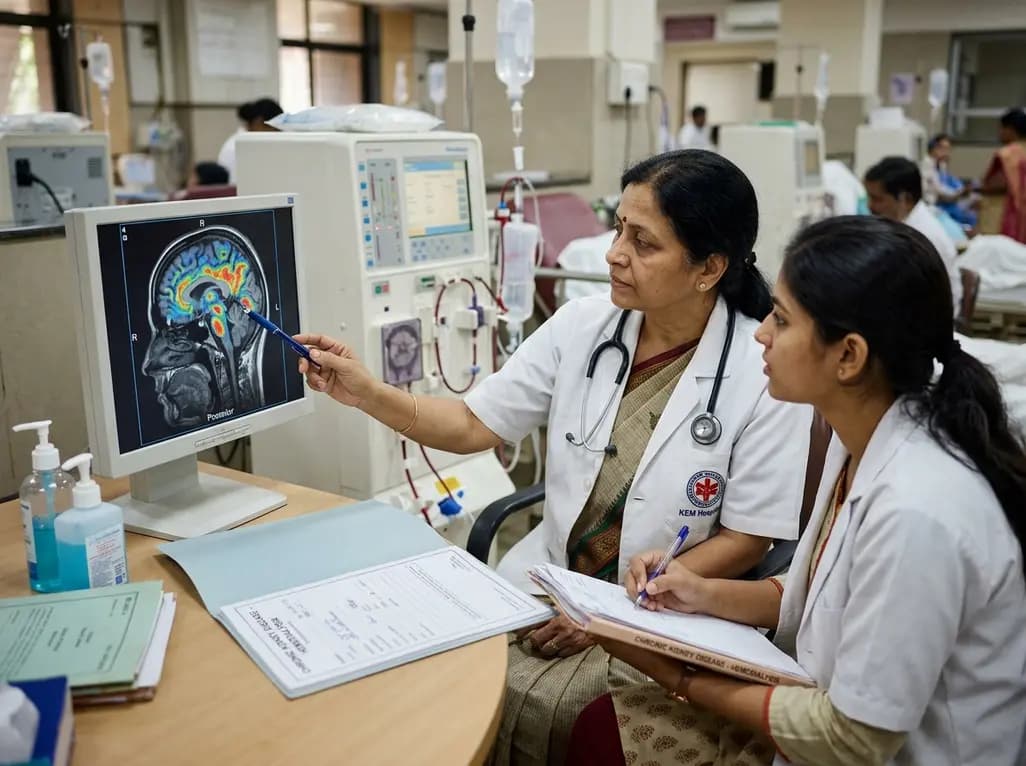
A retrospective clinical analysis reveals that hemodialysis-associated cognitive dysfunction arises from synergistic pathological mechanisms, including severe chronic anemia, worsening renal clearance, abnormal regional brain iron deposition, and an imbalance between neuroinflammatory and neurotrophic factors.
Today

A multiparametric MRI approach combining quantitative T2 shading, apparent diffusion coefficient (ADC) measurements, and morphological signs provides superior diagnostic accuracy over subjective evaluation to differentiate ovarian endometriomas from benign hemorrhagic cysts.
Today

Discover a novel laparoscopic approach for iatrogenic diaphragmatic hernia repair following pedicled omentoplasty. This modified Sugarbaker technique integrates dorsal pedicle lateralization and round ligament reinforcement to secure the diaphragmatic defect while preserving vital omental vascularity.
Today

Evaluating Hill-Sachs lesion size and the distance to dislocation is critical in recurrent shoulder instability. As bone loss concepts shift from binary on-track classifications to continuous risk assessment, clinicians must identify when isolated Bankart repair is insufficient and supplementary procedures are needed.
Today
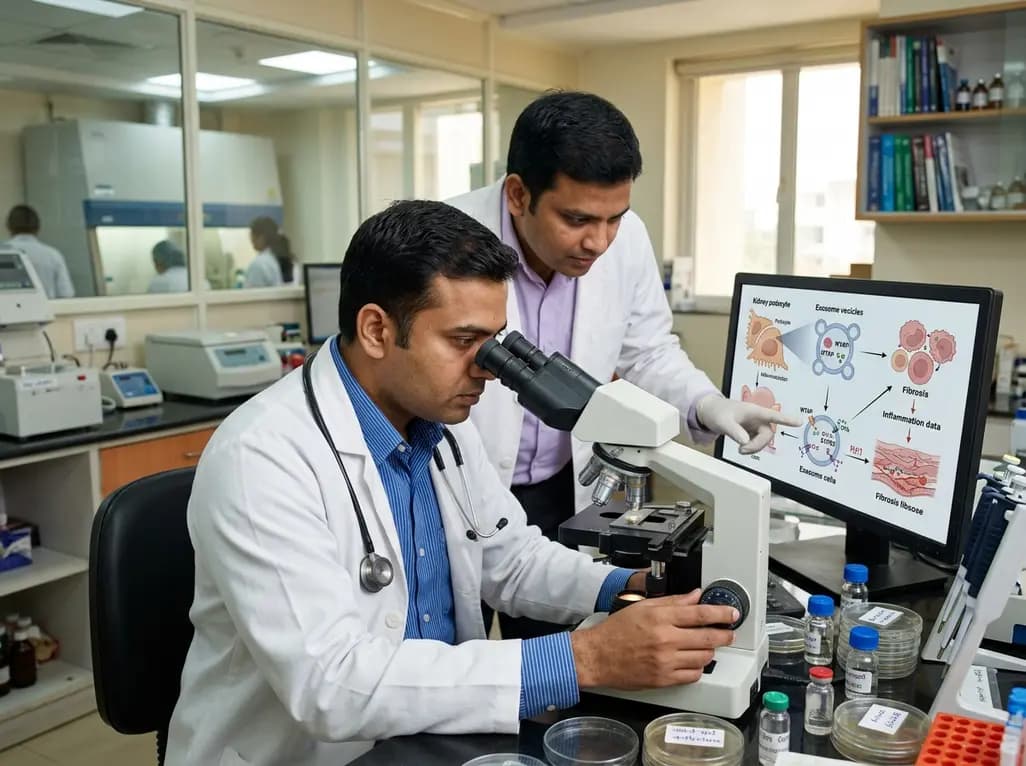
New research reveals that M1 macrophage-derived exosomes aggravate diabetic nephropathy by transferring WTAP to stabilize S1PR2 mRNA. Silencing WTAP in these vesicles attenuates endothelial injury and renal fibrosis, pointing toward innovative nanomedicine therapies.
Today
