.webp&w=384&q=75)

Loading, please wait...
Loading, please wait...

Adult spinal deformity presents intricate biomechanical challenges that significantly impair functional mobility and quality of life. Historically, spine surgeons prioritized the restoration of sagittal alignment during surgical planning and instrumentation. However, persistent coronal malalignment markedly exacerbates axial back pain, asymmetrical neural compression, and mechanical hardware failure. Conventional manual rod contouring often introduces irregular stress points and notch sensitivity. Consequently, these manual alterations compromise construct stiffness and hinder precise multidimensional deformity correction. To overcome these mechanical shortcomings, patient-specific rods offer a customized biomechanical alternative. These pre-contoured implants utilize comprehensive preoperative imaging and computer-assisted simulations to match individualized patient anatomy. Moreover, maintaining coronal symmetry prevents trunk shift and enhances overall bipedal balance. While earlier investigations predominantly highlighted sagittal realignment, coronal plane correction remained relatively underreported. A landmark long-term retrospective cohort study now offers robust clinical insights into coronal restoration using custom rods. Specifically, researchers evaluated 118 adult patients undergoing thoracolumbar or lumbar instrumentation. The investigation focused on evaluating rigid coronal correction alongside global spinopelvic parameters. In addition, the investigators monitored longitudinal clinical outcomes over a rigorous two-year postoperative period. Thus, this evidence establishes a new benchmark for comprehensive multidimensional spinal reconstruction.
Modern deformity correction demands exact mathematical precision to avoid postoperative decompensation. Therefore, computer-guided virtual planning forms the bedrock of personalized surgical execution. Engineers create patient-specific rods by processing three-dimensional computed tomography data and upright full-spine radiographs. The software accurately simulates osteotomy closures, interbody cage placement, and intended lordotic curves. Subsequently, factory technicians manufacture industrially bent rods that precisely replicate these individualized trajectories. This industrial manufacturing eliminates the need for manual, in situ rod bending during surgery. Furthermore, omitting manual notch-producing maneuvers preserves metal fatigue strength and structural integrity. Operating room teams observed substantially streamlined workflows because pre-shaped implants fit naturally into anchor pedicle screws. As a result, surgical teams experience less procedural frustration and achieve superior operative alignment predictability. Thus, digital simulations provide actionable templates that guide complex realignments. In the analyzed clinical cohort, surgeons selected cases exhibiting substantial structural pathology. Specifically, qualifying patients exhibited scoliosis with a Cobb angle exceeding 10 degrees or substantial coronal imbalance. This rigorous threshold required a C7 plumb line deviation of at least 30 millimeters. Consequently, the surgical protocol targeted severely decompensated spines requiring definitive multiaxial restoration.
The radiographic findings from this cohort demonstrated remarkable structural correction across multiple planes. Most notably, the mean maximal coronal Cobb angle improved from 35.0 degrees preoperatively to 18.0 degrees postoperatively. This statistically significant reduction confirmed that personalized contouring effectively flattens asymmetric spinal curves. In addition, patients achieved excellent restoration of global coronal balance without provoking adjacent level decompensation. Meanwhile, surgeons concurrently improved sagittal profile targets without sacrificing coronal stability. The sagittal vertical axis decreased drastically from 62.9 millimeters before surgery to 28.6 millimeters at follow-up. Furthermore, lumbar lordosis and pelvic tilt showed harmonious adaptation, realigning the global gravity line over the sacral base. Multivariate regression analysis highlighted several baseline factors that predicted postoperative alignment. Patients with larger baseline curves experienced greater absolute degree correction during surgery. Moreover, precise coronal restoration did not compromise regional sagittal kyphosis goals. Historically, aggressive coronal curve straightening carried significant risks of producing flatback syndrome or sagittal imbalance. However, computerized pre-contouring established a synchronous equilibrium between both anatomic dimensions. Therefore, these radiographic findings prove that surgeons can successfully achieve coronal balance without compromising critical sagittal spinopelvic parameters.
Radiographic perfection remains hollow unless patients experience meaningful symptomatic relief. Fortunately, this clinical study demonstrated exceptional improvements across validated patient-reported outcome measures. The mean Oswestry Disability Index decreased markedly from 21.1 preoperatively to 13.6 postoperatively. This reduction signifies that patients reclaimed substantial physical independence and regained functional daily mobility. Additionally, pain severity decreased significantly across both back and leg domains. The Numeric Rating Scale score dropped dramatically from 6.1 at baseline to 2.3 at final follow-up. Patients reported this relief as early as nine to twelve months after surgery. Consequently, durable pain relief directly mirrored the degree of successful spinopelvic realignment. When surgeons correct coronal imbalance, they relieve excessive asymmetrical muscular tension along the lumbar spine. Furthermore, restoring the trunk plumb line unloads compressed neural foramina on the curve concavity. As a result, radicular symptoms subside alongside axial postural exhaustion. Similarly, physical function scores reflected restored upright posture and greater walking endurance. These functional gains persisted steadily throughout the entire two-year surveillance window. Patients also reported enhanced social engagement and superior mental health well-being. Thus, restoring multidimensional spinal balance translates into profound, sustained enhancements in long-term human quality of life.
Major adult spinal reconstruction carries substantial surgical risks that require cautious perioperative vigilance. Notably, achieving robust coronal correction did not increase rates of dural tears or catastrophic neurovascular damage. Surgical teams also maintained excellent hemodynamic control throughout lengthy operations. Specifically, massive intraoperative blood loss exceeding 2500 milliliters remained rare among treated patients. Overall hardware-related revision surgery occurred in only 9.3 percent of patients across two years of follow-up. This favorable benchmark reflects the biomechanical durability of industrial rod pre-contouring. By eliminating manual notch-producing maneuvers, factory shaping protects metal fatigue resistance and prevents catastrophic rod fractures. Furthermore, patient-specific implants distribute axial loads evenly, reducing mechanical stress across upper instrumented vertebrae. Indian spine centers managing complex degenerative deformities can adopt these computer-guided protocols to enhance reconstructive predictability and streamline operating theater workflows. Although upfront digital planning requires dedicated software coordination, it dramatically reduces costly reoperations and late construct failures. Consequently, personalized instrumentation establishes an indispensable, safe strategy for adult scoliosis surgery. Therefore, combining digital simulations with customized rods optimizes long-term structural and clinical outcomes.
Patient-specific rods utilize precise preoperative computerized tomography algorithms to contour implants before surgery. Consequently, this engineering approach matches patient anatomy and guides corrective forces along both coronal and sagittal planes. By eliminating intraoperative manual contouring errors, these rods reduce Cobb angles from thirty-five to eighteen degrees while preventing regional coronal decompensation.
In the published cohort, the two-year revision rate attributable to hardware complications was 9.3 percent. This outcome reflects favorable durability compared to historical failure rates exceeding twenty percent with conventional rods. Because industrial pre-bending eliminates notch sensitivity and localized stress points, it prevents early fatigue rod fractures and maintains construct stability.
No, aggressive coronal plane correction did not correlate with increased intraoperative complications or patient morbidity. The investigators noted no rise in dural tear rates, and severe intraoperative blood loss exceeding 2500 milliliters remained rare. Furthermore, restoring coronal balance alongside sagittal parameters produced significant reductions in back and leg pain scores.
Disclaimer: This content is for informational and educational purposes only... Refer to the latest local and national guidelines for clinical practice.
References
Sater A et al. Coronal Plane Correction in Adults With Patient-Specific Rods. Spine (Phila Pa 1976). 2026 Oct 01. doi: 10.1097/BRS.0000000000005574. PMID: 42188460.
Obeid I, Berjano P, Lamartina C, et al. Classification of coronal imbalance in adult scoliosis and spine deformity: a treatment-oriented guideline. Eur Spine J. 2019;28(1):94-113. doi: 10.1007/s00586-018-5826-3.
Blondel B, Boissiere L, Farcy JP, et al. "Patient-specific" rods in the management of adult spinal deformity. One-year radiographic results of a prospective study about 86 patients. Neurochirurgie. 2020;66(5):355-360. doi: 10.1016/j.neuchi.2019.12.015.

Read summarized clinical updates, watch expert medical content, and earn CME certifications right from your smartphone.
Open your smartphone camera to scan and install.





A retrospective cohort study reveals that patient-specific rods effectively correct coronal plane deformity and sagittal malalignment in adult spinal deformity, significantly reducing back pain and physical disability while maintaining low rates of hardware-related revision.
Today
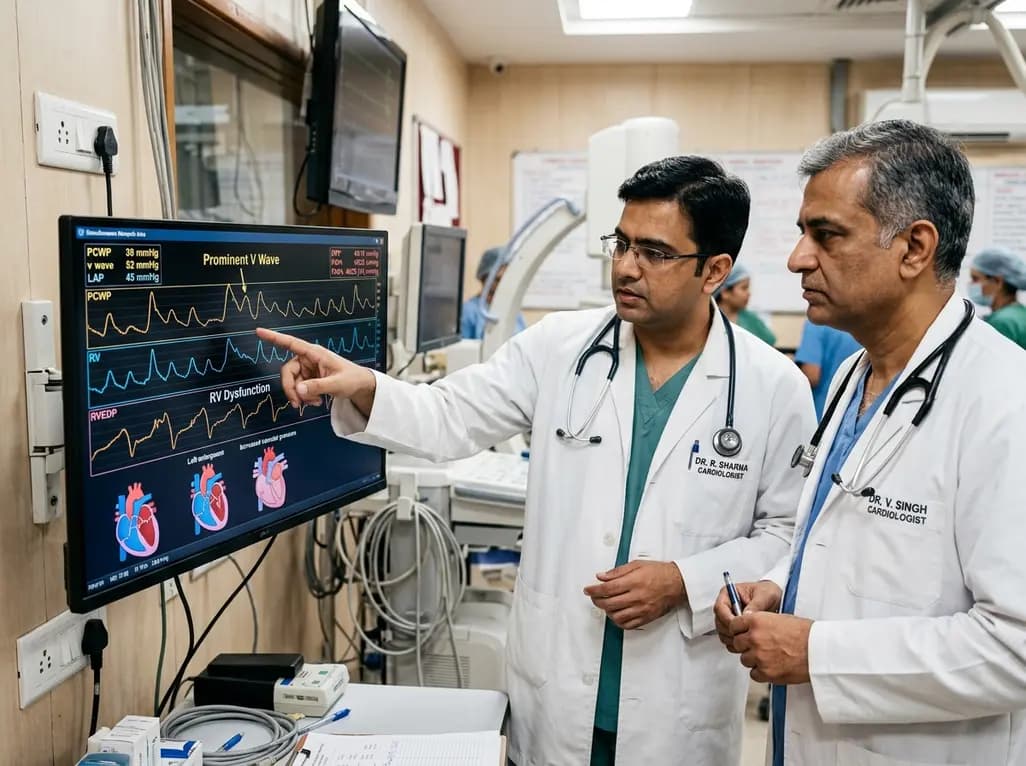
Left atrial stiffening generates prominent V waves that pressurize the pulmonary circulation and augment right ventricular afterload independently of intrinsic pulmonary vascular disease in patients with heart failure with preserved ejection fraction.
Today
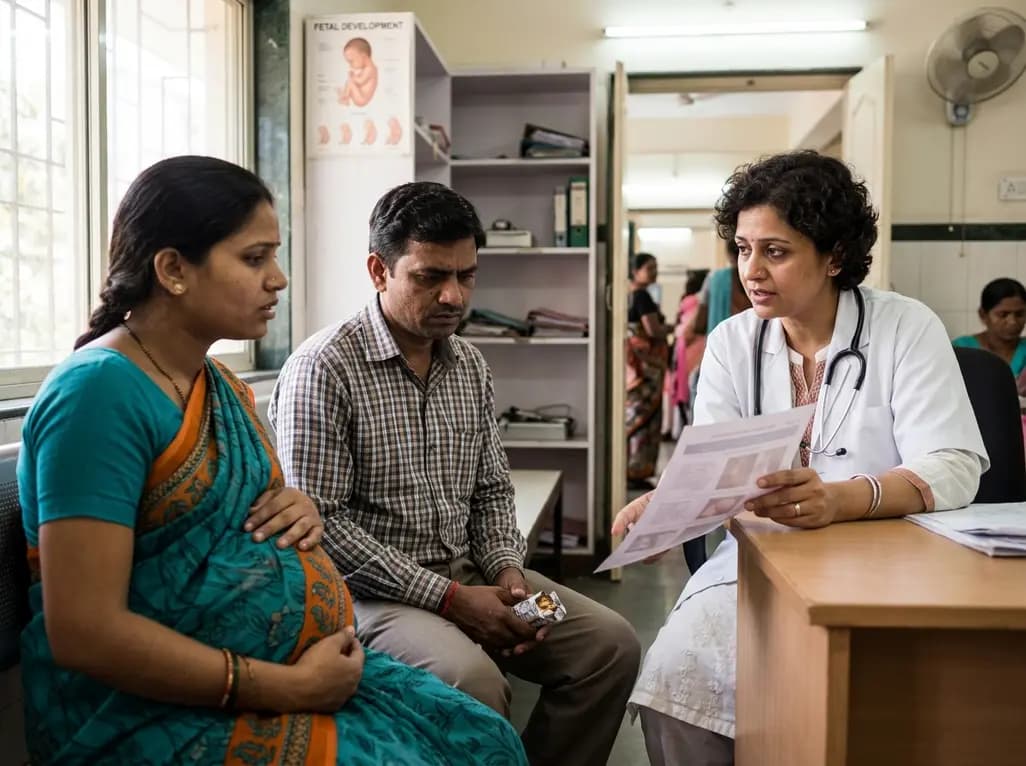
A meta-analysis demonstrates that secondhand smoke exposure significantly elevates fetal loss risk by 21% among nonsmoking pregnant women. Clinicians must implement household screening and family-centered cessation interventions to prevent avoidable miscarriages and stillbirths.
Today

Preclinical validation demonstrates that a novel contact force-integrated pulsed field quantization index accurately predicts lesion depth in real time, achieving 100% durable pulmonary vein isolation without collateral injury.
Today
A new cross-sectional evaluation reveals how regional lean mass and bone mineral content interact in resistance-trained men, showing that whole-body size and allometric scaling explain shared musculoskeletal phenotypes and strength relationships.
Today

Explore the emerging role of glucose metabolic reprogramming in exercise-attenuated osteoporosis, examining how physical activity influences osteoblast glycolysis, osteoclast bioenergetics, and skeletal remodeling pathways to improve bone mineral density.
Today
