.webp&w=384&q=75)

Loading, please wait...
Loading, please wait...
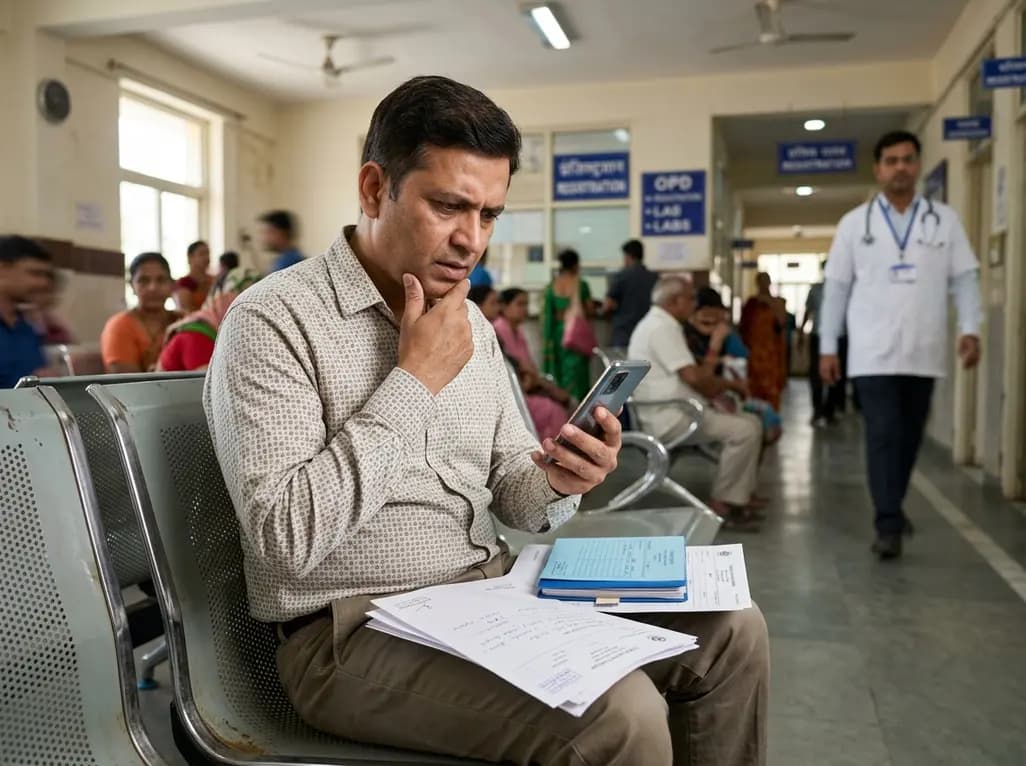
Specifically, a recent study highlights critical issues regarding patient navigation in India. Consequently, many individuals feel completely lost within the medical ecosystem. According to the India Patient Navigation and Confusion Index (IPNCI) 2026, nearly 80% of patients turn to Google after consulting a doctor. This behavior occurs primarily because patients leave appointments with unanswered questions. Additionally, over 73% of respondents reported feeling rushed during their clinic visits.
Furthermore, the survey of 1,000 respondents across the Delhi-NCR region exposed major deficits in care coordination. For instance, approximately 70% of patients did not receive clear instructions on where to go next for diagnostic tests or specialist consultations. Moreover, about 78% experienced severe difficulties coordinating care across doctors, pharmacies, and diagnostic centers. This lack of guidance often forces patients to manage their complex healthcare journeys independently. Consequently, the region received an overall IPNCI score of 68.5, indicating a \"High Confusion, Low Navigation\" environment.
In addition, the breakdown in secondary care coordination leads to a growing imbalance in hospital utilization. Specifically, over 35% of patients bypass secondary healthcare facilities entirely to visit advanced private tertiary hospitals directly. As a result, these tertiary centers face severe overcrowding and increased pressure on specialists. Furthermore, only 21.4% of patients utilize affordable government healthcare facilities, reflecting persistent trust and accessibility concerns. Ultimately, this structural fragmentation contributes to rising patient confusion and increases overall medical expenditures.
To improve patient navigation in India, medical practitioners must adopt more structured communication strategies. First, doctors can provide clear, printed treatment pathways during consultations to reduce post-visit anxiety. Secondly, clinics should establish dedicated patient coordinators or digital help desks to guide individuals through the healthcare system. Consequently, patients will feel more supported and will rely less on unverified online searches. Therefore, improving these communication touchpoints is crucial for ensuring continuity of care.
Q1: Why are patients in Delhi-NCR turning to Google after doctor consultations?
According to the IPNCI 2026 study, about 78.5% of patients use Google because they leave consultations with unclear diagnoses, treatment plans, or next steps. Additionally, many patients feel rushed during doctor visits.
Q2: What is the primary cause of patient confusion in India's healthcare system?
The primary cause is fragmented care and a lack of navigation support. Specifically, most hospitals lack patient coordinators, helplines, or digital tools to guide individuals through diagnostic tests and referrals.
Q3: How does a weak secondary healthcare layer impact tertiary care facilities?
When the secondary healthcare layer is weak, patients bypass it and directly visit tertiary hospitals. Consequently, this trend causes overcrowding at advanced centers and increases overall medical costs.
Disclaimer: This content is for informational and educational purposes only. It does not constitute medical advice or replace professional judgment. Refer to the latest local and national guidelines for clinical practice.
References

Read summarized clinical updates, watch expert medical content, and earn CME certifications right from your smartphone.
Open your smartphone camera to scan and install.





A new Delhi-NCR study reveals that nearly 80% of patients turn to Google post-consultation due to severe gaps in healthcare navigation and communication....
4 months ago

Discover the crucial role of glymphatic dysfunction in stroke, where perivascular clearance failure and neuroinflammation exacerbate cerebral edema and post-stroke brain injury.
Today

A prenatal case highlights severe glutaric acidemia type II presenting as bilateral hyperechoic cystic kidneys at 18 weeks. Whole-exome sequencing revealed a novel homozygous ETFDH frameshift variant, demonstrating the power of rapid genetic testing in fetal renal anomalies.
Today

Review how tailored exercise programs benefit frail older patients with heart failure. Explore pathophysiological mechanisms, individualized training prescriptions, and strategies to overcome adherence barriers in clinical practice.
Yesterday

This comparative study evaluates posterior labral tears with and without glenohumeral instability, highlighting distinct demographic patterns, MRI underestimation in stable shoulders, and successful arthroscopic repair outcomes.
Yesterday

A clinical study demonstrates that early intervention with tocilizumab, either as monotherapy or bridged with corticosteroids, achieves significant proptosis reduction and resolves active inflammation in treatment-naive thyroid eye disease.
Yesterday
