

Loading, please wait...
Loading, please wait...

Modern healthcare demands a paradigm shift toward patient-centered medicine development to bridge traditional clinical research and real-world therapy. Historically, drug evaluation focused heavily on rigid trial endpoints without adequate consideration of participant convenience or holistic lived experience. Consequently, therapeutic candidates often faced high attrition rates, delayed approvals, or suboptimal adoption in routine clinical practice. Today, interdisciplinary breakthroughs are restructuring this clinical trajectory. By integrating patient perspectives from inception to commercial deployment, clinical pharmacologists and multidisciplinary clinicians can optimize therapy efficacy and adherence. Furthermore, emerging methodologies ensure that regulatory approvals align with everyday patient outcomes across diverse demographic groups.
Historically, pharmaceutical developers struggled to estimate the actual viability of novel drug candidates during early exploration. Today, researchers utilize innovative quantitative modeling to assess the Probability of Success with remarkable precision. Model-informed drug development combines pharmacometrics, systems pharmacology, and Bayesian frameworks to evaluate therapeutic compounds. Consequently, research teams can identify safety signals and therapeutic thresholds far earlier than traditional protocols allowed. Therefore, these quantitative methods minimize unnecessary human subject exposure to ineffective molecules while conserving vital research resources.
Furthermore, quantitative frameworks now incorporate patient-reported outcomes directly into predictive statistical modeling. By evaluating how dose alterations influence patient tolerance and daily function, scientists construct more meaningful therapeutic indexes. As a result, decision-makers can determine whether a drug candidate truly warrants advancement into expansive late-stage clinical evaluation. In addition, these quantitative assessments provide Indian regulatory bodies, such as the Central Drugs Standard Control Organisation, with robust scientific rationale during review processes. Ultimately, data-driven probability assessments enhance institutional confidence, streamline protocol designs, and reduce late-stage developmental failures.
Traditional clinical studies historically required frequent participant visits to centralized academic medical centers. However, this model created significant geographic and financial barriers for patients living in rural or semi-urban regions. Decentralized clinical trials effectively dismantle these obstacles by leveraging digital health technologies, local health centers, and mobile nursing services. Consequently, clinical trial protocols can now engage historically underrepresented populations across diverse geographic landscapes. For instance, remote patient monitoring devices and teleconsultation allow subjects to participate comfortably from their home communities.
Moreover, decentralized methodologies dramatically improve participant retention and study protocol compliance. When investigators minimize travel burdens, subjects remain enrolled longer and report adverse events promptly. Digital health applications and wearable sensors continuously capture physiologic parameters, capturing a more realistic representation of patient health. In addition, decentralized trials generate data that accurately mirrors the complex socio-demographic realities of countries like India. Therefore, researchers obtain diverse clinical insights that make subsequent therapeutic recommendations safer and more broadly generalizable across varied patient cohorts.
Achieving regulatory authorization does not instantly guarantee widespread patient benefit in routine clinical practice. In fact, many efficacious therapeutic interventions falter during real-world clinical implementation due to unforeseen operational barriers. Implementation research addresses this critical bottleneck by investigating how healthcare teams adopt, scale, and sustain modern clinical innovations. By evaluating institutional workflows, clinician behaviors, and resource limitations, researchers design actionable deployment strategies. Consequently, evidence-based therapies achieve meaningful uptake far more rapidly across diverse healthcare delivery systems.
Furthermore, effective implementation research actively incorporates input from practicing physicians, nursing staff, and patient advocacy groups. These multidisciplinary stakeholders identify practical hurdles, such as drug storage requirements, complex dosing regimens, or diagnostic prerequisites. Therefore, clinical developers can refine clinical guidelines and supportive training materials before nationwide rollouts commence. As a result, healthcare centers avoid unnecessary treatment delays and operational confusion. Ultimately, rigorous implementation research guarantees that breakthrough laboratory discoveries translate seamlessly into measurable population health improvements across primary, secondary, and tertiary clinical environments.
Randomized controlled trials maintain high internal validity, yet they often exclude elderly individuals or patients with complex comorbidities. To overcome these limitations, regulatory agencies and health technology assessors increasingly demand robust real-world evidence. Real-world evidence utilizes data gathered from electronic medical records, disease registries, insurance claims, and digital health applications. Consequently, researchers can evaluate drug safety and comparative effectiveness across broad, heterogeneous patient populations over prolonged observation periods.
Additionally, advanced computational analytics, including artificial intelligence and machine learning, extract actionable clinical insights from vast unstructured health datasets. These computational tools detect subtle post-marketing safety signals and identify optimal therapeutic responses within specific patient subgroups. Therefore, regulators can adjust label indications, refine dosage guidelines, and monitor long-term outcomes with exceptional reliability. In addition, health economists utilize real-world data to evaluate cost-effectiveness, enabling equitable healthcare resource allocation. Consequently, real-world evidence has become indispensable for demonstrating comprehensive therapeutic value throughout the modern pharmaceutical lifecycle.
Modern drug discovery cannot succeed within isolated scientific or clinical silos. Instead, successful translation requires active, ongoing cooperation among pharmacologists, practicing clinicians, biostatisticians, ethicists, and patient representatives. Each stakeholder provides unique expertise that refines study hypotheses and ensures ethical compliance. Moreover, sustained public-private partnerships between academic research centers, pharmaceutical companies, and government regulatory bodies accelerate therapeutic innovation. As a result, the healthcare ecosystem develops sustainable research frameworks capable of tackling emerging public health challenges.
Importantly, meaningful patient engagement must occur across every stage of therapeutic design rather than serving as an afterthought. When clinical investigators consult patient panels during early trial conception, study protocols reflect practical endpoints that matter to patients, such as functional mobility and fatigue reduction. Furthermore, cross-sector alignment ensures that reimbursement strategies and clinical deployment models accommodate regional infrastructure challenges. Therefore, continuous multidisciplinary collaboration strengthens trust between clinical research communities and the public. Ultimately, this cooperative approach yields safer, more accessible medical treatments that enhance community health outcomes.
Patient-centered medicine development provides clinical practitioners with therapeutics designed around real-world patient needs, tolerability, and compliance. Because these treatments incorporate patient input and decentralized monitoring during development, clinicians receive clearer evidence regarding practical dosing, treatment burden, and safety in heterogeneous populations. Consequently, doctors can prescribe modern therapies with greater clinical confidence and achieve higher treatment adherence in routine practice.
Decentralized clinical trials reduce geographical, logistical, and financial hurdles by utilizing digital monitoring tools, local laboratories, and telemedicine. Consequently, patients residing in rural or medically underserved regions can participate without traveling to distant tertiary centers. This expanded access ensures clinical study cohorts accurately reflect real-world demographic diversity, providing physicians with comprehensive evidence across varied patient populations.
Real-world evidence provides post-marketing insights into how medicines perform across diverse populations outside strictly controlled trial environments. Regulators and health technology assessors evaluate this data to monitor rare adverse effects, verify long-term efficacy, and assess comparative cost-effectiveness. Therefore, real-world evidence enables regulatory bodies to refine drug indications and guide equitable healthcare resource allocation based on pragmatic clinical outcomes.
Disclaimer: This content is for informational and educational purposes only... Refer to the latest local and national guidelines for clinical practice.
References
de Jong AJ et al. The Evidence Journey in Patient-Centered Medicine Development: Reflections on Recent Publications in Clinical Pharmacology & Therapeutics. Clin Pharmacol Ther. 2026 Nov 17. doi: 10.1002/cpt.70537. PMID: 43045666.
US Food and Drug Administration. Real-World Evidence: Considerations Regarding Non-Interventional Studies for Drug and Biological Products. Guidance for Industry. FDA; 2024.
Indian Council of Medical Research. Ethical Guidelines for Biomedical and Health Research Involving Human Participants. ICMR; 2017.

Read summarized clinical updates, watch expert medical content, and earn CME certifications right from your smartphone.
Open your smartphone camera to scan and install.





Explore how patient-centered medicine development is reshaping therapeutics through quantitative probability of success, decentralized clinical trials, and real-world evidence to optimize healthcare decision-making.
Today
A landmark SEER-Medicare study clarifies the breast cancer screening benefit in women aged 70 and 75. Life-years gained vary significantly based on comorbidity, frailty, and race, highlighting why physicians must personalize screening decisions rather than relying solely on arbitrary chronological age cutoffs.
Today
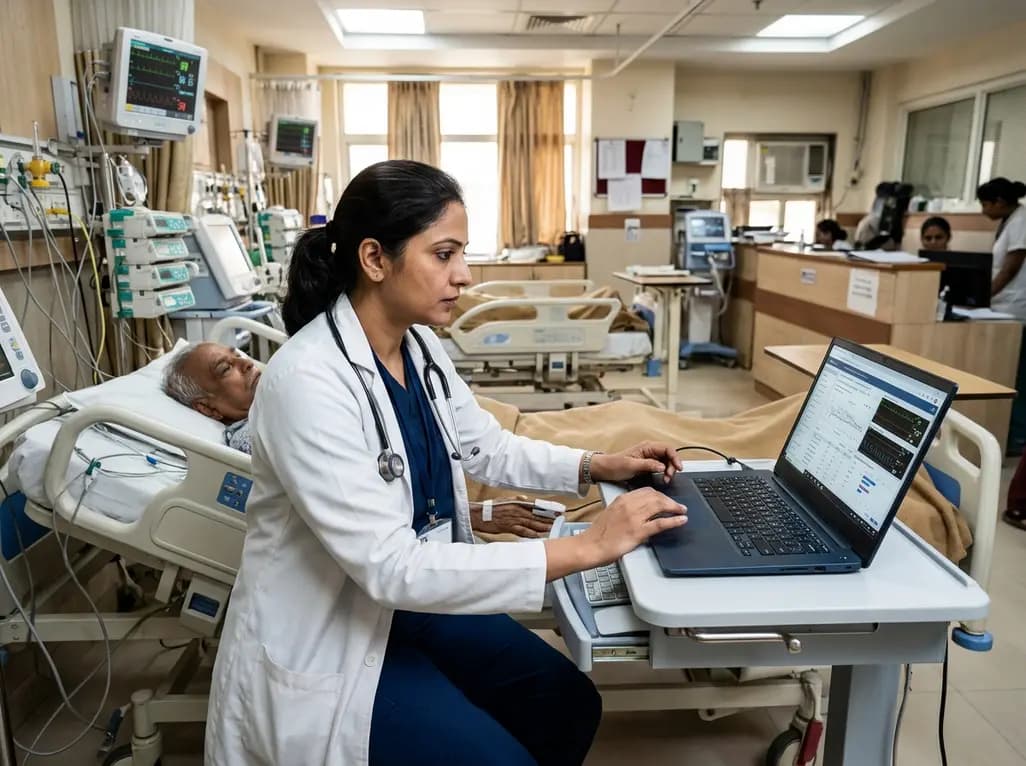
A prospective machine learning study demonstrates that an interpretable XGBoost model using 30 photoplethysmography features accurately estimates continuous blood pressure in intensive care units, achieving Grade A British Hypertension Society standards and reducing reliance on invasive arterial catheters.
Today

Preclinical findings demonstrate that linalool halts neurotoxic A1 astrocyte polarization in degenerative cervical myelopathy by disrupting the ER stress-TXNIP-NLRP3 inflammasome axis, reducing neuronal apoptosis and improving functional motor recovery.
Today
A secondary analysis of the Living Healthier with Diabetes trial reveals that positive baseline technology attitudes significantly improve engagement with digital diabetes self-management apps, leading to enhanced self-care behaviors and better long-term glycemic control in adults with type 2 diabetes.
Today
