.webp&w=384&q=75)

Loading, please wait...
Loading, please wait...

The recent passing of Harish Rana at AIIMS-Delhi marks a significant moment for passive euthanasia in India. This 31-year-old patient lived in a coma for over 13 years following a severe head injury in 2013. Consequently, his case led to a landmark Supreme Court judgment that facilitates the legal withdrawal of life support. His father noted that this decision finally restores dignity to a life of irreversible suffering.
Medical practitioners must follow specific protocols established by the apex court's recent ruling. Specifically, the guidelines require the formation of both primary and secondary medical boards. These experts must unanimously certify that the patient's condition offers no possibility of recovery. For example, Rana's medical team included specialists from neurosurgery, onco-anaesthesia, and psychiatry. Therefore, these professionals ensured the process remained clinically sound and ethical.
The court also simplified the process by removing the absolute necessity for judicial intervention once boards certify the case. Furthermore, Chief Medical Officers must now maintain panels of registered medical practitioners for these boards. Accordingly, this move aims to streamline end-of-life decisions for families facing similar tragic circumstances. Doctors should recognize their role in this multi-disciplinary approach to palliative care.
The legal framework recognizes the fundamental right to die with dignity under Article 21 of the Constitution. Because of the 2023 modifications to the Common Cause judgment, the procedure for passive euthanasia is now more accessible. In Rana's case, the team implemented a tailored plan to withdraw artificial nutrition gradually. This approach highlights the shift from merely prolonging biological existence to respecting a patient’s terminal status. Additionally, the court expressed immense appreciation for the parents' decade-long care.
Q1: What is the definition of passive euthanasia?
Passive euthanasia involves the intentional act of letting a patient die by withholding or withdrawing life support or treatment necessary to sustain life.
Q2: Is a court order always required for passive euthanasia?
According to the latest Supreme Court guidelines, judicial intervention is not required once primary and secondary medical boards certify the withdrawal of life support.
Q3: Which medical specialists are usually involved in the evaluation?
Evaluation typically involves a multidisciplinary team including specialists from neurology, anesthesiology, palliative medicine, and psychiatry to ensure an expert consensus.
Disclaimer: This content is for informational and educational purposes only. It does not constitute medical advice or replace professional judgment. Refer to the latest local and national guidelines for clinical practice.
References

Read summarized clinical updates, watch expert medical content, and earn CME certifications right from your smartphone.
Open your smartphone camera to scan and install.





Harish Rana, India's first patient granted passive euthanasia, passed away at AIIMS. Explore the legal and medical framework for end-of-life care in India....
6 months ago
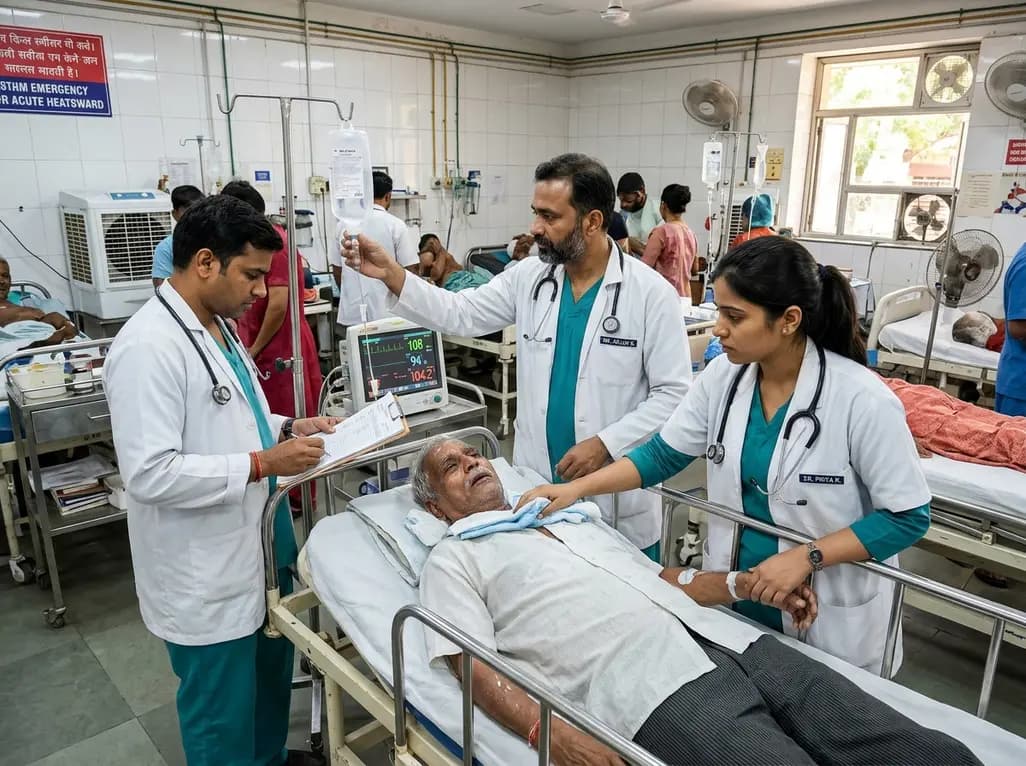
Recent epidemiological data reveals a dramatic surge in summer heat mortality driven by human-induced climate warming. This analysis explores the pathophysiological impacts on cardiac and renal systems, diagnostic dilemmas in death certification, and essential emergency cooling protocols for acute clinical care.
Today

Odisha has established India's first state-level clinical protocol specifically tailored for pregnant women with sickle cell disease. Developed with NHM and UNICEF, the framework provides structured antenatal screening, crisis mitigation, standardized referral pathways, and specialized interdisciplinary care.
Today

India is advancing preventive healthcare by integrating genomics, artificial intelligence, and quantum technologies. With the SANGAM programme sequencing one million Indian genomes, clinicians can unlock personalized therapies, detect cardiometabolic risks early, and curb the burden of diabetes and heart disease.
Today

A randomized controlled trial demonstrates that an eight-week dual-task training intervention significantly improves static and dynamic postural control over standard balance exercises in individuals with chronic ankle instability, addressing critical neurocognitive deficits during athletic and daily activities.
Today

A retrospective cohort study of 7,716 ICU patients from the MIMIC-IV database demonstrates that Gradient Boosting Decision Trees significantly outperform traditional SOFA scores in predicting in-hospital mortality among patients with sepsis and diabetes, with SHAP analysis providing clinical interpretability.
Today
