.webp&w=384&q=75)

Loading, please wait...
Loading, please wait...

Early diagnosis remains a paramount challenge in managing neurodegenerative disorders across global populations. Consequently, Parkinson's disease detection through vocal biomarkers has emerged as a promising, non-invasive screening modality. Hypokinetic dysarthria frequently manifests during the prodromal phase of Parkinson's disease, often years before classical motor signs emerge. Patients typically display hypophonia, monopitch speech, imprecise consonant articulation, and vocal tremor. However, standard clinical consultations often fail to detect these subtle acoustical variations during routine auditory evaluations. Therefore, objective acoustic analysis offers an accessible window into early neuromuscular deterioration. Because voice capture requires only standard consumer microphones or smartphones, automated screening can bridge critical clinical gaps. In addition, rural communities in India face an acute shortage of movement disorder specialists. Implementing digital speech processing platforms can help triage patients and alert clinicians to early neurological changes. Moreover, speech-based digital biomarkers provide objective, repeatable, and scalable metrics that enhance patient compliance. As telemonitoring expands, rapid voice assessments will revolutionize outpatient screening and timely therapeutic interventions.
Speech signals are non-stationary and complex, presenting distinct diagnostic challenges for standard Fourier transforms. To address this limitation, researchers applied Empirical Fourier Decomposition (EFD) to separate non-linear acoustic signals into distinct oscillatory modes. Furthermore, conventional decomposition methods, such as the Empirical Wavelet Transform, often struggle when processing signals with closely spaced frequency modes. In contrast, the EFD technique incorporates an improved spectrum segmentation strategy combined with a zero-phase filter bank. This structured configuration effectively eliminates inconsistency issues and overcomes the trivial component problem by predefining signal components. Consequently, zero-phase filtering preserves essential temporal landmarks within acoustic waveforms without introducing phase distortion. Clinicians and data scientists can therefore isolate subtle phonatory perturbations with high mathematical fidelity. In addition, the segmented modes capture delicate articulatory nuances that reflect basal ganglia dysfunction. By extracting distinct modal boundaries, EFD reveals minute vibratory instabilities caused by impaired vocal fold coordination. Ultimately, this mathematical refinement provides a robust foundation for automated clinical pattern recognition.
Following signal decomposition, investigators extract comprehensive feature vectors from each decomposed acoustic mode. Specifically, the framework calculates fundamental statistical measures, including the mean, variance, skewness, and kurtosis. These classical distribution parameters quantify changes in vocal amplitude stability and waveform symmetry. However, simple statistics cannot completely capture the non-linear complexity inherent in dysarthric speech patterns. Therefore, the researchers also extracted advanced information-theoretic metrics, including Shannon entropy, Renyi entropy, and approximate entropy. Entropy measurements effectively evaluate the regularity, unpredictability, and dynamic structural changes within vocal fold vibrations. For instance, increased entropy values typically indicate irregular phonatory cycles and impaired motor control of laryngeal musculature. In addition, combining statistical distributions with multi-scale entropy creates a resilient feature set that resists ambient acoustic noise. Machine learning models leverage these combined inputs to characterize phonatory micro-instability accurately. Consequently, this multi-parametric synthesis provides high discriminatory power while preserving computational efficiency during algorithmic processing.
The researchers rigorously evaluated the proposed classification architecture using vocal recordings from the validated PC-GITA database. During experimental testing, a Support Vector Machine classifier demonstrated outstanding diagnostic capability on isolated words and sustained phonations. Specifically, the model achieved 95% accuracy when analyzing sustained vowel /i/ phonation. Furthermore, testing on the Spanish isolated word /apto/ yielded a remarkable 93% accuracy. Sustained vowels provide critical insights into glottal closure stability, whereas isolated phonetically balanced words evaluate rapid articulatory transitions. Most importantly, the authors assessed generalization capability by applying the unoptimized system directly to an independent test set. In this challenging scenario, the classifier maintained robust performance, attaining classification accuracies up to 84% for isolated words. These resilient findings confirm that the EFD-derived acoustic markers maintain diagnostic integrity across diverse recording settings. Thus, automated speech analysis demonstrates genuine practical utility outside tightly controlled laboratory environments, paving the way for dependable clinical telemonitoring tools.
The burden of neurodegenerative conditions is steadily rising across India due to shifting demographic patterns and increased longevity. However, access to specialized neurological clinics remains heavily concentrated in metropolitan tier-1 medical centers. Rural and semi-urban patients often experience severe delays before receiving a formal clinical diagnosis of Parkinson's disease. Therefore, integrating non-invasive voice biomarkers into telemedicine platforms offers a transformative opportunity for Indian primary healthcare. Community health workers and general practitioners can collect brief voice samples using affordable digital tablets during routine rural health camps. Furthermore, voice-based screening algorithms can objectively flag individuals exhibiting subclinical acoustic deterioration for prompt specialist referral. Telemonitoring applications can also track disease progression and measure levodopa therapeutic response remotely. Because speech evaluations require minimal patient effort, longitudinal adherence remains exceptionally high among elderly individuals. Ultimately, scalable digital biomarkers can democratize early neurodegenerative screening across diverse socio-economic strata, closing persistent diagnostic disparities.
Parkinson's disease alters speech primarily by producing hypokinetic dysarthria, which stems from basal ganglia dysfunction and dopamine depletion. Patients frequently experience reduced vocal loudness, a monotone pitch, breathiness, and imprecise consonant articulation. In addition, vocal tremor and irregular phonatory pauses can develop long before prominent limb tremors or bradykinesia emerge. Advanced acoustic algorithms can detect these subtle vocal instabilities before human listeners notice them.
Empirical Fourier Decomposition offers superior spectral segmentation by predetermining component boundaries and utilizing a zero-phase filter bank. In contrast, traditional methods like Empirical Wavelet Transforms often struggle to resolve closely spaced frequency modes and generate inconsistent decompositions. Furthermore, EFD eliminates trivial components and phase distortion, ensuring that extracted acoustic features preserve true physiological timing. Consequently, machine learning classifiers receive cleaner, highly reproducible signals for neurodegenerative disease detection.
Speech-based screening cannot replace formal neurological examinations, which require comprehensive motor, sensory, and cognitive clinical evaluations. However, acoustic analysis serves as an invaluable, non-invasive triage tool for identifying early subclinical dysfunction. Telemedicine platforms can deploy these automated tools in underserved communities to identify at-risk individuals who warrant timely clinical referral. Ultimately, acoustic algorithms augment clinical practice by providing objective, repeatable data to guide formal diagnostic workups.
Disclaimer: This content is for informational and educational purposes only and should not be used as a substitute for professional medical advice, diagnosis, or treatment. Refer to the latest local and national guidelines for clinical practice.
References

Read summarized clinical updates, watch expert medical content, and earn CME certifications right from your smartphone.
Open your smartphone camera to scan and install.





A novel acoustic framework using Empirical Fourier Decomposition and entropy measures achieves up to 95% accuracy in distinguishing Parkinson's disease patients from healthy controls, paving the way for scalable, non-invasive telemonitoring.
Today

The government of Maharashtra is establishing a novel state-level Living Lab to elevate clinical outcomes, bridge public-private service gaps, and test real-world health interventions. By integrating digital innovations and frontline feedback, the platform fosters sustainable, equitable care models across communities.
Today
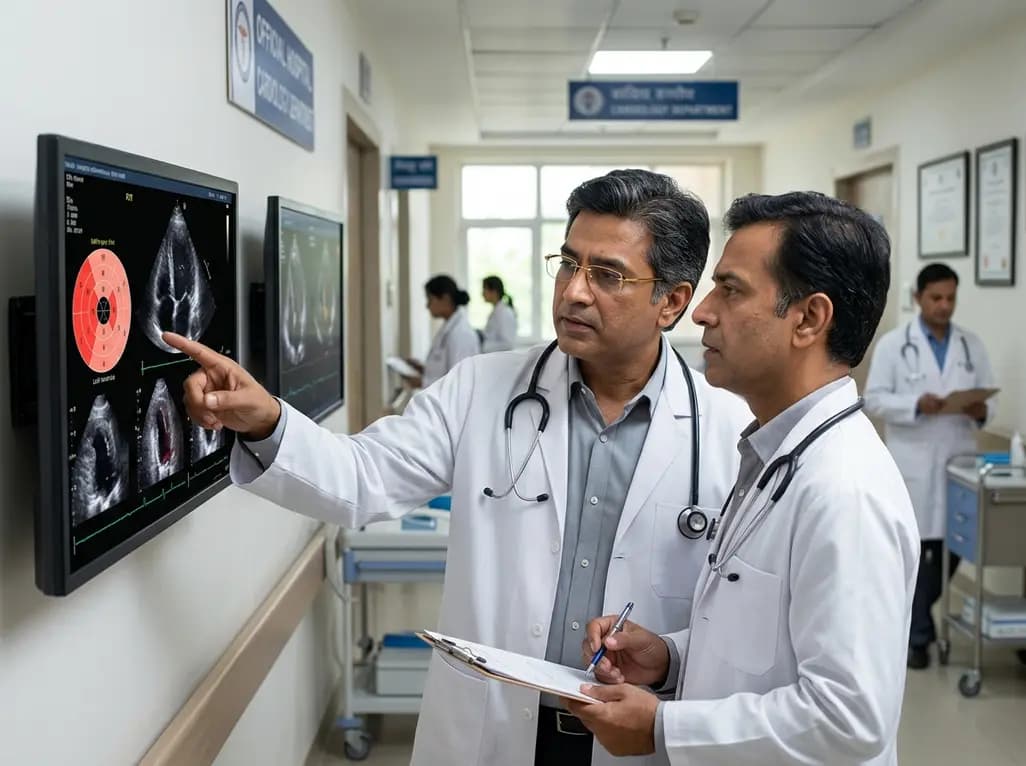
Cardiac involvement is the leading cause of mortality in EGPA. This report highlights an overlap phenotype of lymphocyte-predominant myocardial injury, Takotsubo-like cardiomyopathy, and left ventricular thrombus, emphasizing early multimodality diagnostics and aggressive immunosuppressive biologic therapy.
Today

A landmark biomechanical study demonstrates that sports bra support and running shoe cushioning interact significantly to influence tibial acceleration, breast motion, and comfort in female runners, providing crucial insights for clinical counseling in sports medicine and women's health.
Yesterday

A systematic review and meta-analysis of 5,406 participants reveals that tirzepatide significantly reduces hsCRP by 34.3%, improves cardiorenal biomarkers, and enhances functional capacity and exercise endurance in patients with heart failure.
Today
