.webp&w=384&q=75)

Loading, please wait...
Loading, please wait...

Parkinson's disease (PD) currently stands as the second-most diagnosed age-related neurodegenerative disorder worldwide, and its prevalence in India is rising significantly as the population ages. While motor symptoms like tremors and bradykinesia are the hallmarks of the condition, non-motor symptoms often prove more debilitating for patients and caregivers alike. Specifically, Parkinson's cognitive impairment screening has become a critical focus for neurologists and geriatricians attempting to identify mild cognitive impairment (PD-MCI) before it progresses to full-scale dementia. Traditionally, the medical community relies on standardized tools to quantify these deficits, yet the lived experience of clinicians suggests that a single numerical score rarely captures the full clinical picture. Consequently, there is an urgent need to understand the nuances of how experts interpret patient performance in real-world settings. By shifting focus toward qualitative assessment, medical professionals can better identify subtle shifts in executive function and memory that standardized cutoffs might overlook. This approach recognizes that every patient presents a unique cognitive profile shaped by various biological and environmental factors.
The Montreal Cognitive Assessment (MoCA) is globally recognized as the most recommended screening exam for detecting cognitive decline in Parkinson's patients. However, relying solely on a standardized cutoff score presents several challenges in a diverse clinical landscape like India. For instance, many clinicians observe that the rigid application of guidelines can lead to false positives or negatives, particularly when educational backgrounds vary. Therefore, experienced professionals often supplement the numerical score with their own clinical observations of the patient's test-taking behavior. Furthermore, the traditional scoring method does not always account for the specific motor-cognitive trade-offs that PD patients face during the exam. Indeed, a patient might struggle with the clock-drawing task due to motor tremors rather than cognitive failure. Consequently, experts have begun to look for specific diagnostic patterns that go beyond the final tally. These patterns allow for a more nuanced interpretation of cognitive health, ensuring that the diagnosis reflects the patient's actual functional capacity rather than just their ability to follow instructions under pressure.
Recent research led by A. Journey Eubank has pioneered a qualitative descriptive approach to extract these hidden diagnostic patterns. The study curated retrospective data from patients ranging from mild cognitive impairment to advanced PD-dementia. To ensure a robust analysis, the researchers organized assessments into groups and conducted semi-structured interviews with six seasoned clinical professionals. This methodology allowed the team to gather multiple clinical opinions for each case, providing a rich dataset of expert intuition. Subsequently, three coders used a consensus-based approach to distill meaningful patterns from these interviews. They specifically focused on features that clinicians emphasized as vital for determining cognitive health. Interestingly, these features were not limited to the MoCA scores alone. Instead, they included sociodemographic data, general health history, and the dependent relationships between different sections of the assessment. This holistic view represents a departure from the reductionist approach of traditional scoring, offering a more integrated blueprint for future diagnostic efforts in neurodegenerative care.
The study successfully distilled three clinically meaningful patterns that professionals utilize to assess cognitive health in PD patients. First, clinicians look at sectional performance on the MoCA, specifically noting which domains show the most significant decline. For example, a sharp drop in executive function paired with preserved orientation often signals a different pathology than global decline. Second, the experts highlighted the importance of sociodemographic and health data derived from neuropsychological reports. Factors such as age, education level, and comorbid conditions like hypertension significantly color the interpretation of a MoCA score. Third, the study identified the vital role of dependent relationships between assessments. Clinicians often compare the patient’s performance on the MoCA with their observed daily functioning and motor severity. Consequently, these three patterns provide a multidimensional view of the patient. By integrating these qualitative insights, doctors can more accurately differentiate between normal age-related changes and true neurodegenerative decline, which is essential for developing effective long-term management plans.
The transition from a purely quantitative scoring system to a qualitative pattern-based model marks a significant advancement in Parkinson's cognitive impairment screening. While the MoCA remains a vital tool, its real-world utility is enhanced when clinicians apply these newly identified patterns. Moreover, this qualitative shift aligns with the growing trend toward personalized medicine. By understanding the specific features that experts prioritize, we can begin to tailor cognitive exams to better reflect the unique challenges of the PD population. For instance, future iterations of the MoCA could include specific weights for domains like visuospatial processing, which are frequently affected in Parkinson's. Additionally, training programs for medical students and residents could incorporate these qualitative patterns, helping the next generation of doctors develop sharper clinical intuition. Ultimately, the goal is to create a more responsive diagnostic framework that values professional observation as much as standardized data. This integrated approach ensures that patients receive a diagnosis that truly informs their treatment and improves their quality of life.
Looking ahead, the findings from this qualitative study provide a clear blueprint for refining cognitive assessments in Parkinson’s disease. As we move toward more digital and automated screening tools, incorporating the 'clinician’s eye' into algorithm design will be crucial. Specifically, developers can use these identified patterns to create decision-support systems that alert clinicians to subtle diagnostic markers. Furthermore, in the context of Indian healthcare, these insights are invaluable for adapting tools to local languages and educational contexts. Since traditional cutoffs may be less reliable in diverse populations, pattern-based assessments offer a more equitable way to evaluate cognitive health. In conclusion, the work by Eubank and colleagues reminds us that medicine is both a science and an art. While data provides the foundation, it is the expert interpretation of patterns that leads to clinical excellence. By continuing to explore these qualitative dimensions, we can ensure that Parkinson's cognitive impairment screening remains both accurate and compassionate for all patients.
The Montreal Cognitive Assessment is favored because it evaluates multiple cognitive domains, including executive function, memory, and visuospatial skills, which are frequently affected in Parkinson's disease. Unlike simpler tests, it is sensitive enough to detect mild cognitive impairment (MCI) before it progresses to dementia. Its brevity and ease of administration make it a practical choice for busy clinical environments while providing a reliable baseline for monitoring neurodegenerative progression over time.
Clinicians improve accuracy by identifying qualitative patterns, such as the relationship between different test sections and the patient's behavioral approach to tasks. They also consider sociodemographic factors and the patient's motor symptom severity. This holistic view allows them to distinguish between cognitive deficits caused by PD pathology and those influenced by external factors like education, anxiety, or physical tremors, leading to a more precise and personalized diagnosis for every patient.
Factors like age, education level, and occupation play a significant role in how a patient performs on cognitive screenings. Higher educational attainment can sometimes mask early deficits due to cognitive reserve, while lower education may lead to lower scores that do not reflect true impairment. Clinicians must adjust their expectations based on these variables to ensure that the final assessment accurately represents the patient's cognitive health relative to their individual baseline and life context.
Disclaimer: This content is for informational and educational purposes only and does not constitute medical advice or a professional relationship. Always seek the advice of your physician or other qualified health provider with any questions you may have regarding a medical condition. Refer to the latest local and national guidelines for clinical practice.
References
Eubank AJ et al. A qualitative approach to extract diagnostic patterns of cognitive impairment in Parkinson's disease. Sci Rep. 2026 Jul 16. doi: 10.1038/s41598-026-62469-4. PMID: 42463836.
Postuma RB et al. MDS clinical diagnostic criteria for Parkinson's disease. Mov Disord. 2015 Oct;30(12):1591-601. doi: 10.1002/mds.26424.
Nasreddine ZS et al. The Montreal Cognitive Assessment, MoCA: a brief screening tool for mild cognitive impairment. J Am Geriatr Soc. 2005 Apr;53(4):695-9. doi: 10.1111/j.1532-5415.2005.53221.x.

Read summarized clinical updates, watch expert medical content, and earn CME certifications right from your smartphone.
Open your smartphone camera to scan and install.





New research explores qualitative diagnostic patterns in Parkinson's disease cognitive impairment. By analyzing clinician insights during MoCA exams, experts identified three key performance patterns that enhance diagnostic accuracy beyond traditional scoring cutoffs for better patient care.
3 months ago

Explore vital recurrent stroke predictors in lacunar stroke patients managed with intensive blood pressure lowering. This analysis examines trial findings from SPS3 to uncover residual vascular risks, metabolic factors, and targeted secondary prevention strategies for high-risk neurological patients.
Today

Odisha has established India's first state-level clinical protocol specifically tailored for pregnant women with sickle cell disease. Developed with NHM and UNICEF, the framework provides structured antenatal screening, crisis mitigation, standardized referral pathways, and specialized interdisciplinary care.
Today

India is advancing preventive healthcare by integrating genomics, artificial intelligence, and quantum technologies. With the SANGAM programme sequencing one million Indian genomes, clinicians can unlock personalized therapies, detect cardiometabolic risks early, and curb the burden of diabetes and heart disease.
Today
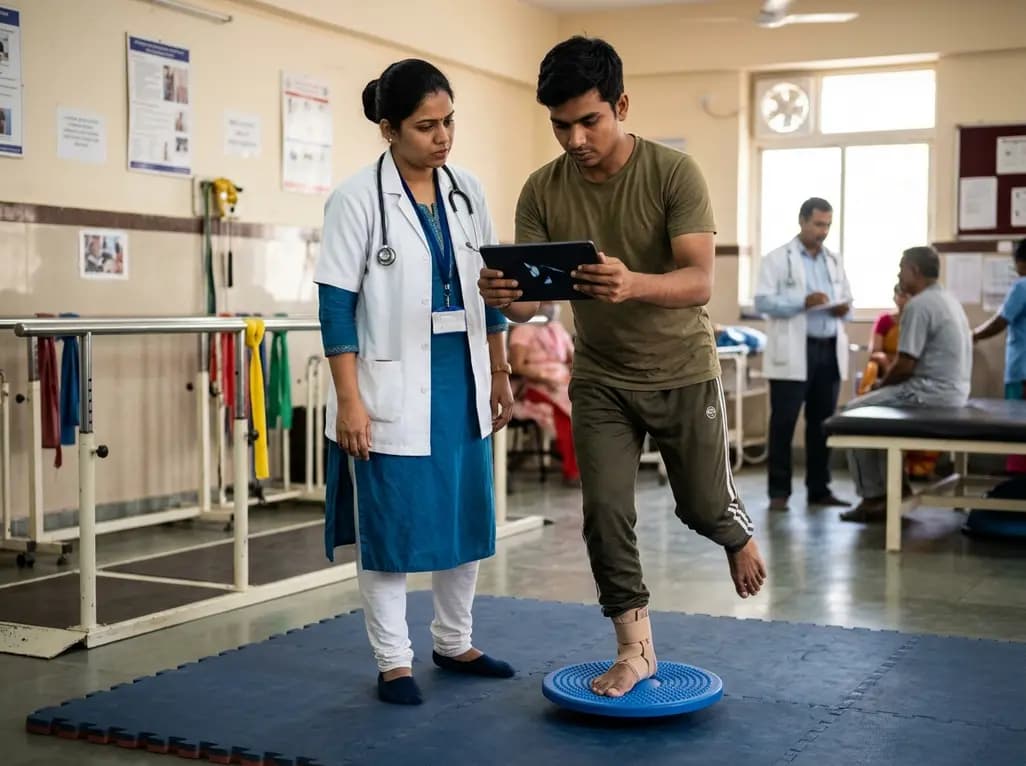
A randomized controlled trial demonstrates that an eight-week dual-task training intervention significantly improves static and dynamic postural control over standard balance exercises in individuals with chronic ankle instability, addressing critical neurocognitive deficits during athletic and daily activities.
Today

A retrospective cohort study of 7,716 ICU patients from the MIMIC-IV database demonstrates that Gradient Boosting Decision Trees significantly outperform traditional SOFA scores in predicting in-hospital mortality among patients with sepsis and diabetes, with SHAP analysis providing clinical interpretability.
Today
