

Loading, please wait...
Loading, please wait...

Adolescent mental health and behavioral well-being represent fundamental pillars of comprehensive pediatric care. Historically, family medicine specialists and pediatricians advised caregivers that rigorous supervision prevents adolescent misconduct. Consequently, investigating the statistical pathways connecting parental monitoring and youth adjustment has become essential for modern clinical guidance. A recent systematic review comprehensively evaluated these mechanisms across decades of published research.
Clinicians frequently encounter families struggling to balance protective oversight with growing adolescent autonomy. Therefore, clarifying the underlying mechanisms of supervisory behaviors remains vital for pediatric counseling. In this rigorous review, researchers examined thirty-nine studies that specifically evaluated statistical mediators linking parental action to behavioral adjustment. The investigators focused strictly on concrete parental actions rather than passive parental knowledge. Moreover, they evaluated cohorts across elementary, middle, and high school environments. Interestingly, forty-six percent of the statistical mediation tests demonstrated significant associations. Most significant pathways suggested that active monitoring produces beneficial behavioral outcomes. However, approximately a quarter of the significant tests revealed unexpected adverse effects. These divergent findings demonstrate that active monitoring functions through complex pathways rather than straightforward control. Additionally, single mediators explained only a small fraction of the total effect size. Specifically, the median standardized indirect effect was remarkably small, accounting for roughly twenty-four percent of total variance. Thus, clinicians must recognize that monitoring alone cannot serve as an isolated protective intervention. Instead, multiple psychological variables interact simultaneously to shape behavioral development.
Although the literature includes dozens of published mediation models, significant methodological shortcomings persist across the field. For instance, twenty-six of the thirty-nine reviewed studies utilized cross-sectional designs rather than longitudinal tracking. Consequently, establishing true causal directionality between parental behaviors and adolescent outcomes remains problematic. Furthermore, all reviewed studies were strictly non-experimental. Only a single investigation made substantial efforts to control for potential confounding variables. Most studies simply adjusted for basic demographic covariates, leaving unmeasured familial stressors unaddressed. In addition, the review identified forty-two distinct pairs of mediators and adjustment outcomes. Yet, researchers replicated only six specific mediational chains across more than one published study. This lack of replication weakens empirical confidence in widely accepted developmental theories. Practitioners must therefore interpret published parenting dogmas with appropriate scientific caution. When families present with adolescent behavioral difficulties, clinicians cannot assume that increased parental scrutiny will reliably resolve misconduct. In fact, relying on simplistic causal models may overlook critical emotional determinants within the home environment. Medical practitioners should emphasize evidence-based behavioral strategies rather than unverified supervisory assumptions.
Crucially, the review highlighted that parental monitoring does not always produce positive outcomes. Among seventy-nine statistically significant tests, twenty showed detrimental effects on adolescent adjustment. This unexpected finding warrants careful clinical consideration by pediatricians and mental health professionals. In many cases, excessive surveillance generates profound reactance among adolescents seeking autonomy. When caregivers deploy intrusive tracking apps or interrogate adolescents constantly, teens often feel deeply mistrusted. Consequently, high levels of controlling surveillance can provoke adolescent secretive behavior, defiance, and emotional distress. Furthermore, severe restriction frequently impairs the development of necessary self-regulation skills. Instead of learning internal coping strategies, youth may simply become more adept at concealing rule violations. In outpatient pediatric settings, physicians frequently witness strained parent-child dynamics resulting directly from excessive parental control. Therefore, healthcare providers must educate parents that surveillance is fundamentally distinct from supportive involvement. While safety boundaries remain necessary, intrusive tracking often damages reciprocal rapport. Thus, clinical guidance should warn parents against replacing genuine emotional connection with overbearing surveillance. Respectful communication remains vastly superior to suspicion.
Over two decades ago, landmark research revolutionized developmental psychology by questioning traditional monitoring assumptions. Specifically, researchers argued that parental knowledge primarily reflects voluntary adolescent disclosure rather than active parental surveillance. Despite the widespread influence of this hypothesis, the systematic review identified only one empirical study testing whether youth disclosure mediates the relationship between monitoring and adjustment. Consequently, this glaring research gap demonstrates that investigators have neglected a central theoretical pillar of adolescent socialization. When adolescents willingly share details about their social lives, parents gain valuable insights without triggering conflict. Conversely, when parents rely solely on aggressive questioning, adolescents frequently withdraw into secrecy. Furthermore, in Indian households, rapid digital adoption has exacerbated this generational tension. Parents often attempt to monitor digital activity through strict restrictions, creating friction and distress. Therefore, fostering an environment where adolescents feel emotionally safe to disclose their challenges remains paramount. Pediatricians and family doctors must guide caregivers to prioritize active listening over authoritarian questioning. As a result, families nurture mutual trust that inherently supports healthy psychological development.
Given the complex evidence, healthcare providers must translate these empirical findings into actionable clinical advice. When parents express concern regarding adolescent conduct, clinicians should first evaluate the overall parent-child relationship. Rigid supervisory strategies frequently backfire if mutual trust is absent. Hence, pediatricians should encourage caregivers to establish collaborative household boundaries rather than imposing unilateral edicts. For example, national pediatric guidelines recommend joint agreements regarding screen time, curfew, and social activities. In addition, physicians must train parents to practice constructive conflict resolution. Caregivers should react calmly when adolescents disclose mistakes, avoiding harsh punitive measures that discourage future honesty. Moreover, primary care clinicians can screen for underlying mood disorders or attention issues when severe adjustment problems arise. If behavioral defiance escalates, pediatricians should refer families to qualified adolescent psychiatrists or family counselors. By shifting the clinical focus from punitive oversight to relational warmth, doctors help caregivers build resilient relationships. Ultimately, supportive guidance protects youth adjustment far more effectively than rigid surveillance, ensuring long-term emotional resilience.
Current scientific evidence indicates that parental monitoring does not guarantee positive youth adjustment. Although nearly half of published mediation tests demonstrate beneficial behavioral outcomes, roughly one quarter show adverse effects. Excessive or intrusive tracking frequently provokes adolescent rebellion, emotional distress, and deliberate secrecy. Therefore, clinicians advise parents to balance supervision with relational warmth, emotional validation, and age-appropriate autonomy rather than relying strictly on authoritarian surveillance measures.
Adolescent disclosure is more influential because voluntary sharing reflects strong mutual trust and open emotional communication. When adolescents choose to disclose their daily activities and challenges, caregivers gain authentic insight without triggering hostility. Conversely, aggressive parental surveillance often damages connection and encourages secretive behavior. Consequently, developmental experts urge parents to foster a nonjudgmental home environment, which naturally encourages adolescents to seek parental guidance during times of distress.
Pediatricians should counsel parents to adopt collaborative digital mediation rather than covert phone surveillance. Clinicians recommend establishing agreed-upon digital rules, such as media-free family meals and device curfews. In addition, caregivers must educate youth about online safety, cyberbullying, and digital wellness. By maintaining supportive dialogue rather than invading digital privacy, parents preserve adolescent trust while successfully providing guidance against problematic smartphone usage and online hazards.
Disclaimer: This content is for informational and educational purposes only and does not substitute for clinical judgment or professional medical advice. Healthcare providers should corroborate findings with local clinical protocols and patient-specific needs. Refer to the latest local and national guidelines for clinical practice.
References

Read summarized clinical updates, watch expert medical content, and earn CME certifications right from your smartphone.
Open your smartphone camera to scan and install.





A comprehensive systematic review examines how parental monitoring influences youth adjustment. Findings reveal that active parental surveillance alone yields modest benefits, urging clinicians and pediatricians to advocate for youth disclosure, bidirectional trust, and collaborative guidance.
Today
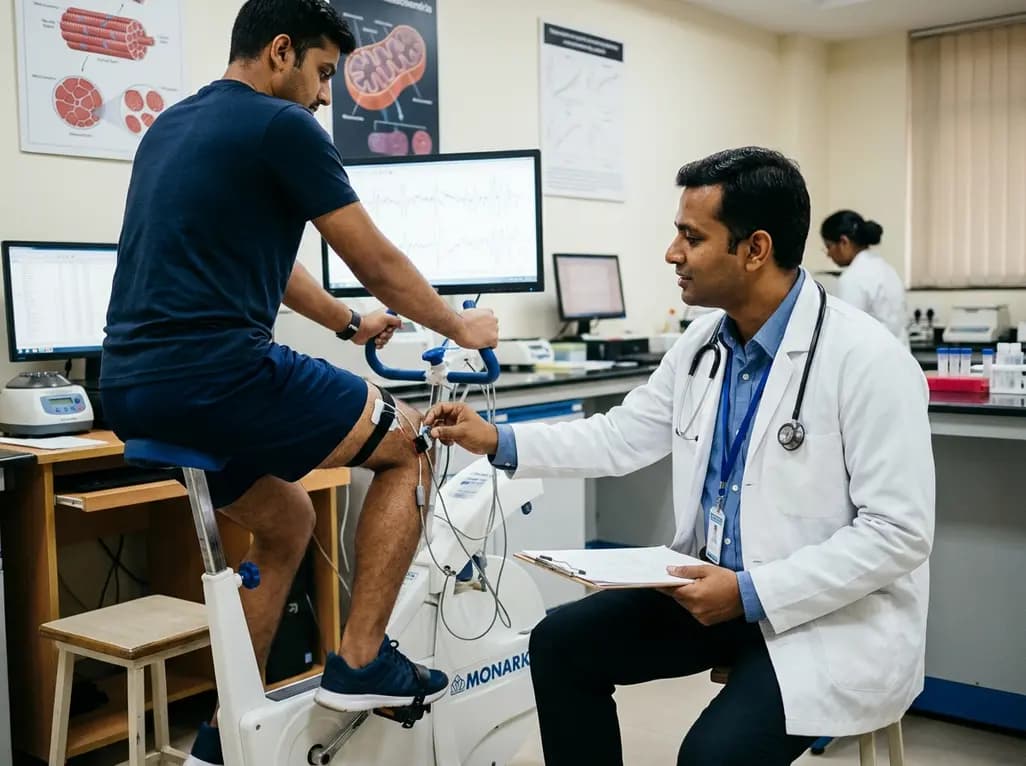
A 6-week trial evaluated twice-weekly single-leg cycle interval training in active adults. Aside from a modest rise in NDUFB8 protein, citrate synthase and capillarisation showed no change, indicating that twice-weekly low-volume sessions may not reach the threshold for muscle oxidative adaptations.
Today

Doctors at AIIMS New Delhi have achieved a historic milestone by performing India's first open prenatal myelomeningocele repair on a 25-week unborn fetus. This landmark multidisciplinary procedure provides vital neuroprotective benefits, lowers hydrocephalus risks, and transforms maternal-fetal medicine nationwide.
Today

A randomized crossover trial reveals that daily fresh watermelon consumption significantly reduces baseline TMAO levels and favorably modulates lipid profiles, lowering triglycerides and LDL cholesterol in adults with overweight and obesity.
Today

A systematic review of over 25,000 patients reveals that surgical decompression of proximal and distal nerve compression sites significantly improves clinical outcomes in double crush syndrome, particularly for upper extremity entrapment, while highlighting key diagnostic and sequencing considerations.
Today

Childhood insulinoma is a rare cause of recurrent hyperinsulinemic hypoglycemia that often eludes early diagnosis. Advanced GLP-1 receptor-targeted PET/CT imaging using 68Ga-exendin-4 complements anatomic MRI to localize occult pancreatic lesions, facilitating focused, curative surgical enucleation.
Today
