

Loading, please wait...
Loading, please wait...

Double crush syndrome represents a complex clinical challenge where dual compression sites compromise a single peripheral nerve pathway. Clinicians frequently encounter proximal cervical or lumbosacral nerve root compression coexisting with distal entrapments like carpal tunnel syndrome. Consequently, this serial compression impairs bidirectional axoplasmic flow and magnifies distal nerve vulnerability. Therefore, isolated distal release often fails to alleviate neuropathic pain and weakness completely. Furthermore, spine surgeons face ongoing debates regarding whether to decompress both lesions simultaneously or stage interventions sequentially. Recently, a comprehensive systematic review analyzed twenty-four clinical studies encompassing over twenty-five thousand patients to synthesize evidence regarding neurosurgical management and functional outcomes.
The double crush hypothesis suggests that a proximal neural insult renders distal axons vulnerable to secondary mechanical entrapment. Historically, Upton and McComas first formulated this concept after observing high rates of cervical radiculopathy among patients with carpal tunnel syndrome. Mechanistically, proximal compressive forces impair vital axoplasmic flow along the peripheral nerve trunk. As a result, disrupted cytoskeletal transport reduces the delivery of trophic proteins and functional organelles toward the distal neuromuscular apparatus. Furthermore, retrograde transport mechanisms suffer comparable impairment, which diminishes neurotrophic signalling back to primary dorsal root ganglion cells. Consequently, even mild compression at a secondary distal site causes pronounced electrophysiological deterioration and severe clinical manifestations. Animal models confirm that serial subthreshold compressions induce cumulative histological degeneration, intraneural edema, and progressive Schwann cell apoptosis. In contrast, an isolated single subthreshold compression remains entirely subclinical without functional deficits. Therefore, understanding this dual vulnerability enables neurosurgeons to recognize that distal paresthesias frequently stem from combined proximal and peripheral pathology.
Patients with double crush pathology typically present with atypical, diffuse limb pain and sensory abnormalities that defy standard dermatomal boundaries. For example, individuals with cervical spondylotic radiculopathy may concurrently report classic nocturnal paresthesias and thenar atrophy suggestive of median nerve compression. However, physical examination alone cannot reliably distinguish whether proximal root irritation or distal tunnel stenosis drives primary functional impairment. Therefore, clinicians must utilize a systematic diagnostic protocol that integrates detailed neurological evaluation, advanced cross-sectional imaging, and specialized electrodiagnostic studies. High-resolution magnetic resonance imaging reliably delineates neural foramen narrowing, disc herniations, and spinal cord effacement. Concurrently, comprehensive nerve conduction studies and electromyography evaluate motor and sensory conduction velocities across both anatomical regions. Nevertheless, standard electrodiagnostic testing frequently reveals conflicting results, particularly when proximal radiculopathies mask distal latency delays. Moreover, high-resolution ultrasound has emerged as an indispensable adjunct to visualize focal cross-sectional swelling and neural hypervascularity at peripheral entrapment sites. Consequently, multimodal evaluation prevents diagnostic oversight and guides appropriate surgical decision-making.
Neurosurgical management of dual nerve compression requires meticulous planning to balance surgical morbidity against therapeutic efficacy. Currently, two primary operative strategies dominate clinical practice: simultaneous single-session decompression and staged interventions. In simultaneous decompression, surgeons perform both spinal nerve root release and peripheral decompression during the same operative event. Consequently, this concurrent strategy substantially shortens overall hospital stay, reduces cumulative anesthesia exposure, and accelerates patient return to vocational activities. Furthermore, recent cohort analyses demonstrate that simultaneous intervention leads to rapid improvements in validated functional metrics, including the Quick Disabilities of the Arm, Shoulder, and Hand score. However, staged surgery remains an appealing alternative for frail patients or those with ambiguous diagnostic localization. Specifically, many surgeons prefer decompressing the distal entrapment first under local anesthesia, reserving invasive spinal fusion or foraminotomy for persistent symptoms. Conversely, other clinicians prioritize proximal spinal decompression, arguing that restoring axoplasmic flow facilitates spontaneous distal nerve recovery. Although clinical consensus remains divided, modern systematic evidence highlights that comprehensive bimodal decompression achieves superior pain relief compared to isolated single-site surgery.
Clinical evidence reveals remarkable disparities between upper and lower extremity double crush presentations. Upper extremity cases involving median, ulnar, and suprascapular nerves achieve predictable and robust functional recovery following decompression. In fact, large systematic cohorts report rapid normalization of grip strength, sensory resolution, and durable symptom relief with minimal reoperation rates. In contrast, lower extremity presentations, such as concurrent lumbar radiculopathy and common peroneal or tibial nerve entrapment, exhibit significantly more variable outcomes. Several anatomical and physiological factors explain this clinical divergence. First, lower extremity nerves travel substantially longer distances, which complicates regenerative axonal transport after prolonged chronic compression. Additionally, lower extremity cases frequently stem from traumatic injuries or severe degenerative lumbosacral spondylolisthesis accompanied by profound axonal loss. As a result, patients with traumatic peroneal palsy or tarsal tunnel syndrome often retain residual motor deficits despite prompt proximal and distal decompression. Furthermore, systemic comorbidities like diabetic microvascular disease exacerbate lower limb peripheral ischemia, blunting neural repair mechanisms. Thus, spine surgeons must counsel lower extremity patients carefully regarding realistic functional expectations and extended rehabilitation timelines.
Despite growing recognition of dual compressive neuropathies, substantial heterogeneity persists across diagnostic definitions and treatment protocols. Current neurosurgical literature features variable diagnostic criteria, ranging from purely clinical findings to rigorous electrodiagnostic cutoffs. Consequently, comparing outcome data across international multi-center registries remains exceedingly challenging. Furthermore, randomized clinical trials directly comparing simultaneous versus staged decompression remain conspicuously absent. To address these deficiencies, multidisciplinary collaborative initiatives must establish standardized diagnostic algorithms and validated outcome benchmarks. Prospective clinical registries will help clarify whether specific electrophysiological biomarkers can predict which patients benefit from early concurrent decompression. Moreover, advanced neuroimaging modalities, such as magnetic resonance neurography and diffusion tensor imaging, offer promising avenues to quantify axonal tract integrity objectively before intervention. In addition, incorporating artificial intelligence into diagnostic pipelines may soon assist clinicians in mapping multi-level nerve entrapments accurately. Ultimately, systematic standardization will refine operative indications, minimize surgical failures, and optimize long-term neurological recovery for complex patients worldwide.
Double crush syndrome involves compression at two distinct sites along the same peripheral nerve pathway, whereas isolated entrapment occurs at a single anatomical constriction. Consequently, the proximal lesion impairs longitudinal axoplasmic transport, making distal axons hypersensitive to minor secondary mechanical pressure. Because symptoms frequently overlap across dermatomal boundaries, patients experience atypical pain distributions that fail to resolve completely with isolated distal decompression alone.
Surgeons generally favor simultaneous decompression when diagnostic investigations demonstrate definitive, symptomatic nerve compression at both proximal and distal sites. Furthermore, this single-stage approach minimizes overall hospital stays, reduces cumulative anesthesia risks, and accelerates vocational rehabilitation for suitable surgical candidates. However, staged procedures remain preferable for medically frail individuals, ambiguous electrodiagnostic presentations, or cases where decompressing the primary entrapment may alleviate downstream neural compromise safely.
Lower extremity nerve pathways span considerably longer anatomical trajectories, which significantly delays retrograde and anterograde axonal regeneration following decompression. Additionally, lower extremity presentations frequently involve severe trauma, chronic multi-level lumbar spine degeneration, or systemic metabolic neuropathies like diabetes mellitus. Consequently, irreversible axonal loss and persistent intraneural fibrosis occur more frequently in the lower limb, leading to unpredictable functional recovery and lingering motor weakness despite successful surgical decompression.
Disclaimer: This content is for informational and educational purposes only. It is not intended to be a substitute for professional medical advice, diagnosis, or treatment. Always seek the advice of your physician or other qualified health provider with any questions you may have regarding a medical condition. Refer to the latest local and national guidelines for clinical practice.
References

Read summarized clinical updates, watch expert medical content, and earn CME certifications right from your smartphone.
Open your smartphone camera to scan and install.





A systematic review of over 25,000 patients reveals that surgical decompression of proximal and distal nerve compression sites significantly improves clinical outcomes in double crush syndrome, particularly for upper extremity entrapment, while highlighting key diagnostic and sequencing considerations.
Today
A validated computable phenotype accurately identifies malnutrition in older adults in outpatient settings, achieving 95% sensitivity and predicting mortality risk.
Today
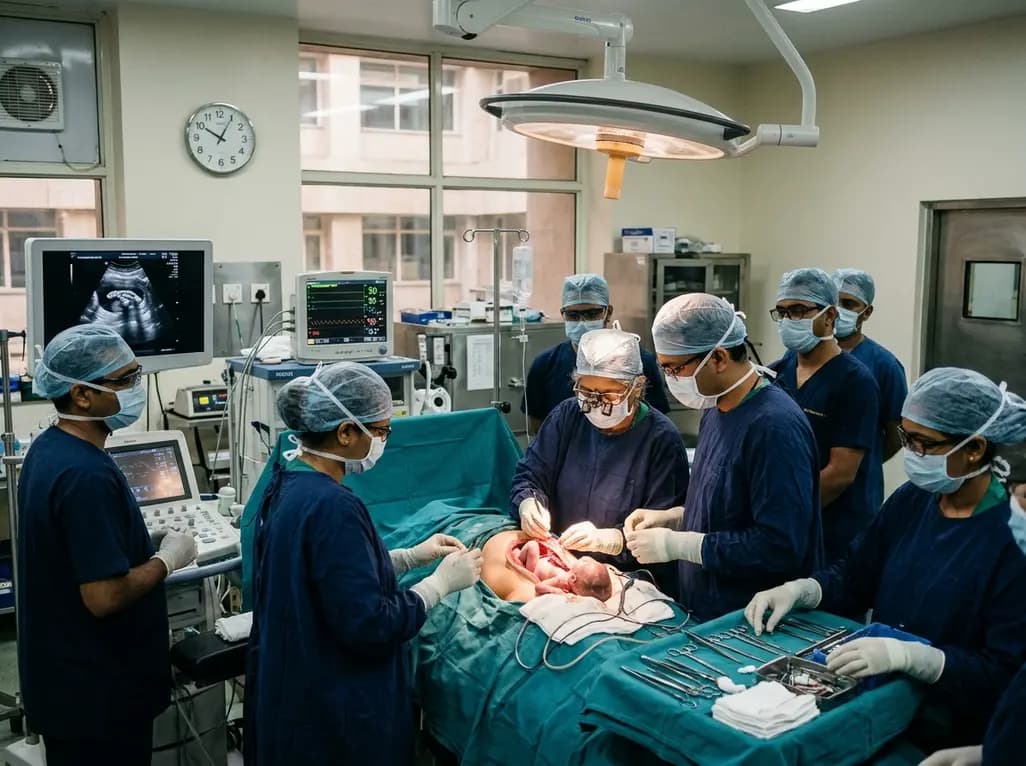
Doctors at AIIMS New Delhi have achieved a historic milestone by performing India's first open prenatal myelomeningocele repair on a 25-week unborn fetus. This landmark multidisciplinary procedure provides vital neuroprotective benefits, lowers hydrocephalus risks, and transforms maternal-fetal medicine nationwide.
Today

A randomized crossover trial reveals that daily fresh watermelon consumption significantly reduces baseline TMAO levels and favorably modulates lipid profiles, lowering triglycerides and LDL cholesterol in adults with overweight and obesity.
Today

A large-scale retrospective cohort study demonstrates that GLP-1 receptor agonists significantly reduce all-cause hospitalizations, alcohol-related admissions, major cardiovascular events, and mortality in patients with overweight or obesity and alcohol use disorder, providing profound clinical insights.
Today
