.webp&w=384&q=75)

Loading, please wait...
Loading, please wait...

The death of a child from oncological disease represents a devastating crisis with profound, enduring psychological consequences. Clinicians frequently observe that parental grief in childhood cancer persists for decades after the initial loss. However, high-quality empirical evidence detailing long-term bereavement profiles beyond ten years remains limited. A recent multicenter Swiss study provides vital insights into parental mourning trajectories, symptom severity, and prognostic determinants. The investigation demonstrates that while many caregivers adapt over time, a substantial minority experiences intense, debilitating grief. Furthermore, the findings reveal that socioeconomic factors, particularly poverty risk, profoundly influence bereavement outcomes. Consequently, healthcare providers must understand these long-term dynamics to deliver effective, equitable bereavement support.
Bereavement following pediatric malignancy involves distinct challenges that separate it from standard adult bereavement models. Parents endure the cumulative trauma of aggressive oncological treatments, prolonged hospitalizations, and the profound tragedy of outliving their child. In addition, the loss disrupts family structures, parental identity, and long-term future expectations. As a result, grief does not follow a simple, linear timeline toward emotional resolution. Instead, bereaved parents experience fluctuating waves of emotional pain, existential questioning, and persistent longing over many years. While public perceptions often assume that mourning substantially diminishes after the first anniversary, clinical experience demonstrates persistent grief manifestations. Many mothers and fathers successfully maintain meaningful emotional bonds with their deceased child while slowly rebuilding daily functional capacity. Conversely, vulnerable individuals may develop severe chronic distress that impairs occupational and interpersonal functioning. Therefore, pediatric oncology teams must adopt a longitudinal perspective, recognizing that parental bereavement requires enduring clinical vigilance and extended supportive resources.
A comprehensive multicenter cross-sectional study recruited 103 parents of 81 deceased children through the Swiss Childhood Cancer Registry. All eligible participants had lost a child diagnosed with cancer at or before age 18, with at least one year elapsed since death. Researchers assessed grief intensity using the validated Prolonged Grief 13 (PG-13) instrument, which generates a sum score ranging from 11 to 55. Overall, the cohort demonstrated a mean grief intensity score of 23.3. Specifically, persistent longing and emotional yearning represented the most prominent symptom across participants. In contrast, emotional numbness and avoidance behaviors scored lowest among respondents. Furthermore, latent profile analysis identified three distinct bereavement trajectories: low grief (56%), moderate grief (32%), and high grief (12%). These findings indicate that nearly half of bereaved parents experience clinically relevant ongoing distress. Interestingly, time since death did not independently correlate with reduced grief intensity, confirming that time alone does not resolve complex bereavement distress without adequate psychosocial support.
Multivariable regression models within the study highlighted critical sociodemographic determinants of long-term grief intensity. Most notably, high poverty risk exhibited the strongest positive association with elevated grief scores. Bereaved parents confronting severe financial instability scored substantially higher on the PG-13 scale compared to financially secure counterparts. Thus, socioeconomic disparity emerges as a major contributor to persistent psychological morbidity. Financial deprivation creates chronic daily stress while simultaneously limiting access to private psychotherapy, respite care, and social support services. In addition, the catastrophic medical and indirect costs of childhood cancer often deplete family financial reserves. Consequently, disadvantaged parents face housing instability, food insecurity, and workplace strain during their mourning process. Lower health literacy may also prevent economically vulnerable caregivers from navigating community mental health resources effectively. Therefore, oncology multidisciplinary teams must systematically identify financially vulnerable families early during cancer treatment. Proactive social work interventions and targeted economic assistance can help protect vulnerable parents from severe long-term bereavement complications.
Clinicians must accurately distinguish typical bereavement reactions from Prolonged Grief Disorder (PGD) using established diagnostic criteria. According to the DSM-5-TR and ICD-11, PGD involves persistent, pervasive yearning for the deceased accompanied by severe emotional pain lasting at least twelve months post-loss in adults. This condition causes significant functional impairment across social, occupational, and personal domains. Common diagnostic features include identity disruption, marked disbelief regarding the death, emotional numbness, intense loneliness, and feeling that life has lost all purpose. In pediatric cancer contexts, parents with PGD frequently report overwhelming guilt regarding treatment choices or intense difficulty re-engaging with surviving siblings. Utilizing validated screening tools like the PG-13 facilitates prompt clinical identification. Differentiating PGD from major depressive disorder and post-traumatic stress disorder is vital because therapeutic strategies differ markedly. Whereas standard supportive counseling assists normal mourning, PGD requires structured, evidence-based psychotherapeutic modalities tailored specifically to resolve complicated grief mechanisms.
Pediatric oncology programs must integrate structured bereavement pathways into standard institutional care models. Crucially, effective bereavement support begins well before the end of life through proactive palliative care integration. Palliative specialists, psycho-oncologists, and medical social workers must collaborate closely to evaluate family resilience, address financial hardships, and establish comprehensive support plans. Following a patient's death, oncology centers should maintain systematic, compassionate contact with bereaved families. Sending personalized sympathy cards, offering multidisciplinary debriefing conferences, and conducting milestone telephone follow-ups provide substantial emotional comfort. Furthermore, clinical teams should perform routine psychological screenings at six and twelve months post-loss to identify parents requiring specialized psychiatric referral. Community peer support groups also offer invaluable shared validation and practical coping strategies. In addition, clinicians must monitor the psychological well-being of surviving siblings, as whole-family stability directly facilitates parental emotional recovery and long-term psychological resilience.
The Prolonged Grief 13 (PG-13) is a validated diagnostic screening tool containing thirteen self-reported items that measure core cognitive, behavioral, and emotional symptoms of pathological grief. Each item is rated on a five-point Likert scale, yielding a total score between 11 and 55. Higher cumulative scores indicate greater grief severity, enabling clinicians to identify parents at risk for Prolonged Grief Disorder beyond twelve months post-loss.
Financial hardship generates chronic daily distress while severely restricting access to mental health services, specialized grief counseling, and supportive community resources. Additionally, the substantial medical expenses of childhood cancer deplete household savings, leading to job instability and social isolation. These compounding socioeconomic stressors deplete emotional reserves, hindering natural psychological adaptation and exacerbating long-term bereavement intensity among economically vulnerable parents.
Clinicians should refer bereaved parents when intense grief symptoms persist beyond twelve months post-loss and cause substantial impairment in daily functioning. Warning signs include unrelenting yearning, severe emotional numbness, persistent survivor guilt, active avoidance of reality, profound identity disruption, or suicidal thoughts. Structured interventions, such as Prolonged Grief Disorder Therapy, provide evidence-based strategies to resolve these debilitating psychological symptoms effectively.
Disclaimer: This content is for informational and educational purposes only. It is not intended to be a substitute for professional medical advice, diagnosis, or treatment. Always seek the advice of your physician or other qualified health provider with any questions you may have regarding a medical condition. Refer to the latest local and national guidelines for clinical practice.
References

Read summarized clinical updates, watch expert medical content, and earn CME certifications right from your smartphone.
Open your smartphone camera to scan and install.





A multicenter Swiss Childhood Cancer Registry study reveals distinct long-term grief profiles in bereaved parents, showing that high poverty risk strongly predicts severe grief intensity even years after pediatric loss.
last month

A study reveals that salivary cortisone correlates more strongly with serum cortisol than salivary cortisol during dynamic adrenal testing, while salivary dexamethasone accurately confirms compliance. This provides a non-invasive, precise alternative to venipuncture for diagnosing adrenal disorders.
Today
Prenatal evaluation of fetal growth restriction requires an integrated diagnostic approach. While chromosomal microarray remains fundamental, exome sequencing offers significant diagnostic yield in isolated and syndromic cases, especially when ultrasound shows skeletal anomalies or normal placental function.
Today

Evaluating disagreement among Friedewald, Martin-Hopkins, and Sampson LDL-C equations reveals diagnostic uncertainty at statin cutoffs. An interpretable regime-aware calibration model rescues patient misclassifications without extra testing costs.
Today
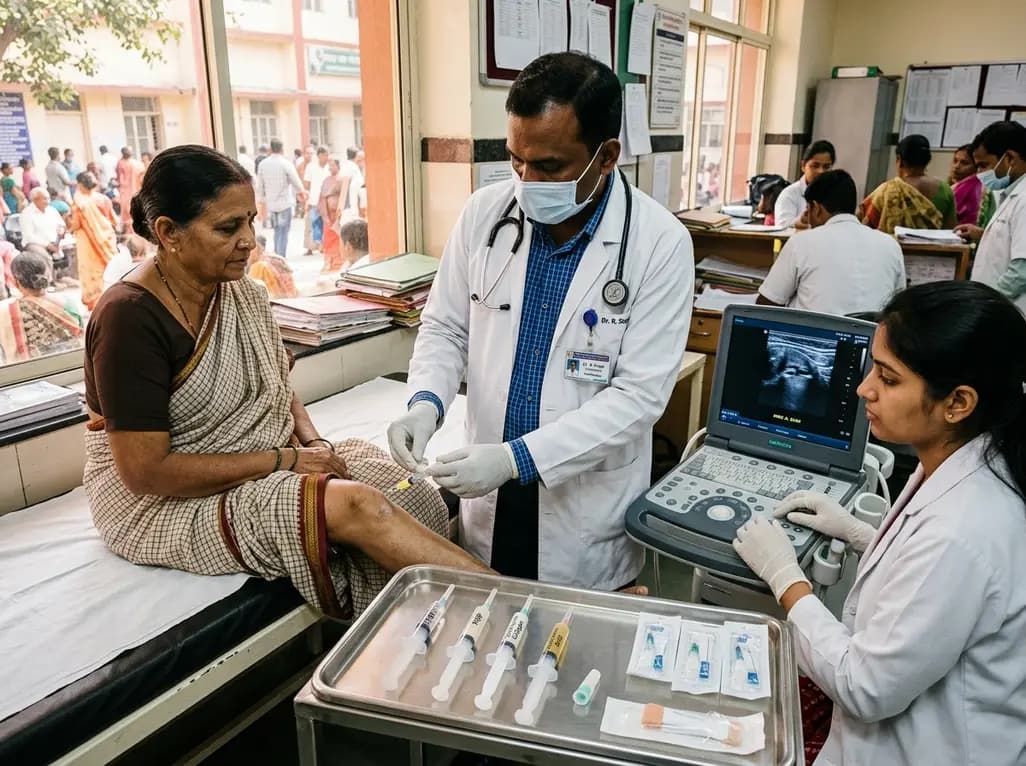
A randomized controlled trial compared ultrasound-guided intra-articular injections of PRP, hydrolyzed type I collagen, and hyaluronic acid in knee osteoarthritis. All therapies demonstrated significant improvements in WOMAC and pain scores at six months, supporting hydrolyzed collagen as a viable biological option.
Today

A groundbreaking review highlights mitochondrial quality control as a pivotal gating layer between metabolite signaling and regulated cell death, offering transformative therapeutic avenues across cardiology, oncology, and critical care.
Today
