.webp&w=384&q=75)

Loading, please wait...
Loading, please wait...

Autism spectrum disorder (ASD) is a complex neurodevelopmental condition that profoundly impacts the entire family system. In India, where family units are often tightly knit and serve as the primary support structure, the mental health of caregivers is a critical factor in the child\'s developmental trajectory. Research consistently shows that Parental Depression and Autism are interconnected, creating a domestic environment where the well-being of one member significantly influences the others. Studies indicate that approximately 31% to 49% of parents with autistic children report clinically significant symptoms of depression. This prevalence is substantially higher than that seen in the general population. For Indian clinicians, recognizing this link is essential for providing holistic care. The chronic stress of managing core autism symptoms, navigating social stigma, and accessing specialized services can take a heavy toll on parents. Furthermore, when a parent\'s mental health declines, it can inadvertently affect their interaction with the child, potentially exacerbating the child\'s own mental health challenges. Understanding the longitudinal pathways of these connections allows for better-targeted interventions that support the whole family rather than just the individual patient.
To understand the mechanics of how mental health problems spread within a family, researchers utilize longitudinal mediation models. A recent study by Piro-Gambetti and colleagues (2025) leveraged three data cycles to track 162 families with autistic children over several years. This approach is superior to cross-sectional studies because it allows for the observation of time-ordered effects. Specifically, it helps determine if parental depression precedes child mental health issues or if the child\'s challenges drive the parent\'s depression. The findings suggest a highly reciprocal and bidirectional relationship. In the context of Parental Depression and Autism, the mediation model explored how relationship quality—defined by warmth and criticism—serves as a bridge. For instance, the study found that specific communication patterns act as pathways through which a father\'s depressive symptoms translate into outcomes for the child. These longitudinal insights are vital for Indian healthcare providers, as they highlight that family dynamics are not static. Instead, they are evolving processes that require consistent monitoring and support. By identifying these pathways, practitioners can intervene at the relationship level, potentially breaking the cycle of worsening mental health for both the parent and the child.
Historically, much of the research on caregiver burden in autism has focused on mothers, who are often the primary caregivers in many Indian households. However, recent data highlights the unique and significant role of paternal mental health. The study revealed that father depression mediated the link between child mental health problems and father critical comments. This suggests that depressed fathers may be more prone to using criticism as a communication style, which in turn affects the child\'s psychological state. Interestingly, the researchers found that father positive remarks also mediated the connection between father depression and child mental health. This indicates that even in the presence of depression, the ability to maintain warmth and provide positive reinforcement can alter the child\'s outcomes. In India, fathers often play a different but equally crucial role in the family hierarchy, and their psychological well-being is frequently overlooked in pediatric settings. When a father\'s mental health is neglected, the entire family subsystem may suffer. Therefore, addressing the psychological needs of fathers is just as important as supporting mothers. Clinicians should ensure that fathers are included in the care plan and screened for depressive symptoms regularly.
The quality of the parent-child relationship is often measured through the lens of expressed emotion, which includes warmth (positive remarks) and criticism. These behavioral markers are key to understanding the link between Parental Depression and Autism. In the examined study, father report of child mental health problems mediated the association between father depression and critical comments. This creates a challenging cycle: a father who perceives his child as having significant mental health issues may feel more depressed, leading to more criticism, which then worsens the child\'s symptoms. Conversely, warmth and positive remarks serve as protective factors. For autistic children, who may already struggle with social communication and emotional regulation, a highly critical environment can be particularly damaging. On the other hand, a warm and supportive environment can foster resilience. Indian families often face high societal pressure for their children to perform or behave in specific ways, which can inadvertently increase the frequency of critical comments. Educators and therapists must work with parents to shift the focus toward positive reinforcement. Reducing criticism is not about ignoring challenges but about changing the emotional tone of the household to support the child\'s long-term mental health.
For practitioners in India, these findings have immediate clinical applications. Pediatricians and psychiatrists are often the first point of contact for families of autistic children. It is vital to move beyond a child-centric model toward a family-systems approach. Screening both parents for depression should be a standard part of the protocol. In many Indian clinical settings, fathers may not always be present during consultations, making it even more important to encourage their participation. Furthermore, addressing the stigma associated with mental health is crucial. Many parents may feel that seeking help for their own depression is a sign of weakness or a distraction from the child\'s needs. Clinicians must educate families that a parent\'s well-being is a prerequisite for the child\'s progress. Integrating Parental Depression and Autism support into routine care can prevent the reciprocal toll identified in longitudinal studies. This could involve referral to counseling, support groups, or cognitive-behavioral therapy. By addressing parental mental health early, clinicians can improve the home environment, leading to better social and emotional outcomes for the autistic child. This holistic approach is essential for the sustainable management of neurodevelopmental disorders.
The evidence is clear: the mental health of parents and autistic children is deeply intertwined. Moving forward, the goal of autism services should be the implementation of family-centered interventions. These programs should not only target the child\'s behavioral symptoms but also actively work on improving the parent-child relationship. Specifically, interventions that focus on reducing parental criticism and increasing warmth can have a lasting impact. For fathers, targeted support that addresses their specific stressors and communication styles is necessary. Furthermore, longitudinal research should continue to explore these pathways in diverse cultural contexts, including across various socioeconomic backgrounds in India. As we refine our understanding of the bidirectional links between Parental Depression and Autism, we can develop more nuanced and effective support systems. Ultimately, the aim is to create a nurturing environment where every family member can thrive. This requires a shift in both clinical practice and public health policy to recognize that the family is the most influential environment for a child\'s development. By supporting parents, we are directly investing in the future health and well-being of the autistic child.
Clinicians must screen both parents because their mental health is inextricably linked to the child\'s behavioral outcomes. As the study suggests, paternal depression specifically impacts child mental health through communication patterns like criticism. Focusing only on mothers may miss critical family dynamics that exacerbate the child\'s symptoms over time.
Relationship quality acts as a bridge between a parent\'s internal state and the child\'s well-being. Depression can increase critical comments or decrease positive remarks, which then worsens the child\'s mental health. Conversely, maintaining warmth and positive communication can buffer the child against the negative impacts of parental depressive symptoms.
Interventions should focus on reducing critical comments and increasing positive remarks from parents. For fathers, addressing depression is key to improving these communication styles. By training parents in positive reinforcement and emotion regulation, healthcare providers can help families break the reciprocal cycle of mental health problems and improve overall outcomes.
Disclaimer: This content is for informational and educational purposes only. It is not intended as medical advice or a substitute for professional healthcare. Always seek the advice of your physician or other qualified health provider with any questions you may have regarding a medical condition. Refer to the latest local and national guidelines for clinical practice.
References
Piro-Gambetti B et al. Longitudinal pathways between parent depression and child mental health in families of autistic children. Dev Psychopathol. 2025 Oct. doi: 10.1017/S0954579424001378. PMID: 39310936.
Karst JS, Van Hecke AV. Parent and Family Impact of Autism Spectrum Disorders: A Review and Proposed Model for Intervention Evaluation. Clin Child Fam Psychol Rev. 2012; 15:247-277.
Zablotsky B, et al. The association between child autism spectrum disorder and parent mental health: A longitudinal and hierarchical analysis. J Child Psychol Psychiatry. 2013; 54(1):54-62.
Prevalence of Depression, Anxiety, and Stress among Parents of Children with Autism Spectrum Disorders in North India: A Cross-sectional Study. Taiwanese Journal of Psychiatry. 2024; 38:45-51.
"
Read summarized clinical updates, watch expert medical content, and earn CME certifications right from your smartphone.
Open your smartphone camera to scan and install.





New longitudinal research highlights the bidirectional link between parental depression and child mental health in families of autistic children. The study emphasizes how paternal communication, specifically warmth and criticism, mediates these mental health outcomes over time.
3 months ago

Explore vital recurrent stroke predictors in lacunar stroke patients managed with intensive blood pressure lowering. This analysis examines trial findings from SPS3 to uncover residual vascular risks, metabolic factors, and targeted secondary prevention strategies for high-risk neurological patients.
Today

Odisha has established India's first state-level clinical protocol specifically tailored for pregnant women with sickle cell disease. Developed with NHM and UNICEF, the framework provides structured antenatal screening, crisis mitigation, standardized referral pathways, and specialized interdisciplinary care.
Today

India is advancing preventive healthcare by integrating genomics, artificial intelligence, and quantum technologies. With the SANGAM programme sequencing one million Indian genomes, clinicians can unlock personalized therapies, detect cardiometabolic risks early, and curb the burden of diabetes and heart disease.
Today
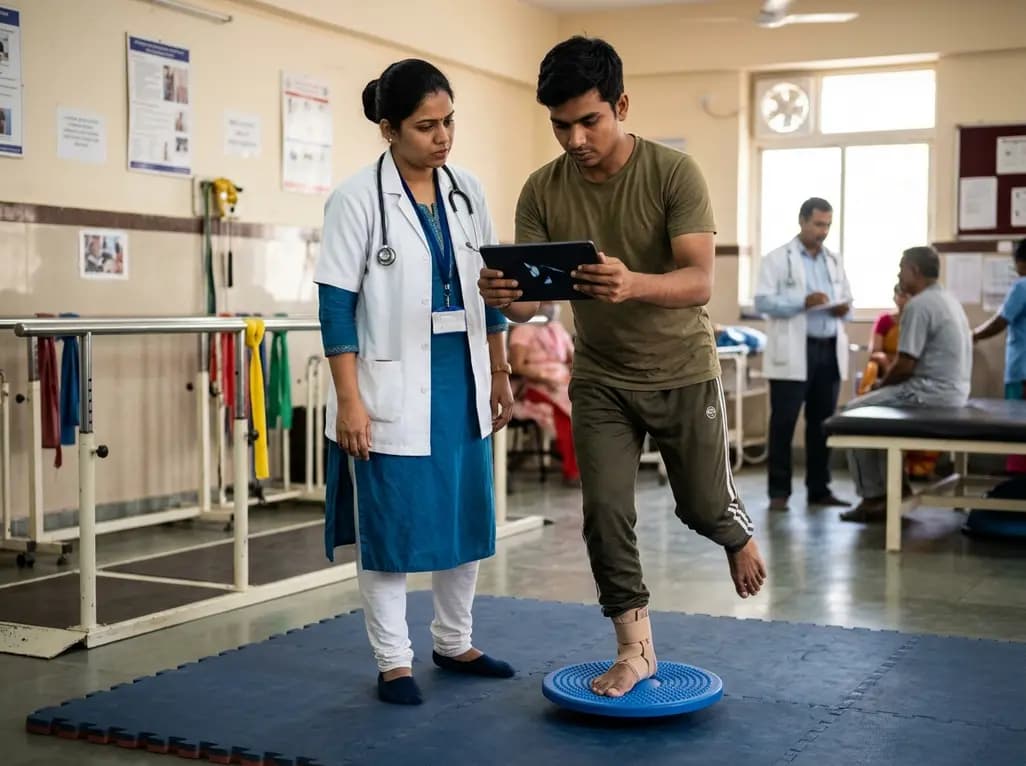
A randomized controlled trial demonstrates that an eight-week dual-task training intervention significantly improves static and dynamic postural control over standard balance exercises in individuals with chronic ankle instability, addressing critical neurocognitive deficits during athletic and daily activities.
Today

A retrospective cohort study of 7,716 ICU patients from the MIMIC-IV database demonstrates that Gradient Boosting Decision Trees significantly outperform traditional SOFA scores in predicting in-hospital mortality among patients with sepsis and diabetes, with SHAP analysis providing clinical interpretability.
Today
