.webp&w=384&q=75)

Loading, please wait...
Loading, please wait...

Caring for pediatric patients with severe, long-term medical complexity requires extraordinary vigilance and psychological fortitude from their families. In contemporary pediatric practice, parental adaptability serves as the primary engine sustaining complex home care regimens across dynamic stages of illness. When a child faces life-limiting disorders, congenital syndromes, or multiorgan impairment, parents transition rapidly from ordinary caregivers to home-based clinical managers. However, pediatric care teams historically lacked a comprehensive theoretical framework to evaluate how parents cope with progressive medical demands over decades. A recent evolutionary concept analysis clarifies this phenomenon by defining it as an iterative, multileveled caregiving process. Understanding these specific mechanisms allows pediatricians, nurses, and family physicians to identify caregiver vulnerability much earlier. Consequently, clinicians can design targeted supportive measures that bolster resilience rather than expecting families to manage immense burdens in isolation.
The evolutionary concept analysis identifies parental adaptability as an ongoing, parent-enacted process operating across family, healthcare, and social environments. Rather than representing a static personality trait, it evolves continuously as the health trajectory of the child fluctuates. Parents must constantly recalibrate their daily routines to maintain medical stability while preserving household harmony. Therefore, adaptability encompasses cognitive, emotional, and pragmatic behaviors that accommodate shifting developmental hurdles and acute clinical crises. In resource-constrained settings or during sudden decompensations, this flexible capacity becomes even more essential. Clinicians must recognize that parental adjustment extends far beyond basic treatment compliance. Furthermore, the caregiving environment requires parents to negotiate complex health systems, secure specialized supplies, and educate ancillary care providers. Because this process is highly dynamic, a family that appears well-adjusted during a stable clinic visit may quickly struggle during treatment escalations. Recognizing adaptability as an evolving mechanism allows healthcare teams to assess family coping continuously rather than treating it as a one-time assessment.
The conceptual framework outlines three foundational attributes that define caregiving execution: responsiveness, balancing, and care management. Responsiveness involves the heightened parental sensitivity required to detect subtle physical or emotional changes in the child. Consequently, parents can intervene promptly before mild symptoms escalate into catastrophic emergencies. Meanwhile, balancing represents the difficult ongoing effort to reconcile rigorous medical regimens with broader family priorities. Parents constantly weigh the clinical needs of the affected child against the developmental needs of healthy siblings, financial obligations, and spousal relationships. In addition, care management reflects the practical execution of complex therapies, nutritional regimens, polypharmacy schedules, and specialized device maintenance. These three attributes do not function in isolation. Instead, they interact iteratively across social systems, school settings, and hospital networks. When clinical teams comprehend these specific operational pillars, they can pinpoint exact caregiver deficits. As a result, interventions can directly target scheduling coordination, symptom recognition skills, or psychosocial balancing.
Although parental adaptability ensures treatment continuity and optimizes child survival, it frequently comes at an immense personal cost. The concept analysis introduces the critical phenomenon of adaptive exhaustion to describe this clinical reality. In this paradoxical state, parents continue to deliver flawless, high-quality medical care despite experiencing profound psychological, physical, and emotional depletion. Because the child appears stable and well-managed, clinicians often assume the family unit is thriving. However, hidden beneath competent execution lies unrelenting caregiver fatigue, chronic sleep fragmentation, marital strain, and severe anxiety. If clinicians judge parental well-being solely by child health indicators, they inadvertently overlook acute distress in the parents. Over time, adaptive exhaustion can erode physical health, leading to chronic illness, systemic burnout, and sudden caregiving collapse. Therefore, healthcare providers must deliberately screen for parental fatigue during every clinical encounter, even when disease management protocols appear impeccably maintained.
Integrating these conceptual insights into daily pediatric practice requires a paradigm shift toward family-centered assessment protocols. Pediatricians, general practitioners, and nursing professionals should evaluate caregiver functional capacity alongside routine pediatric monitoring. Clinicians can utilize structured clinical questions to assess responsiveness, care management burdens, and systemic stressors. Moreover, interdisciplinary coordination between medical providers, social workers, and clinical psychologists creates essential safety nets for vulnerable families. Routine hospital discharge planning must incorporate practical assessments of parental stamina, local community support, and financial resources. When medical staff proactively recognize the limits of parental coping, they can simplify arduous polypharmacy regimens and consolidate outpatient specialty appointments. Furthermore, clear communication reduces the cognitive burden on parents who are already overwhelmed by care management duties. By embedding these supportive practices into hospital policies, health systems create a sustainable care continuum that safeguards both the child and their primary caregivers.
To preserve parental resilience over extended periods, health systems must deploy proactive, evidence-based supportive interventions. First, healthcare organizations should expand access to planned respite care services, offering parents critical intervals for physical rest and emotional recuperation. Peer-support networks also serve as vital therapeutic resources, connecting isolated parents with experienced peers facing comparable challenges. In addition, digital health platforms, such as asynchronous telemedicine and direct communication portals, streamline care coordination and reduce logistical friction for families. Practical education focused on shared problem-solving and emotional coping mechanisms further strengthens parental competence. Financial counseling and systemic navigation assistance also alleviate chronic external stressors that accelerate parental depletion. Ultimately, protecting caregivers preserves child health outcomes over the long term. When healthcare systems actively reinforce parental adaptability through structured resources, children with complex chronic diseases achieve greater stability, higher quality of life, and safer transitions across every phase of development.
Parental adaptability is an active, iterative caregiving process where parents dynamically alter routines to meet the shifting healthcare needs of a chronically ill child. It involves responsive symptom monitoring, delicate household balancing, and complex clinical management across family and community environments.
Adaptive exhaustion often remains hidden because parents continue to deliver highly effective medical care despite severe emotional and physical depletion. Healthcare providers who assess caregiver wellness solely by child clinical stability may completely miss the underlying fatigue and psychological distress experienced by parents.
Clinicians can support resilience by screening parents for burnout, consolidating outpatient visits, and simplifying home medication regimens. Providing access to planned respite care, family counseling, peer support networks, and streamlined telehealth channels also alleviates daily burdens on family caregivers.
Disclaimer: This content is for informational and educational purposes only and should not be considered medical advice. Always seek the advice of a qualified healthcare provider regarding medical conditions or treatment plans. Refer to the latest local and national guidelines for clinical practice.
References
Lee E et al. Parental Adaptability in Families of Children With Complex Chronic Conditions: An Evolutionary Concept Analysis. ANS Adv Nurs Sci. 2026 Oct 09. doi: 10.1097/ANS.0000000000000708. PMID: 42854190.
Brenner M et al. Integrated care for children living with complex care needs: an evolutionary concept analysis. Eur J Pediatr. 2023;182(5):2049-2059.
Edelstein H et al. Children with medical complexity: A scoping review of interventions to support caregiver stress. Child Care Health Dev. 2017;43(3):323-333.

Read summarized clinical updates, watch expert medical content, and earn CME certifications right from your smartphone.
Open your smartphone camera to scan and install.





Caring for children with complex chronic conditions requires enduring parental adaptability. This evolutionary concept analysis highlights caregiving dynamics, adaptive exhaustion, and targeted clinical interventions to support family well-being.
Today
A multicentre study validates Day 1 prognostic scores (ADMIT-ASC, ACE, and ROR) for predicting steroid non-response in acute severe ulcerative colitis, delineating crucial trade-offs between sensitivity and specificity.
Today
A German MS and Pregnancy Registry cohort study shows women with relapsing-remitting multiple sclerosis treated with ocrelizumab or rituximab before pregnancy experience low relapse rates during gestation and postpartum, demonstrating sustained disease control without requiring prolonged washout intervals.
Today
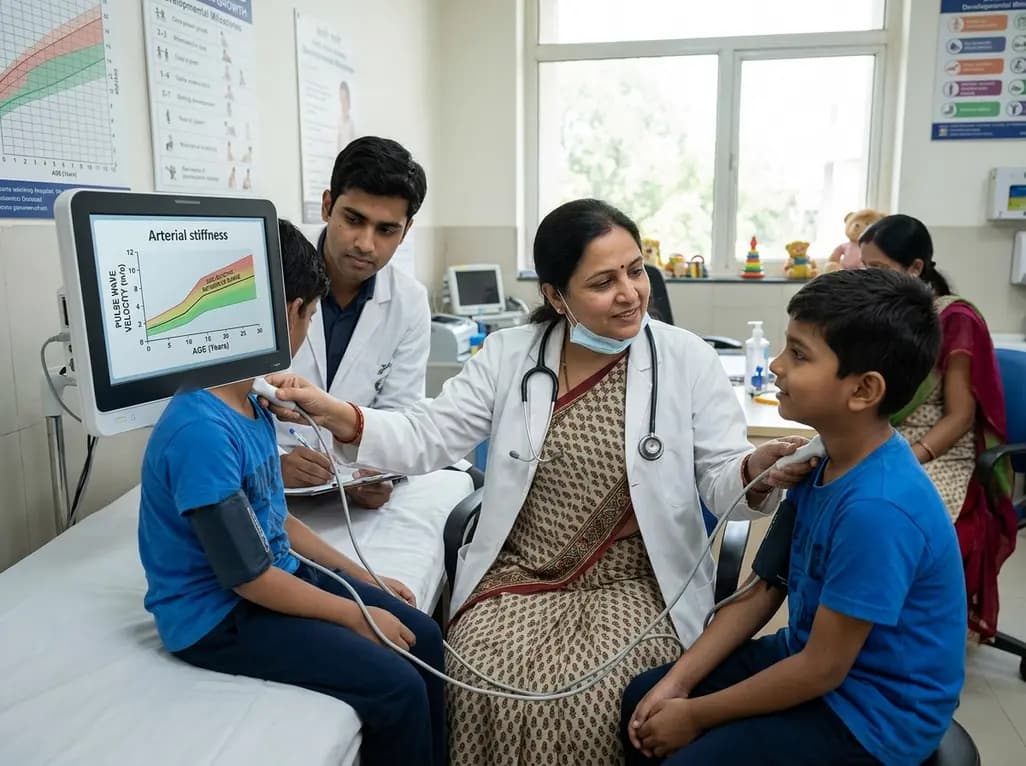
A landmark systematic review and meta-analysis establishes age-specific normative reference values for pediatric pulse wave velocity, revealing a nonlinear trajectory of arterial stiffness from early childhood through adolescence.
Today

New biomechanical research reveals how postural stabilization mechanisms coordinate delayed sensory feedback and ground reaction forces to preserve pendulum-like center of mass motion across standing and walking, providing vital insights for balance rehabilitation and fall prevention.
Today

A landmark cross-sectional study in Asian adults with type 2 diabetes identifies novel urinary metabolites linked to mild cognitive impairment. Elevated urinary sucrose and altered metabolites highlight non-invasive pathways for early cognitive risk stratification and targeted metabolic management.
Today
