.webp&w=384&q=75)

Loading, please wait...
Loading, please wait...
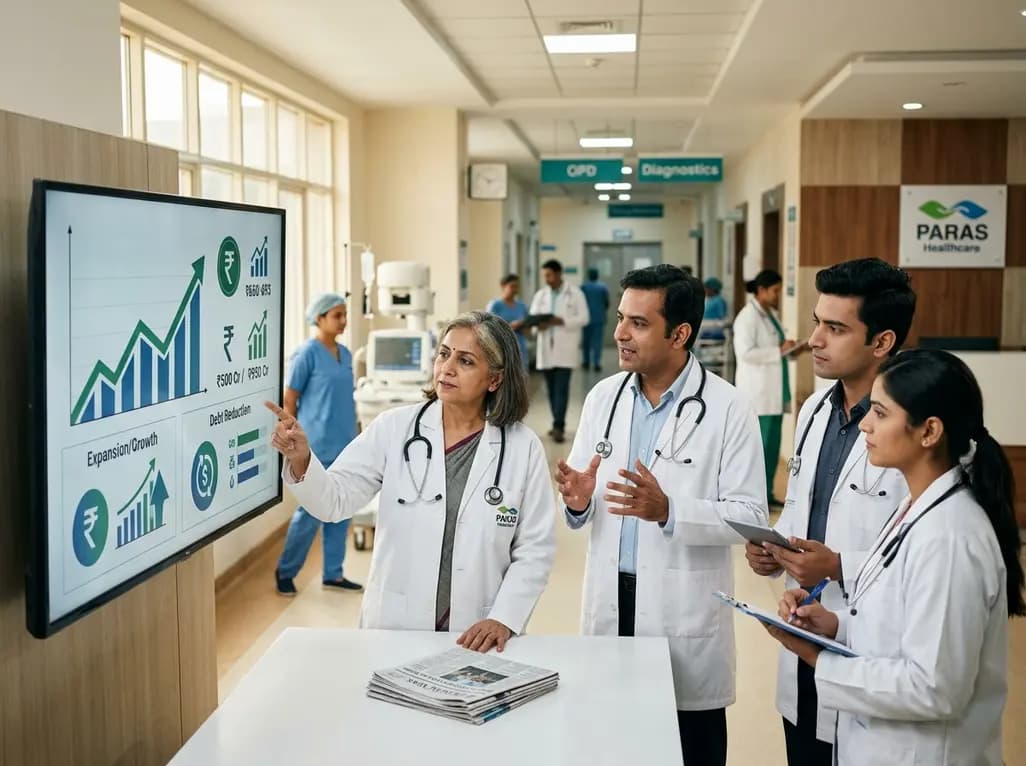
The Indian private healthcare sector continues to witness significant capital market engagement as major hospital operators expand services. Notably, the Paras Healthcare IPO is scheduled to open for public subscription on October 21. This corporate milestone marks a pivotal chapter in the organization's regional growth journey. Furthermore, this move highlights growing institutional interest in tertiary healthcare infrastructure across developing tier-two cities. Consequently, healthcare practitioners and industry analysts observe these developments closely.
The Gurugram-based healthcare chain has formally declared an issue size of ₹1,450 crore. Furthermore, the company set its price band between ₹660 and ₹693 per equity share. The total issue includes a fresh equity component worth ₹500 crore. In addition, existing shareholders will offer shares worth ₹950 crore through an offer for sale. Notably, promoter Dharminder Kumar Nagar and financial investor Commelina Limited will offload part of their holdings. Earlier, the healthcare provider had envisioned a larger public issue of ₹1,800 crore. However, management prudently revised the issue size to align with current equity market dynamics. As a result, the primary offering now balances debt rationalization with optimal capital structuring. Meanwhile, three leading investment banks will coordinate the capital generation process. Specifically, JM Financial, BofA Securities India, and Nuvama Wealth Management serve as the book-running lead managers. Additionally, MUFG Intime India acts as the official registrar to administer share transactions. Therefore, this public issue establishes clear transparency regarding corporate valuation and capital formation. Healthcare administrators monitor these metrics because institutional capitalization shapes the clinical environment significantly. Ultimately, robust capitalization fosters greater operational stability in private health systems across the country.
Financial management remains fundamental to maintaining clinical excellence and technological leadership across healthcare networks. Therefore, Paras Healthcare proposes to direct net proceeds from the fresh equity issue primarily toward debt reduction. Outstanding borrowing obligations often impose financial overhead on growing multi-hospital networks. Consequently, paying down debt significantly reduces ongoing interest costs for the healthcare network. In turn, lower debt servicing liabilities liberate vital operational cash reserves. Medical administrators can then reinvest these funds into cutting-edge medical technologies and diagnostic machinery. Furthermore, reduced debt burden improves financial resilience amidst evolving healthcare delivery landscapes. In addition, the organization plans to utilize residual resources for general corporate purposes. Such flexibility supports clinical talent retention programs and strengthens digital hospital infrastructure. Moreover, sound financial engineering enables management to modernize intensive care facilities and diagnostic pathways. As a result, tertiary institutions can secure high-end surgical instrumentation without relying on expensive commercial credit. In summary, disciplined deleveraging strengthens institutional autonomy while stabilizing operational cash flows. Ultimately, this capital reorganization creates a sustainable foundation for patient-centric innovation and long-term institutional growth. Clinicians benefit directly when hospital organizations maintain strong balance sheets and dedicated technological reinvestment budgets.
Currently, Paras Healthcare operates a network of eight multispecialty hospitals across northern India. Geographically, these facilities serve patients across five distinct states and one Union Territory. Specifically, hospital locations include Gurugram and Panchkula in Haryana, alongside Patna and Darbhanga in Bihar. Additionally, the network maintains modern tertiary centers in Kanpur, Uttar Pradesh, and Udaipur, Rajasthan. The organization also runs critical facilities in Ranchi, Jharkhand, and Srinagar, Jammu and Kashmir. Thus, the hospital group intentionally targets underserviced medical micro-markets in northern and eastern India. Historically, tier-two and tier-three regions experienced significant deficits in quaternary and tertiary clinical care. Therefore, patients often endured long journeys to major metropolitan hubs for complex surgical treatments. However, establishing comprehensive oncology, neurosurgery, and cardiac centers in these cities bridges critical healthcare voids. In addition, local clinical availability drastically reduces out-of-pocket travel and logistical expenses for families. Consequently, regional doctors gain access to collaborative referral networks and modern diagnostic suites. Furthermore, regional hospitals elevate local emergency readiness and intensive critical care capabilities during health crises. Ultimately, expanding localized tertiary hubs fosters equitable medical delivery across historically underserved population clusters.
Modern healthcare delivery demands continuous physical and clinical capacity expansion across fast-growing regions. At present, the hospital network manages an aggregate operational capacity of over 2,200 beds. Furthermore, management has outlined ambitious expansion roadmaps to address escalating patient care demands. Specifically, the network plans to establish a 300-bed hospital facility in Gurugram. Additionally, the organization aims to construct a 500-bed medical facility in Ludhiana. As a result, total network capacity will expand toward 3,011 beds over coming financial cycles. Such systematic scaling requires comprehensive infrastructure investments in laminar airflow operation theaters and robotic systems. Moreover, expanding clinical bed strength directly addresses bed shortages in acute tertiary disciplines. Critical disciplines such as medical oncology, interventional cardiology, and organ transplantation require extensive infrastructure. Therefore, expanded facilities will house modern linear accelerators, advanced catheterization laboratories, and specialized intensive care cubicles. Consequently, medical professionals can treat complex clinical cases with heightened diagnostic precision. In addition, these new facilities will establish robust continuous medical education wings for young clinicians. Overall, structured infrastructure investments reinforce long-term clinical safety, operational efficiency, and regional community well-being.
The public issue follows a structured book-building timeline across domestic stock exchanges. First, bidding for anchor investors opens on October 19 to establish early institutional confidence. Subsequently, the public subscription opens officially on October 21 and concludes on October 23. Following subscription closure, the allocation process occurs before listing on October 28. Moreover, the issue structure reserves 75 percent of net shares for qualified institutional buyers. Meanwhile, non-institutional investors receive an allocation of 15 percent of the offering. Finally, retail individual investors can bid for the remaining 10 percent of equity shares. This tranche distribution encourages strong institutional stewardship alongside broad public participation. Furthermore, prospective equity shares will list concurrently on both the BSE and NSE bourses. Therefore, the timeline ensures streamlined regulatory oversight and transparent price discovery throughout. In addition, healthy institutional backing generally reflects confidence in long-term governance and patient care volume. Consequently, hospital leadership can navigate public compliance requirements with structured corporate accountability. Meanwhile, market participants evaluate how debt repayment enhances post-listing operating margins. Ultimately, transparent equity listing aligns administrative transparency with sustainable healthcare delivery standards.
Public listings among healthcare providers signify maturing operational dynamics within Indian medicine. Historically, hospital expansion relied heavily on private equity funding or debt instruments. However, tapping public equity markets provides permanent capital with increased operational accountability. Furthermore, public scrutiny encourages hospital chains to adhere strictly to standardized clinical governance protocols. Consequently, institutional transparency enhances trust among patients, medical clinicians, and healthcare regulators alike. Moreover, health systems with robust capital reserves can attract top-tier medical talent and specialized surgical consultants. In turn, medical professionals gain access to modern clinical workstations and multidisciplinary tumor boards. In addition, capital infusion accelerates digital healthcare integration, such as electronic health records and automated pharmacy dispensing. As a result, patient documentation and clinical audit mechanisms improve substantially across all hospital units. Therefore, the ongoing corporate evolution directly elevates patient safety standards and clinical precision. Furthermore, well-capitalized hospital networks can collaborate effectively with national health insurance schemes to broaden treatment access. Ultimately, structured capitalization across private hospital networks fortifies national healthcare infrastructure across diverse geographical regions.
Q1: What are the key subscription dates for the Paras Healthcare IPO?
The Paras Healthcare IPO officially opens for public subscription on October 21, 2026, and closes on October 23, 2026. Prior to the public bidding, anchor investor participation begins on October 19, 2026. Following share allotment procedures, the equity shares will officially list on both the National Stock Exchange and Bombay Stock Exchange on October 28, 2026. Therefore, investors have a three-day bidding window to participate.
Q2: How will the fresh proceeds from the public offering be utilized?
The company plans to raise ₹500 crore through the fresh issuance of equity shares. Primarily, management will utilize these funds to prepay or repay outstanding debt liabilities across its corporate network. Consequently, reducing borrowing obligations will lower finance costs and enhance overall operational cash flows. In addition, the organization will direct remaining funds toward general corporate purposes, thereby strengthening hospital operations and clinical facility infrastructure.
Q3: Where does the hospital network currently operate clinical facilities in India?
The organization operates eight multispecialty hospitals across five states and one Union Territory in northern and eastern India. Specifically, facilities are operational in Gurugram and Panchkula in Haryana, Patna and Darbhanga in Bihar, and Kanpur in Uttar Pradesh. Furthermore, the healthcare network maintains active tertiary hospitals in Udaipur, Rajasthan, Ranchi, Jharkhand, and Srinagar, Jammu and Kashmir. Thus, the group provides advanced tertiary medical services across these regional population centers.
Disclaimer: This content is for informational and educational purposes only. It does not constitute medical advice or replace professional judgment. Refer to the latest local and national guidelines for clinical practice.
References

Read summarized clinical updates, watch expert medical content, and earn CME certifications right from your smartphone.
Open your smartphone camera to scan and install.





Paras Healthcare has announced its public issue comprising a Rs 500-crore fresh issue and Rs 950-crore offer for sale. The healthcare chain plans to utilize proceeds primarily to repay debt while continuing the expansion of its multispecialty hospital network across underserved regional healthcare markets in India.
Today
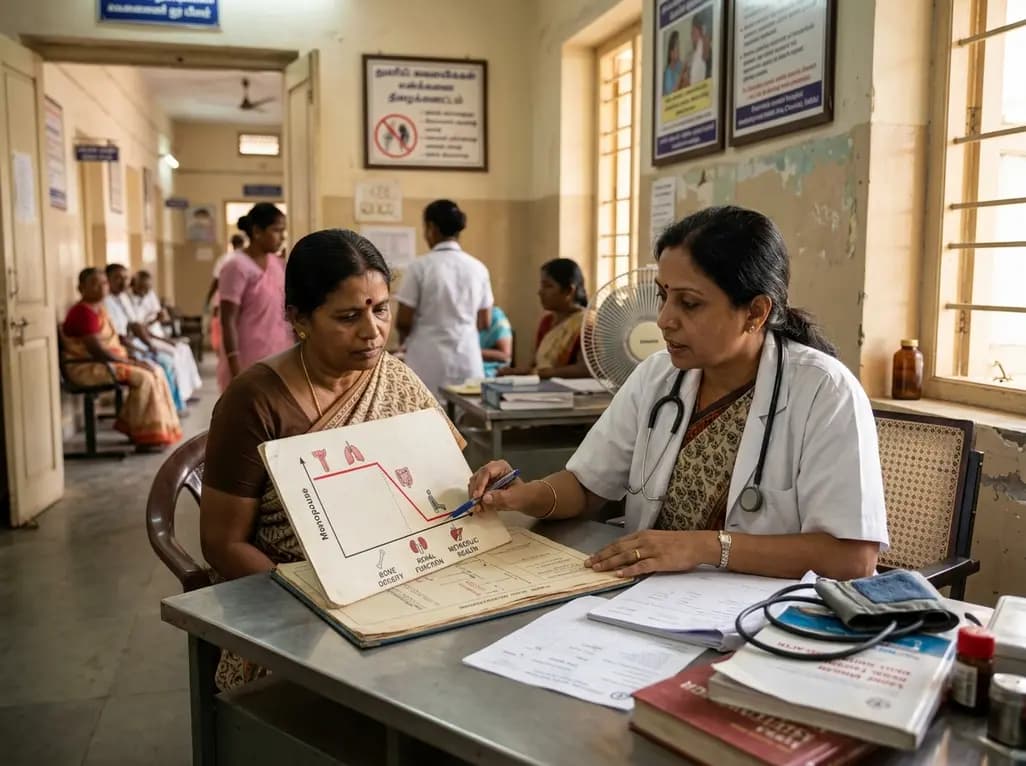
Recent research challenges the traditional view of menopause as a slow transition, demonstrating an abrupt physiological cliff across metabolic, renal, and bone markers. Understanding these rapid multi-organ shifts allows clinicians to optimize early screening, lifestyle guidance, and personalized hormone therapy.
Today

A comparative analysis of labor induction with vaginal misoprostol in individuals with and without severe obesity, highlighting pharmacokinetic differences, labor duration, dosing, and intrapartum safety.
Today
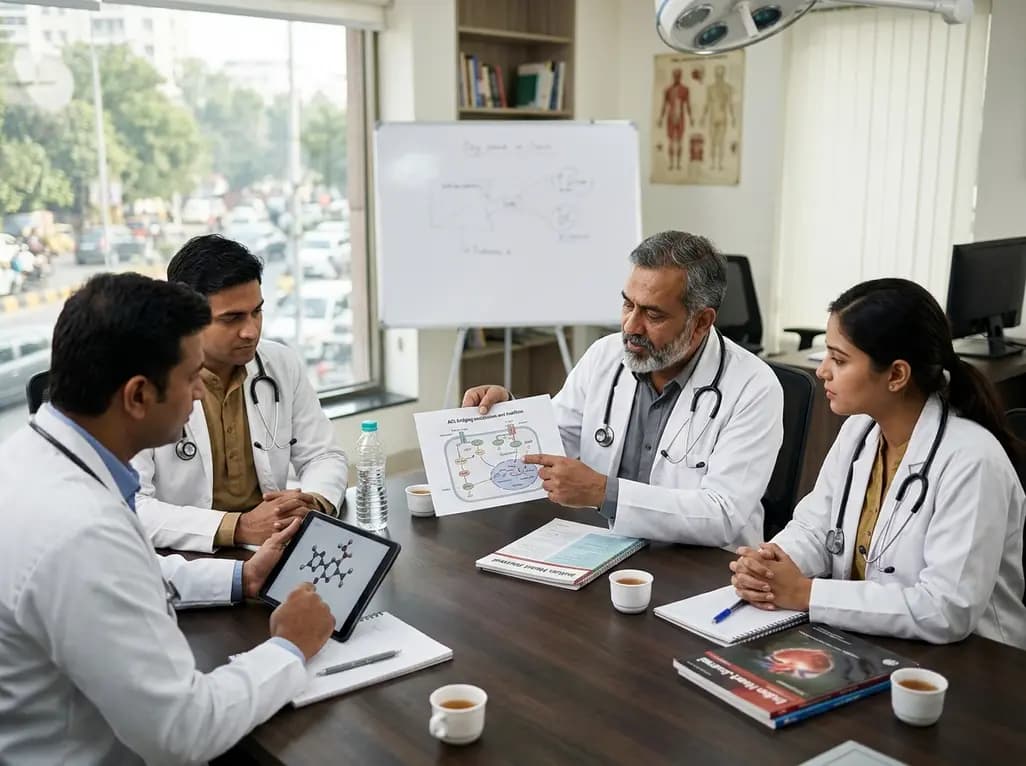
ATP-citrate lyase (ACLY) bridges energy metabolism and epigenetic regulation by generating acetyl-CoA. This review explores ACLY biology, its disease relevance across cardiometabolic disorders and oncology, and current clinical developments surrounding ACLY inhibitors like bempedoic acid.
Today
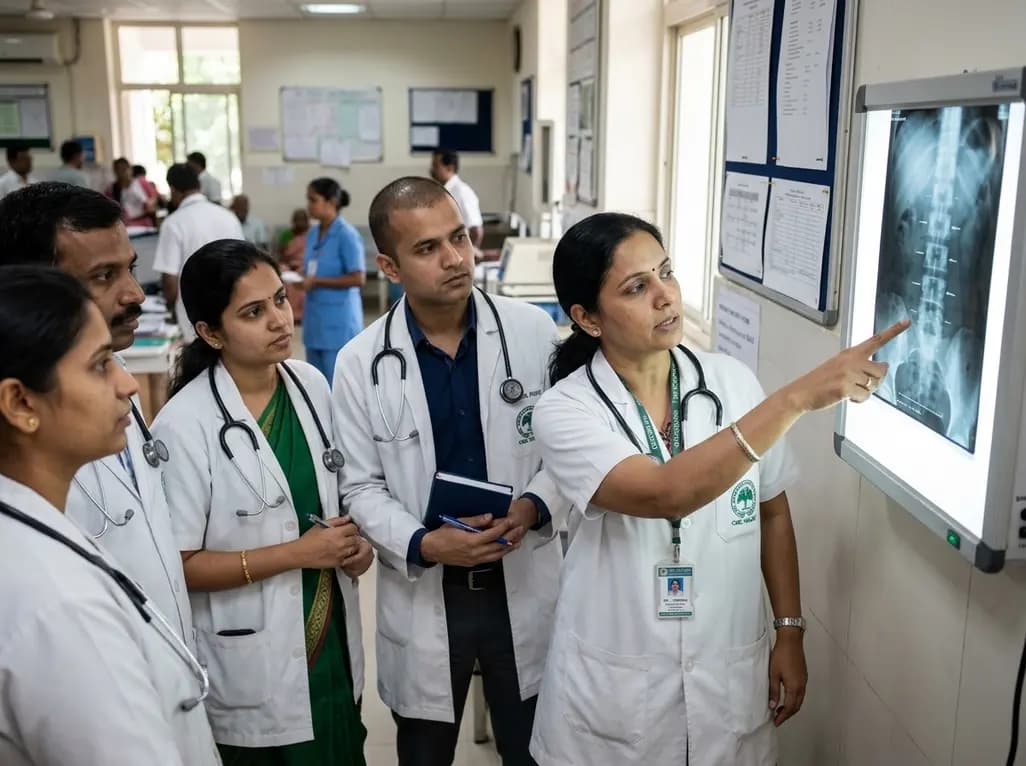
A comprehensive umbrella review of 22 meta-analyses and 286,584 adults reveals that calcium supplementation modestly increases bone mineral density and reduces vertebral fractures, but does not decrease hip or wrist fracture risks.
Today
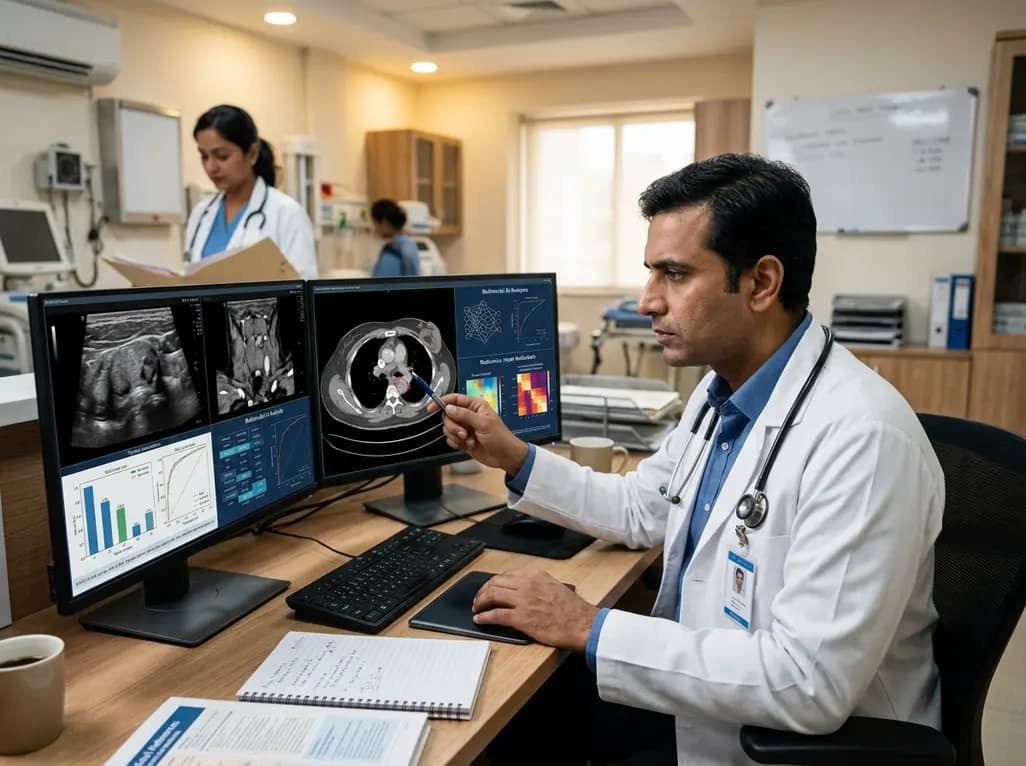
A multimodal AI model integrating ultrasound deep learning, CT perivascular adipose tissue radiomics, and clinical risk factors accurately predicts central lymph node metastasis in papillary thyroid carcinoma, providing clinicians with a non-invasive tool to optimize pre-operative surgical decisions.
Today
