.webp&w=384&q=75)

Loading, please wait...
Loading, please wait...

Papillary thyroid carcinoma represents the most common endocrine malignancy encountered in surgical oncology. Accurate identification of occult central lymph node metastasis remains pivotal for designing an appropriate surgical strategy. Although high-resolution ultrasound serves as the primary diagnostic imaging modality, its sensitivity for detecting nodal involvement in the central neck compartment often falls below acceptable thresholds. Overlying structures such as the thyroid gland, clavicle, and tracheal rings frequently obscure suspicious nodes. Consequently, surgeons must decide between prophylactic central neck dissection and simple thyroidectomy without robust pre-operative certitude. A pioneering study now leverages multimodal artificial intelligence to overcome these diagnostic obstacles. By integrating ultrasound deep learning with computed tomography radiomics of perivascular adipose tissue, researchers have created an innovative predictive platform. This dual-modality strategy improves diagnostic precision, reduces unnecessary nodal dissections, and provides clinicians with reliable quantitative data before entering the operating room.
Central neck nodal status directly influences patient recurrence rates, staging, and therapeutic pathways. Central lymph node metastasis occurs in nearly forty to sixty percent of patients with papillary thyroid cancer. However, standard preoperative ultrasound identifies only a fraction of these metastases due to acoustic shadowing from the clavicles, sternum, and air-filled trachea. Therefore, many patients with occult nodal disease undergo lobectomy or total thyroidectomy without necessary lymphadenectomy. Conversely, routine prophylactic central neck dissection carries considerable surgical morbidity. The procedure significantly elevates the risks of transient or permanent hypoparathyroidism and recurrent laryngeal nerve palsy. Surgeons must therefore weigh the risks of oncological recurrence against potentially permanent complications. In clinical practice, clinicians urgently need reliable, non-invasive imaging biomarkers to detect occult micrometastases accurately. Recent advances demonstrate that deep learning algorithms can capture subtle tumoral microarchitectural details invisible to the human eye. Multimodal artificial intelligence systems bridge this critical clinical gap by combining structural acoustic features with systemic tissue imaging.
To decode complex ultrasound representations, investigators developed a specialized framework called ResNet101 with Hierarchical Attention Integration, known as ResHAI-101. This advanced convolutional neural network analyzes high-resolution sonographic images of primary thyroid nodules. Traditional deep learning models often treat all regions of interest with equal weight, which dilutes diagnostic accuracy. In contrast, ResHAI-101 employs hierarchical attention mechanisms to prioritize highly predictive intranodular patterns, irregular margins, and subtle microcalcifications. By focusing selectively on critical tissue regions, the network extracts deep learned features that correlate with aggressive metastatic potential. Furthermore, the model architecture filters out background acoustic artifacts and sonographic noise from surrounding strap muscles. As a result, the deep learning network transforms qualitative ultrasound images into objective, quantifiable mathematical representations. When benchmarked across multicenter training sets, the ResHAI-101 network consistently outperformed standard unimodal imaging classifiers. Consequently, this deep learning framework establishes a robust foundation for integrating disparate imaging modalities into one unified prognostic score.
A major breakthrough of this multimodal paradigm involves evaluating perivascular adipose tissue at the sixth cervical vertebra level using computed tomography. Historically, radiologists regarded cervical fat depots as passive structural spaces. However, emerging research indicates that perivascular fat actively participates in tumor microenvironments, cytokine signaling, and lymphangiogenesis. Chronic inflammatory alterations and tumor secretomes alter the density, vascularity, and texture of adjacent adipose beds. To capture these microscopic changes, researchers applied high-throughput radiomics to cervical perivascular adipose tissue on neck computed tomography scans. By extracting hundreds of spatial texture and intensity distribution metrics, radiomics detects subtle immune infiltration and metabolic shifts. Consequently, these radiomic signatures uncover early microenvironmental changes that accompany nodal metastasis. Integrating perivascular adipose tissue radiomics with primary tumor imaging provides a comprehensive biological view of disease aggressiveness. Furthermore, this approach demonstrates that systemic surrounding tissue characteristics provide indispensable clues regarding regional tumor dissemination.
Beyond imaging algorithms, patient-specific demographic and pathological characteristics provide essential predictive context. Multivariate binary logistic regression demonstrated that patient gender, young age, large tumor size, and extrathyroidal extension serve as independent clinical predictors for nodal spread. Male patients and individuals under fifty-five years of age exhibited markedly higher propensities for early metastatic involvement. Similarly, primary lesions larger than one centimeter or showing thyroid capsular breach carry increased metastatic risk. Rather than relying on imaging alone, researchers synthesized these independent predictors alongside deep learning and radiomic vectors. The resulting combined multimodal model achieved remarkable diagnostic performance, demonstrating an area under the receiver operating characteristic curve of 0.915 in the internal cohort. Furthermore, the model maintained outstanding accuracy in an independent external validation cohort, achieving an area under the curve of 0.890. This high consistency across diverse clinical settings confirms that the model avoids overfitting while delivering resilient, generalizable risk stratification.
The clinical deployment of this multimodal platform carries immediate transformative potential for head and neck surgeons. In routine practice, distinguishing between patients who require prophylactic central compartment neck dissection and those who can safely avoid it remains contentious. By providing an objective preoperative risk probability, the multimodal model enables individualized surgical planning. High-risk patients identified by the algorithm can undergo formal central compartment clearance during their initial thyroidectomy, minimizing the need for revision surgeries in scarred operative fields. Conversely, low-risk patients can safely undergo thyroid lobectomy or organ-sparing management, avoiding unnecessary operative trauma and reducing post-operative hypocalcemia risks. Moreover, the integration of routine ultrasound and standard computed tomography requires no novel invasive procedures, making adoption feasible across tertiary referral centers. Ultimately, this deep learning framework bridges computational data science and bedside oncology, delivering precise, patient-tailored surgical interventions.
Detecting central compartment nodal involvement preoperatively remains notoriously difficult because acoustic shadowing from the clavicles, sternum, and air-filled trachea obscures ultrasound visualization. Furthermore, normal lymph nodes often share similar echogenicity with overlying thyroid parenchyma. Consequently, conventional ultrasound misses more than fifty percent of occult central micrometastases. This severe diagnostic blind spot frequently forces surgeons to rely on subjective intraoperative assessments or perform potentially unnecessary prophylactic neck dissections.
Perivascular adipose tissue actively interacts with regional lymphatics and circulating tumor cytokines rather than acting as inert filler tissue. In papillary thyroid cancer, localized inflammatory signals, metabolic remodeling, and lymphangiogenesis subtly alter the density and microscopic texture of cervical fat. Quantitative computed tomography radiomics captures these imperceptible structural alterations. Therefore, analyzing perivascular fat at cervical vertebra six provides early biological evidence of regional tumor invasion and nodal dissemination.
Extensive multivariate analysis identifies younger age, male gender, primary tumor size exceeding one centimeter, and gross or microscopic extrathyroidal extension as significant independent risk factors. Younger males with invasive tumors demonstrate noticeably higher frequencies of nodal dissemination. Integrating these four clinical parameters directly with ultrasound deep learning and computed tomography radiomic scores produces the most accurate risk stratification tool for operating surgeons.
Disclaimer: This content is for informational and educational purposes only and should not be used as a substitute for professional medical advice, diagnosis, or treatment. Always seek the advice of your physician or other qualified healthcare provider with any questions you may have regarding a medical condition or treatment choices. Refer to the latest local and national guidelines for clinical practice.
References

Read summarized clinical updates, watch expert medical content, and earn CME certifications right from your smartphone.
Open your smartphone camera to scan and install.





A multimodal AI model integrating ultrasound deep learning, CT perivascular adipose tissue radiomics, and clinical risk factors accurately predicts central lymph node metastasis in papillary thyroid carcinoma, providing clinicians with a non-invasive tool to optimize pre-operative surgical decisions.
Today
ATP-citrate lyase (ACLY) bridges energy metabolism and epigenetic regulation by generating acetyl-CoA. This review explores ACLY biology, its disease relevance across cardiometabolic disorders and oncology, and current clinical developments surrounding ACLY inhibitors like bempedoic acid.
Today

A 34-year-old postpartum woman suffered a pheochromocytoma crisis resulting in cardiac arrest and respiratory failure. Intensivists successfully deployed veno-arteriovenous ECMO to stabilize refractory arrhythmias and differential hypoxemia, bridging her safely to complete tumor resection and full clinical recovery.
Today
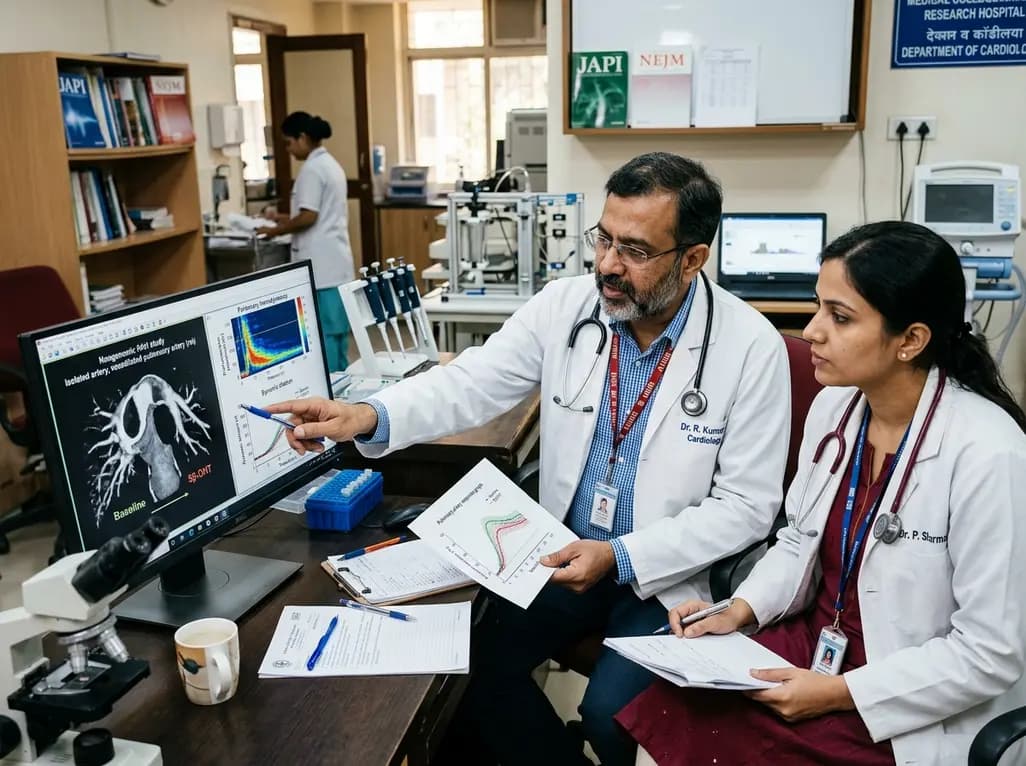
Preclinical findings demonstrate that 5β-dihydrotestosterone induces rapid, nongenomic pulmonary artery vasodilation in male and female rats with greater potency than testosterone. Because it lacks androgenic activity, this metabolite represents a promising lead for pulmonary arterial hypertension therapeutics.
Today
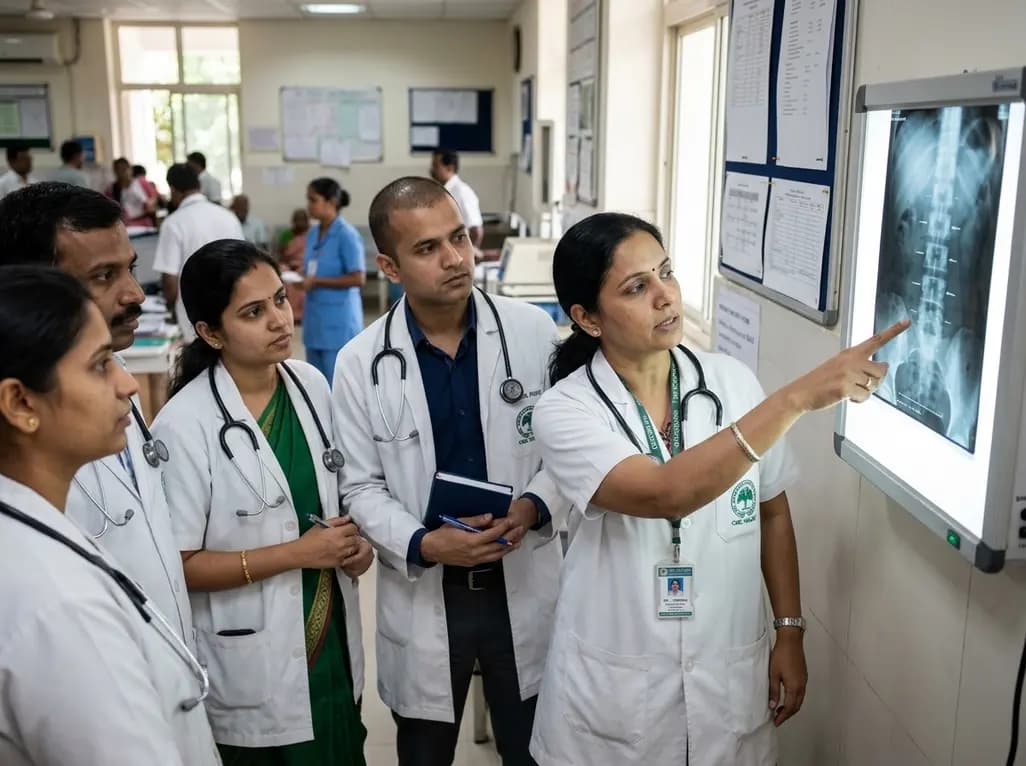
A comprehensive umbrella review of 22 meta-analyses and 286,584 adults reveals that calcium supplementation modestly increases bone mineral density and reduces vertebral fractures, but does not decrease hip or wrist fracture risks.
Today
