

Loading, please wait...
Loading, please wait...

Accurate monitoring of paediatric intraoperative haemodynamics remains one of the greatest clinical priorities in modern surgical care. Anaesthesiologists routinely manage cardiovascular fluctuations during surgical interventions to prevent end-organ malperfusion. However, clinicians have long faced substantial challenges because evidence-based normative ranges under anaesthesia were remarkably scarce. Practitioners frequently relied on awake physiological charts or crude rule-of-thumb formulas. Consequently, these historical approximations created significant diagnostic uncertainty across operating theatres worldwide.
Defining true normative thresholds in anaesthetised children has historically presented severe hurdles. Healthy paediatric physiology shifts dramatically across developmental stages from infancy through adolescence. Furthermore, general anaesthetics alter autonomic tone, vascular resistance, and myocardial contractility in unique ways. In awake cohorts, standard blood pressure percentiles account for age, sex, and height. In contrast, intraoperative thresholds rarely incorporated these essential anthropometric covariates simultaneously. As a result, clinicians often adopted arbitrary blood pressure cut-offs, such as a mean arterial pressure below age plus thirty. However, such generalised formulas fail to reflect individual physiological variance. Consequently, providers risked either overdiagnosing hypotension or missing subtle tissue hypoperfusion during critical surgical procedures. Similarly, intraoperative heart rate reference values were virtually non-existent for anaesthetised children. Bradycardia and tachycardia definitions therefore remained largely subjective. Clinicians urgently required robust, empirical normative standards derived from diverse paediatric populations under real-world clinical anaesthesia.
To address this evidence gap, investigators conducted a retrospective multicentre study using the Multicenter Perioperative Outcomes Group registry. The research team evaluated electronic health record data gathered between 2016 and 2022 across 57 tertiary and community hospitals. Specifically, the cohort included 284,385 healthy paediatric patients younger than 18 years classified as ASA physical status 1 or 2. All participants underwent noncardiac surgical procedures under general anaesthesia. The investigators analysed four core physiological outcomes: heart rate, systolic blood pressure, diastolic blood pressure, and mean arterial pressure. Additionally, the research team gathered measurements at two distinct intraoperative epochs. These epochs comprised the preparation phase, defined as the end of induction, and the stable surgical maintenance phase, recorded fifteen to thirty-five minutes following incision. Furthermore, investigators applied quantile regression to generate the 2.3rd, 16th, 50th, 84th, and 97.7th percentiles. Importantly, the mathematical models simultaneously incorporated age, sex, weight, and height. Cross-validation with pinball loss confirmed the superior predictive accuracy of a three-way interaction framework.
The study demonstrated distinct physiological differences between induction and surgical maintenance. During the preparation phase, potent volatile or intravenous induction agents depress systemic vascular resistance and cardiac output before surgical stimulation begins. Therefore, arterial blood pressure and heart rate readings frequently touch their lowest intraoperative levels at this precise interval. Conversely, during active surgery, nociceptive inputs and varying depths of anaesthesia produce different autonomic patterns. For example, surgical incision stimulates neuroendocrine responses that moderately elevate blood pressure and heart rate above post-induction nadirs. By separating these two clinical phases, the researchers provided practitioners with granular, context-specific expectations. Furthermore, the findings confirmed that weight and height exert profound independent influences beyond chronological age alone. A stunted child and an overweight adolescent display drastically divergent normal limits despite sharing the same birth year. Consequently, assessing paediatric intraoperative haemodynamics without anthropometric adjustment introduces substantial bias. The newly established centiles directly resolve this long-standing clinical dilemma.
Static paper tables cannot easily capture four-way demographic interactions in fast-paced surgical environments. Therefore, the investigators developed a validated, interactive web-based clinical calculation tool. Anaesthesia providers can rapidly enter an individual child's biological sex, chronological age, weight, and height into the digital platform. Subsequently, the algorithm instantly plots personalized percentile distribution curves for both the preparation and surgical phases. For instance, the system displays the 2.3rd centile as an empirical lower boundary to identify severe hypotension or marked bradycardia. Similarly, the 97.7th centile defines upper physiological limits for hypertension and tachycardia. In addition, displaying the median 50th centile gives clinicians a realistic target for titration of vasopressors, fluid boluses, and depth of anaesthesia. Thus, this user-friendly digital interface bridges the gap between complex biostatistical modeling and bedside decision support. Practitioners can quickly determine whether an observed reading represents benign pharmacological variation or true cardiovascular instability requiring prompt therapeutic intervention.
These findings hold immense practical relevance for paediatric surgical care across India. Indian paediatric populations demonstrate wide variations in nutritional status, ranging from acute malnutrition and growth stunting to rapid urban childhood obesity. Consequently, age-only hemodynamic charts frequently fail Indian children by providing inappropriate physiological targets. For example, using Western age-based standards without adjusting for low body surface area may prompt unnecessary inotropic support. Conversely, underestimating baseline requirements in overweight children could lead to unrecognised hypoperfusion. Therefore, integrating height and weight into routine hemodynamic evaluation directly enhances patient safety in Indian operating rooms. Furthermore, resource-constrained surgical centres in tier-2 and tier-3 cities often lack invasive arterial lines for noncardiac surgery. Clinicians in these facilities rely predominantly on non-invasive oscillometric blood pressure cuffs. Having clear, empirically validated percentiles allows Indian anaesthesiologists to manage fluid administration and drug dosages with greater scientific precision, thereby reducing perioperative morbidity.
The interactive prediction tool incorporates four key biological variables: chronological age, biological sex, weight, and standing height. By evaluating these parameters simultaneously within a three-way interaction model, the system generates customized percentiles for heart rate, systolic blood pressure, diastolic blood pressure, and mean arterial pressure. This multi-variable approach eliminates the clinical inaccuracies of traditional age-only approximations during noncardiac surgery.
The study evaluated the preparation phase and the surgical maintenance phase separately because anaesthetic depth and surgical stimulation uniquely alter cardiovascular dynamics. Induction agents suppress vascular tone and depress myocardial performance before surgery starts. Subsequently, surgical incision and tissue handling introduce nociceptive stimuli that alter autonomic balance. Measuring both intervals provides anaesthesiologists with phase-appropriate reference boundaries throughout surgery.
The 2.3rd percentile represents approximately two standard deviations below the median, serving as a statistically grounded definition for intraoperative hypotension or bradycardia. Clinicians can use this threshold as a reliable trigger for diagnostic evaluation or clinical intervention. When values drop below this limit, anaesthetists may adjust anaesthetic depth, administer intravenous fluid boluses, or titrate inotropic and vasopressor medications.
Disclaimer: This content is for informational and educational purposes only and should not be considered as medical advice. Always consult a qualified healthcare professional regarding any medical condition or treatment. The findings discussed reflect recent research and should not replace clinical judgement. Refer to the latest local and national guidelines for clinical practice.
References
Tangel VE et al. Reference values and web-based tool for intraoperative heart rate and blood pressure in paediatric patients undergoing general anaesthesia for noncardiac procedures. Br J Anaesth. 2026 Nov 09. doi: undefined. PMID: 43003742.
de Graaff JC et al. Pediatric intraoperative blood pressure management: A consensus statement from the European Society for Paediatric Anaesthesiology. Paediatr Anaesth. 2020;30(9):948-964.
Flynn JT et al. Clinical practice guideline for screening and management of high blood pressure in children and adolescents. Pediatrics. 2017;140(3):e20171904.

Read summarized clinical updates, watch expert medical content, and earn CME certifications right from your smartphone.
Open your smartphone camera to scan and install.





A landmark Multicenter Perioperative Outcomes Group study establishes comprehensive reference centiles and an interactive web tool for intraoperative blood pressure and heart rate in children undergoing general anaesthesia, accounting simultaneously for age, sex, weight, and height to guide clinical care.
Today
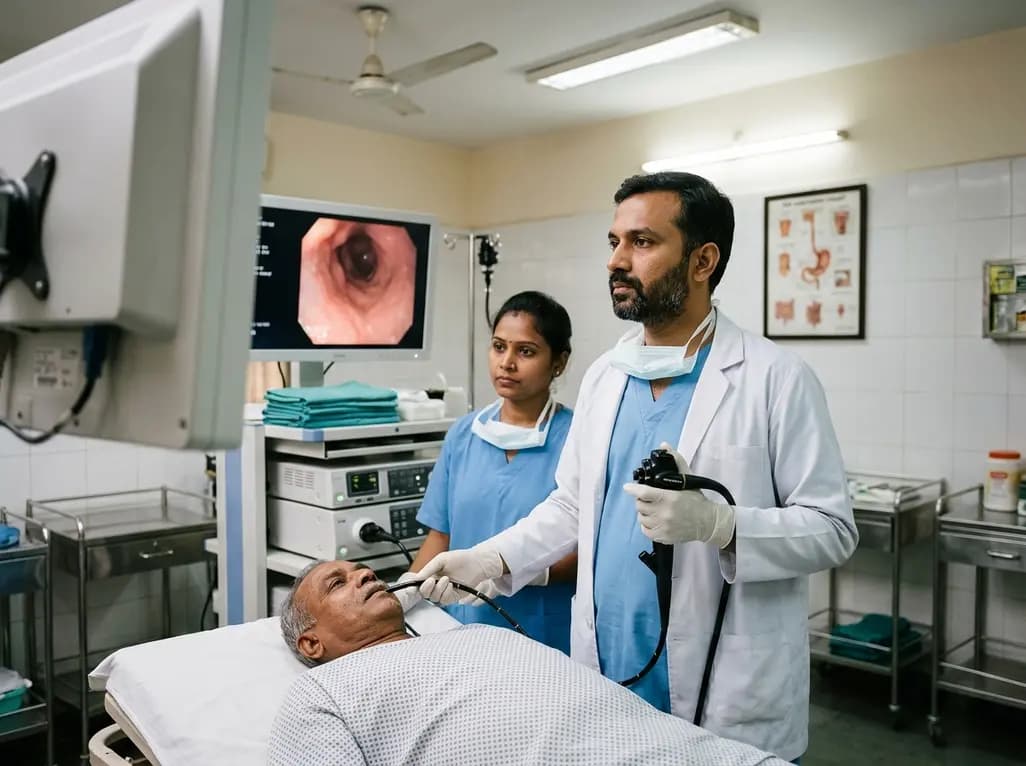
A large cohort study evaluating 1,245 patients demonstrates that unsedated gastroscopy is safe, feasible, and achieves high completion rates, offering an efficient alternative to sedated procedures.
Today

An intracranial EWSR1::CREM fusion sarcoma in a 31-year-old female manifested as a paraneoplastic inflammatory syndrome with anemia and secondary infertility. The dural mass mimicked meningioma, but gross-total resection resolved her systemic inflammation and restored natural fertility within one month.
Today

The DOMINO study protocol presents a multidisciplinary implementation mapping approach to overcome provider, patient, and payer barriers to antiobesity medications, offering vital insights for Indian clinicians managing the growing diabesity burden.
Today
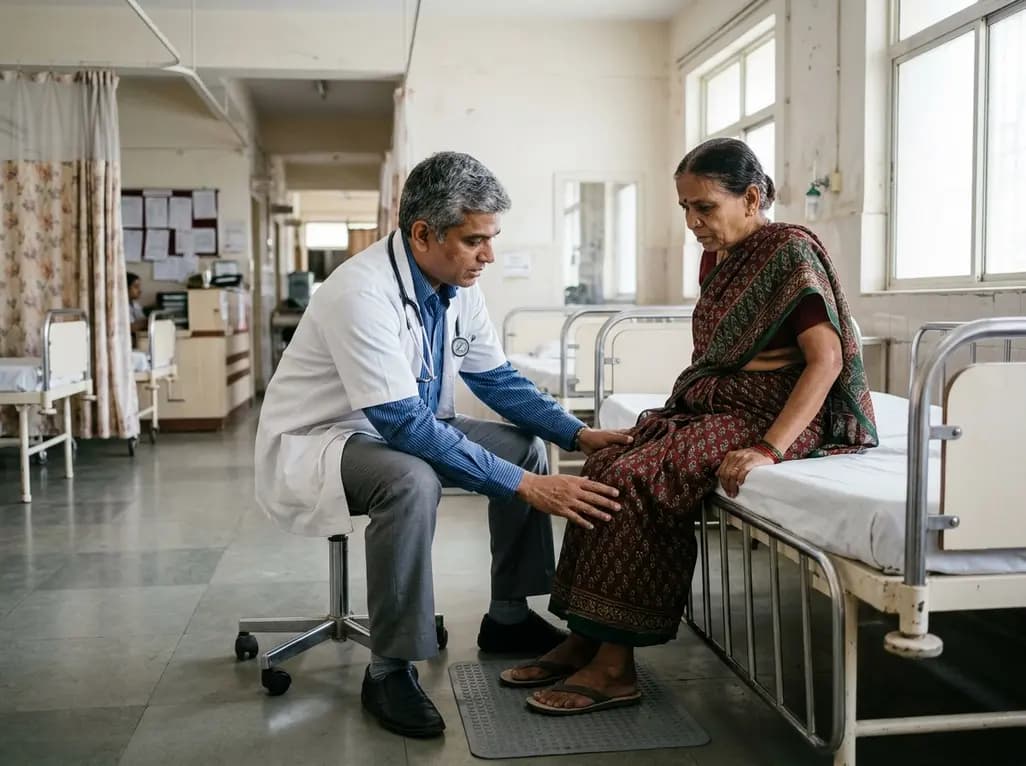
An age-matched cross-sectional study reveals that lower muscle quality and impaired lower-extremity function strongly correlate with an increased fear of falling in older women, highlighting the necessity of targeted resistance training and balance interventions in geriatric care.
Today

Near-infrared autofluorescence provides real-time label-free optical guidance during endoscopic transsphenoidal pituitary surgery. By highlighting stark signal contrasts between normal pituitary gland and adenomas, this technique aids gross-total tumor resection while safeguarding critical endocrine function.
Today
