.webp&w=384&q=75)

Loading, please wait...
Loading, please wait...
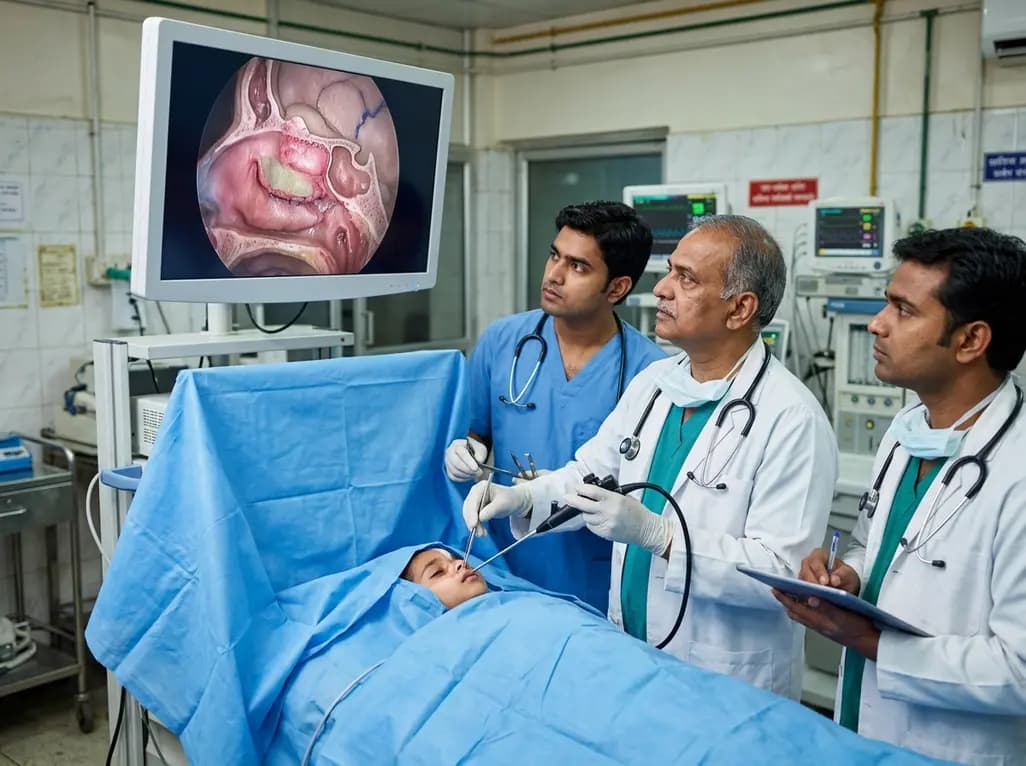
The management of skull base pathologies in children has undergone a significant paradigm shift over the last decade. Historically, these complex conditions required extensive open craniofacial approaches, which often carried high morbidity and significant recovery times. However, the introduction of the endoscopic endonasal approach (EEA) has revolutionized the field. This minimally invasive technique allows surgeons to access deep-seated lesions through natural nasal corridors. Consequently, the paediatric endonasal skull base reconstruction process has become a critical focal point for surgical innovation. Research by Di Giorgio D et al. highlights that the endoscopic approach provides excellent visualization while minimizing brain retraction. Furthermore, this method often results in shorter hospital stays and improved cosmetic outcomes for young patients. Surgeons now prioritize these techniques for various midline pathologies, ranging from congenital malformations to complex neoplasms. Despite the anatomical challenges posed by smaller nasal passages in children, technological advancements in instrumentation have made these procedures safer. As the field evolves, clinicians must continue to refine reconstructive strategies to ensure long-term success. Understanding the nuances of paediatric anatomy remains essential for optimizing outcomes in this vulnerable population.
Paediatric skull base lesions often present with a diverse array of symptoms that require a high index of suspicion. Visual disturbances are among the most common clinical findings reported in these patients. Specifically, bitemporal hemianopsia and progressive visual impairment frequently occur due to the proximity of the optic chiasm to the sella turcica. In addition to visual changes, many children present with persistent headaches that do not respond to standard analgesic therapy. These symptoms often reflect underlying intracranial pressure changes or direct mass effect from the lesion. Notably, craniopharyngiomas represent a significant portion of paediatric skull base pathologies. These tumors often involve the hypothalamic-pituitary axis, leading to endocrine dysfunctions such as growth hormone deficiency. Furthermore, pituitary adenomas and clivus chordomas are frequently identified in the paediatric demographic. Each of these conditions presents unique surgical challenges regarding tumor consistency and adherence to vital neurovascular structures. Therefore, a thorough preoperative radiological assessment using high-resolution MRI and CT scans is mandatory. Early diagnosis and intervention are paramount to preserving neurological function and ensuring better developmental trajectories. Consequently, paediatric neurosurgeons and otolaryngologists must collaborate closely to navigate these intricate cases effectively.
Successful paediatric endonasal skull base reconstruction requires a tailored approach based on the size and location of the defect. Surgeons have developed several robust techniques to ensure a watertight seal and prevent cerebrospinal fluid (CSF) leaks. One of the most widely utilized methods is the nasoseptal flap (NSF), which provides a vascularized pedicled tissue layer for reconstruction. This technique has significantly reduced the incidence of postoperative CSF leaks in both adult and paediatric populations. Additionally, the multilayer technique incorporates various materials, such as fat grafts, fascia lata, or synthetic dural substitutes, to reinforce the closure. For more complex high-flow defects, the Gasket-Seal technique offers a rigid support system that effectively bridges larger gaps in the bone. Furthermore, heterologous reconstruction remains an option when autologous tissue availability is limited. Each method possesses specific advantages and limitations depending on the patient's age and nasal anatomy. Specifically, the growth of the paranasal sinuses in children can influence the availability of local flaps. Therefore, surgeons must carefully plan their reconstructive strategy during the initial approach. Ultimately, the goal is to provide a durable barrier that survives the duration of the healing process.
Analysing the outcomes of endonasal procedures reveals a remarkably high success rate in the paediatric population. Recent clinical data suggest that reconstructive techniques achieve success rates between 96.5% and 100%. This high efficacy underscores the safety and reliability of modern endoscopic methods. However, no surgical procedure is entirely without risk. Major complications, though rare, can have significant implications for the patient's recovery. For instance, postoperative CSF leaks remain a primary concern, occurring in a small percentage of cases. When these leaks occur, they often require prompt surgical revision to prevent ascending infections such as meningitis. Additionally, some patients may develop a brain abscess, which necessitates intensive antibiotic therapy and potential drainage. Endocrine complications, specifically diabetes insipidus, are also observed, particularly following the resection of sellar and suprasellar tumors. These hormonal imbalances require careful management by paediatric endocrinologists to maintain fluid and electrolyte stability. Despite these risks, the overall complication rate remains low compared to traditional open surgeries. Consequently, the endoscopic endonasal approach is now considered the gold standard for many middle skull base pathologies in children.
The complexity of paediatric skull base surgery necessitates a highly coordinated multidisciplinary team. This team typically includes neurosurgeons, otolaryngologists, neuroradiologists, and paediatric intensivists. Furthermore, the involvement of paediatric endocrinologists and ophthalmologists is crucial for managing the long-term sequelae of both the pathology and the surgery. Effective communication among these specialists ensures that all aspects of the patient's health are addressed simultaneously. For example, while the surgical team focuses on tumor resection and reconstruction, the endocrinology team monitors for pituitary dysfunction. In addition, ophthalmologists provide essential follow-up to track visual recovery and detect any late-onset changes. The inclusion of specialized nursing staff and rehabilitation therapists further enhances the recovery process. Notably, the psychological impact of major surgery on children and their families cannot be overlooked. Therefore, social workers and child life specialists play an integral role in providing emotional support. This holistic approach not only improves surgical outcomes but also enhances the overall quality of life for the patient. Ultimately, the synergy between different medical disciplines is what drives the success of modern paediatric skull base programs.
Looking ahead, the field of paediatric endonasal surgery is poised for further advancements through technological innovation. The integration of intraoperative navigation and robotic assistance promises to enhance surgical precision even further. Specifically, real-time feedback during reconstruction could help surgeons verify the integrity of the skull base seal more accurately. Moreover, the development of bioengineered materials for dural replacement may provide better alternatives to traditional grafts. Research into these materials aims to improve biocompatibility and reduce the risk of graft failure. Additionally, virtual reality and 3D modeling are increasingly used for preoperative planning and resident training. These tools allow surgeons to simulate complex maneuvers before entering the operating room, thereby increasing procedural safety. Furthermore, long-term longitudinal studies are needed to monitor the impact of endonasal surgery on midfacial growth in children. As surgical techniques become more refined, the indications for endoscopic approaches are likely to expand to even more complex pathologies. Consequently, ongoing education and specialized training programs will be vital for the next generation of paediatric skull base surgeons. The commitment to innovation ensures that children with skull base defects receive the most advanced and effective care available.
The endoscopic endonasal approach is significantly less invasive than traditional open skull base surgeries. It avoids large incisions and brain retraction, leading to faster recovery times and less postoperative pain. Furthermore, it provides superior visualization of midline structures, which enhances the precision of tumor resection and subsequent reconstruction for paediatric patients.
Success is primarily measured by the absence of postoperative cerebrospinal fluid (CSF) leaks and the stability of the reconstructive graft. Clinical evaluations, combined with postoperative radiological imaging, confirm the integrity of the seal. Recent studies indicate that contemporary reconstructive techniques achieve high success rates, typically ranging from 96.5% to 100%.
While the endoscopic approach is generally safe, potential complications include postoperative CSF leaks, brain abscesses, and diabetes insipidus. These issues are relatively rare but require diligent monitoring. A multidisciplinary team of neurosurgeons, ENT specialists, and endocrinologists work together to identify and manage these complications promptly to ensure optimal patient outcomes.
Disclaimer: This content is for informational and educational purposes only and does not constitute medical advice. It is not intended to be a substitute for professional medical judgment, diagnosis, or treatment. Always seek the advice of your physician or another qualified health provider with any questions you may have regarding a medical condition. Refer to the latest local and national guidelines for clinical practice.
References
Di Giorgio D et al. Paediatric endoscopic endonasal middle skull base reconstruction: retrospective analysis of 78 patients treated in a single tertiary care paediatric center. Br J Neurosurg. 2025 Oct. doi: 10.1080/02688697.2024.2333971. PMID: 38546282.
Kassam AB, Prevedello DM, Carrau RL, et al. Endoscopic endonasal skull base surgery: definitions, contemporary indications, and limitations. Neurosurg Clin N Am. 2010;21(4):515-535.
Cavallo LM, Prevedello DM, Solari D, et al. Extended endoscopic endonasal transsphenoidal approach for petclival meningiomas. World Neurosurg. 2011;75(2):289-297.
"
Read summarized clinical updates, watch expert medical content, and earn CME certifications right from your smartphone.
Open your smartphone camera to scan and install.





This retrospective analysis of 78 paediatric patients highlights the efficacy of endoscopic endonasal skull base reconstruction. With a high success rate (96.5-100%) and minimal complications, techniques like nasoseptal flaps and multilayer reconstruction represent a significant advancement in paediatric care.
3 months ago

Explore vital recurrent stroke predictors in lacunar stroke patients managed with intensive blood pressure lowering. This analysis examines trial findings from SPS3 to uncover residual vascular risks, metabolic factors, and targeted secondary prevention strategies for high-risk neurological patients.
Today

Odisha has established India's first state-level clinical protocol specifically tailored for pregnant women with sickle cell disease. Developed with NHM and UNICEF, the framework provides structured antenatal screening, crisis mitigation, standardized referral pathways, and specialized interdisciplinary care.
Today

India is advancing preventive healthcare by integrating genomics, artificial intelligence, and quantum technologies. With the SANGAM programme sequencing one million Indian genomes, clinicians can unlock personalized therapies, detect cardiometabolic risks early, and curb the burden of diabetes and heart disease.
Today

A randomized controlled trial demonstrates that an eight-week dual-task training intervention significantly improves static and dynamic postural control over standard balance exercises in individuals with chronic ankle instability, addressing critical neurocognitive deficits during athletic and daily activities.
Today

A retrospective cohort study of 7,716 ICU patients from the MIMIC-IV database demonstrates that Gradient Boosting Decision Trees significantly outperform traditional SOFA scores in predicting in-hospital mortality among patients with sepsis and diabetes, with SHAP analysis providing clinical interpretability.
Today
