.webp&w=384&q=75)

Loading, please wait...
Loading, please wait...

P-wave peak time (PWPT) has emerged as a promising electrocardiographic marker for identifying subclinical organ damage. In patients with hypertension, clinicians often seek low-cost methods to detect early renal microvascular injury. Recent research indicates that a prolonged P-wave peak time strongly correlates with the presence of albuminuria. This correlation provides a window into both cardiac and renal health through a standard surface ECG.
Physicians define P-wave peak time as the interval from the beginning of the P-wave to its peak. This measurement reflects atrial conduction delay and structural remodeling. Because hypertension induces systemic changes, these electrical alterations often mirror microvascular damage elsewhere, such as in the kidneys. Consequently, measuring PWPT helps clinicians identify patients who may already harbor subclinical renal dysfunction. Therefore, this marker serves as a bridge between electrocardiology and nephrology.
A prospective study recently evaluated 367 hypertensive patients to investigate this relationship. The researchers categorized participants into groups based on their spot urinary albumin-to-creatinine ratio (UACR). The results showed that patients with positive albuminuria exhibited significantly longer PWPT in leads DII and V1. Moreover, multivariate regression analysis confirmed that PWPT is an independent predictor of albuminuria. This suggests that atrial electrical delays and renal protein leakage share common underlying pathophysiological pathways in hypertension.
The clinical utility of P-wave peak time lies in its accessibility and cost-effectiveness. Since most hypertensive patients undergo routine ECG screening, calculating PWPT adds significant value without increasing healthcare costs. Additionally, the study established specific cut-off values for PWPT in leads DII and V1 to predict albuminuria with high sensitivity and specificity. Thus, integrating this parameter into routine evaluations could improve the early detection of chronic kidney disease. Furthermore, it identifies patients who require more intensive blood pressure control and monitoring.
Prolonged P-wave peak time reflects atrial conduction delay and structural stress. These changes often occur alongside systemic microvascular damage, which manifests as albuminuria in the kidneys of hypertensive patients.
PWPT offers a non-invasive, inexpensive way to screen for target organ damage. It helps identify hypertensive individuals at high risk for renal and cardiac complications early in the disease course.
The study identified that a PWPT greater than 58 ms in lead DII or 48 ms in lead V1 serves as a significant predictor for the presence of albuminuria.
Disclaimer: This content is for informational and educational purposes only and does not constitute medical advice or a professional relationship. Always seek the advice of a physician or other qualified health provider with any questions regarding a medical condition. Refer to the latest local and national guidelines for clinical practice.
References

Read summarized clinical updates, watch expert medical content, and earn CME certifications right from your smartphone.
Open your smartphone camera to scan and install.





A study finds that P-wave peak time is independently associated with albuminuria in hypertensive patients, providing a non-invasive marker for renal risk....
8 months ago

The TREM-AB open-label pilot study evaluated a wearable passive nonlinear vibration absorber for essential tremor. The Nonlinear Energy Sink bracelet reduced clinical Fahn-Tolosa-Marin tremor scores by 32.1% and electrophysiological tremor power by 49.2% with no adverse effects reported.
Today

A population-based study of 20,928 children reveals that small vulnerable newborns face sex-divergent mental capital outcomes at ages 6-7: term SGA girls show higher behavioral difficulties and lower resilience, while preterm non-SGA boys experience increased behavioral problems.
Today
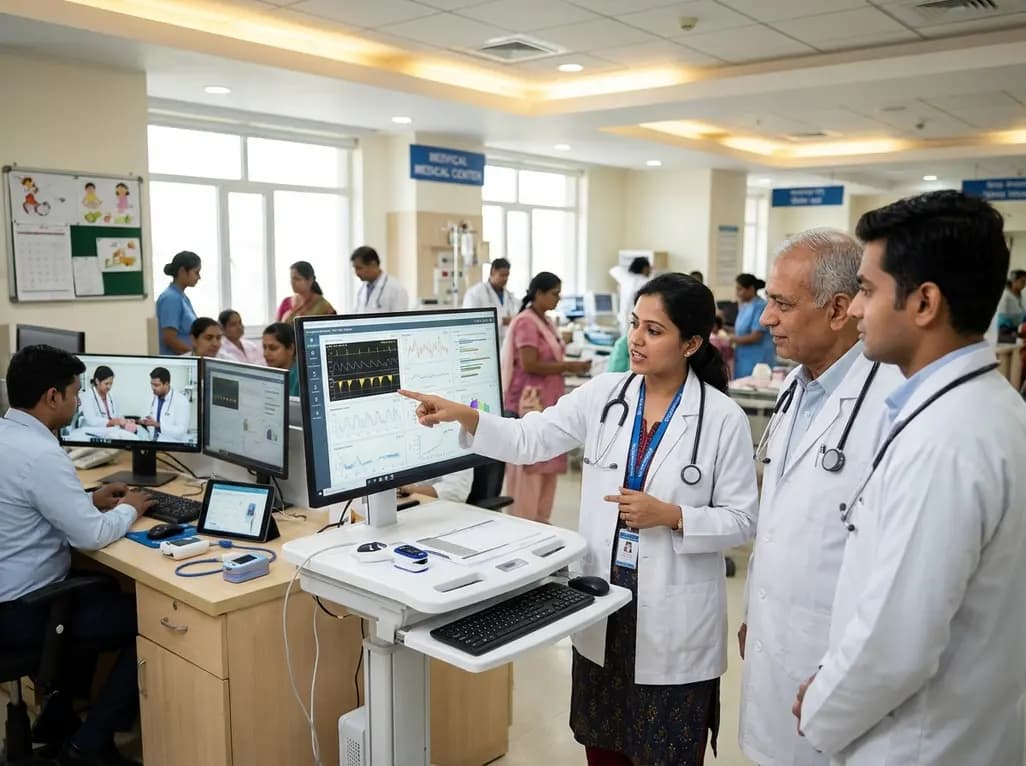
A landmark study details how an enterprise pediatric remote patient management model expanded from a single cardiology pilot to 16 diverse specialty programs by combining centralized digital operations with specialty clinical leadership.
Today

A comparative review of tension band wiring and intramedullary screw fixation in thumb metacarpophalangeal arthrodesis, evaluating union rates, hardware complications, and clinical outcomes.
Today

A breakthrough ultrathin multimodal sensor decouples physical hemodynamic monitoring from disposable electrochemical calibration, achieving long-term wearable glucose prediction with 81.36% accuracy and a 9.12% MARD. This offers a robust, drift-free solution for outpatient metabolic surveillance.
Today
