.webp&w=384&q=75)

Loading, please wait...
Loading, please wait...

Obstructive sleep apnea (OSA) represents a significant public health challenge in India, where urban lifestyles and rising obesity rates contribute to a growing burden of sleep-disordered breathing. Despite the severity of the condition, many patients wait years before seeking a formal diagnosis. Understanding the reasons behind this behavior requires high-quality qualitative inquiry. However, recent critical appraisals suggest that current OSA consultation delay research often relies on flawed methodological paradigms. Most existing studies utilize retrospective designs, which may not capture the fluid and complex nature of the healthcare-seeking journey. Consequently, there is a pressing need to move toward prospective models that can provide more accurate insights into patient decision-making. By refining our research tools, clinicians and policymakers can develop more effective interventions to reduce diagnostic lag. This shift is essential because delayed treatment increases the risk of cardiovascular events, metabolic dysfunction, and cognitive impairment. Therefore, improving the rigor of our qualitative investigations is not merely an academic exercise but a clinical necessity for better patient management.
One of the primary limitations identified in current qualitative literature is the heavy reliance on retrospective interview designs. In these studies, researchers interview patients who have already received a diagnosis and ask them to look back at the years preceding their clinical visit. While this provides a narrative, it is highly susceptible to recall bias. Specifically, patients often struggle to remember the exact timing of symptom onset or the subtle psychological shifts that influenced their decisions years ago. Furthermore, the very act of receiving a diagnosis can change how a patient perceives their past. Once they understand the physiology of OSA, they may unconsciously reinterpret their previous experiences to align with their new medical knowledge. This process of post-hoc rationalization obscures the true barriers they faced in real-time. Moreover, the emotional weight of living with untreated symptoms for years can skew the narrative toward either extreme frustration or minimization. As a result, the data collected from these interviews may reflect a reconstructed reality rather than the actual barriers present during the delay. To address this, future research should aim to capture data closer to the moments of decision-making.
Another critical methodological flaw in current research is the presence of survivorship bias. Most qualitative studies recruit participants from sleep clinics or hospital registries. These individuals represent the \"survivors\" of the diagnostic process—those who eventually overcame barriers and successfully navigated the healthcare system. Consequently, we are missing the perspectives of the most vulnerable population: those who remain in the community, unaware of their condition or unable to access care. These individuals likely face vastly different obstacles than those who eventually make it to a specialist. For instance, socioeconomic barriers, deep-seated cultural stigmas, or a complete lack of awareness regarding snoring as a pathology might prevent them from ever entering a clinic. Therefore, by only studying diagnosed patients, researchers are essentially looking at a skewed sample. This limitation prevents the development of broad-based public health strategies that target the people who need them most. Moving research into community settings allows investigators to reach high-risk populations before they become patients. Specifically, engaging with undiagnosed individuals in their local environments can reveal the true structural and cognitive inhibitors to early consultation.
Obstructive sleep apnea rarely exists in isolation, yet research often fails to sufficiently analyze the role of comorbidities in the delay process. Many patients presenting for sleep studies also suffer from hypertension, type 2 diabetes, or obesity. These conditions can significantly cloud the patient's perception of their sleep symptoms. For example, a patient may attribute their chronic daytime fatigue to their poorly managed blood sugar rather than considering a respiratory issue. In addition, frequent interactions with other medical specialists for chronic conditions might actually provide a false sense of security. Patients may assume that if their primary doctor has not mentioned sleep apnea, it is not a concern. Conversely, some comorbidities might act as triggers that finally push a patient to seek help for sleep. Current OSA consultation delay research often treats these comorbidities as background noise rather than primary drivers of behavioral timing. Furthermore, the directionality between cognitive factors and behavior remains unclear in many studies. Does a patient's belief system cause the delay, or does the experience of the delay itself reshape their beliefs? Investigating these complex interplays requires more sophisticated analytical frameworks that look beyond simple thematic categorization.
The role of family and friends is often presented in a simplified manner in qualitative sleep research. While bed partners are frequently the ones who identify snoring or gasping, their influence on the consultation process is multifaceted. Sometimes, family members might normalize symptoms, viewing loud snoring as a sign of deep sleep rather than a medical emergency. In other cases, social pressure might lead to shame or avoidance. Current literature often lacks in-depth analysis of these deviant cases where support systems fail or actually hinder the path to diagnosis. Moreover, the transparency of qualitative reporting remains a concern across the field. Many studies do not provide clear interview guides or detailed descriptions of how they reached data saturation. This lack of transparency makes it difficult for other researchers to replicate findings or verify the credibility of the conclusions. Additionally, the absence of researcher reflexivity—where the investigator's own biases are acknowledged—can lead to biased data interpretation. Improving these reporting standards is crucial for building a reliable evidence base. Consequently, future studies must prioritize methodological transparency to ensure that qualitative findings can be translated into actionable clinical interventions.
The ultimate recommendation for improving the validity of research in this field is the adoption of prospective, community-based designs. Instead of waiting for patients to arrive at the clinic, researchers should identify high-risk individuals in the general population through screening tools. By following these individuals over time, we can document the entire trajectory of their consultation delay as it happens. This approach allows for the collection of real-time data on cognitive shifts, social influences, and the impact of emerging symptoms. Furthermore, prospective designs enable researchers to observe the exact triggers that finally motivate an individual to call a doctor. This level of detail is impossible to achieve through retrospective memory alone. Such studies would also provide a much-needed focus on non-survivors—those who decide against seeking help even when symptoms become severe. Understanding their journey is key to breaking down the systemic barriers to sleep healthcare. Although these studies are more resource-intensive, the depth and accuracy of the resulting data are far superior. As we move forward, integrating these rigorous methods will allow us to create targeted education programs that speak directly to the patient's lived experience.
Survivorship bias occurs when researchers only recruit participants who have successfully navigated the healthcare system and received a diagnosis. Consequently, the study excludes individuals who face the most significant barriers and never seek help. This exclusion creates an incomplete picture of the patient journey. Therefore, current findings may only reflect the experiences of a privileged or highly motivated subset of the population, limiting the generalizability of intervention strategies developed from such data.
Comorbid conditions like hypertension or diabetes often complicate the symptom recognition process for obstructive sleep apnea. Patients may attribute fatigue or nighttime awakenings to their existing illnesses rather than a new respiratory issue. Furthermore, frequent interactions with specialists for other conditions can either accelerate or mask the need for a sleep-specific consultation. Consequently, research must account for these confounding variables to accurately determine the specific drivers of diagnostic delay across diverse patient populations.
Prospective designs allow researchers to observe the decision-making process in real-time as symptoms emerge and evolve. By following high-risk individuals in community settings before they seek medical care, investigators can document the specific triggers that lead to a consultation. Moreover, this approach significantly reduces recall bias, as participants do not have to rely on long-term memory to describe their barriers. Ultimately, prospective data provide a more accurate foundation for developing early intervention programs.
Disclaimer: This content is for informational and educational purposes only. It does not constitute professional medical advice, diagnosis, or treatment. Always seek the advice of your physician or other qualified healthcare provider with any questions you may have regarding a medical condition. Refer to the latest local and national guidelines for clinical practice.
References
Zhao FY et al. From retrospective to prospective design: a short communication on why the methodological paradigm for qualitative research on delayed medical consultation in obstructive sleep apnea may need to be reconstructed. Sleep Breath. 2026 Jun 30. doi: undefined. PMID: 42380374.
Babu A et al. Knowledge and Awareness of Obstructive Sleep Apnea and Its Related Complications Among Patients Visiting Outpatient Departments in a Tertiary Care Center: A Cross-Sectional Study. Int J Pharm Res Technol. 2025;15(2):1094-1100.
Pendharkar SR et al. Challenges to Providing Optimal Care for Obstructive Sleep Apnea Identified: A Qualitative Study of Patient and Provider Perspectives. J Clin Sleep Med. 2021;17(5):980-990.
"
Read summarized clinical updates, watch expert medical content, and earn CME certifications right from your smartphone.
Open your smartphone camera to scan and install.





This article explores the critical need to reconstruct qualitative research methodologies for OSA consultation delays, moving from retrospective to prospective designs to improve patient outcomes and diagnostic accuracy in sleep medicine.
3 months ago
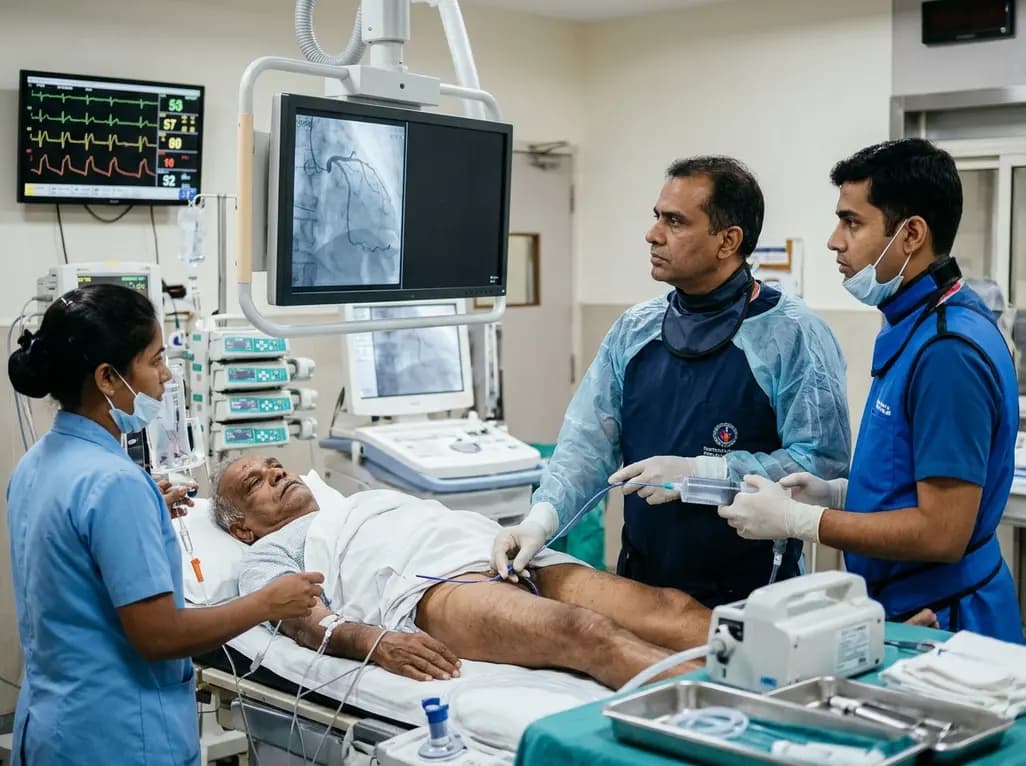
An elderly man with partially repaired Tetralogy of Fallot presented with STEMI caused by coronary embolism rather than atherosclerosis. Successful treatment with sustained mechanical aspiration thrombectomy underscores the vital need for high clinical vigilance in adult congenital heart disease.
Today

Demanding exhaustive hormonal profiling can inadvertently discourage clinical studies involving females. Methodological standards must align with the specific scientific question to expand, not restrict, equitable evidence for women.
Today

A recent study demonstrates that spinal oxygen sensors do not require mitochondrial electron transport to trigger sympathetic excitation during acute hypoxia, revealing new insights into how mitochondrial oxidative stress modulates autonomic tone in cardiovascular and neurological diseases.
Today

A novel calcium polyphosphate coacervate enables injectable bone implants with in situ hierarchical porosity via phase separation and gas foaming, significantly enhancing cell proliferation, energy metabolism, and osteogenic differentiation for minimally invasive bone defect repair.
Today

Following regulatory scrutiny from FSSAI regarding promotional representations and lean muscle preservation claims, Dr. Reddy's Laboratories and Nestlé Health Science are currently reviewing the branding and marketing strategy for their joint nutritional supplement Celevida GLP+.
Today
