

Loading, please wait...
Loading, please wait...

Meniscal injuries represent a common knee pathology in orthopedic practice, with an annual incidence of approximately 66 per 100,000 individuals. Because the meniscus distributes mechanical load and protects articular cartilage, meniscal damage accelerates joint degeneration. Consequently, untreated or excised tears significantly heighten the risk of knee osteoarthritis. Modern surgical management prioritizes meniscal preservation over meniscectomy whenever technically feasible. However, limited vascularity within the inner meniscal zones frequently prevents successful tissue healing after mechanical repair. To address these biological limitations, orthopedic surgeons increasingly evaluate orthobiologics for meniscal tears as potential adjuncts to conventional repair techniques.
The human meniscus features distinct vascular regions that govern its inherent healing potential. Specifically, the peripheral red-red zone retains substantial blood flow, whereas the inner white-white zone completely lacks vascular supply. Standard surgical suturing in avascular areas often fails because local fibrochondrocytes cannot initiate robust repair cascades. Therefore, orthobiological therapies aim to deliver essential signaling cytokines, anabolic growth factors, and progenitor cells directly into the lesion. These biological adjuncts stimulate extracellular matrix synthesis and attenuate damaging intra-articular inflammatory responses. Furthermore, autologous preparations such as platelet concentrates, bone marrow aspirates, and microfragmented adipose tissue provide accessible point-of-care delivery systems. Experimental animal studies confirm that biological augmentation upregulates type I and type III collagen deposition across repair margins. Consequently, orthobiologics may provide the regenerative stimulus necessary to enhance meniscal healing where sutures alone prove inadequate.
Platelet-rich plasma represents the most extensively researched orthobiological adjunct in sports medicine. Clinicians utilize concentrated autologous platelets to release transforming growth factor-beta, vascular endothelial growth factor, and platelet-derived growth factor into injured fibrocartilage. However, clinical investigations evaluating platelet-rich plasma demonstrate mixed results and notable heterogeneity. Most comparative trials show no statistically significant improvements in patient-reported outcome measures. Specifically, patients receiving platelet augmentation report International Knee Documentation Committee, Lysholm, and Visual Analogue Scale scores comparable to suture-only controls. Similarly, Knee Injury and Osteoarthritis Outcome Scores show minimal divergence between treatment cohorts. Nevertheless, structural metrics present encouraging findings. Selected clinical trials report lower re-rupture rates with platelet augmentation, observing failure rates of 14.6% compared with 17.0% in isolated repair groups. Consequently, platelet concentrates may provide modest structural reinforcement despite failing to produce superior subjective symptom relief.
Bone marrow aspirate concentrate provides a biological alternative rich in mesenchymal stem cells, hematopoietic precursors, and anti-inflammatory cytokines. Unlike simple platelet preparations, this bone marrow product supplies nucleated progenitor cells alongside bioactive interleukin-1 receptor antagonist. Preclinical translational research highlights substantial reparative potential for this cellular therapy. In animal models of avascular meniscal lacerations, bone marrow concentrate produced superior tissue filling and higher structural stiffness compared to platelet-rich plasma. Furthermore, histological analysis demonstrated denser collagen remodeling and superior integration with adjacent native tissue. However, comparative clinical evidence in human patients remains scarce. While early prospective series confirm procedural safety and symptom stabilization, large randomized trials evaluating bone marrow concentrates for meniscal repair are lacking. In addition, harvest sites and preparation protocols vary substantially across clinical centers. Therefore, while translational data appears highly promising, clinical recommendations require rigorous validation through prospective controlled trials.
Microfragmented adipose tissue has emerged as an innovative cellular therapy derived from subcutaneous fat. Mechanical microfragmentation preserves intact vascular stromata containing viable pericytes and mesenchymal stem cells without requiring enzymatic digestion. Currently, clinical evidence for microfragmented fat focuses primarily on degenerative meniscal tears in patients suffering from concomitant knee osteoarthritis. In these clinical studies, treated patients demonstrated meaningful improvements in functional scores and pain reduction from baseline. Furthermore, patients frequently experienced reduced joint swelling and diminished reliance on analgesic medications. However, the orthopedic literature currently lacks preclinical animal studies assessing microfragmented fat for acute meniscal healing. As a result, available data cannot confirm whether adipose tissue induces true structural healing in younger, non-arthritic populations. Clinicians must therefore view microfragmented adipose tissue as an investigational symptom-modulating intervention rather than a definitive tissue-regenerative therapy for acute tears.
Methodological heterogeneity represents a major barrier when analyzing the current orthobiological literature. First, tear morphologies vary substantially across published clinical trials, spanning acute vertical tears to chronic complex cleavages. Second, orthopedic surgeons employ diverse repair techniques, including all-inside, inside-out, and outside-in suture configurations. In addition, concomitant anterior cruciate ligament reconstruction introduces a powerful confounding biological effect. Drilling femoral and tibial tunnels releases native marrow elements into the joint space, which may obscure the true impact of injected orthobiologics. Furthermore, biological preparation protocols lack universal standardization across institutions. Variations in centrifugation speeds, leukocyte concentrations, and cellular viability produce unpredictable biological products. Because many authors omit detailed compositional analyses, comparing therapeutic outcomes across studies remains difficult. Ultimately, current evidence does not demonstrate consistent clinical superiority of orthobiological adjuncts over standard repair techniques. Surgeons must critically evaluate these confounding variables before adopting biologics into standard surgical practice.
Given the lack of definitive superiority, orthopedic surgeons must exercise evidence-based restraint when selecting patients for orthobiological augmentation. Young athletes with acute vertical tears in vascular zones heal reliably through meticulous anatomical repair alone. Therefore, routine biological augmentation provides minimal demonstrable advantage for straightforward peripheral lesions. In contrast, complex avascular tears, chronic tissue damage, or revision meniscal repairs face high biological failure rates. In these challenging scenarios, introducing an autologous biologic provides a rational, albeit experimental, microenvironmental stimulus. Furthermore, clinicians must distinguish between traumatic tears and age-related degenerative lesions. For degenerative meniscal tears, non-operative management and targeted exercise therapy remain the primary standard of care. When considering orthobiologics, practitioners must clearly discuss current evidence limitations and out-of-pocket costs with patients. Ultimately, rigorous multi-center registries and standardized randomized trials are essential to identify which clinical subgroups genuinely benefit from biological preservation.
Platelet-rich plasma primarily provides concentrated growth factors that stimulate cellular proliferation and tissue angiogenesis. In contrast, bone marrow aspirate concentrate supplies both anabolic growth factors and nucleated cells, including mesenchymal stem cells and native anti-inflammatory cytokines. While preclinical studies suggest bone marrow concentrate may induce superior meniscal tissue regeneration, human clinical trials directly comparing these two biologics remain limited. Consequently, both modalities require further comparative clinical validation.
Current medical evidence does not show that microfragmented adipose tissue can structurally regenerate or reverse torn meniscal cartilage. Published studies consist largely of clinical case series in patients with degenerative joint disease, demonstrating improved symptom control and functional scores rather than proven anatomical healing. Therefore, clinicians should view microfragmented adipose tissue primarily as an investigational symptom-modifying adjunct rather than a proven disease-reversing structural cure for meniscal tears.
Surgeons should base clinical decisions on tear vascularity, patient age, repair complexity, and failure risk. While peripheral tears in young athletes heal reliably with anatomical suturing alone, avascular or revision repairs face higher biological failure rates. In those challenging scenarios, clinicians may consider autologous biologics as experimental adjuncts. However, practitioners must thoroughly discuss the lack of definitive clinical superiority and additional procedure costs with patients before proceeding.
Disclaimer: This content is for informational and educational purposes only... Refer to the latest local and national guidelines for clinical practice.
References

Read summarized clinical updates, watch expert medical content, and earn CME certifications right from your smartphone.
Open your smartphone camera to scan and install.





A narrative review assesses orthobiologics—PRP, BMAC, and MFAT—for meniscal tear repair. While preclinical data show regenerative promise, clinical evidence reveals no consistent superiority over standard repair, highlighting persistent heterogeneity in application protocols and surgical outcomes.
Today
A retrospective study reveals that pulse-controlled ergometry has low sensitivity in cholinergic urticaria diagnosis. Clinicians should combine history and photo-documentation with validated tools like CholUSI and UCT rather than relying solely on bicycle challenge tests to guide therapy.
Today

A recent clinical study demonstrates that women with inflammatory bowel disease undergoing assisted reproductive technology experience low flare rates and high live birth rates, confirming that fertility treatment is safe with proper multidisciplinary care.
Today
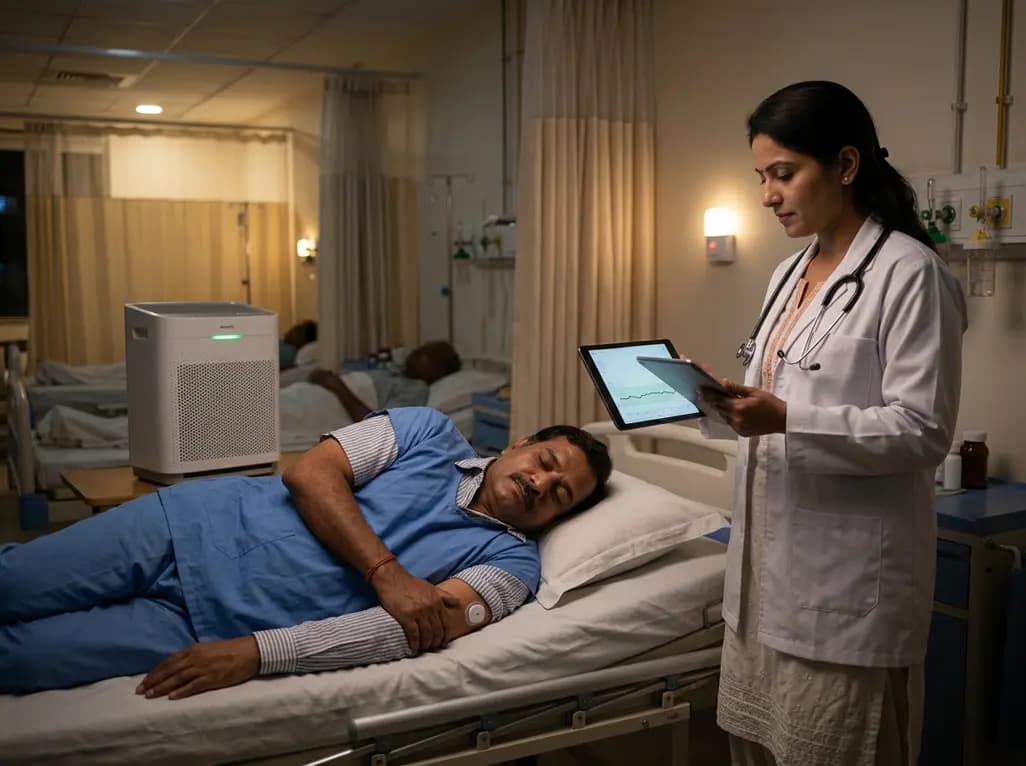
A recent clinical trial demonstrates that using bedroom HEPA air filtration during sleep significantly reduces nocturnal particulate exposure, curbs glycemic variability, and mitigates postprandial glucose surges in prediabetic patients, underscoring indoor air quality as an actionable cardiometabolic risk factor.
Today
A systematic review evaluates psychological interventions for smoking cessation in diabetes, showing short-term success but highlighting challenges in long-term abstinence.
Today
