.webp&w=384&q=75)

Loading, please wait...
Loading, please wait...

In the rapidly evolving landscape of clinical diagnostics, mass spectrometry resolution has reached a transformative milestone. A recent study published in the Journal of the American Society for Mass Spectrometry introduces a revolutionary optimization method for segmented-electrode Orbitraps. This technological leap allows for a resolution exceeding 200,000. Such precision is vital for identifying complex biomarkers and rare metabolites in patient samples.
Traditional Orbitrap designs often utilize spindle-shaped electrodes that are difficult to manufacture precisely. However, the new design uses segmented conical outer electrodes to simplify production while improving accuracy. By applying precise bias voltages to these segments, the system cancels frequency shifts caused by field imperfections. Consequently, this innovation enables researchers to analyze large, heterogeneous biomolecules with unprecedented clarity.
Furthermore, the optimization method addresses mechanical tolerances that previously limited instrument performance. If small machining errors occur, fine electronic adjustments on the outer electrodes compensate for these discrepancies. Therefore, the device maintains ultrahigh precision even under non-ideal manufacturing conditions. Notably, this advancement ensures that high-end diagnostic labs in India can leverage more robust and reliable analytical tools for oncology and precision medicine.
Ultrahigh resolution allows for the clear separation of isobaric compounds, which have nearly identical masses. This is essential for identifying specific drug metabolites and proteins in complex blood or tissue samples.
The segmented design allows for localized field adjustments. This means engineers can \"tune\" the electric field electronically to correct for physical imperfections in the hardware, ensuring consistent accuracy.
Disclaimer: This content is for informational and educational purposes only. It does not constitute medical advice or a substitute for professional healthcare. Refer to the latest local and national guidelines for clinical practice.
References
1. Zhao Y et al. Field Optimization in a Segmented-Electrode Orbitrap. J Am Soc Mass Spectrom. 2026 Feb 18. doi: 10.1021/jasms.5c00339. PMID: 41709111.
2. Makarov A, Denisov E, Lange O. Performance evaluation of a high-field Orbitrap mass analyzer. J Am Soc Mass Spectrom. 2009 Aug;20(8):1391-6.
3. Thermo Fisher Scientific. High-Resolution, Accurate-Mass Orbitrap Mass Spectrometry – Definitions, Opportunities, and Advantages. 2024.

Read summarized clinical updates, watch expert medical content, and earn CME certifications right from your smartphone.
Open your smartphone camera to scan and install.





Researchers have developed a field optimization method for segmented-electrode Orbitraps, pushing mass resolution beyond 200,000 for improved diagnostics....
8 months ago

Explore vital recurrent stroke predictors in lacunar stroke patients managed with intensive blood pressure lowering. This analysis examines trial findings from SPS3 to uncover residual vascular risks, metabolic factors, and targeted secondary prevention strategies for high-risk neurological patients.
Today
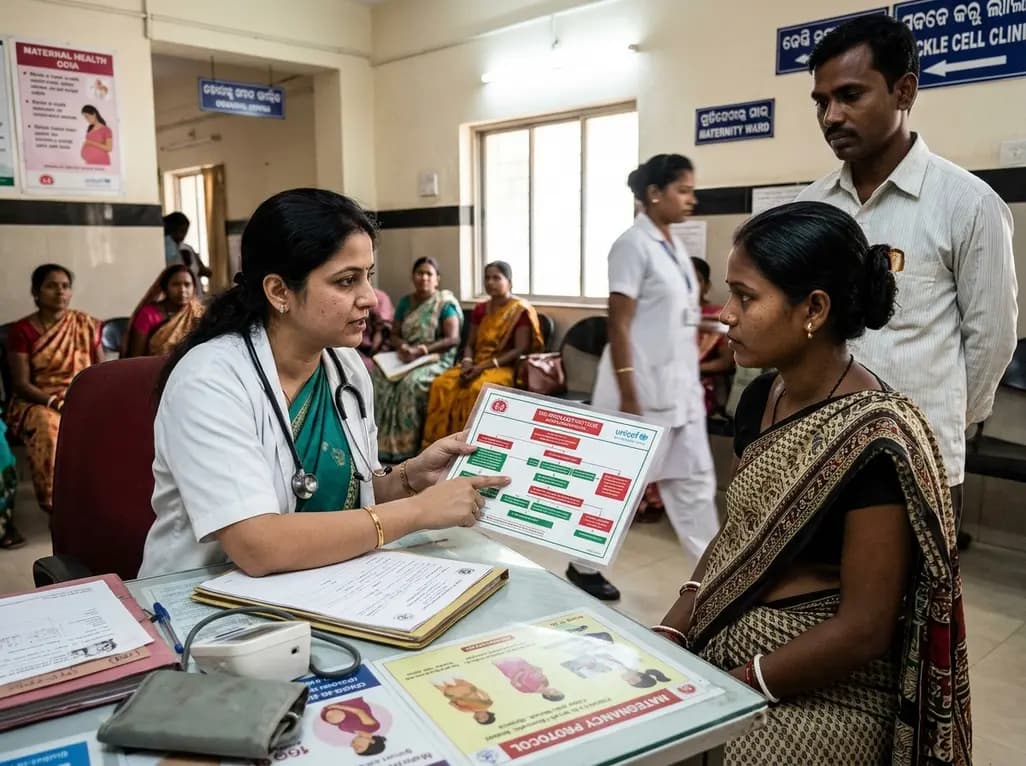
Odisha has established India's first state-level clinical protocol specifically tailored for pregnant women with sickle cell disease. Developed with NHM and UNICEF, the framework provides structured antenatal screening, crisis mitigation, standardized referral pathways, and specialized interdisciplinary care.
Today

India is advancing preventive healthcare by integrating genomics, artificial intelligence, and quantum technologies. With the SANGAM programme sequencing one million Indian genomes, clinicians can unlock personalized therapies, detect cardiometabolic risks early, and curb the burden of diabetes and heart disease.
Today
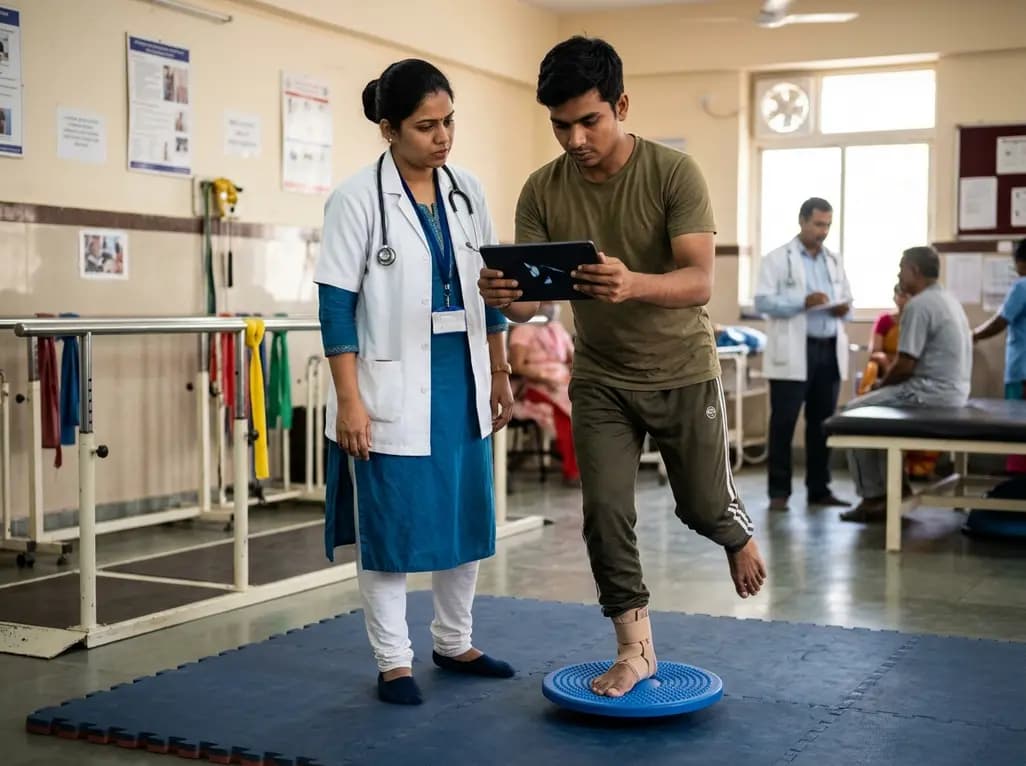
A randomized controlled trial demonstrates that an eight-week dual-task training intervention significantly improves static and dynamic postural control over standard balance exercises in individuals with chronic ankle instability, addressing critical neurocognitive deficits during athletic and daily activities.
Today

A retrospective cohort study of 7,716 ICU patients from the MIMIC-IV database demonstrates that Gradient Boosting Decision Trees significantly outperform traditional SOFA scores in predicting in-hospital mortality among patients with sepsis and diabetes, with SHAP analysis providing clinical interpretability.
Today
