.webp&w=384&q=75)

Loading, please wait...
Loading, please wait...
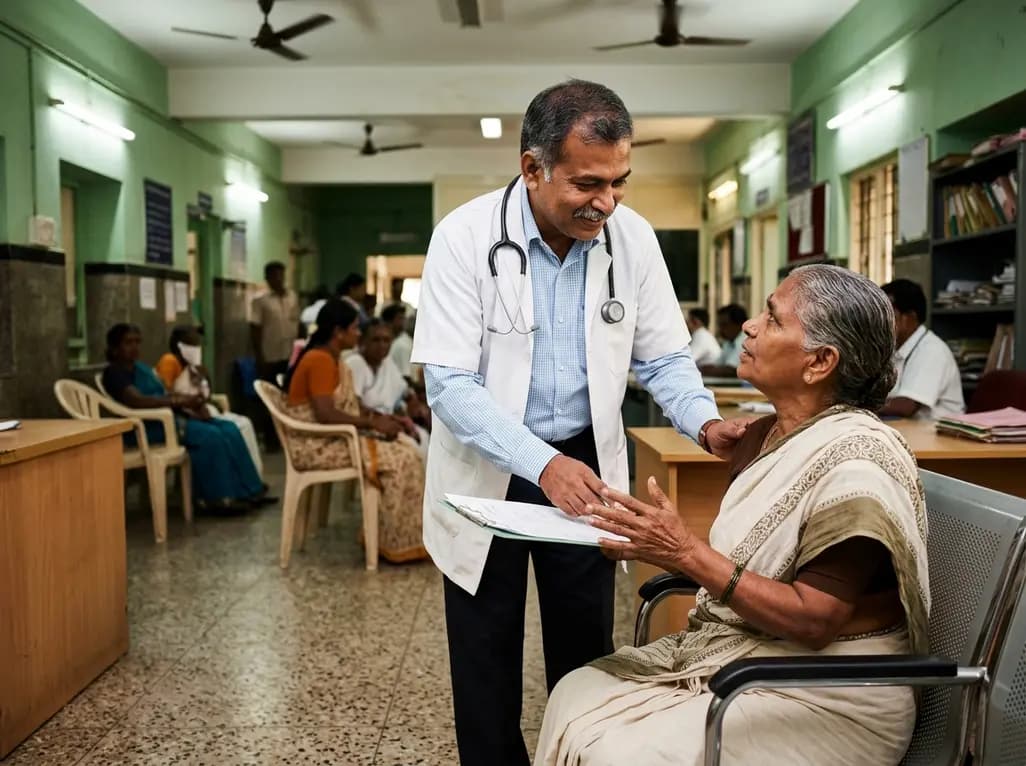
Atopic dermatitis represents a significant global health burden, characterized by its chronic nature and the frequent need for longitudinal specialist intervention. Unfortunately, many patients face substantial barriers to accessing dermatological expertise, including geographic distances, long waiting periods, and the socioeconomic costs associated with physical clinic visits. Consequently, there is an urgent need for scalable, collaborative care models that can effectively bridge these gaps. The recent randomized clinical trial led by April Armstrong and colleagues addresses this challenge by evaluating the efficacy of atopic dermatitis online care compared to traditional in-person consultations. This study is particularly relevant in the modern era, where digital health infrastructure is rapidly expanding. By utilizing a Team-Based Connected Health (TCH) model, the researchers aimed to provide a comprehensive, patient-centered approach that integrates primary care and specialist knowledge. The study emphasizes that for chronic conditions requiring frequent monitoring, asynchronous digital platforms might offer a viable solution. This shift in care delivery could potentially democratize access to high-quality dermatological care, ensuring that patients receive timely assessments regardless of their physical location. Furthermore, the trial provides a rigorous evidence-based foundation for clinicians who are considering the integration of telehealth into their routine practice.
The core of this investigation lies in the implementation of the Team-Based Connected Health (TCH) model, an innovative framework designed to streamline communication between patients and healthcare providers. In this asynchronous setup, patients utilize a secure online platform to share their clinical histories and high-resolution photographs with a team of dermatologists. Unlike synchronous video calls, which require both parties to be available simultaneously, the TCH model allows for greater flexibility. Specifically, dermatologists can review cases and provide detailed treatment recommendations at their convenience, while patients can upload data whenever they observe changes in their skin condition. This approach is highly efficient for managing chronic inflammatory diseases like eczema, where visual assessment is a primary diagnostic tool. Moreover, the model encourages collaborative care by potentially involving primary care practitioners in the treatment loop. By creating a structured digital record of the patient's progress, the TCH system facilitates continuous monitoring and rapid adjustments to therapy. This methodology not only optimizes the specialist's time but also empowers the patient to take a more active role in their disease management. Effectively, the TCH model serves as a digital bridge, ensuring that clinical expertise is accessible without the logistical constraints of a traditional office visit.
To ensure robust results, this pragmatic, randomized clinical equivalence trial enrolled 300 participants from eight outpatient dermatology clinics across California. The recruitment period spanned from August 2019 to May 2024, providing a wealth of long-term data. Participants were randomized in a 1:1 ratio, with 149 assigned to the TCH online care group and 151 to the conventional in-person control arm. Eligibility criteria were inclusive, requiring only a physician diagnosis of atopic dermatitis and access to the internet and a camera. Notably, the study included both adults and children, with a mean age of approximately 34.6 years, reflecting the broad demographic impact of atopic dermatitis across the lifespan. Females represented about 70% of the cohort. This diverse population ensures that the findings are applicable to a wide range of clinical scenarios. During the 12-month study period, investigators assessed outcomes quarterly to capture the relapsing-remitting nature of the disease. By maintaining a long-term follow-up, the researchers could evaluate whether the benefits of online care were sustainable over time. This rigorous design was essential to determine if digital interventions could truly stand as a substitute for, or a complement to, physical examinations in the management of chronic skin disorders.
The primary focus of the trial was to measure changes in the Eczema Area and Severity Index (EASI) over 12 months. This validated tool is essential for quantifying the clinical signs of atopic dermatitis. Interestingly, the results showed a mean difference in change between the two groups of only -0.01, which fits well within the prespecified equivalence margins. Secondary outcomes further supported this finding. The Patient-Oriented Eczema Measure (POEM), which captures the patient’s perspective on symptom severity, showed a difference of 0.38. Additionally, the validated Investigator Global Assessment (vIGA) scores, which provide a clinician’s overview of disease status, showed a minimal difference of 0.06. These statistics collectively indicate that atopic dermatitis online care is clinically equivalent to in-person visits. Furthermore, all differences remained within the narrow margins defined before the trial began, proving that the quality of care was not compromised by the lack of physical contact. These findings are revolutionary, as they suggest that the nuances of skin examination can be captured effectively through high-quality photography and detailed history-taking. Consequently, clinicians can feel confident that transitioning appropriate patients to an online model will not negatively impact their clinical trajectory or symptom control.
In the Indian healthcare landscape, the implications of this trial are profound. India faces a significant shortage of dermatologists, particularly in rural and semi-urban areas, leading to delayed diagnoses and suboptimal management of chronic conditions. Furthermore, the high patient volume in public hospitals often limits the time available for detailed counseling and longitudinal follow-up. Integrating atopic dermatitis online care through models like TCH could significantly alleviate this burden. Indian studies, such as those by Kaliyadan et al., have already highlighted the utility of store-and-forward teledermatology in various clinical settings. By adopting a team-based approach, Indian practitioners can leverage digital platforms to monitor patients more frequently than physical travel would allow. Moreover, the widespread use of smartphones and the success of initiatives like 'Digital India' provide the necessary technological foundation for such models. However, it is crucial to ensure that digital health tools are culturally adapted and accessible in multiple languages to reach diverse populations. Specifically, the use of photography for skin assessment must be standardized to account for variations in lighting and skin tones common in the Indian population. By implementing these evidence-based digital strategies, the Indian medical community can improve specialty access and enhance the overall quality of life for millions of eczema sufferers across the country.
The success of the TCH model underscores the potential for telehealth to transform chronic disease management beyond simple convenience. To optimize atopic dermatitis online care, future efforts must focus on improving the integration of primary care and specialist services. The collaborative nature of the TCH model ensures that all stakeholders are aligned on the treatment plan, which is vital for maintaining patient adherence in chronic conditions. Additionally, as artificial intelligence and machine learning continue to evolve, these digital platforms could incorporate automated triage or severity scoring tools to further assist clinicians. However, the human element remains irreplaceable; the dermatologist’s assessment of photographs and clinical history is what drives successful outcomes. Scalability is another critical factor. As the trial demonstrated equivalence over a full year, it suggests that teledermatology is not just a temporary fix for acute flares but a sustainable long-term solution. Healthcare systems should consider investing in secure, user-friendly platforms that facilitate high-quality image sharing and data privacy. Ultimately, the transition to more digital-first models will require changes in reimbursement policies and clinician training. By embracing these technological advancements, the medical community can move toward a more resilient and accessible healthcare system that meets the evolving needs of patients with chronic skin diseases.
The Team-Based Connected Health (TCH) model primarily utilizes asynchronous communication, meaning that patients and dermatologists do not need to be online at the same time. Patients upload clinical histories and photographs to a secure platform, which dermatologists review at a later time. This differs from standard synchronous video calls, providing more flexibility for both parties and allowing the clinical team more time to review complex data before providing recommendations.
Yes, this randomized clinical trial found that improvements in atopic dermatitis were equivalent across both groups. Using validated measures like the EASI, POEM, and vIGA, the researchers demonstrated that there were no significant clinical differences in disease severity or symptom management over a 12-month period. This suggests that for many patients, the visual and historical data provided online are sufficient for high-quality specialist management and treatment adjustments.
The study specifically included both adults and children, with participants as young as one year old. The results showed that the online model was effective across these different age groups. Parents of children with atopic dermatitis often find the online model particularly helpful, as it reduces the stress and logistical challenges of bringing a child to a physical clinic, while still ensuring they receive expert care from a specialized dermatology team.
Disclaimer: This content is for informational and educational purposes only. It does not constitute professional medical advice, diagnosis, or treatment. Always seek the advice of your physician or other qualified healthcare provider with any questions you may have regarding a medical condition. Refer to the latest local and national guidelines for clinical practice.
References
Armstrong AW et al. Online vs In-Person Care for Atopic Dermatitis: A Randomized Clinical Trial. JAMA Dermatol. 2026 Jun 24. doi: 10.1001/jamadermatol.2026.1959. PMID: 42340708.
Kaliyadan F, Venkitakrishnan S. Teledermatology: Clinical case profiles and practical issues. Indian J Dermatol Venereol Leprol 2009;75:32-35.
Patro BK et al. Diagnostic agreement between a primary care physician and a teledermatologist for common dermatological conditions in North India. Indian Dermatol Online J. 2015;6(1):21-26.
American Academy of Dermatology. AAD Teledermatology Standards. Available at: https://www.aad.org/member/practice/teledermatology/standards.

Read summarized clinical updates, watch expert medical content, and earn CME certifications right from your smartphone.
Open your smartphone camera to scan and install.





A pragmatic randomized clinical trial involving 300 patients demonstrates that an asynchronous, online team-based connected health (TCH) model achieves equivalent improvements in atopic dermatitis severity compared to traditional in-person dermatology visits over 12 months.
3 months ago

Novel diimide and hydrazone scaffolds, particularly compound #C4, synergistically reactivate latent HIV-1 when combined with JQ1 or PKC activators. Demonstrating donor-matched proviral transcription ex vivo and non-canonical signaling, these findings advance shock and kill strategies toward reservoir eradication.
Today

A cross-sectional study reveals that maternal RSV vaccination coverage reached only 43.7% in Argentina, with maternal vaccine knowledge being the sole independent predictor of uptake. Clinicians play a crucial role in eliminating informational and structural barriers to optimize infant health.
Today

Review how tailored exercise programs benefit frail older patients with heart failure. Explore pathophysiological mechanisms, individualized training prescriptions, and strategies to overcome adherence barriers in clinical practice.
Yesterday

This comparative study evaluates posterior labral tears with and without glenohumeral instability, highlighting distinct demographic patterns, MRI underestimation in stable shoulders, and successful arthroscopic repair outcomes.
Yesterday

A clinical study demonstrates that early intervention with tocilizumab, either as monotherapy or bridged with corticosteroids, achieves significant proptosis reduction and resolves active inflammation in treatment-naive thyroid eye disease.
Yesterday
