.webp&w=384&q=75)

Loading, please wait...
Loading, please wait...
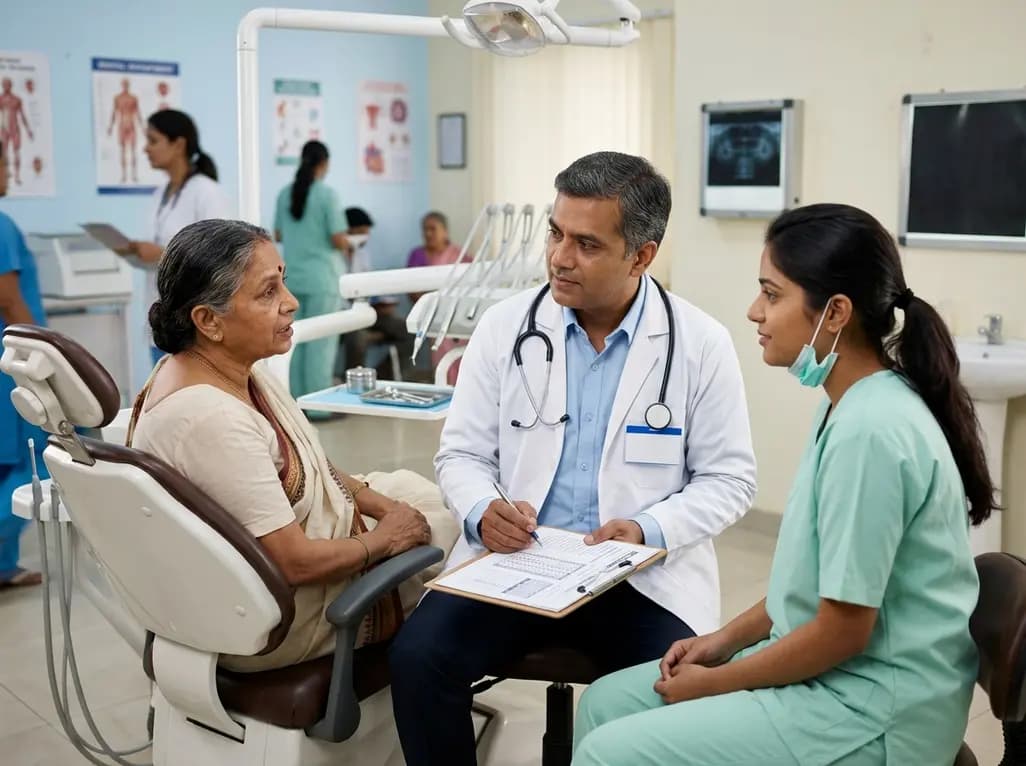
Clinicians often struggle to assess the real-world impact of dental diseases in diverse patient populations. However, the recent validation of the OHIP-5 oral health instrument in Nigeria offers a promising solution. By adapting this tool for Yoruba-speaking patients, researchers have highlighted a scalable method to improve patient-centered care in multilingual settings.
Healthcare access in low- and middle-income countries (LMICs) frequently faces significant structural and linguistic barriers. Consequently, oral health is often overlooked in broader universal health coverage efforts. To address this, a cross-sectional survey of 143 adults was conducted at dental centers in Ibadan. The study utilized a forward-backward translation method to create the Yoruba version (OHIP-5Yor), ensuring cultural and linguistic relevance. Furthermore, psychometric testing revealed that the tool possesses acceptable internal consistency, with a Cronbach's alpha of 0.67.
The implementation of such tools represents a vital step toward health equity. Specifically, the OHIP-5Yor allows non-English speakers to participate fully in their own oral health assessments. Therefore, clinicians can better understand patient-perceived impacts and tailor treatments accordingly. Although the factorial structure requires further evaluation in larger samples, these findings provide preliminary support for its clinical use. Moreover, integrating these brief measures into routine care can significantly strengthen public health surveillance.
Beyond its technical performance, the instrument serves as a bridge for communication. Effective patient-clinician dialogue is essential for identifying unmet needs and improving long-term outcomes. In contrast to longer questionnaires, the 5-item version minimizes the burden on both the provider and the patient. This makes it an ideal tool for busy clinical environments in India and other diverse regions. In addition, the study's results advocate for the inclusion of indigenous languages in all healthcare assessment protocols.
Short-form tools like the OHIP-5 reduce the time required for assessment. Consequently, they are more feasible for routine clinical use compared to longer versions like the OHIP-49, while still providing high-quality data on patient outcomes.
By providing validated translations in indigenous languages, the tool ensures that non-English speakers have an equal voice in their clinical assessments. This leads to more accurate diagnoses and better-aligned treatment plans.
Disclaimer: This content is for informational and educational purposes only. It is not intended as a substitute for professional medical advice, diagnosis, or treatment. Always seek the advice of your physician or other qualified health provider with any questions you may have regarding a medical condition. Refer to the latest local and national guidelines for clinical practice.
References
Oladayo AM et al. Validating OHIP-5 for Equitable Oral Healthcare in Nigeria. Int Dent J. 2026 Jun 11. doi: undefined. PMID: 42275745.
John MT et al. Validation of the English-language version of 5-item Oral Health Impact Profile. Health Qual Life Outcomes. 2016;14(1):50. doi: 10.1186/s12955-016-0448-x. PMID: 27036109.
Acharya S et al. Validation of the Indian version of the Oral Health Impact Profile. Oral Health Prev Dent. 2007;5(2):145-151. PMID: 17708365.

Read summarized clinical updates, watch expert medical content, and earn CME certifications right from your smartphone.
Open your smartphone camera to scan and install.





Researchers validated the Yoruba version of the OHIP-5 oral health tool, demonstrating its reliability for assessing oral health-related quality of life (OHRQoL) in Nigeria. This brief instrument supports equitable healthcare by enabling inclusive assessments for non-English speakers in multilingual dental settings.
4 months ago

Review how tailored exercise programs benefit frail older patients with heart failure. Explore pathophysiological mechanisms, individualized training prescriptions, and strategies to overcome adherence barriers in clinical practice.
Today

Leucine Rich Bio has introduced South Asia's first comprehensive vaginal microbiome test, BugSpeaks. By profiling microbial dysbiosis, pathogens, and antimicrobial resistance, this next-generation diagnostic platform provides clinicians with deeper insights into recurrent infections, fertility, and reproductive health.
Today

In high-risk pulmonary embolism complicated by severe anemia and active uterine bleeding, systemic thrombolysis is contraindicated. Large-bore aspiration thrombectomy provides rapid hemodynamic rescue without fibrinolysis, supported by inferior vena cava filter placement and multidisciplinary critical care.
Today

This comparative study evaluates posterior labral tears with and without glenohumeral instability, highlighting distinct demographic patterns, MRI underestimation in stable shoulders, and successful arthroscopic repair outcomes.
Today

A clinical study demonstrates that early intervention with tocilizumab, either as monotherapy or bridged with corticosteroids, achieves significant proptosis reduction and resolves active inflammation in treatment-naive thyroid eye disease.
Today
