

Loading, please wait...
Loading, please wait...
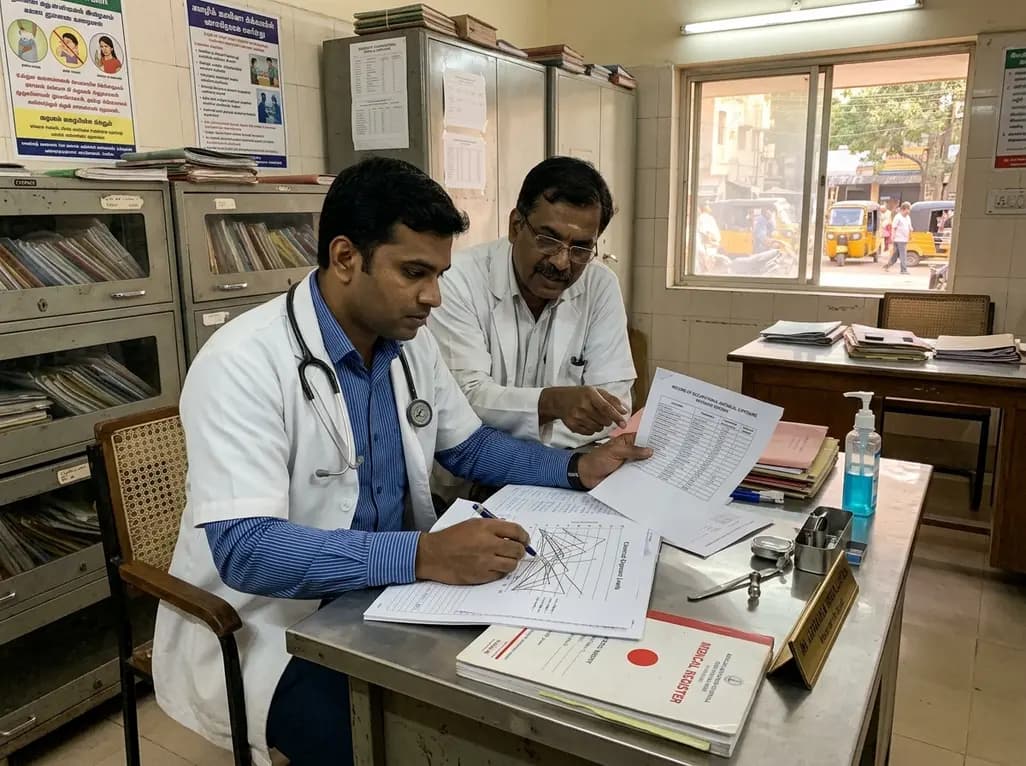
Assessing occupational multiexposure risk represents a paramount challenge in modern industrial hygiene and preventive medicine. Traditionally, occupational safety standards evaluate airborne chemical exposures on an isolated, agent-by-agent basis. However, industrial environments rarely expose workers to a single chemical entity. Instead, employees encounter complex chemical mixtures containing solvents, volatile organic compounds, and heavy metal fumes simultaneously. When toxic agents share target organs, their combined biological effects often act additively or synergistically. Consequently, relying strictly on individual permissible exposure limits can overlook severe health hazards. A comprehensive study utilizing the Canadian Workplace Exposure Database has illuminated these overlooked risks. The investigators evaluated long-term surveillance data to measure concomitant toxicities across multiple manufacturing cohorts. Furthermore, the findings demonstrate that relying solely on single-substance thresholds creates a false sense of security. Clinicians and occupational hygienists must therefore adopt additive risk models to safeguard employee health effectively.
Researchers examined historical industrial hygiene data collected between 1969 and 2012 to quantify real-world additive exposures. They grouped 227,163 airborne measurements into 15,399 distinct work situations, defined by specific occupations within facilities during a single calendar year. Remarkably, the authors categorized 4,620 work situations, or 30.0 percent, as multiexposed scenarios involving two or more detected agents. To understand recurring patterns, the researchers deployed frequent itemset mining algorithms. This computational approach revealed that co-occurring exposures clustered heavily around specific industrial mixtures, particularly combinations of volatile solvents or toxic metals. In addition, the investigators conducted an additive risk assessment across 23 standardized toxicological classes. A work situation was classified as hazardous whenever the sum of individual chemical concentration-to-limit ratios exceeded unity. These rigorous calculations provided empirical proof that multi-agent interactions dominate modern shop floors.
The study yielded alarming findings regarding hidden workplace toxicity. Among 2,464 multiexposed hazardous work situations, missed risks occurred in 18.5 percent of cases. In these specific scenarios, every single chemical concentration remained comfortably below its respective occupational exposure limit. Nonetheless, the combined additive burden surpassed safe toxicological thresholds. Furthermore, this phenomenon spanned 16 separate organ-specific toxicological endpoints. Hematopoietic system disruption exhibited the highest vulnerability, where missed risks reached an astonishing 22.2 percent. Conversely, skin and respiratory sensitization presented missed risks in 2.67 percent of evaluated situations. Solvent combinations, such as toluene and xylene, frequently induced silent additive neurotoxicity and hepatic stress. Similarly, co-exposures to heavy metals like lead, cadmium, and chromium compounded nephrotoxic and hematologic risks. Consequently, traditional single-agent monitoring fails to protect millions of workers from progressive, organ-specific organ damage.
The magnitude of missed risk varied widely across 50 distinct industrial categories. For instance, household and institutional furniture and kitchen cabinet manufacturing demonstrated the highest vulnerability, with missed risks reaching 48.4 percent. Workers in these facilities routinely spray multi-component coatings, apply chemical adhesives, and utilize volatile stripping solvents. Consequently, they inhale complex vapor mixtures that accumulate rapidly in enclosed finishing spaces. In contrast, electrical equipment and component manufacturing registered the lowest proportion of missed risks at 4.76 percent. In addition, structural metal fabrication, automotive refinishing, and industrial printing exhibited substantial additive risk profiles. Because routine workplace inspections typically monitor only prominent indicator compounds, many co-existing toxic chemicals escape scrutiny entirely. Therefore, industrial hygiene specialists must prioritize high-risk sectors for comprehensive, mixture-based environmental monitoring rather than relying on standard single-chemical surveys.
These findings hold direct clinical relevance for medical practitioners evaluating exposed industrial laborers in India. Developing economies feature extensive manufacturing networks, informal enterprises, and small-scale workshops where multi-chemical handling remains ubiquitous. Indian physicians frequently encounter factory workers presenting with unexplained cytopenias, chronic peripheral neuropathy, elevated transaminases, or refractory occupational asthma. Unfortunately, workplace environmental reports often claim full legal compliance based purely on isolated substance levels. Therefore, clinicians must take meticulous occupational histories that explore every concurrent chemical exposure. Moreover, primary care physicians and internists should suspect mixture-induced toxicity whenever multi-organ symptoms emerge without an obvious solitary etiology. Periodic hematological screening, renal function panels, and spirometry remain essential for individuals laboring in furniture, paint, and metal fabrication units. Proactive clinical vigilance can detect subclinical toxicity before irreversible systemic disease develops.
A missed occupational risk occurs when multiple airborne chemicals individually remain below their respective occupational exposure limits, yet their combined biological burden exceeds safe exposure levels. Because each individual chemical appears compliant during standard industrial testing, safety officers often fail to recognize that the additive toxicological load still damages targeted human organs.
The hematopoietic system is exceptionally vulnerable to additive chemical exposures, exhibiting missed toxic risks in over twenty-two percent of evaluated multi-agent scenarios. In addition, volatile organic solvents frequently cause cumulative central nervous system depression and hepatotoxicity, while concurrent heavy metal exposures severely damage pulmonary structures and renal parenchyma over chronic timelines.
Clinicians must obtain a thorough occupational history that identifies every chemical solvent, dust, and metallic fume present in the work environment. Physicians should avoid relying on single-agent compliance certificates. Instead, practitioners should order baseline complete blood counts, hepatic panels, renal markers, and spirometric studies to detect early additive toxicities promptly.
Disclaimer: This content is for informational and educational purposes only... Refer to the latest local and national guidelines for clinical practice.
References
Almadin C et al. Highlighting missed risks associated with multiexposures in the Canadian Workplace Exposure Database (CWED). J Occup Environ Hyg. 2026 Nov 18. doi: 10.1080/15459624.2026.2749868. PMID: 43050656.
World Health Organization. Assessment of combined exposures to multiple chemicals: report of a WHO/IPCS international workshop on aggregate/cumulative risk assessment. WHO Workshop Report; 2011.
American Conference of Governmental Industrial Hygienists (ACGIH). TLVs and BEIs: Threshold Limit Values for Chemical Substances and Physical Agents & Biological Exposure Indices. ACGIH; 2023.

Read summarized clinical updates, watch expert medical content, and earn CME certifications right from your smartphone.
Open your smartphone camera to scan and install.





Concomitant exposure to multiple industrial chemicals often produces cumulative toxicities overlooked by single-agent limits. A landmark study of exposure records shows that additive risks frequently escape detection, highlighting an urgent need for updated occupational health surveillance.
Today
Climate change disrupts global food supply and nutritional security, driving undernutrition alongside obesity, metabolic disorders, and mental distress. Healthcare providers must adopt a One Health approach and screen vulnerable populations, especially older adults, to mitigate cascading clinical risks.
Today

A large cohort study demonstrates that fetal growth restriction in a first pregnancy raises maternal cardiovascular risk within five years postpartum, including elevated rates of heart failure, stroke, and myocardial infarction. Clinicians must initiate proactive postpartum screening and cardiovascular prevention.
Today

An NHANES analysis reveals that meeting 24-hour movement guidelines significantly lowers the odds of cardiovascular disease, obesity, hypertension, and diabetes among adults with disabilities, emphasizing the power of combined physical activity, sleep, and limited sedentary time.
Today

A paired cadaveric study compared triple and quintuple percutaneous Achilles tendon lengthening. While quintuple hemisection showed numerically greater elongation, differences were not statistically significant.
Today

As non-communicable diseases surge, India is prioritizing non-pharmacological interventions. Recent national health initiatives highlight structured dietary protocols, yoga therapies, and clinical trials like ReGEN-Beta to complement standard medical treatments for metabolic and lifestyle-related disorders.
Today
