

Loading, please wait...
Loading, please wait...

Modern vascular neurosurgery demands extraordinary precision, particularly during complex revascularization procedures such as superficial temporal artery to middle cerebral artery bypass. Historically, surgeons evaluated technical competence through subjective mentor feedback, retrospective patency rates, or checklist evaluations. However, these traditional modalities fail to capture dynamic intraoperative subtleties. Performing an intricate STA-MCA microanastomosis requires meticulous instrument handling and sub-millimeter needle manipulation. Consequently, evaluating these delicate actions necessitates objective, quantitative measurement rather than anecdotal observation. Automated video analytics provide a novel avenue to deconstruct complex technical steps without disrupting operative workflows. By converting standard operative recordings into discrete kinematic data points, clinicians can identify previously unrecognized movement anomalies. Furthermore, postoperative debriefing shifts from qualitative recall to structured, evidence-based inquiry. Surgeons can pinpoint exact instances where instrument stability degraded or path efficiency faltered. This technological evolution addresses a major gap in modern surgical education and maintenance of certification. As cerebrovascular procedures grow increasingly sophisticated, surgeons require dependable feedback tools to sustain peak technical proficiency throughout their careers. Ultimately, data-driven debriefing transforms passive review into active, continuous technical improvement.
To establish an unobtrusive analysis system, investigators implemented a computer vision pipeline utilizing open-source Python libraries and OpenCV architecture. The tracking software processed standard surgical microscope video feeds without requiring bulky physical sensors or specialized hardware attachments. Specifically, the algorithm tracked the spatial coordinates of the primary needle holder across thousands of consecutive video frames. In initial validation testing, the software maintained continuous tracking integrity across 92.09% of all operative footage analyzed. Consequently, researchers reconstructed precise two-dimensional tool trajectories across 13,183 frames, representing several minutes of uninterrupted suture placement. This noninvasive tracking strategy overcomes several barriers that previously hindered video assessment in real clinical environments. Physical marker arrays often crowd the narrow surgical field and interfere with fine instrument articulation. In contrast, algorithmic video processing functions passively in the background without affecting sterile technique. Therefore, surgical teams can capture granular motion profiles across routine microsurgical procedures seamlessly. By establishing high fidelity tracking without specialized robotic platforms, this methodology creates an accessible blueprint for surgical programs worldwide.
Extracting raw spatial coordinates represents merely the first step in assessing surgical performance. To generate clinically meaningful insights, the platform computes four fundamental kinematic parameters: absolute error, velocity, acceleration, and jerk. Velocity and acceleration illustrate the speed and dynamic force profiles applied during needle passage. However, jerk, defined as the third derivative of position over time, serves as the most sensitive indicator of motion smoothness. Abrupt, corrective instrument movements trigger pronounced jerk spikes, exposing mechanical hesitation or tissue struggle. To standardize these measurements, investigators established a reference distribution combining clips from multiple suture placements. Furthermore, the platform calculated a strict ninety-fifth percentile threshold for each motion parameter. Whenever a surgeon’s instrument kinematics exceed this critical threshold, the software automatically tags the segment for postprocedural review. Dynamic synchronized plots display these anomalies directly beside the surgical video feed. Consequently, operators can review complex needle passages alongside synchronized kinematic telemetry. This focused debriefing eliminates the tedious chore of reviewing entire operative videos manually. As a result, surgeons receive actionable visual feedback within minutes following complex microsurgical cases.
Beyond gross instrument trajectory and smoothness, physiological hand tremor represents a critical factor dictating microsurgical precision. In microscopic vascular reconstruction, even microscopic tremors can tear fragile endothelial layers. Therefore, the debriefing platform applies spectral decomposition to the position signal, converting raw spatial data into comprehensive time-frequency spectrograms. This mathematical decomposition isolates physiological tremor bands that remain invisible to the naked eye. In the analyzed procedures, spectral decomposition revealed two distinct bands: one under 4 Hz and another between 6 and 8 Hz. Furthermore, time-frequency analysis uncovered transient broadband bursts during challenging needle maneuvers. Computing the average power density within the 6- to 8-Hz band provides a quantitative metric of surgeon stability. Notably, this frequency band revealed subtle temporal fluctuations that standard velocity or acceleration curves completely missed. Surgeons can now determine whether fatigue, suboptimal body positioning, or mental stress amplified their physiological tremor during critical operative phases. Identifying these physiological vulnerabilities enables clinicians to optimize their ergonomic setups and operative pacing proactively. Consequently, spectral tremor tracking introduces a brand-new dimension to intraoperative performance monitoring.
Unlike prior research initiatives that primarily distinguished novices from senior consultants, this platform champions longitudinal, self-directed professional development. The authors demonstrated this continuous tracking capability by analyzing eight operative procedures performed between 2023 and 2026. By plotting mean jerk metrics per suture across this multi-year timeline, researchers observed a remarkably stable kinematic signature. This consistent trajectory confirmed expert-level motor control while proving tracking reliability across disparate cases. Moreover, longitudinal telemetry allows experienced clinicians to detect insidious performance degradation caused by ergonomic strain or fatigue. In high-stakes vascular procedures, maintaining technical consistency across years is paramount for patient safety. Educational programs can also leverage this framework to track resident progression across residency milestones objectively. Instead of relying solely on annual qualitative evaluations, trainees can review personalized kinematic dashboards reflecting true procedural improvement. In addition, institutions can integrate these objective metrics into structured credentialing and quality improvement frameworks. By bridging artificial intelligence and surgical craftsmanship, this platform modernizes technical debriefing for clinicians at every career stage. Consequently, continuous kinematic monitoring establishes a new gold standard for lifelong technical mastery in microsurgery.
The platform utilizes open-source computer vision algorithms running on Python and OpenCV to process high-definition operative microscope video feeds. By identifying and tracking the precise coordinates of the needle holder tip without physical markers, the software reconstructs two-dimensional movement vectors across thousands of sequential video frames. Consequently, this noninvasive pipeline provides accurate kinematic telemetry without disrupting the sterile operative field, altering surgical instrument ergonomics, or requiring costly robotic attachments during delicate microvascular procedures.
Jerk represents the rate of change of acceleration, measuring motion smoothness and mechanical fluidity during needle manipulation. In microsurgery, elevated jerk values highlight abrupt starts, sudden stops, instrument hesitations, and uncontrolled hand twitches. By flagging movements that cross the ninety-fifth percentile threshold, the platform instantly directs the surgeon's attention to problematic suture passes. Therefore, clinicians can review specific technical inefficiencies and tissue drag rather than wasting time scrutinizing hours of uneventful operative recordings.
Spectral decomposition isolates position signals within the 6- to 8-Hz band, directly quantifying physiological microtremors that evade standard visual detection. Tracking this frequency domain reveals how surgeon fatigue, physical positioning, and cognitive stress impact fine motor stability over time. By reviewing dynamic spectrograms after complex microvascular anastomoses, surgeons can identify moments of heightened physiological strain. Consequently, they can modify intraoperative ergonomics, optimize arm support, adjust rest breaks, and adopt targeted physical conditioning to preserve stability.
Disclaimer: This content is for informational and educational purposes only and should not be considered professional medical advice, diagnosis, or treatment. Refer to the latest local and national guidelines for clinical practice.
References

Read summarized clinical updates, watch expert medical content, and earn CME certifications right from your smartphone.
Open your smartphone camera to scan and install.





A computer vision platform analyzes intraoperative microscope video to quantify surgeon micromovements during STA-MCA microanastomosis. By assessing velocity, acceleration, jerk, and microtremor, it facilitates objective postprocedural self-debriefing and longitudinal surgical skill tracking.
Today
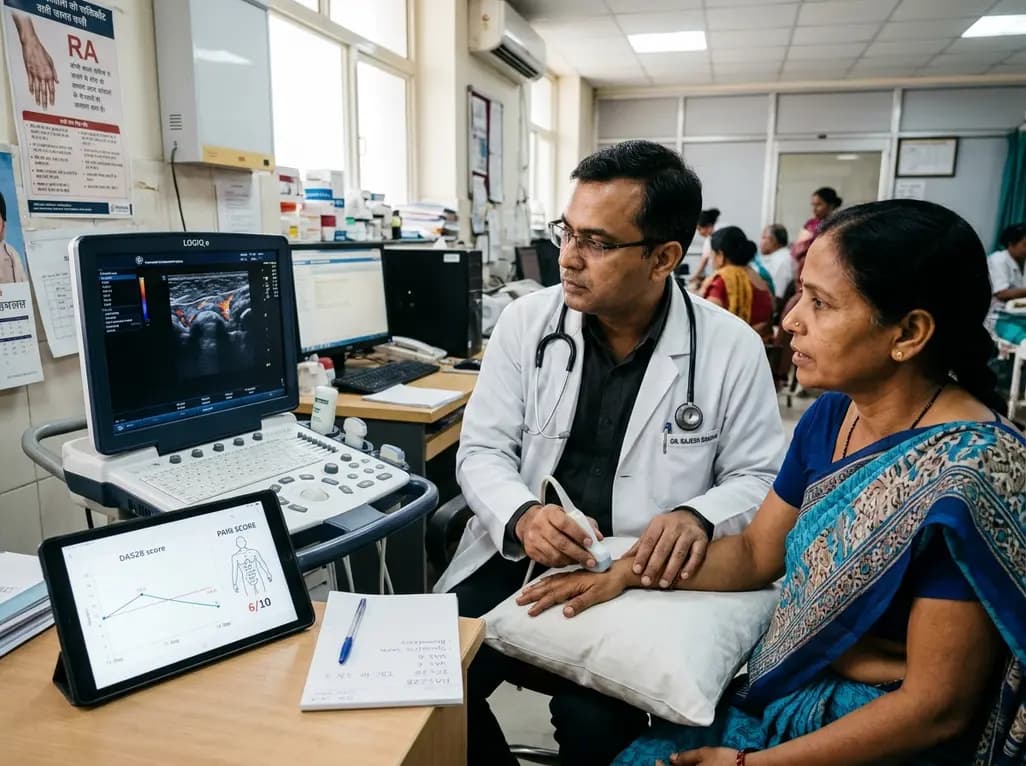
Subjective components in DAS28 often inflate disease activity scores due to central sensitization and emotional distress. Integrating the DAS28-P index, musculoskeletal ultrasound, and emerging digital biomarkers allows clinicians to differentiate true synovitis from non-inflammatory pain and prevent futile escalation.
Today

AIIMS researchers suggest yoga may alleviate gut dysbiosis in Polyendocrine Metabolic Ovarian Syndrome (PMOS) by modulating the gut-brain axis, lowering chronic inflammation, and enhancing parasympathetic tone to support metabolic and hormonal equilibrium.
Today
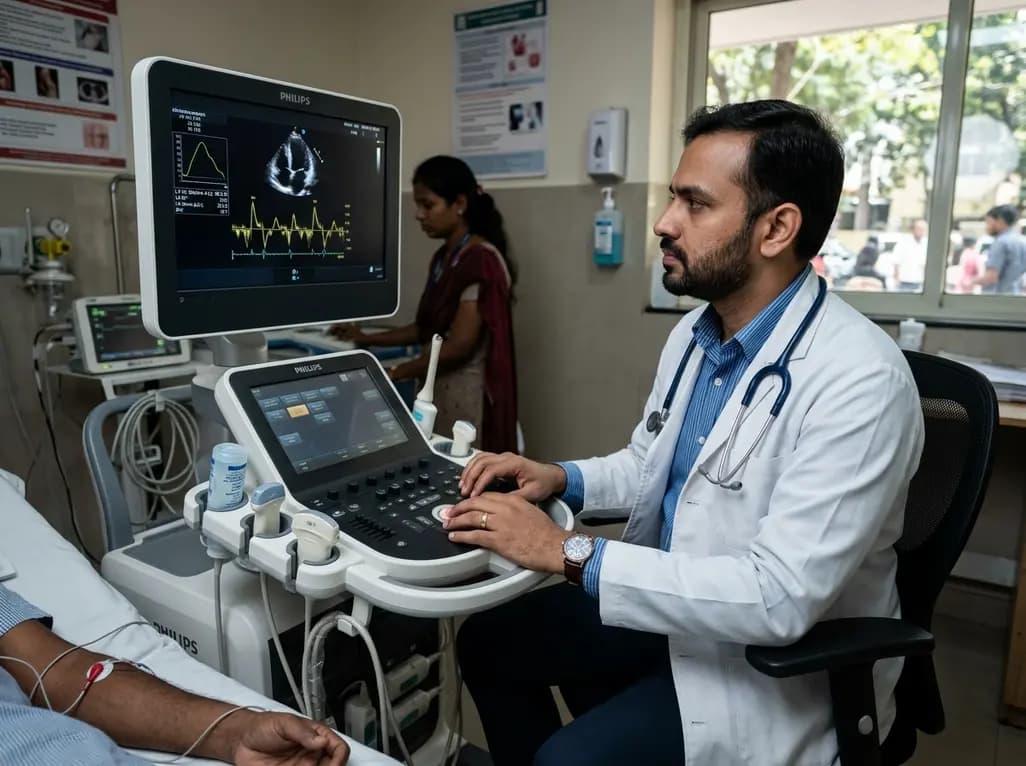
A structured practical guide to left atrial echocardiographic assessment covering biplane volumetry, phasic physiology, speckle-tracking strain, and hemodynamic filling pressure estimation for routine cardiovascular practice.
Today
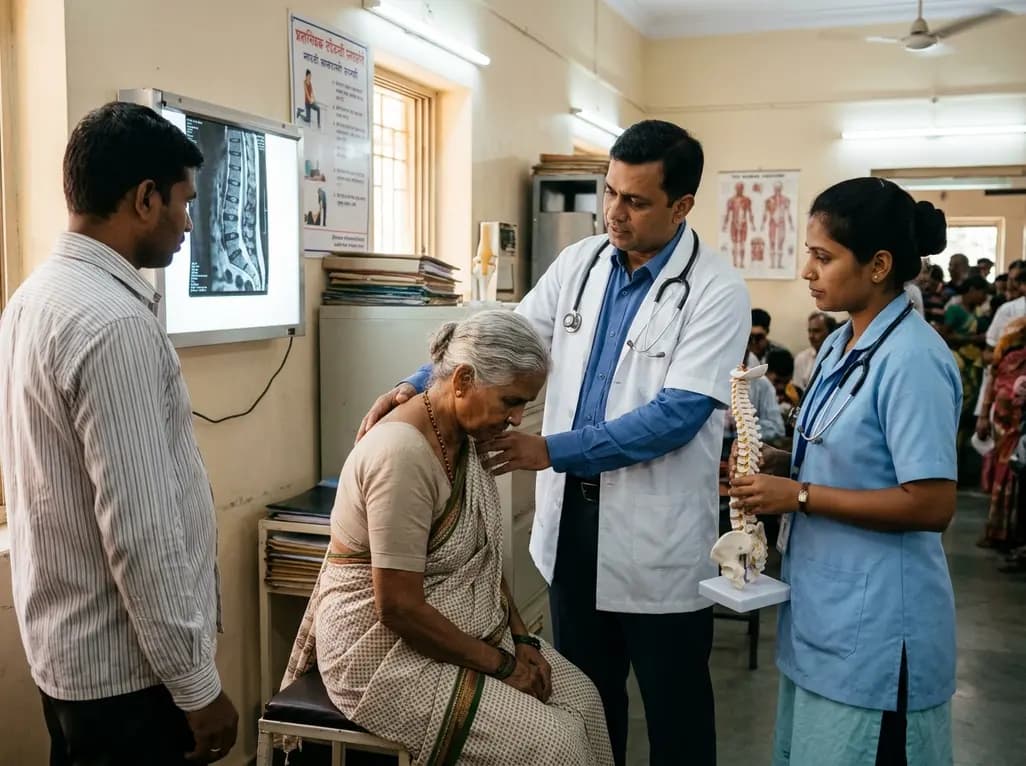
Age-related spinal kyphosis is driven by vertebral fragility, disc degeneration, and paraspinal muscle dysfunction. Coexisting with locomotive syndrome and frailty, its management requires combined anti-osteoporotic therapy, spinal extensor rehabilitation, and comprehensive nutritional optimization.
Today

A longitudinal feasibility pilot study highlights that combining polygenic risk score disclosure with in-person lifestyle counseling significantly enhances genomic literacy in individuals at risk for type 2 diabetes, overcoming educational disparities and reinforcing patient motivation.
Today
