.webp&w=384&q=75)

Loading, please wait...
Loading, please wait...
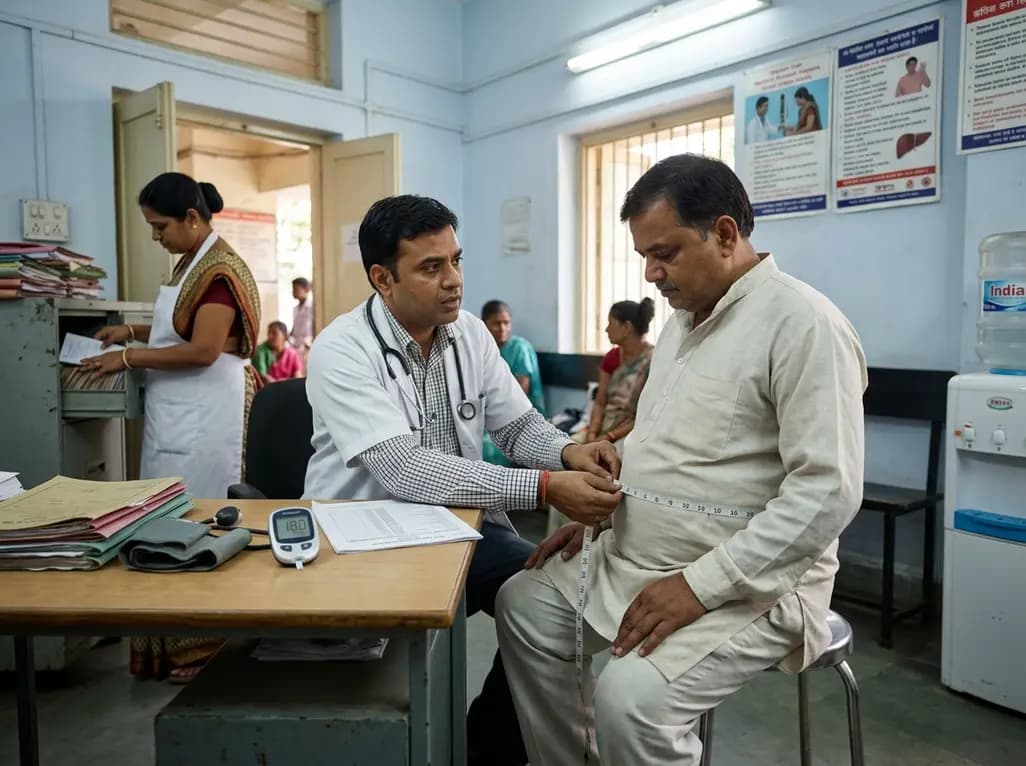
The National Family Health Survey-6 (NFHS-6) recently exposed a rapid surge in adult obesity in India. Consequently, health authorities are raising alarms over the simultaneous jump in high blood sugar levels across the country. This dual challenge signals a massive increase in non-communicable diseases.
According to the survey, 30.7 percent of women aged 15-49 years are now overweight or obese. In comparison, the previous NFHS-5 survey reported only 24 percent for the same cohort. Similarly, the proportion of overweight or obese men increased from 22.9 percent to 27.3 percent. These rising numbers indicate a profound shift in national health. Additionally, urban regions generally showed much higher rates of obesity than rural areas.
Alongside weight gain, blood sugar levels have also climbed significantly. For instance, high blood sugar prevalence among men rose from 15.6 percent to 20.9 percent. Meanwhile, women experiencing elevated blood sugar levels rose to 17.8 percent from 13.5 percent. Consequently, clinicians must prepare for a growing wave of diabetes and cardiovascular complications. Healthcare providers must proactively implement preventive education.
The survey highlights critical geographic variations across the subcontinent. Specifically, southern states and union territories reported the highest obesity and blood sugar metrics. Puducherry registered the highest female obesity prevalence at 46.3 percent, followed closely by Chandigarh at 44 percent. On the other hand, states like Bihar and Chhattisgarh recorded comparatively lower obesity rates. Therefore, targeted regional healthcare interventions are highly necessary.
Q1: What are the primary findings of the NFHS-6 regarding adult obesity in India?
The NFHS-6 survey indicates a significant rise in adult obesity, with overweight or obese rates climbing to 30.7 percent for women and 27.3 percent for men.
Q2: Which regions in India reported the highest prevalence of obesity?
Southern states and union territories, particularly Puducherry, reported some of the highest female obesity levels, whereas states like Bihar and Chhattisgarh maintained lower rates.
Disclaimer: This content is for informational and educational purposes only. It does not constitute medical advice or replace professional judgment. Refer to the latest local and national guidelines for clinical practice.
References

Read summarized clinical updates, watch expert medical content, and earn CME certifications right from your smartphone.
Open your smartphone camera to scan and install.





According to NFHS-6 data, adult obesity and elevated blood sugar levels are climbing fast in India, representing a serious spike in non-communicable disease...
4 months ago

Review how tailored exercise programs benefit frail older patients with heart failure. Explore pathophysiological mechanisms, individualized training prescriptions, and strategies to overcome adherence barriers in clinical practice.
Today

Leucine Rich Bio has introduced South Asia's first comprehensive vaginal microbiome test, BugSpeaks. By profiling microbial dysbiosis, pathogens, and antimicrobial resistance, this next-generation diagnostic platform provides clinicians with deeper insights into recurrent infections, fertility, and reproductive health.
Today

In high-risk pulmonary embolism complicated by severe anemia and active uterine bleeding, systemic thrombolysis is contraindicated. Large-bore aspiration thrombectomy provides rapid hemodynamic rescue without fibrinolysis, supported by inferior vena cava filter placement and multidisciplinary critical care.
Today

This comparative study evaluates posterior labral tears with and without glenohumeral instability, highlighting distinct demographic patterns, MRI underestimation in stable shoulders, and successful arthroscopic repair outcomes.
Today

A clinical study demonstrates that early intervention with tocilizumab, either as monotherapy or bridged with corticosteroids, achieves significant proptosis reduction and resolves active inflammation in treatment-naive thyroid eye disease.
Today
