.webp&w=384&q=75)

Loading, please wait...
Loading, please wait...
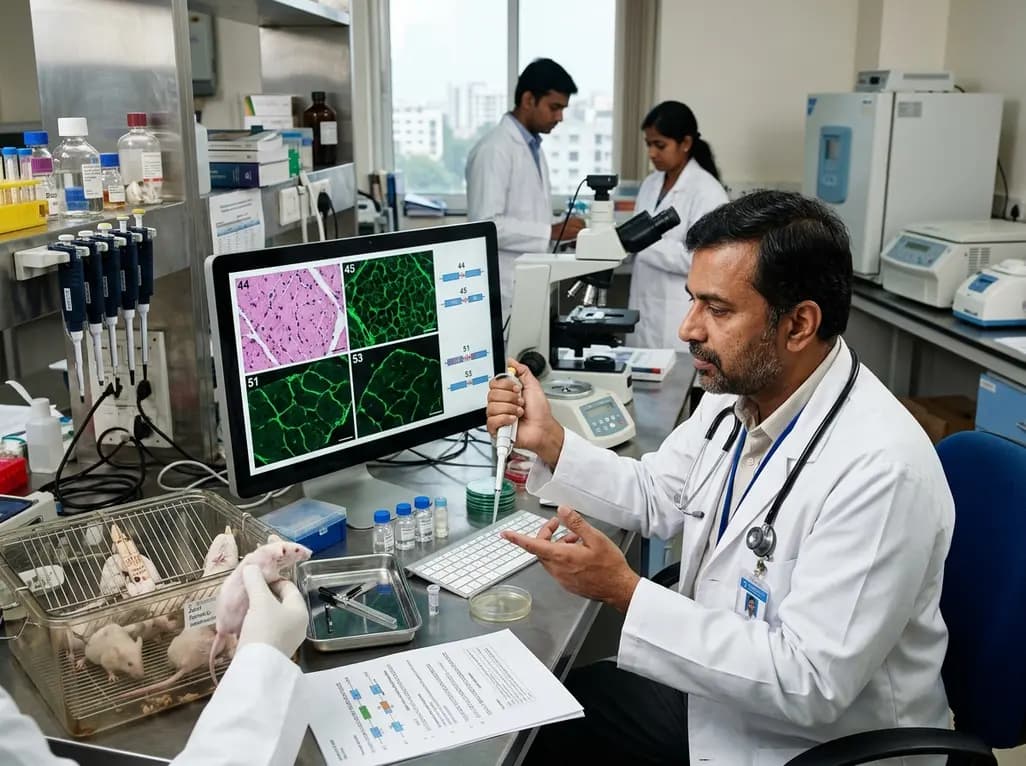
Duchenne muscular dystrophy presents a relentless challenge for pediatric neurologists and clinical geneticists worldwide. The primary cause involves disruptive mutations in the dystrophin gene that abolish functional protein expression. Consequently, young patients experience progressive skeletal muscle degeneration, respiratory compromise, and cardiomyopathy. Over the past decade, precision genetic medicines such as antisense oligonucleotides and CRISPR-Cas9 genome editing have emerged as promising strategies. However, evaluating these human-specific therapeutic agents in standard rodent models remains difficult. Classic murine models carry species-specific endogenous mutations that do not match human nucleotide sequences. Therefore, scientists urgently need humanized DMD mouse models to bridge this vital translational divide and accelerate clinical drug validation.
To overcome traditional testing limitations, researchers engineered four distinct humanized DMD mouse models carrying common human exon deletions. Specifically, investigators deleted human exon 44, 45, 51, or 53 within a full-length human DMD sequence. They established these modifications on a mouse dystrophin-deficient background using the classic mdx strain. An optimized CRISPR-Cas9 prescreening pipeline ensured precise genome engineering and reproducible germline transmission. These specific exon deletions represent critical clinical hotspots frequently observed in boys diagnosed with muscular dystrophy. Consequently, the novel strains faithfully replicate the exact genomic architecture and splicing junctions targeted by modern precision antisense drugs.
Comprehensive characterization confirmed that all four mouse strains faithfully recapitulate the hallmarks of dystrophin deficiency. Young adult animals exhibited either a complete absence or mere trace amounts of dystrophin protein in skeletal musculature. As a direct consequence, the mice developed robust histopathological lesions consistent with active muscular dystrophy. Histological analyses revealed extensive myofiber degeneration and compensatory regeneration. In addition, skeletal muscle tissues displayed substantial chronic inflammatory infiltrates alongside progressive interstitial fibrosis. Because these pathological hallmarks develop reliably during early adulthood, researchers can accurately assess both structural recovery and therapeutic biomarkers during preclinical screening trials.
Investigators further validated the therapeutic utility of these strains by conducting targeted rescue experiments. They administered sequence-specific vivo-morpholinos through intramuscular injections into the mutant mice. These antisense morpholino oligonucleotides successfully targeted the flanking human exons during pre-mRNA splicing. Consequently, the intervention induced efficient exon skipping and restored the disrupted open reading frame. Western blot and immunohistochemical assays confirmed the re-emergence of correctly localized dystrophin protein across sarcolemmal membranes. Thus, the study definitively proves that these animals serve as functional, responsive platforms for testing human-specific genetic tools.
For clinicians managing neuromuscular disorders, robust preclinical models represent essential precursors to successful human trials. In clinical practice, therapeutic exon skipping requires extremely high sequence fidelity. Minor variations between animal and human target sites often produce misleading pharmacodynamic data. Furthermore, these four specific exon deletions cover therapeutic targets applicable to a large segment of amenable patients globally. Therefore, establishing reliable preclinical platforms containing actual human targets significantly minimizes risk during early-phase drug development. Clinicians can anticipate more predictable translational pipelines as novel splice-switching oligonucleotides and base editors enter regulatory pipelines.
Looking ahead, these humanized animal models will accelerate the development of next-generation genetic therapeutics. Researchers can now systematically compare novel delivery platforms, such as lipid nanoparticles, antibody-oligonucleotide conjugates, and viral vectors. Moreover, these models provide an ideal foundation for testing long-term genomic editing approaches designed for permanent reading frame restoration. Continued refinement of functional motor assays and cardiac biomarkers in these strains will yield comprehensive safety and efficacy profiles. Ultimately, these efforts offer great hope for translating personalized molecular interventions into meaningful functional improvements for children affected by muscular dystrophy.
Humanized mouse models incorporate exact human DMD gene sequences. Many modern precision therapies, including antisense oligonucleotides and guide RNAs, rely on strict sequence complementarity. Traditional animal models carry mouse-specific sequences, which prevents researchers from directly testing human therapeutic candidates. Humanized models enable rigorous evaluation of pharmacodynamics, target engagement, and safety using the exact clinical compounds intended for patient administration.
These four new models feature deletions of exon 44, exon 45, exon 51, or exon 53 within the human DMD gene. These deletions align precisely with major clinical mutation hotspots commonly identified in pediatric patients with muscular dystrophy. Consequently, therapies validated in these animals directly target exon-skipping strategies applicable to a substantial majority of patients amenable to reading frame restoration.
Vivo-morpholinos bind specifically to splice motifs on targeted exons in pre-mRNA transcripts. In this study, intramuscular administration induced targeted exon skipping, which bypassed out-of-frame mutations and restored the reading frame. As a result, the muscle fibers produced truncated yet functional dystrophin protein that correctly localized to the sarcolemma, demonstrating robust biochemical rescue in treated tissues.
Disclaimer: This content is for informational and educational purposes only and does not constitute medical advice, diagnosis, or treatment. Healthcare professionals must exercise independent clinical judgment. Refer to the latest local and national guidelines for clinical practice.
References

Read summarized clinical updates, watch expert medical content, and earn CME certifications right from your smartphone.
Open your smartphone camera to scan and install.





Researchers have developed four novel humanized DMD mouse models with clinically relevant human exon deletions (44, 45, 51, and 53). These models closely replicate human muscle pathology and validate human-sequence-specific exon skipping, providing powerful preclinical tools for targeted genetic therapeutics.
last month

According to WHO data, average lifespan reached 73.3 years in 2023, recovering from pandemic lows. However, healthy life expectancy lags at 62.8 years due to surging noncommunicable conditions like cardiovascular disease and dementia, demanding proactive primary screening and sustained chronic care.
Today

A nationwide South Korean study shows underreporting of smoking among women dropped from 57.4% to 36.4% between 2008 and 2021. However, over one-third of female smokers still conceal their habit, highlighting the critical role of cotinine verification in clinical risk assessment.
Today

Medical robotics is transitioning beyond operative suites into diagnostics, cardiology, and endocrinology. Explore how innovations in tele-robotics, AI integration, and nanomedicine are overcoming geographical barriers and transforming precision healthcare delivery across India's evolving disease landscape.
Today

A new study evaluates the rheological stability of decellularized peripheral nerve matrix hydrogels under varied storage conditions. Findings show -80°C storage and freeze-drying preserve gelation kinetics and mechanical stiffness, offering key insights for shipping and translational clinical applications.
Today

A qualitative meta-synthesis highlights the complex interplay between gender dysphoria, minority stress, and eating disorders in transgender and gender-diverse individuals. Clinicians must recognize these distinct drivers to offer supportive, gender-affirming, and interdisciplinary eating disorder care.
Today
