.webp&w=384&q=75)

Loading, please wait...
Loading, please wait...
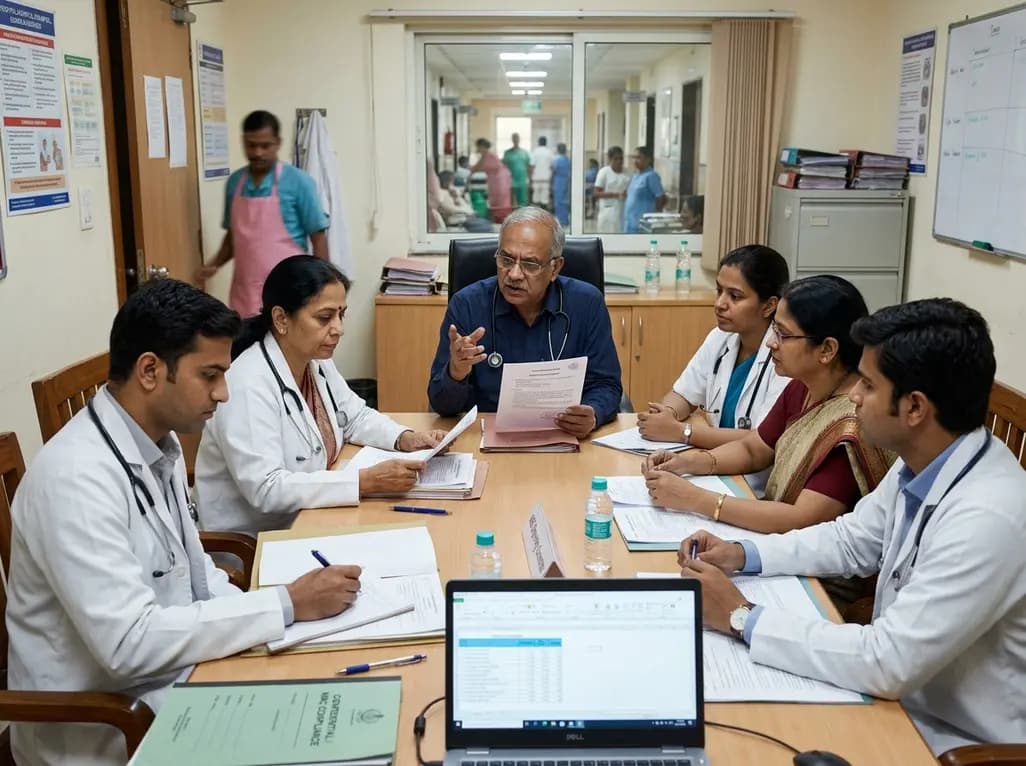
The National Medical Commission (NMC) has issued urgent regulatory advisories regarding institutional accountability across Indian medical colleges. Medical colleges must now strictly execute NMC suicide reporting compliance to uphold student safety. Specifically, the Post Graduate Medical Education Board (PGMEB) released this mandatory directive under Public Notice No. Z/1/2024-PGMEB-NMC-Part(7). This comprehensive circular enforces binding orders passed by the Supreme Court of India in Amit Kumar & Others vs. Union of India & Others. Consequently, institutional leaders cannot treat student distress as an isolated personal matter anymore. Administrators must implement systemic reporting mechanisms immediately. Therefore, every medical college must submit detailed Action Taken Reports (ATRs) and maintain transparent records. Moreover, institutions must forward monthly compliance data to central authorities to eliminate reporting deficits.
The Supreme Court of India initiated decisive judicial scrutiny over escalating student distress across higher educational institutions. In March 2025, the apex court constituted a dedicated National Task Force under the chairmanship of Justice (Retd.) S. Ravindra Bhat. Furthermore, the court examined systemic factors driving distress in technical and medical institutions. In its landmark order dated January 15, 2026, the bench emphasized that institutional failures significantly compound student anxiety. Consequently, the court invoked Article 142 to issue binding nationwide directions for immediate administrative compliance. The court reviewed the Supreme Court ruling in Amit Kumar vs Union of India and demanded comprehensive accountability. Higher education regulators, including the NMC and UGC, received strict instructions to implement systemic reforms. In addition, the Ministry of Education reiterated these directions via multiple office memorandums. Therefore, regulatory authorities now mandate exhaustive institutional tracking of student distress and campus incidents. The judiciary identified excessive workloads, toxic hierarchies, lack of mentorship, and structural inequalities as primary contributors. Thus, medical colleges must urgently align their administrative operations with these constitutional directives.
The apex regulatory body has established rigorous reporting protocols for all affiliated medical colleges and standalone teaching hospitals. Under the latest framework for NMC suicide reporting compliance, deans must document every unnatural incident without delay. Specifically, Part I of the prescribed format requires immediate documentation of student suicides and unnatural deaths. Furthermore, institutions must record whether local police authorities received formal notification under statutory criminal provisions. In addition, college heads must confirm the prompt registration of a First Information Report (FIR). Consequently, colleges cannot suppress incidents internally or bypass law enforcement agencies. Medical institutions must also constitute an independent Institutional Inquiry Committee for every single case. Moreover, administrators must track the precise stage of inquiry and record corrective preventive measures taken. To promote transparency, colleges must submit these figures annually to regulatory bodies and central databases. Institutions must also monitor distress among postgraduate trainees using dedicated resident mental health resources. Therefore, timely reporting creates institutional transparency while establishing zero tolerance for administrative negligence across Indian campuses.
Medical colleges must maintain meticulously updated institutional records to satisfy continuous regulatory scrutiny. Specifically, the NMC directive requires institutions to send monthly Action Taken Reports directly via email. Principals and Deans must personally certify each Action Taken Report before digital transmission. Furthermore, the regulatory board consolidates this crucial data for onward submission to the Supreme Court. Consequently, administrative delays or inaccurate reporting will invite direct judicial sanctions. In addition, institutions must maintain detailed rosters of all unnatural fatalities occurring in campus hostels or outside premises. Colleges must also record student demographics, course year, date of incident, and precise location. Meanwhile, institutions must document the operational status of anti-ragging committees and internal complaint bodies. Therefore, record keeping is now an active regulatory audit tool rather than a passive administrative exercise. Moreover, college administrations must identify major operational challenges faced during local implementation. By establishing robust data streams, colleges enable regulators to design effective evidence-based interventions. Thus, transparent record keeping serves as the backbone of institutional accountability.
Chronic faculty shortages severely undermine academic mentorship and exacerbate resident physician burnout across teaching institutions. Consequently, the Supreme Court specifically directed institutions under Paragraph 45(vi) to resolve faculty shortages rapidly. Higher educational institutions must fill all vacant faculty positions within a strict four-month window. Furthermore, institutions must launch special recruitment drives for reserved categories and persons with disabilities (PwDs). In addition, college administrations must systematically document sanctioned posts, filled seats, and existing vacancies across departments. Under Part II of the reporting format, colleges must track Professor, Associate Professor, and Assistant Professor rosters. Moreover, administrators must record key leadership positions including Deans, Medical Superintendents, Vice-Principals, and Registrars. Paragraph 45(vii) strictly mandates filling leadership vacancies within one month of their occurrence. Therefore, institutions must initiate recruitment processes well in advance of scheduled faculty retirements. Maintaining optimum teacher-to-student ratios reduces excessive clinical work hours and improves postgraduate supervision. Consequently, timely hiring directly mitigates academic stress and fosters a supportive educational environment for young doctors.
Access to immediate clinical care is a cornerstone of student well-being in professional institutions. Therefore, the Supreme Court order explicitly mandates 24x7 access to qualified medical assistance. Specifically, every medical campus must provide on-site healthcare facilities or ensure access within one kilometer. Furthermore, higher education institutions must deploy dedicated, qualified psychological counselors and accessible psychiatric services. Institutions must also appoint trained hostel wardens who can identify early signs of emotional distress. Moreover, colleges must actively publicize confidential crisis helplines and peer-support networks throughout residential quarters. According to the National Task Force interim guidelines, preventive mental healthcare must integrate into campus culture. In addition, institutions must guarantee the timely disbursement of student stipends and scholarships without bureaucratic backlog. Financial stress often precipitates severe psychological crises among marginalized postgraduate trainees. Consequently, administrators must clear all pending scholarship disbursements within four months or issue formal explanatory notices. Thus, comprehensive medical and psychological support structures provide an essential safety net for medical scholars.
To ensure complete compliance with apex regulatory directives, medical institutions must execute an urgent operational roadmap. First, Deans and Principals must immediately convene emergency administrative meetings to audit current records. Furthermore, college leadership must establish an institutional task force to oversee data collection across all departments. In addition, administrators must conduct rigorous compliance audits regarding anti-ragging policies and gender equality mandates. Institutions must also establish a single-window grievance redressal cell to address resident complaints efficiently. Moreover, medical colleges must train senior faculty members in empathetic mentorship and suicide postvention strategies. Colleges must submit certified compliance affidavits well before the deadlines set by the Supreme Court. Therefore, medical college managements must accord top priority to these directives without administrative complacency. State Directorates of Medical Education (DMEs) must actively supervise affiliated colleges to ensure uniform implementation. As a result, medical institutions will transform into secure, nurturing environments dedicated to both academic excellence and trainee well-being. Ultimately, collective institutional vigilance remains the most effective defense against preventable student tragedies.
Disclaimer: This content is for informational and educational purposes only... Refer to the latest local and national guidelines for clinical practice.
References

Read summarized clinical updates, watch expert medical content, and earn CME certifications right from your smartphone.
Open your smartphone camera to scan and install.





The NMC has mandated strict compliance with Supreme Court orders requiring medical institutions to submit Action Taken Reports on student suicides and vacancies.
last month
According to WHO data, average lifespan reached 73.3 years in 2023, recovering from pandemic lows. However, healthy life expectancy lags at 62.8 years due to surging noncommunicable conditions like cardiovascular disease and dementia, demanding proactive primary screening and sustained chronic care.
Today

A nationwide South Korean study shows underreporting of smoking among women dropped from 57.4% to 36.4% between 2008 and 2021. However, over one-third of female smokers still conceal their habit, highlighting the critical role of cotinine verification in clinical risk assessment.
Today
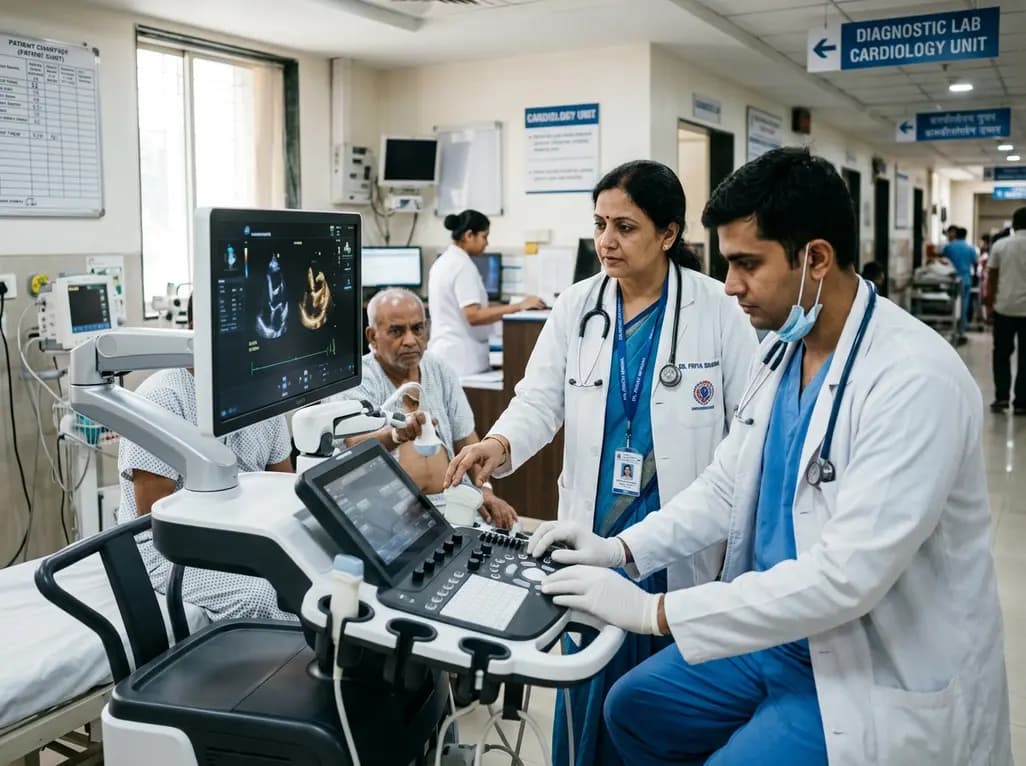
Medical robotics is transitioning beyond operative suites into diagnostics, cardiology, and endocrinology. Explore how innovations in tele-robotics, AI integration, and nanomedicine are overcoming geographical barriers and transforming precision healthcare delivery across India's evolving disease landscape.
Today
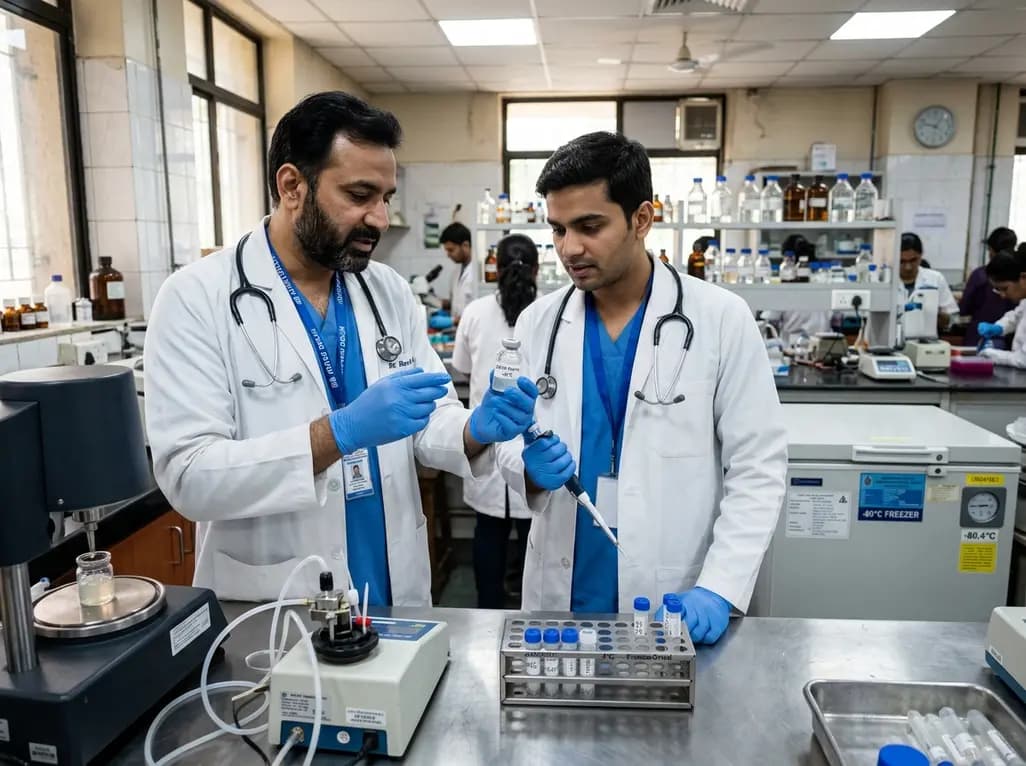
A new study evaluates the rheological stability of decellularized peripheral nerve matrix hydrogels under varied storage conditions. Findings show -80°C storage and freeze-drying preserve gelation kinetics and mechanical stiffness, offering key insights for shipping and translational clinical applications.
Today

A qualitative meta-synthesis highlights the complex interplay between gender dysphoria, minority stress, and eating disorders in transgender and gender-diverse individuals. Clinicians must recognize these distinct drivers to offer supportive, gender-affirming, and interdisciplinary eating disorder care.
Today
