.webp&w=384&q=75)

Loading, please wait...
Loading, please wait...

The National Medical Commission (NMC) recently issued a critical nationwide advisory to address rising patient safety concerns. Specifically, this directive orders all Indian medical colleges to strictly implement safe injection practices to protect patients from severe risks. Consequently, health authorities want to completely eliminate the preventable transmission of blood-borne pathogens in medical facilities.
Recent evidence shows that clinical lapses can trigger dangerous outbreaks of HIV, Hepatitis B, and Hepatitis C. Therefore, the regulator emphasizes that unsafe procedures are entirely preventable if clinicians adhere to standard protocols. In addition, the advisory highlights a zero-tolerance policy toward the reuse of syringes or needles under any circumstances. Furthermore, improper disposal of sharps poses severe dangers to both patients and healthcare workers.
To combat these risks, the NMC has issued several concrete mandates. First, hospitals must immediately prohibit syringe reuse and unsafe vial sharing. Second, institutions should progressively adopt safety-engineered auto-disable syringes to prevent reuse. Additionally, medical colleges must conduct periodic training and competency assessments for all healthcare staff. Finally, authorities must ensure proper segregation and disposal of medical waste according to local rules.
Besides prevention, the advisory details clear steps for managing accidental needle-stick injuries. Specifically, hospital administrators must report these incidents and any infection clusters for thorough investigation. Moreover, institutions must provide immediate post-exposure prophylaxis following official guidelines. Thus, systematic audits by internal infection-control teams will help ensure full compliance. In conclusion, strict adherence remains the most effective defense against hospital-acquired infections.
Q1: Why did the National Medical Commission issue this new safety advisory?
The National Medical Commission released the advisory to address the critical risks of patients contracting blood-borne infections. Specifically, unsafe procedures can transmit serious pathogens like HIV, Hepatitis B, and Hepatitis C in healthcare settings.
Q2: What specific clinical practices does the advisory strictly prohibit?
The advisory mandates zero tolerance for several hazardous practices. For instance, it strictly prohibits syringe reuse, unsafe medication vial sharing, needle recapping, and improper disposal of clinical sharps.
Q3: How should medical institutions handle accidental needle-stick injuries under these guidelines?
Institutions must immediately report all needle-stick injuries and infection clusters for investigation. Additionally, authorities must ensure prompt post-exposure prophylaxis for affected healthcare workers in line with NACO guidelines.
Disclaimer: This content is for informational and educational purposes only. It does not constitute medical advice or replace professional judgment. Refer to the latest local and national guidelines for clinical practice.
References

Read summarized clinical updates, watch expert medical content, and earn CME certifications right from your smartphone.
Open your smartphone camera to scan and install.





The National Medical Commission has warned against syringe reuse, directing Indian medical colleges to enforce zero tolerance for unsafe clinical procedures...
4 months ago

Explore vital recurrent stroke predictors in lacunar stroke patients managed with intensive blood pressure lowering. This analysis examines trial findings from SPS3 to uncover residual vascular risks, metabolic factors, and targeted secondary prevention strategies for high-risk neurological patients.
Today
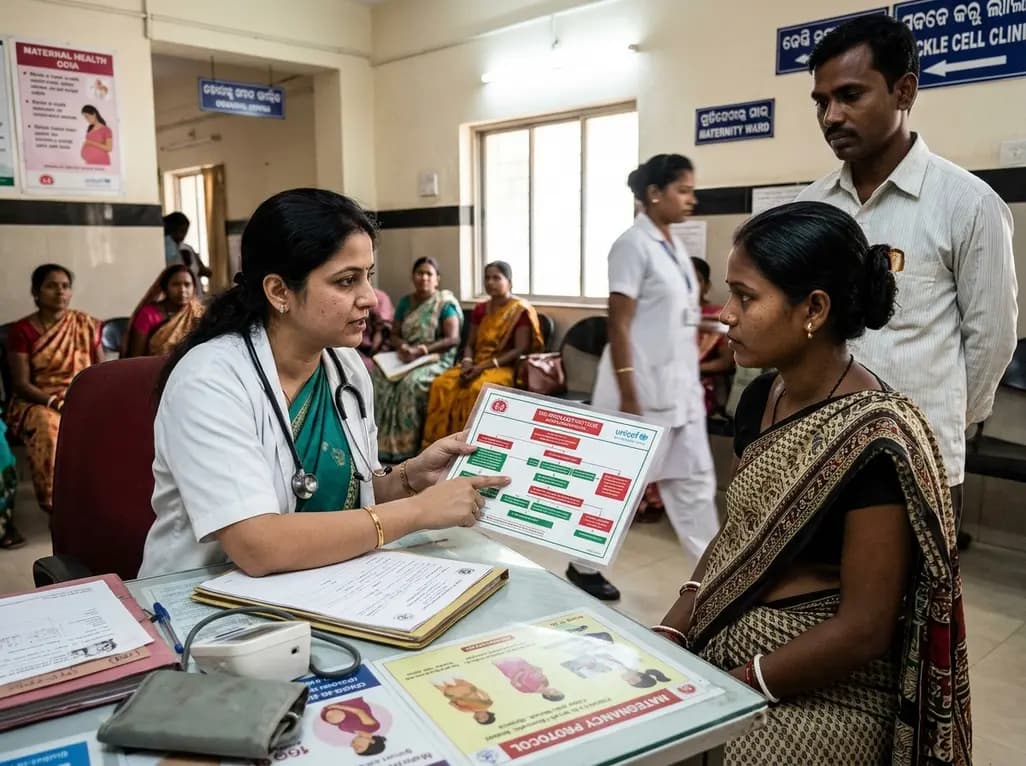
Odisha has established India's first state-level clinical protocol specifically tailored for pregnant women with sickle cell disease. Developed with NHM and UNICEF, the framework provides structured antenatal screening, crisis mitigation, standardized referral pathways, and specialized interdisciplinary care.
Today

India is advancing preventive healthcare by integrating genomics, artificial intelligence, and quantum technologies. With the SANGAM programme sequencing one million Indian genomes, clinicians can unlock personalized therapies, detect cardiometabolic risks early, and curb the burden of diabetes and heart disease.
Today

A randomized controlled trial demonstrates that an eight-week dual-task training intervention significantly improves static and dynamic postural control over standard balance exercises in individuals with chronic ankle instability, addressing critical neurocognitive deficits during athletic and daily activities.
Today

A retrospective cohort study of 7,716 ICU patients from the MIMIC-IV database demonstrates that Gradient Boosting Decision Trees significantly outperform traditional SOFA scores in predicting in-hospital mortality among patients with sepsis and diabetes, with SHAP analysis providing clinical interpretability.
Today
