.webp&w=384&q=75)

Loading, please wait...
Loading, please wait...

The National Medical Commission has recently released comprehensive NMC ethical advertising guidelines to govern public communication across the healthcare sector in India. These statutory regulations target registered medical practitioners, private clinics, and large tertiary hospitals. Consequently, medical professionals must now re-evaluate their digital presence and marketing practices. Healthcare delivery relies on public trust, objectivity, and transparency. However, aggressive promotional strategies and commercial tactics have increasingly compromised this sacred relationship. Therefore, the regulatory authority has established unequivocal boundaries to protect vulnerable patients from deceptive clinical narratives.
The new framework covers promotional interactions across digital channels and traditional print media. Specifically, the regulatory directives apply to personal websites, mobile healthcare applications, social media platforms, podcasts, and third-party aggregator portals. In addition, the rules govern institutional advertisements published by private and public hospitals alike. Healthcare facilities frequently seek greater visibility in a competitive environment. Nevertheless, the commission insists that institutional messaging must conform strictly to professional ethical standards expected of physicians.
Furthermore, medical practitioners cannot advertise personal accolades or unverified patient volume to attract prospective clients. Clinicians must not publish superlatives such as best doctor, leading specialist, or most trusted center. Similarly, healthcare entities cannot claim guaranteed outcomes or painless procedures without empirical proof. These restrictions ensure that healthcare choices rest on factual knowledge rather than promotional hype. Consequently, institutions cannot bypass these statutory boundaries by outsourcing campaigns to external marketing agencies. The regulations hold both medical establishments and individual practitioners fully accountable for any deceptive public communication.
Rapid technological progress enables medical marketers to produce sophisticated synthetic media. However, the commission strictly forbids clinicians and hospitals from deploying artificial intelligence to generate patient testimonials. Doctors cannot utilize automated systems to fabricate clinical outcomes, patient voices, or synthetic endorsement videos. In addition, deepfake representations and algorithmically altered recovery depictions violate core medical ethics. Such deceptive media creates unrealistic patient expectations and damages clinical credibility across the community.
Furthermore, medical institutions cannot release digitally altered before-and-after photographs to illustrate therapeutic success. While genuine clinical photography remains valuable for scientific discourse, practitioners must not exploit patient imagery for promotional gain. Moreover, healthcare providers must secure documented, informed consent before archiving or displaying identifiable clinical photographs. Even with patient permission, clinicians cannot publish promotional testimonials that guarantee therapeutic triumph. If an organization utilizes artificial intelligence for educational health content, it must explicitly disclose the source origin. Therefore, transparency remains mandatory whenever computational tools support health communications.
The digital ecosystem frequently rewards aggressive commercial tactics and algorithmic search optimization. Nevertheless, the regulatory council has prohibited clinicians and medical centers from purchasing search engine rankings. Doctors cannot pay search engines or digital aggregators to manipulate user reviews, ratings, or profile positioning. Furthermore, healthcare facilities cannot deploy commercial influencers, celebrities, or digital marketing agencies to solicit patients. Financial arrangements linking third-party remuneration to patient volume remain entirely illegal under these standards.
Additionally, the guidelines prohibit commercial enticements that induce unnecessary clinical consultations or surgical interventions. Practitioners must not distribute limited-time discount vouchers, seasonal treatment coupons, or bundled gift packages. Similarly, hospitals cannot offer referral commissions or financial cashback to incentivize patient visits. Such commercial schemes degrade professional clinical judgment into transactional consumerism. Therefore, physicians must base all diagnostic recommendations exclusively on individual clinical merit. By barring promotional incentives, the commission actively shields vulnerable individuals from exploitative marketing schemes.
While the commission strictly prohibits commercial promotion, it actively endorses genuine public health education. Consequently, registered physicians can continue utilizing social media channels to disseminate accurate scientific information. Doctors may freely discuss disease prevention, treatment modalities, and community wellness initiatives on public forums. However, practitioners must ensure that educational material remains strictly informational, evidence-based, and objective. Clinicians must avoid subtle self-promotion or implicit service endorsements during these informational broadcasts.
Similarly, hospitals can share objective operational details regarding clinical infrastructure, specialized diagnostic equipment, and available departments. Facilities may publish verifiable credentials, doctor consultation timings, and official institutional contact numbers. Furthermore, health education campaigns must focus on public welfare rather than institutional branding. In addition, medical professionals should cite recognized clinical guidelines when discussing therapeutic strategies online. Thus, the regulatory framework draws a sharp distinction between noble health advocacy and commercial solicitation. Practitioners can safely educate their communities without fearing regulatory scrutiny if they adhere to verified facts.
To guarantee strict compliance across the country, the commission has established a structured, graded disciplinary framework. First-time offenders will receive a formal regulatory warning coupled with mandatory ethics training. However, repeated non-compliance will trigger progressively severe administrative sanctions. A second ethical violation incurs formal censure alongside substantial monetary fines against the registered practitioner or hospital entity.
Furthermore, continued defiance results in temporary suspension of the medical license for three to six months. If a clinician commits serious ethical breaches, the commission can suspend registration for up to twelve months. Finally, habitual offenders risk removal from the state and national medical registers for one to three years. These stringent deterrents highlight the commission's determination to eliminate commercial malpractices from Indian healthcare. Therefore, institutional administrators and individual doctors must immediately review their existing marketing collateral. Clinicians must promptly audit digital campaigns to ensure full alignment with these statutory requirements.
Q1: Can Indian doctors share authentic patient testimonials on their clinic websites?
Under the new statutory regulations, registered medical practitioners and hospitals cannot share patient testimonials or endorsements for promotional purposes. Even if a patient provides written consent, physicians must not publish recovery narratives, reviews, or before-and-after photographs that could mislead prospective patients or create unrealistic therapeutic expectations. Consequently, healthcare providers must remove promotional testimonials from all websites and social media profiles immediately.
Q2: Is artificial intelligence permitted for developing public healthcare educational videos?
Yes, medical professionals may utilize artificial intelligence tools to assist in creating factual, non-promotional educational material. However, the commission strictly prohibits the use of synthetic algorithms to fabricate patient voices, simulated outcomes, or deceptive clinical scenarios. Furthermore, if practitioners utilize artificial intelligence to generate educational graphics or informational text, they must explicitly label the content to ensure complete public transparency.
Q3: What legal penalties do hospitals face for manipulating online search rankings?
The regulatory authority enforces graded disciplinary penalties for manipulating search engine rankings or paying digital platforms for patient procurement. Initial infractions result in formal warnings and mandatory medical ethics coursework. However, subsequent violations lead to monetary fines, public censure, and professional license suspensions lasting up to twelve months. In severe recurrent instances, the council can de-register offending medical professionals for three years.
Disclaimer: This content is for informational and educational purposes only. It does not constitute medical advice or replace professional judgment. Refer to the latest local and national guidelines for clinical practice.
References

Read summarized clinical updates, watch expert medical content, and earn CME certifications right from your smartphone.
Open your smartphone camera to scan and install.





The National Medical Commission has enforced strict advertising regulations for registered medical practitioners and hospitals across India. The mandate prohibits artificial intelligence testimonials, manipulated search rankings, and commercial endorsements while outlining graded disciplinary penalties.
Today

A breakthrough study identifies thioredoxin-interacting protein (TXNIP) as a key upstream driver of tubular ferroptosis in hyperuricemic nephropathy. Pharmacological suppression by verapamil halts renal injury independently of serum urate levels, presenting a novel therapeutic paradigm for chronic kidney disease.
Today
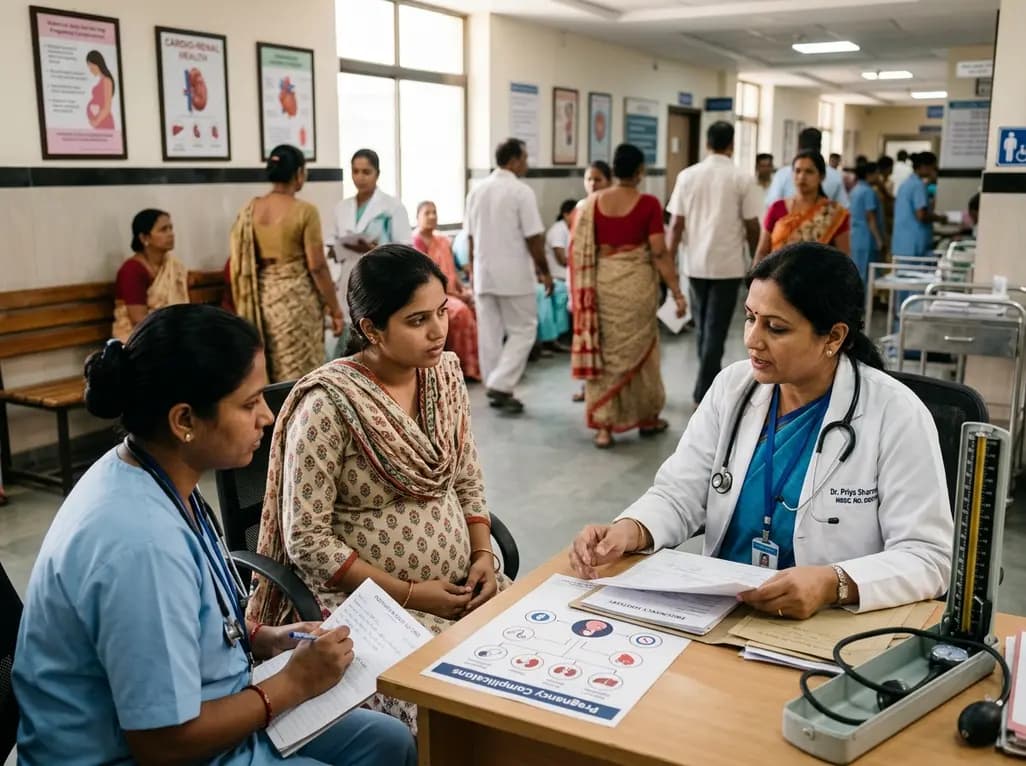
A large UK cohort study of 1.4 million women shows that pregnancy complications, including gestational diabetes, hypertension, and preterm birth, substantially raise long-term risks for hypertension, chronic kidney disease, type 2 diabetes, and cardiovascular events, highlighting early postpartum intervention needs.
Today
A cross-sectional study reveals that hypertension knowledge, illness perceptions, depression, and substance use significantly predict self-care behaviors. Addressing mental health and cognitive beliefs in primary care is crucial for optimal blood pressure control and cardiovascular disease prevention.
Today
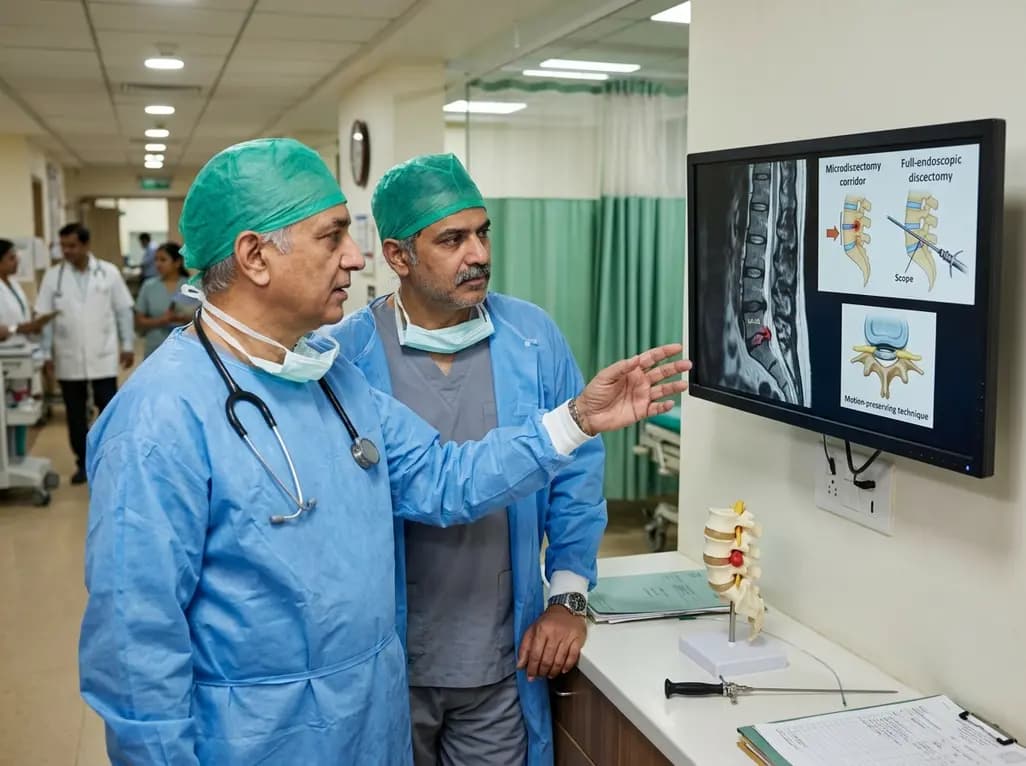
This clinical overview examines recent advancements in lumbar disc herniation surgery, comparing microscopic and full-endoscopic discectomy while highlighting biportal techniques and emerging motion-preserving innovations for spine specialists.
Today

Small interfering RNA (siRNA) therapeutics harness RNA interference to degrade disease-causing messenger RNA. By delivering hepatocyte-targeted, durable gene silencing, agents targeting PCSK9, LPA, and angiotensinogen offer potent cardiovascular risk reduction with infrequent, biannual dosing schedules.
Today
