

Loading, please wait...
Loading, please wait...

The National Medical Commission (NMC) has issued an important directive to medical colleges and research institutions across India. Consequently, academic leadership must evaluate proposed changes to laboratory animal handling. The central government recently unveiled the animal experiment draft rules to strengthen ethical standards in preclinical science. Medical institutions have thirty days to submit their feedback and suggestions to the regulatory authorities. Therefore, institutional heads must comprehend these major shifts in laboratory governance. By modernizing laboratory protocols, the regulatory authority seeks to harmonize Indian medical education with contemporary global biomedical standards.
The new regulatory framework places the internationally recognized 3Rs at the forefront of scientific exploration. Specifically, investigators must prioritize replacement, reduction, and refinement before designing animal studies. Researchers must actively seek alternative non-animal methodologies whenever scientifically viable options exist. For instance, computer modeling, advanced organoid systems, tissue engineered constructs, and cell cultures can frequently replace live specimens. Furthermore, researchers must minimize the number of animals whenever animal usage remains entirely unavoidable. Scientists must also refine experimental procedures to diminish potential pain and distress during every study phase.
In addition, the proposals establish a rigorous four-tier classification system for all scientific procedures. These formal categories divide experiments into non-recovery, mild, moderate, and severe protocols. Importantly, the draft regulations strictly prohibit any experimental protocol that produces prolonged, severe suffering that investigators cannot alleviate. This explicit prohibition sets an unprecedented ethical standard for medical colleges. Consequently, pharmacology departments and research centers must re-evaluate their ongoing animal protocols immediately. Principal investigators must demonstrate that their research design eliminates excessive distress. Moreover, ethical review panels will scrutinize whether scientific objectives warrant the anticipated level of discomfort. Through these structural boundaries, authorities intend to elevate scientific standards while protecting research subjects from preventable agony.
Medical colleges must adapt to structured oversight systems to conduct any laboratory research. Consequently, every accredited establishment breeding or utilizing research animals must appoint a qualified veterinarian. This veterinarian must supervise all ongoing investigations to maintain animal health and comfort. Furthermore, veterinary oversight ensures that surgical interventions and post-operative recovery adhere to recognized veterinary standards. In addition, institutions must reconstitute their Institutional Animal Ethics Committee (IAEC) under stringent central guidelines. Each IAEC will function with nine dedicated members serving an official three-year tenure.
Notably, the committee composition must integrate diverse scientific and independent perspectives. The panel will include institutional scientists, a dedicated biologist, a certified veterinarian, and four CCSEA nominees. Furthermore, the committee must convene at least twice every year to review active protocols and assess facility conditions. As a result, individual researchers cannot bypass collective institutional scrutiny. The committee evaluates every protocol against ethical benchmarks before experimental work begins. Moreover, this collective oversight ensures that institutions fulfill compliance duties transparently. Institutional heads must support the committee by allocating adequate administrative resources and space. Thus, the draft rules transform animal welfare from a peripheral formality into a core institutional responsibility.
A critical focus of the proposed guidelines involves setting early humane endpoints for all laboratory studies. Consequently, scientists must avoid using animal death as a default endpoint whenever practical alternatives exist. Researchers must detect early clinical signs of severe distress to terminate trials compassionately. Therefore, investigators must closely monitor physiological markers, behavioral signs, body weight loss, and pain indicators throughout each project. When death becomes unavoidable, researchers must strictly minimize both the duration and intensity of suffering.
Additionally, the draft guidelines mandate thorough documentation for every euthanasia procedure performed within the facility. Institutions must maintain comprehensive registries that track euthanasia details with meticulous precision. Specifically, staff must document the scientific reason, the chosen chemical or physical method, and the exact dosage administered. Furthermore, qualified personnel must administer these procedures to guarantee swift, painless outcomes. Designated veterinarians must inspect these records during routine audits to ensure compliance. In addition, ethics committees will review these registries to identify potential departures from approved protocols. Medical trainees must also learn these humane handling techniques during their postgraduate studies. These measures will prevent arbitrary practices and reinforce compassionate handling across medical institutions.
The draft regulations establish stringent limitations regarding the procurement and selection of laboratory animals. In particular, researchers may not utilize stray and feral domestic animals for experimental studies. However, competent authorities can approve limited exemptions under exceptionally narrow scientific circumstances. For instance, researchers may only utilize stray animals when investigations address severe threats to public health or animal welfare. Even then, investigators must furnish robust scientific justification demonstrating that no other model can suffice.
Similarly, experiments involving non-human primates will face exceptional regulatory scrutiny. Under the proposed framework, researchers may employ non-human primates solely for narrowly defined translational studies. In particular, this restriction applies to critical investigations where non-human primate physiology provides unique, irreplaceable biological insights. Furthermore, applicants must prove that no lower phylogenetic species can meet the experimental objective. Consequently, pharmacology laboratories must redesign protocols that previously relied on higher mammalian models. Institutional panels must verify that non-human primates receive specialized environmental enrichment during their housing. Moreover, facilities must prevent unnecessary acquisition of wild-caught animals through verified captive breeding programs. Thus, these specific limitations protect vulnerable animal populations from exploitation in routine educational exercises.
Under the proposed framework, all research institutions must register formally with the CCSEA. This legal mandate encompasses facilities that breed, house, trade, or experiment on laboratory animals. Furthermore, registered establishments will undergo mandatory regulatory inspections at least twice a year. Independent inspectors will assess facility ventilation, cleanliness, veterinary care standards, and animal housing dimensions. Consequently, institutions must modernize their animal house infrastructure to fulfill these national standards. Investigators must maintain comprehensive records of animal acquisition, breeding cycles, and experimental allocation.
Additionally, the draft rules define precise enforcement mechanisms for institutions that violate regulatory standards. If inspectors discover procedural or infrastructural deficiencies, authorities will issue a formal 15-day rectification notice. Subsequently, repeated non-compliance or failure to address identified flaws will lead to immediate license suspension or cancellation. Moreover, regulatory authorities possess the legal power to initiate immediate interventions if animals face imminent welfare risks. Therefore, medical college deans and research directors must proactively audit their internal facilities. Institutional leadership must conduct internal mock reviews and train laboratory personnel on ethical protocols. Ultimately, rigorous adherence to these draft guidelines will protect institutional reputation and elevate the international credibility of Indian medical research.
Q1: Why has the NMC issued this public notice to medical colleges?
The National Medical Commission issued this public notice to ensure that medical colleges examine the updated draft rules for laboratory animals. The proposed changes significantly affect institutional ethics committees, protocol approval pathways, and preclinical research methodologies. Therefore, medical college deans, faculty, and research heads must submit their comments, suggestions, and objections within thirty days directly to the CCSEA. This feedback helps shape the finalized national regulatory policy for medical education.
Q2: What are the primary ethical classifications for animal experiments under the draft rules?
The draft rules classify animal experiments into four specific categories based on distress: non-recovery, mild, moderate, and severe. Furthermore, the framework completely prohibits any scientific procedure expected to cause prolonged, severe pain or distress that researchers cannot alleviate through analgesia or anesthesia. Consequently, investigators must refine experimental designs, incorporate proactive pain management, and select early humane endpoints to prevent avoidable suffering throughout the investigation period.
Q3: How do the draft rules govern the use of stray animals and non-human primates?
The draft regulations strictly prohibit using stray and feral domestic animals in medical experiments. Authorities permit rare exceptions only when robust scientific justification demonstrates that a study addresses vital threats to human or animal health. Similarly, experiments on non-human primates face severe restrictions. Researchers may only use primates for narrowly defined translational research where no alternative species or model can scientifically serve the study objective.
Disclaimer: This content is for informational and educational purposes only. It does not constitute medical advice or replace professional judgment. Refer to the latest local and national guidelines for clinical practice.
References

Read summarized clinical updates, watch expert medical content, and earn CME certifications right from your smartphone.
Open your smartphone camera to scan and install.





The National Medical Commission has requested Indian medical institutions to submit feedback on proposed laboratory animal regulations. The draft norms emphasize replacement, reduction, and refinement while mandating veterinary supervision, institutional oversight committees, and stringent humane endpoints.
Today
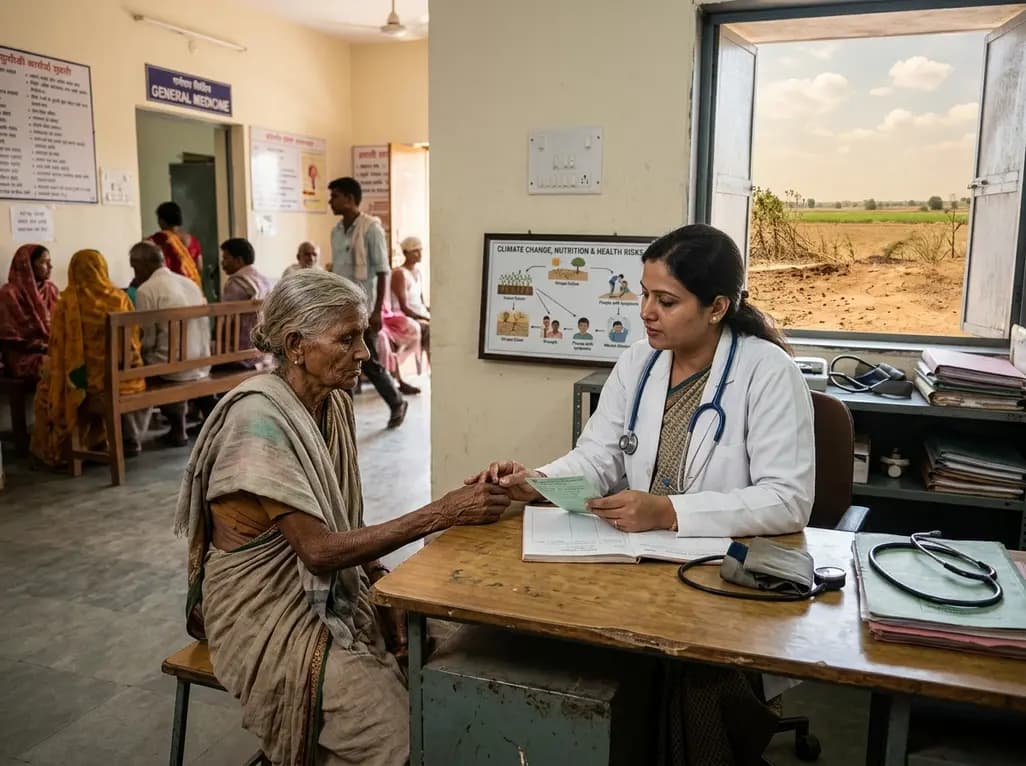
Climate change disrupts global food supply and nutritional security, driving undernutrition alongside obesity, metabolic disorders, and mental distress. Healthcare providers must adopt a One Health approach and screen vulnerable populations, especially older adults, to mitigate cascading clinical risks.
Today

A large cohort study demonstrates that fetal growth restriction in a first pregnancy raises maternal cardiovascular risk within five years postpartum, including elevated rates of heart failure, stroke, and myocardial infarction. Clinicians must initiate proactive postpartum screening and cardiovascular prevention.
Today

An NHANES analysis reveals that meeting 24-hour movement guidelines significantly lowers the odds of cardiovascular disease, obesity, hypertension, and diabetes among adults with disabilities, emphasizing the power of combined physical activity, sleep, and limited sedentary time.
Today
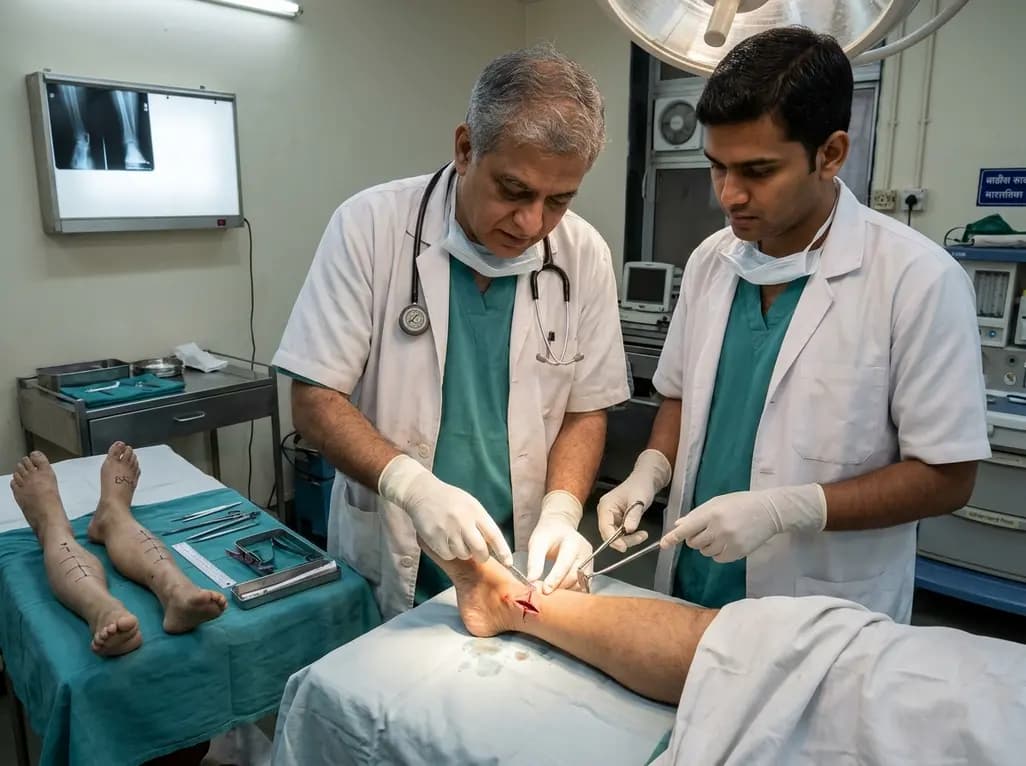
A paired cadaveric study compared triple and quintuple percutaneous Achilles tendon lengthening. While quintuple hemisection showed numerically greater elongation, differences were not statistically significant.
Today

As non-communicable diseases surge, India is prioritizing non-pharmacological interventions. Recent national health initiatives highlight structured dietary protocols, yoga therapies, and clinical trials like ReGEN-Beta to complement standard medical treatments for metabolic and lifestyle-related disorders.
Today
