

Loading, please wait...
Loading, please wait...

Immune checkpoint inhibitors have revolutionized modern cancer therapy across multiple solid malignancies. However, escalating pharmaceutical expenditures create substantial economic strain on healthcare institutions and cancer patients. To address this financial toxicity, hospital oncology teams are exploring innovative prescribing frameworks. A structured nivolumab dose stewardship initiative offers a pragmatic method to optimize medicine procurement without jeopardizing patient safety. By evaluating real-world prescribing patterns alongside pharmacological modeling, clinical teams can systematically curb unnecessary drug consumption and minimize expensive inventory loss.
Modern immuno-oncology has delivered remarkable clinical gains in melanoma, lung cancer, and renal cell carcinoma. Nevertheless, the exorbitant cost of monoclonal antibodies severely strains hospital budgets and public healthcare payers. In routine clinical care, manufacturers originally evaluated nivolumab using weight-based dosing at three milligrams per kilogram. Subsequently, regulatory approvals shifted commercial regimens toward flat dosing schedules, such as two hundred forty milligrams every two weeks or four hundred eighty milligrams every four weeks. Although flat dosing simplifies compounding schedules, it frequently leads to substantial drug overexposure in lighter individuals. Consequently, health systems procure far more drug mass than necessary for clinical efficacy. In countries where patients bear substantial out-of-pocket costs, such economic burdens frequently lead to treatment discontinuation. Therefore, oncology leaders require sustainable delivery models that preserve therapeutic potency while reducing fiscal toxicity. Comprehensive stewardship programs provide a systematic mechanism to evaluate clinical necessity alongside economic prudence.
A retrospective health-economic simulation examined adult patients receiving immunotherapy between 2024 and 2026 to assess practical stewardship interventions. Specifically, researchers collected real-world data from one hundred two cancer patients who completed a median of 9.5 treatment cycles. The cohort demonstrated a median age of sixty-four years and a median body weight of seventy kilograms. In this investigation, researchers compared observed standard administration against a modeled nivolumab dose stewardship protocol. This innovative stewardship policy integrated weight-informed dosing, vial-based rounding algorithms, and strict preservation of protocol-mandated fixed regimens. Importantly, the mathematical simulation assumed therapeutic equivalence based on established pharmacological literature, although it did not prospectively measure direct clinical endpoints. Furthermore, the modeling demonstrated that systematic dose adjustment aligned drug quantities directly with actual patient physiology. As a result, the health system eliminated significant excess dispensing without altering the planned treatment frequency. These real-world findings illustrate how data-driven stewardship policies establish meaningful cost control in routine oncology practice.
The simulated dose stewardship strategy achieved remarkable improvements across all primary utilization metrics. Overall, modeled drug consumption fell from 432,360 milligrams under routine care to 342,360 milligrams under the optimized algorithm. Consequently, the hospital achieved an absolute reduction of 90,000 milligrams, representing a 20.8 percent decline in total drug volume. Furthermore, estimated medication expenditure plummeted from 221,040,980 Turkish Lira to 175,029,119 Turkish Lira. Thus, the healthcare facility achieved net savings of 46,011,861 Turkish Lira over the observation timeframe. In addition to direct monetary savings, the algorithm achieved extraordinary reductions in leftover medication waste. Unused vial waste plunged from 43,360 milligrams down to merely 2,000 milligrams, marking an impressive 95.4 percent reduction. Standard weight-based dispensing often leaves expensive leftover quantities in single-use glass vials. However, combining vial-based rounding with coordinated compounding schedules effectively recaptures this lost value. Ultimately, these dramatic findings demonstrate that disciplined institutional algorithms convert discarded medication into substantial clinical savings.
Executing dose stewardship requires synchronized cooperation between clinical oncologists and oncology pharmacy teams. Primarily, institutions can adopt dose-rounding rules endorsed by international professional societies. Guidelines from the National Comprehensive Cancer Network support dose rounding within five to ten percent of the calculated target. In practice, rounding doses to match whole vial increments prevents opening additional single-use containers for trivial fractional amounts. For example, a patient requiring two hundred ten milligrams can safely receive two hundred milligrams, avoiding an extra vial. Moreover, centralized compounding cleanrooms can batch patient infusions on designated clinic days. When oncology departments coordinate scheduling, pharmacy specialists can aggregate vial volumes under sterile conditions. Therefore, pharmacy teams maximize drug utility and drastically suppress discard volumes. In addition, electronic health record systems can automatically compute weight-informed targets and guide prescribers toward standardized vial-aligned options. Hence, digital decision support streamlines safe compounding workflows while eliminating manual calculation errors.
While economic simulations highlight compelling cost savings, clinicians must evaluate patient outcomes before universally altering prescribing habits. Pharmacokinetic investigations indicate that nivolumab demonstrates receptor occupancy saturation across wide dosage ranges. Nevertheless, clinicians should recognize that the simulation assumed clinical equivalence rather than empirically demonstrating equal survival. Consequently, prospective clinical trials remain necessary to confirm disease control and safety across diverse cancer populations. For low- and middle-income nations like India, immunotherapy stewardship holds transformative societal value. Because high drug costs frequently cause catastrophic health expenditures, dose optimization makes life-extending therapies accessible to broader socioeconomic groups. In fact, Indian oncologists have actively investigated low-dose checkpoint inhibition to expand therapeutic equity. However, clinicians must uphold rigorous regulatory and ethical standards whenever modifying approved dosing schedules. Ultimately, hospital drug committees should design institutional protocols that balance rigorous safety monitoring with transparent economic stewardship.
Flat dosing provides an identical fixed dose to every adult patient regardless of weight. In contrast, weight-informed dosing calculates individual requirements using milligrams per kilogram. Because pivotal clinical trials established efficacy using weight-based dosing, lighter individuals often receive unnecessarily high drug amounts under flat regimens. Therefore, reverting to weight-informed strategies eliminates excess drug mass, prevents unnecessary toxicity, and lowers overall purchase requirements for healthcare facilities without compromising therapeutic receptor saturation.
Dose rounding adjusts calculated medication quantities within acceptable clinical margins to match whole vial sizes. Major clinical guidelines permit dose rounding up to ten percent without diminishing therapeutic efficacy. Consequently, pharmacy staff avoid opening an entire additional vial simply to withdraw a minuscule fractional dose. This practical intervention preserves sterile supply integrity, curtails expensive vial discard rates, and simplifies preparation protocols for hospital pharmacists while maintaining identical anticancer efficacy for treated patients.
Institutions can implement dose stewardship safely by establishing multidisciplinary protocols involving oncologists, pharmacologists, and hospital administrators. Standardized dose rounding within established guideline thresholds ensures patient safety while preventing compounding mistakes. However, because health-economic simulations assume clinical equivalence, oncology departments must collect real-world outcome data to ensure long-term efficacy. Prospective validation and computerized ordering rules help clinicians monitor safety profiles while successfully curbing financial toxicity across routine oncology practices.
Disclaimer: This content is for informational and educational purposes only. It is not intended to substitute for professional medical advice, diagnosis, or treatment. Always seek the advice of your physician or other qualified health provider with any questions you may have regarding a medical condition. Refer to the latest local and national guidelines for clinical practice.
References

Read summarized clinical updates, watch expert medical content, and earn CME certifications right from your smartphone.
Open your smartphone camera to scan and install.





A real-world simulation reveals that nivolumab dose stewardship incorporating weight-informed dosing and vial rounding reduced drug utilization by 20.8%, lowered drug costs by over 46 million TL, and curtailed vial waste by 95.4%, highlighting significant health-economic savings for oncology practices.
Today

A comprehensive review of malnutrition in older adults, addressing multifactorial drivers, screening tools, and targeted nutritional and exercise interventions to foster healthy ageing.
Today
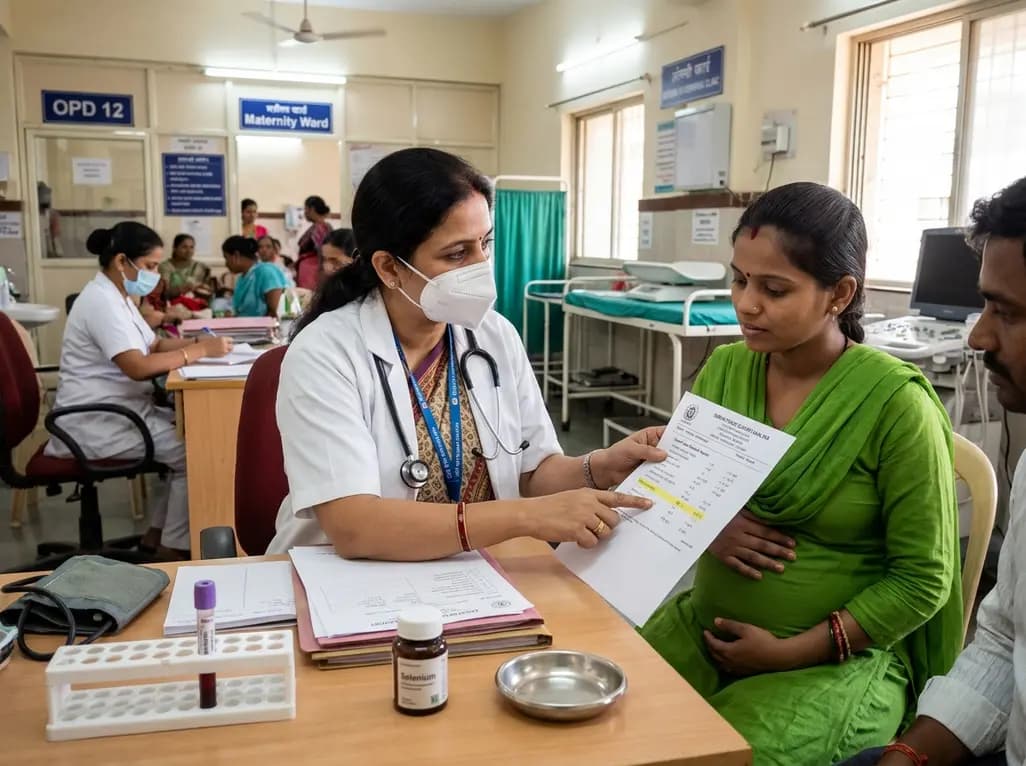
A prospective study reveals significant first-trimester trace-element alterations in pregnant women with epilepsy. Lower serum selenium independently predicted subsequent seizure recurrence despite prior remission, highlighting the vital clinical role of micronutrient profiling during antenatal care.
Today

A 15-year-old patient presented with knee arthralgia and acute rheumatic fever, exhibiting complex arrhythmias including AV blocks and non-sustained ventricular tachycardia despite lacking severe valvulitis. This highlights the importance of extended Holter monitoring in pediatric rheumatic carditis.
Today

A biomechanical study shows that removing a stripped nonlocking screw during metacarpal bridge plate fixation safely avoids hardware migration without reducing construct strength or creating a stress riser, resolving a common intraoperative dilemma in hand trauma surgery.
Today

Annual health checks only offer static snapshots. Real-world evidence from 2.1 million insured Indians reveals that tracking dynamic biomarker trends over time enables clinicians to spot evolving cardiometabolic risks early, reverse borderline pathology, and deliver tailored preventive interventions.
Yesterday
