.webp&w=384&q=75)

Loading, please wait...
Loading, please wait...

Niva Bupa Health Insurance recently announced a major financial milestone for the fourth quarter of the fiscal year. The company reported a significant 67 percent surge in its net profit. Specifically, this figure reached Rs 345 crore during the March quarter. This growth highlights the insurer\'s robust position in India\'s expanding health insurance market. The total income during this period increased to Rs 2,078 crore. This represents a substantial rise from Rs 1,565 crore in the year-ago period.
Furthermore, the gross written premium grew to Rs 2,880 crore. This momentum is supported by the insurer\'s expanding footprint in the retail health segment. The company reported a claim settlement ratio of 94.4 percent for FY26. This metric shows a 205 basis point improvement over the prior fiscal year. Consequently, it reflects a strong focus on enhancing the customer claims experience. However, the solvency ratio declined to 2.49 from 3.03. Even with this decline, the ratio remains well above the regulatory requirement of 1.5.
In addition to financial gains, the board approved the elevation of Ankur Kharbanda to Deputy CEO. This move became effective on May 8, 2026. Moreover, the company’s retail health market share improved to 10.1 percent. CEO Krishnan Ramachandran emphasized that these gains reflect growing customer trust. Additionally, the company aims to continue delivering superior insurance experiences. These results indicate a positive trend for both the company and its policyholders across India.
Q1: What was the claim settlement ratio for Niva Bupa in FY26?
Niva Bupa achieved a claim settlement ratio of 94.4 percent for the 2025-26 fiscal year. This figure represents an improvement of 205 basis points over the previous year.
Q2: Who has been appointed as the new Deputy CEO of the company?
The board approved the elevation of Ankur Kharbanda to the position of Executive Director and Deputy Chief Executive Officer, effective May 8, 2026.
Q3: How much did the net profit grow in the fourth quarter?
The net profit jumped by 67 percent to reach Rs 345 crore in the fourth quarter, compared to Rs 206 crore in the same period last year.
Disclaimer: This content is for informational and educational purposes only. It does not constitute medical advice or replace professional judgment. Refer to the latest local and national guidelines for clinical practice.
References

Read summarized clinical updates, watch expert medical content, and earn CME certifications right from your smartphone.
Open your smartphone camera to scan and install.





Niva Bupa Health Insurance reports a 67% profit surge to Rs 345 crore and a 94.4% claim settlement ratio for FY26, signaling strong retail growth....
3 months ago
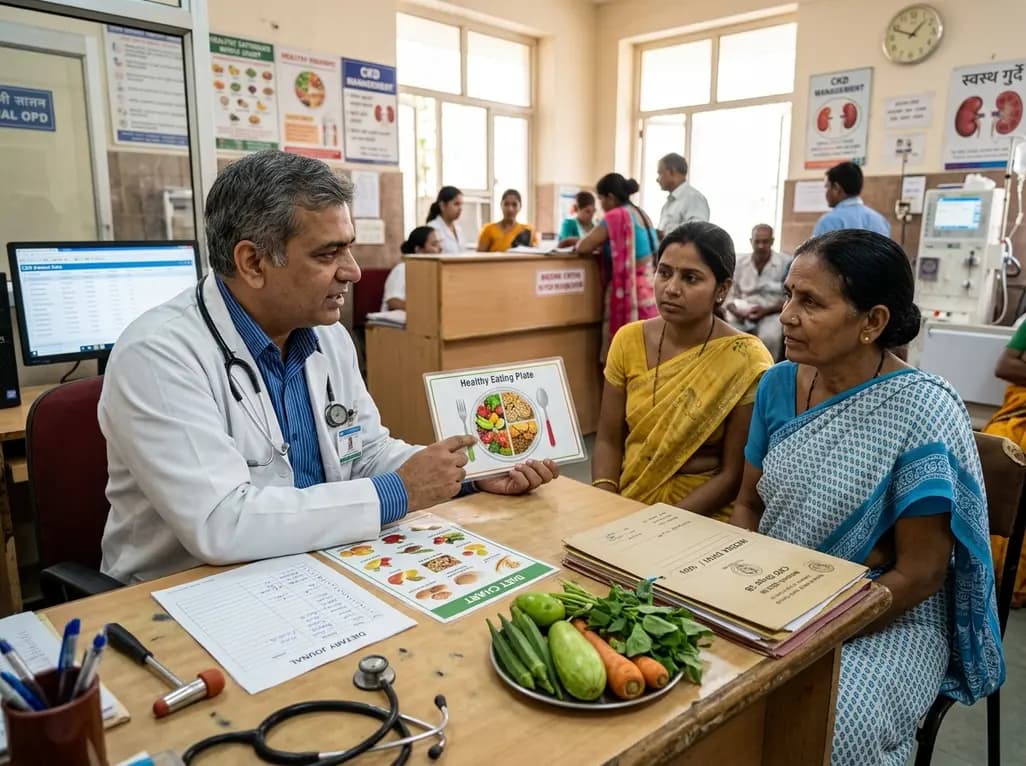
A large NHANES cohort study reveals that higher Healthy Eating Index scores significantly reduce all-cause mortality risk in CKD patients by 45%. This analysis highlights the importance of comprehensive diet quality and medical nutrition therapy in renal care to optimize long-term clinical survival.
Today

A prospective cohort study demonstrates that poor adolescent sleep quality, especially long sleep latency and reduced efficiency, increases dysmenorrhea severity in young adulthood. Addressing adolescent rest patterns offers a critical preventive avenue for clinicians.
Today

A meta-analysis of 13 propensity score-matched studies shows ViV-TAVR delivers lower early mortality and reduced bleeding compared to redo-SAVR for degenerated bioprosthetic aortic valves, though long-term hemodynamics warrant careful anatomical and patient-centered evaluation.
Today

Endoscopic posterior cervical fusion combines minimally invasive decompression, joint preparation, and rigid screw-rod fixation for atlantoaxial pathologies. Early clinical findings demonstrate solid bony union, excellent symptom relief, and minimal soft-tissue morbidity without significant vascular compromise.
Today
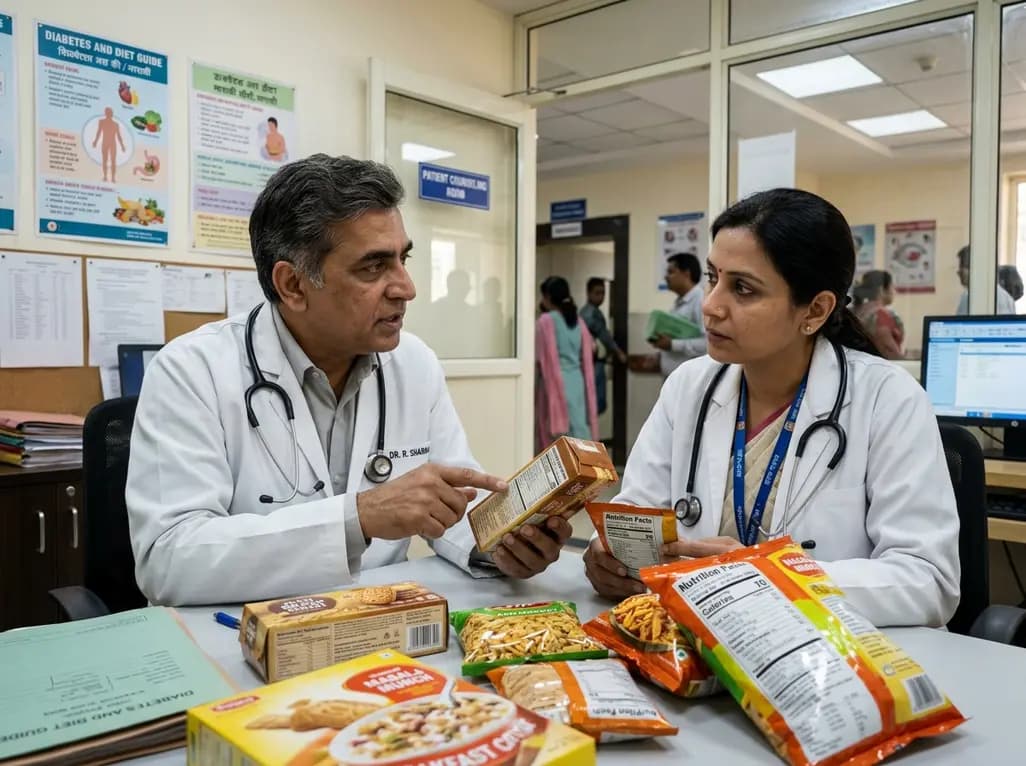
The All-India Food Processors' Association has approached the Supreme Court to oppose FSSAI's proposed per-100g benchmark for front-of-pack warning labels, advocating instead for a per-serving threshold. We explore the regulatory showdown, nutritional evidence, and implications for clinical lifestyle counseling.
Today
