.webp&w=384&q=75)

Loading, please wait...
Loading, please wait...
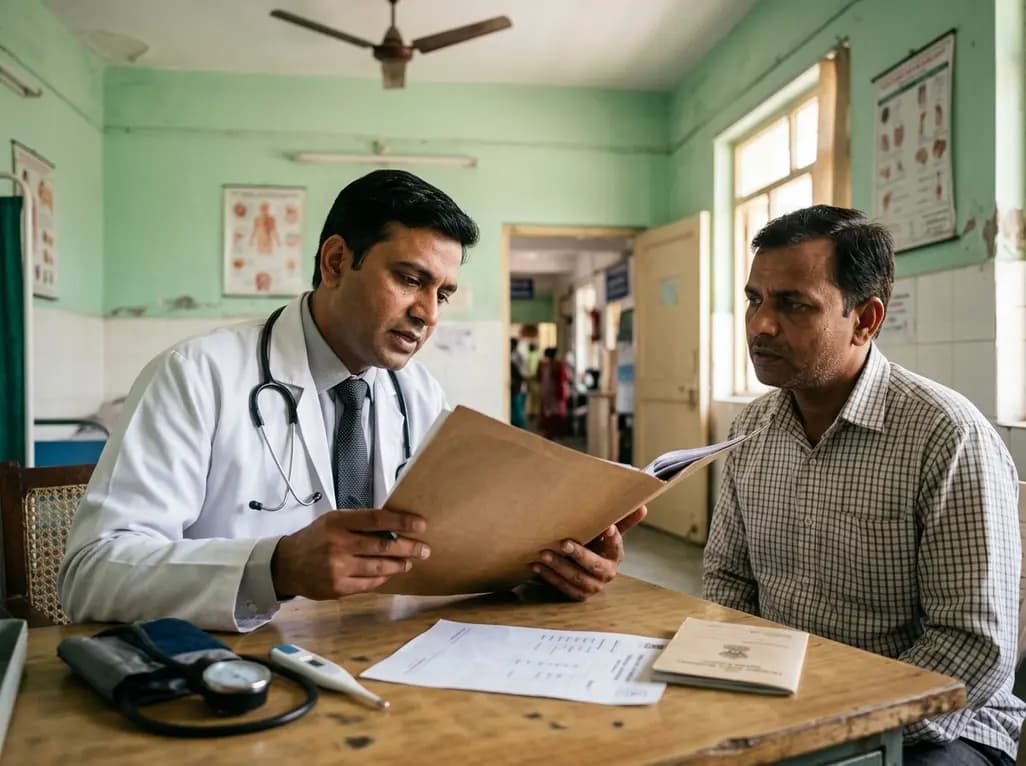
Delayed HIV diagnosis remains a major public health challenge across India. Recent research from the Ram Manohar Lohia Institute of Medical Sciences highlights this issue. The study appeared in the Journal of the Indian Medical Association. Furthermore, investigators analyzed 402 newly diagnosed HIV-positive adults. Consequently, nearly six out of ten patients arrived only after experiencing severe immune suppression. Therefore, late presentation severely compromises clinical outcomes.
The two-year study at RMLIMS provided crucial insights into diagnostic timing. Specifically, researchers followed 402 treatment-naive adult patients at the institute's antiretroviral therapy center. Most patients presented long after their initial exposure. Moreover, delayed detection restricts the immediate benefits of viral suppression therapy. Consequently, ongoing community transmission continues unnoticed during this asymptomatic window. Heterosexual transmission accounted for 47% of documented cases. Meanwhile, injection drug use represented 17.9% of transmission routes. Unidentified sources comprised 22.1% of cases. Thus, comprehensive epidemiological surveillance remains vital for capturing missed opportunities. Clinicians must maintain a high index of suspicion across all patient demographics. Furthermore, routine clinical encounters should integrate screening options. Early detection significantly reduces opportunistic infections. Therefore, addressing diagnostic inertia is essential for effective epidemic control.
Analyzing demographic variables helps medical providers identify high-risk populations. In this study, young adults represented the largest proportion of newly diagnosed individuals. Specifically, individuals aged 18 to 29 years accounted for 40.8% of total diagnoses. Male patients comprised 73.4% of the cohort. Additionally, married individuals made up 61.2% of the overall population. This finding challenges the misconception that HIV affects only specific high-risk groups. Instead, it indicates broader community transmission across mainstream social groups. Moreover, young adults often delay seeking healthcare due to perceived low vulnerability. Stigma also deters people from requesting routine sexual health screenings. Consequently, targeted awareness campaigns must directly address young adults and married couples. Furthermore, expanding confidential testing in community clinics will encourage timely participation. Ultimately, demographic insights enable precise public health interventions.
The clinical consequences of late presentation center on severe immune depletion. Laboratory analysis demonstrated that 59.7% of patients had CD4 counts below 350 cells/µl upon initial evaluation. CD4 T-lymphocytes perform essential roles in coordinating host immune defenses against pathogens. Therefore, a low CD4 count signals heightened risk for serious co-infections. Alarmingly, 35.1% of patients presented with CD4 counts under 200 cells/µl. This threshold defines advanced HIV disease and severe immunodeficiency. Patients face substantial risks of tuberculosis, fungal infections, and neurological complications. In addition, baseline immune damage hampers full CD4 recovery after initiating antiretroviral therapy. Furthermore, managing advanced disease requires complex regimens and prophylactic medications. Consequently, early baseline CD4 evaluation remains critical for guiding clinical management. Prompt diagnostic testing ensures timely delivery of life-saving therapies.
Socioeconomic factors heavily influence healthcare-seeking behavior and diagnostic delays. The study observed a prominent rural skew, with 58% of patients originating from rural villages. Among rural patients, 61.4% sought medical care only after their CD4 count dropped below 350 cells/µl. Limited local diagnostic infrastructure in rural health centers contributes to this delay. Moreover, educational attainment was notably low across the study population. Nearly one-third of participants completed only primary education, while 21.9% were illiterate. Low health literacy reduces awareness regarding HIV transmission risks and subtle clinical symptoms. Additionally, social stigma in rural communities creates fear of discrimination. As a result, individuals frequently postpone testing until severe symptoms emerge. Furthermore, financial constraints compound these healthcare barriers. Thus, addressing social determinants of health is fundamental to achieving early diagnosis.
Primary care physicians play a pivotal role in overcoming diagnostic delays. Integrating indicator-condition-guided testing into routine general practice can uncover undiagnosed infections early. For instance, conditions like unexplained weight loss, chronic diarrhea, prolonged fever, and persistent herpes zoster should trigger immediate HIV screening. Furthermore, clinicians should offer opt-out HIV screening during routine adult laboratory panels. Opt-out testing reduces individual stigma by framing the test as a standard medical protocol. Medical centers must also adopt rapid point-of-care testing kits to provide same-day results. Consequently, patients receive immediate post-test counseling and prompt referral to antiretroviral therapy centers. In addition, strengthening inter-departmental referrals between medicine and dermatology ensures fewer missed opportunities. Implementing these proactive clinical strategies will systematically close the diagnostic gap.
Maximizing the impact of India's "test and treat" policy requires seamless coordination between diagnostic services and treatment centers. National guidelines recommend immediate initiation of antiretroviral therapy upon HIV confirmation regardless of CD4 count. However, the success of this policy depends entirely on early identification. When patients present late with CD4 counts below 350 cells/µl, clinical management becomes far more complex. Therefore, public health infrastructure must prioritize early community screening alongside immediate treatment linking. Expanding rapid testing in rural peripheral clinics ensures earlier diagnosis before immunological decline occurs. Moreover, robust counseling services help patients understand the vital importance of lifelong adherence. Additionally, routine viral load monitoring ensures long-term treatment efficacy. By reinforcing early screening, the healthcare system can fulfill the true potential of the test and treat strategy.
Q1: What defines a delayed HIV diagnosis in clinical practice?
A delayed HIV diagnosis occurs when an individual is identified with HIV infection after significant immune depletion has already occurred. Clinically, presenting with a CD4 cell count below 350 cells/µl or an AIDS-defining illness indicates delayed presentation. Furthermore, a CD4 count below 200 cells/µl signifies advanced HIV disease. Late diagnosis increases the risk of opportunistic infections, treatment complications, and early mortality compared to timely detection.
Q2: Why are young adults and married individuals particularly affected by late HIV diagnosis?
Young adults and married individuals often face delayed diagnosis due to low perceived risk and social stigma. Young individuals may view HIV as an unlikely condition, leading them to ignore early symptoms or skip routine screening. Similarly, married individuals may not consider themselves at risk for sexual exposure. Consequently, healthcare providers frequently omit routine screening in these groups, resulting in delayed clinical detection and compromised immune health.
Q3: How can primary care clinicians improve early HIV detection in rural areas?
Primary care clinicians can improve rural HIV detection by implementing indicator-condition-guided screening during routine consultations. Conditions such as recurrent fever, unexplained weight loss, chronic diarrhea, or herpes zoster should prompt immediate HIV testing. In addition, adopting rapid point-of-care screening kits provides fast on-site results. Normalizing HIV testing as a standard component of adult health evaluations helps reduce social stigma and encourages broader patient participation.
Disclaimer: This content is for informational and educational purposes only. It does not constitute medical advice or replace professional judgment. Refer to the latest local and national guidelines for clinical practice.
References

Read summarized clinical updates, watch expert medical content, and earn CME certifications right from your smartphone.
Open your smartphone camera to scan and install.





A major study highlights that nearly six in ten newly diagnosed HIV patients present with advanced immunological compromise. Delayed HIV diagnosis remains a major barrier to effective antiretroviral therapy. Clinicians must strengthen routine screening, address rural healthcare barriers, and promote early testing.
last month

A recent study highlights the utility of two-dimensional speckle tracking echocardiography in assessing right atrial mechanics in OSAHS. Progressive reductions in reservoir and conduit strain, coupled with elevated contraction strain, signal early right heart remodeling correlated with apnea severity.
Today

A multicentre RCT in China shows that the PAICS AI system significantly boosts sonographer sensitivity in detecting fetal intracranial malformations by 8.7% without compromising specificity, offering promising diagnostic support for prenatal neurosonography.
Today

A 2026 meta-analysis evaluates PDE5 inhibitors in advanced ILD with severe gas exchange impairment. While overall mortality was not significantly reduced, a targeted subgroup with pulmonary hypertension showed a 49% risk reduction, underscoring the necessity of precise hemodynamic phenotyping.
Today

A premature neonate developed upper limb compartment syndrome after uterine rupture extruded the arm through a scar defect. Conservative management with continuous monitoring yielded complete functional recovery and normal limb growth at 10-year follow-up, highlighting non-operative safety in selected cases.
Yesterday

The Supreme Court questioned FSSAI's phased warning approach, urging single-phase implementation for foods exceeding limits in any nutrient of concern. Backed by ICMR-NIN recommendations, the proposed red hexagonal warnings target added sugar, salt, and fat to combat India's escalating chronic disease epidemic.
Today
